Trending YouTube Shorts Ideas and How to Validate Them
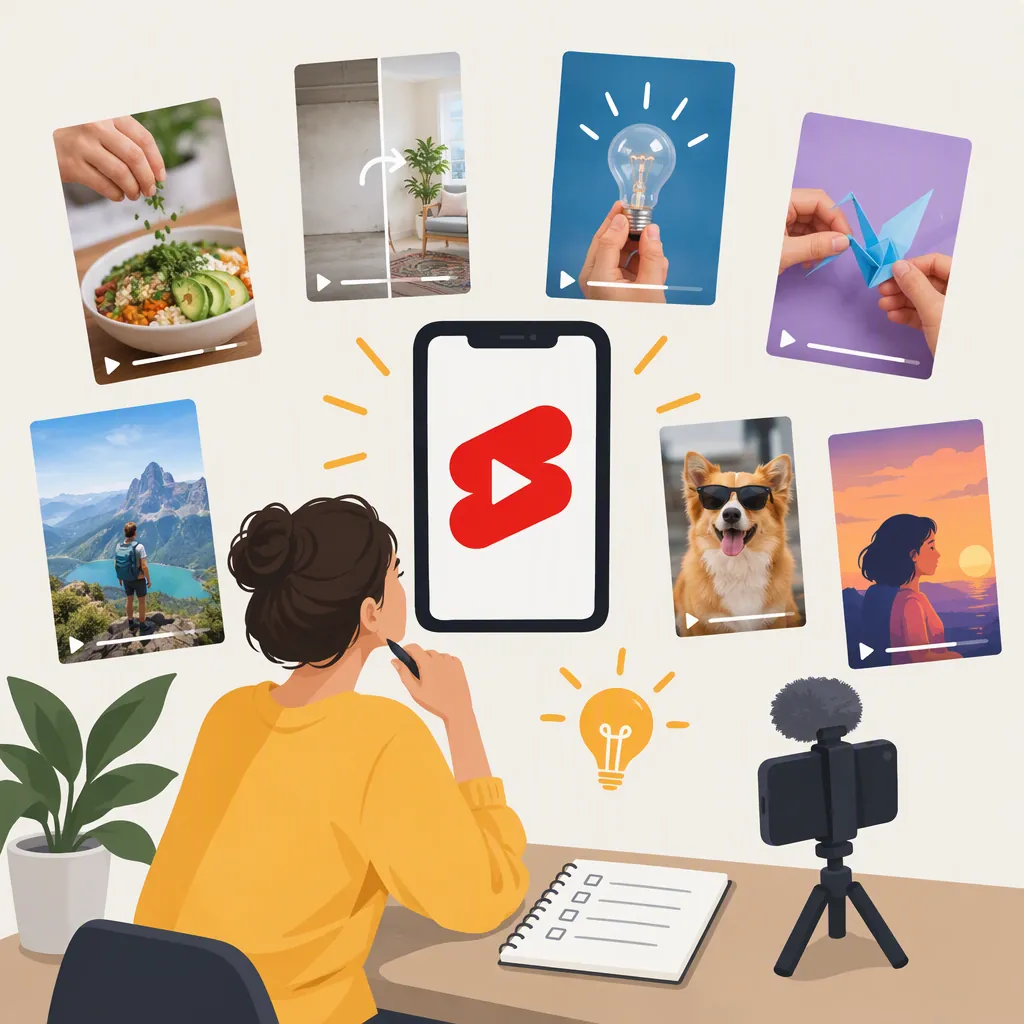
For trending YouTube Shorts ideas, start with adaptable formats: quick tutorials, mini vlogs, before-and-after reveals, POV stories, and themed montages. Then look for a specific topic, opening, or visual structure repeating across recent public Shorts in your niche—not just one popular video. Teleprompter.com's format guide includes these options. [c1]
Source context: Teleprompter.com's guide, published February 26, 2026, and Postiz's ideas article, published March 1, 2026, provide format inspiration. TubeBuddy's Suggested Shorts page also lists content ideas. These commercial publisher pages are not a live, representative YouTube trend dataset, so they do not establish today's fastest-growing topics or a formula for virality. [c1] [c2] [c3]
The ideas below are candidates to investigate and adapt, with search directions and a public-evidence workflow for checking their trend status.
Separate a Repeatable Format from a Current Trend
Separate three elements before choosing a Short:
- Topic: What the video covers, such as meal preparation or drawing.
- Format: How it delivers the idea, such as a three-step tutorial or transformation reveal.
- Trend signal: Recent public examples suggesting that multiple creators are using a particular topic, structure, or sound.
For example, “photography” is a topic. “Compare two images to explain a term” is a format. Several recent Shorts from different creators using the same two-image correction structure would be a possible trend signal.
Teleprompter.com's guide lists mini vlogs, DIY tutorials, explainers, POV micro-drama, transformations, and montages among its Shorts formats. Use that list as an inspiration menu, not a popularity ranking. [c1]
A format can remain useful even when its current-trend status is unknown. The practical question is whether you have a relevant subject, a clear payoff, and something original to add.
Topic–Format–Signal Worksheet
- Topic: What subject does the intended viewer care about?
- Format: Tutorial, reveal, mini vlog, story, comparison, or montage?
- Public examples: Record video URLs and publication dates.
- Repeated element: What question, opening, visual treatment, or sound recurs?
- Original contribution: What will your version explain or demonstrate differently?
- Status: Evergreen idea, possible trend, or insufficient evidence?
10 YouTube Shorts Ideas to Adapt
These are original test prompts built around formats described by Teleprompter.com and Postiz. Postiz's article includes workflow demonstrations and common creator mistakes paired with fixes. [c1] [c2]
| Format | Original idea | Opening and payoff |
|---|---|---|
| Quick tutorial | Fix one confusing spreadsheet setting | Show the problem, demonstrate the change, reveal the corrected result. |
| Mini vlog | Follow one library visit from arrival to book selection | Establish the goal, show the search, end with the chosen book. |
| Constraint-based recipe | Prepare lunch using three ingredients already available | Show the ingredients, key steps, and finished plate. |
| Educational explainer | Explain one commonly confused photography term | Put two contrasting images on screen, then explain the difference. |
| Before-and-after reveal | Reorganize one crowded drawer | Show matching before and after angles, with the sorting steps between them. |
| POV micro-story | Dramatize a familiar misunderstanding in a group project | Establish the situation, introduce the mix-up, resolve it with a clear twist. |
| Pet progress clip | Document a calm, voluntary training session | Show a small task and the animal's response without forcing a reaction. |
| Themed montage | Show one sketch progressing through several stages | Keep the subject consistent and finish on the completed drawing. |
| Mistake and fix | Compare unclear instructions with a clearer rewrite | Show both versions and explain the specific improvement. |
| Workflow demonstration | Turn a loose list of ideas into a simple weekly plan | Show the starting list, grouping decisions, and finished calendar. |
Choose subjects you can demonstrate accurately. Avoid fabricated results, staged reactions presented as spontaneous, and dramatic transformations that conceal important context.
Connect Candidate Ideas to Trend Signals
Use the following English search phrases as starting points. They are proposed searches, not evidence that the patterns are currently trending. Adapt them to your niche and inspect the actual videos rather than relying on titles alone.
| Candidate idea | Repeated element to investigate | Public search direction |
|---|---|---|
| Photography explainer | Two contrasting images followed by a correction of the same misconception | photography terms explained shorts, aperture vs shutter speed shorts |
| Drawer transformation | An opening reveal followed by sorting steps and a matching-angle comparison | drawer organization before after shorts, small space organization shorts |
| Three-ingredient lunch | An ingredient-count constraint repeated across recent recipe videos | three ingredient lunch shorts, 3 ingredient recipe shorts |
| Group-project POV | The same recognizable misunderstanding or scene structure across different creators | group project POV shorts, student group work comedy shorts |
| Sketch montage | The same progression pattern, such as rough sketch → linework → final reveal | sketch progress shorts, drawing process reveal shorts |
| Weekly-plan demonstration | A loose list becoming a calendar through visible grouping steps | weekly planning shorts, content calendar organization shorts |
Check whether the repetition concerns the topic, the format, or both. Several unrelated organization videos do not necessarily support a claim that one specific drawer-reveal structure is spreading.
Three-Angle Idea Builder
Choose one subject, then write three versions:
- Tutorial angle: How to complete one task involving the subject.
- Comparison angle: The difference between two commonly confused options.
- Story angle: A small obstacle involving the subject, followed by a resolution.
Select the angle with the clearest visible payoff and an original contribution. If you found a repeated structure, identify which part you can adapt without copying another creator's script or distinctive execution.
Check Trend Signals Using Public Evidence
Use a small, documented observation exercise rather than treating your feed as a popularity ranking:
- Define a narrow question. For example: Are recent beginner photography Shorts repeatedly using a two-image correction structure?
- Choose a consistent search approach. Record the search phrases and the publication-date windows you intend to review.
- Inspect examples from several creators. Watch enough of each video to identify the structure. Note when multiple results come from the same channel.
- Record dates and observations. Capture the topic, opening, visual pattern, available public counts, and relevant comments.
- Separate repetition from momentum. Repetition suggests adoption within the sample. Increasing adoption requires observations across more than one time window using a reasonably consistent approach.
- Check niche fit. Identify what your version would explain, demonstrate, or reinterpret differently.
This is a proposed research workflow, not a validated ranking method. A small public sample cannot establish platform-wide popularity, and public view totals do not reveal why a video attracted attention.
Public Trend Observation Log
For each example, record:
| Field | What to capture |
|---|---|
| Observation date | When you inspected the video |
| Search term | The exact query used |
| Public video URL | The address of the example |
| Publish date | The date shown publicly |
| Creator | Channel name |
| Repeated pattern | The specific opening, structure, topic, or sound |
| Public counts | Available counts and the date captured |
| Caveat | Missing context, duplicate creator, uncertain date, or another limitation |
After each review, summarize:
- Repetition: What appeared across different creators?
- Change over time: Did comparable observations suggest an increase, decrease, or no clear change?
- Status: Evergreen idea, possible trend, or insufficient evidence?
- Reason: What evidence supports that label, and what remains unknown?
Hypothetical Example: From Observations to a Conclusion
This example illustrates how to interpret a log. It does not describe real videos, creators, counts, or observed growth.
Suppose you investigate the two-image photography explainer using the same search phrases and two adjacent, equal-length publication windows.
| Review element | Hypothetical earlier window | Hypothetical later window |
|---|---|---|
| Structure | Two-image correction appears in a series from one channel | The same broad structure appears across several different channels |
| Creator distribution | Concentrated in one creator's uploads | Distributed across more creators in the reviewed sample |
| Remaining uncertainty | A channel series is not evidence of wider adoption | Search results may omit examples or surface different channels between reviews |
| Interpretation | Insufficient evidence of a cross-creator trend | Possible trend within the reviewed niche sample |
The later window would justify investigating the pattern further, but not declaring platform-wide growth. Even with consistent queries, search results are not a complete census.
Use these distinctions when choosing a label:
- Evergreen idea: The concept answers a useful question, but you do not have evidence of recent momentum.
- Possible trend: A specific element repeats across several creators in recent examples, with the sample and limitations documented.
- Insufficient evidence: The finding rests on one creator, one unusually popular video, unclear dates, or inconsistent observations.
These labels serve different purposes: “evergreen” describes the idea's usefulness without a timeliness claim; the other labels describe the strength of your trend evidence.
Same-channel repetition shows that channel's adoption. A single breakout video shows an individual result. Neither alone demonstrates cross-creator diffusion.
Turn an Idea into a Standalone Short
Build around one promise and one payoff. A practical outline is:
Question or result → demonstration → conclusion
Teleprompter.com's guide recommends leading with the main point, keeping scripts focused, and using captions to clarify the message. These are editorial suggestions, not guarantees of reach. [c1]
Existing material can also supply ideas. TubeBuddy's Suggested Shorts page and its FAQ suggest extracting key moments from long-form videos, alongside quick tips and behind-the-scenes content. [c3] A reused moment still needs enough context to make sense independently.
For a tutorial, show the starting problem and the finished result. For an explainer, preserve qualifications that affect the meaning. For a story, include its resolution rather than cutting away before the promised payoff. Use visuals and audio you have permission to publish.
Four-Line Script Template
- Opening: State the question or show the result.
- Context: Give only the background needed to understand it.
- Demonstration: Show the steps, comparison, or evidence.
- Conclusion: Deliver the answer and any essential limitation.
Final check: Does the Short make sense without another video? Does the ending fulfill the opening promise? If it adapts a repeated format, is the underlying content still original and accurate?
Choose What to Test Without Chasing Every Trend
Use a simple editorial filter: audience relevance, originality, evidence quality, production effort, and safety. An evergreen tutorial with a clear answer may be a better choice than a timely format you cannot execute responsibly.
For a manageable test, choose one subject and two different structures—for example, a photography comparison and a mistake-and-fix explanation. Keep a record of the intended viewer benefit and what changes between versions.
If reviewing publicly visible results, record the observation date and avoid declaring a winner solely from unequal lifetime view totals. Treat the comparison as exploratory: different topics, publication times, and other unobserved factors may affect the results.
Continue a format when it offers useful follow-up questions and remains feasible to produce. Revise it when the opening promises something the video does not deliver. Set it aside when its appeal depends on misleading claims, unsafe imitation, or copying another creator's distinctive work.
Idea Selection Checklist
- Relevance: Can I name the intended viewer and their question?
- Originality: What does this add beyond the examples I found?
- Evidence: Can I support the factual statements?
- Execution: Can I show a complete payoff with available resources?
- Safety and permissions: Can I publish this responsibly?
- Trend status: Is the current-trend label supported, tentative, or unnecessary?
Record a decision—test, revise, or set aside—and a one-sentence reason.
FAQ
What YouTube Shorts Ideas Are Trending Right Now?
Mini vlogs, tutorials, explainers, transformations, and POV stories are useful candidates from Teleprompter.com's format guide, not a verified live ranking. [c1] To narrow them down, choose a niche, search for recent examples, and identify a specific element repeating across different creators. Record publication and observation dates before labeling it a possible current trend.
For example, investigate whether photography creators are repeatedly using two-image corrections—not simply whether photography Shorts exist.
How Can I Tell Whether a Format Is a Trend or an Evergreen Idea?
Treat it as evergreen when its value comes from answering a useful question without evidence of recent momentum. Treat it as a possible trend when a specific element appears across several creators in a documented recent sample. To investigate increasing adoption, compare more than one publication window with a consistent search approach. These are working research labels, not YouTube's official classifications.
Can I Build a Shorts Idea Without Trending Audio?
Yes. A tutorial, comparison, explainer, or transformation can be planned around its visual demonstration and message rather than a particular sound. Teleprompter.com's guide includes several such formats. [c1] If investigating a trend, look for repeated openings, questions, or editing structures as well as audio. No format alone establishes how your version will perform.
How Can an Existing Video Become a Shorts Idea?
Look for one self-contained answer, demonstration, or story moment. TubeBuddy's Suggested Shorts page suggests repurposing highlights from long-form videos. [c3] Add missing context, preserve essential qualifications, and make sure the extracted segment delivers a complete payoff on its own. Its suitability as a Short does not automatically make it a trending idea.