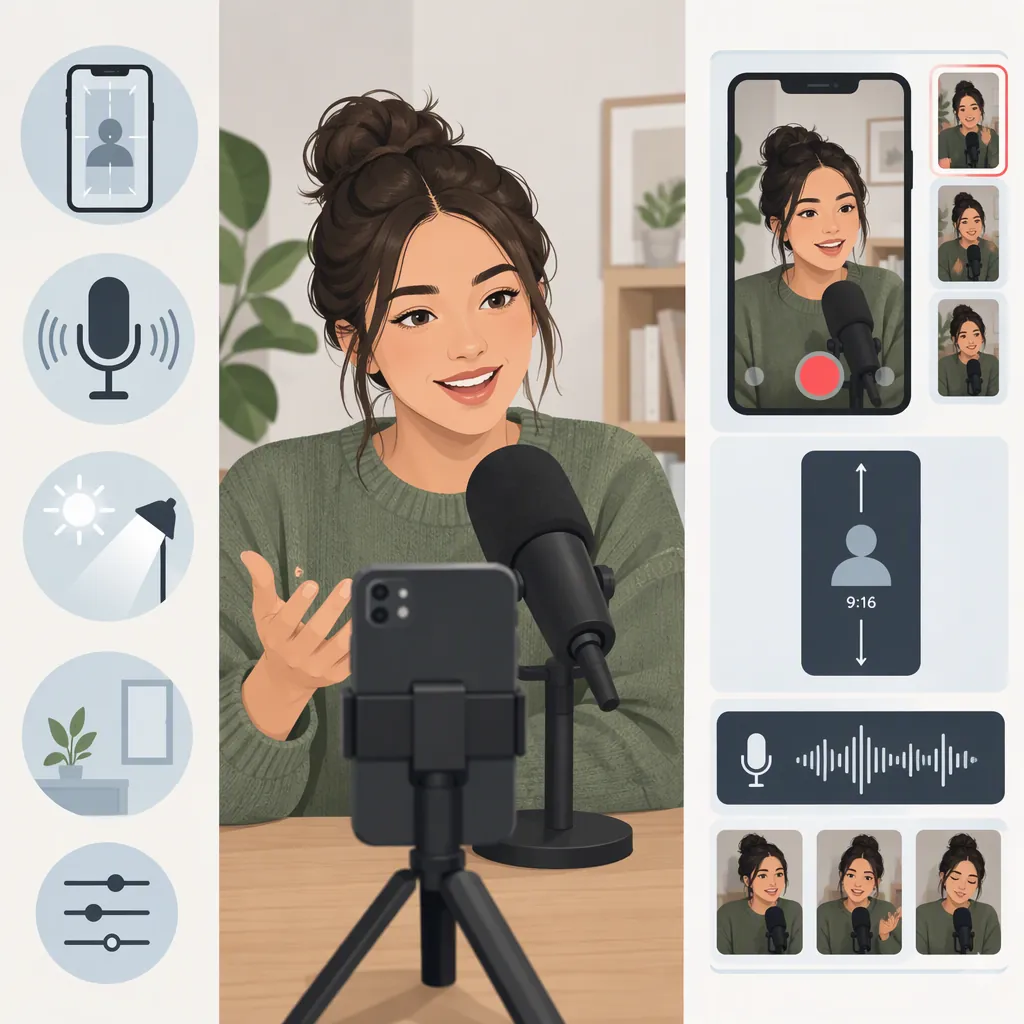
The TikTok Microphone Trend: What It Is and How to Assess It
The TikTok microphone trend refers here to videos featuring small microphones, used both as recording tools and as visible props for commentary, interviews, or performance. SYNCO’s articles describe these uses, but they do not establish one defining sound, challenge, origin, or current level of popularity. Treat the tiny-mic look as a creative format—not a guarantee of better audio or wider reach. [c1] [c2]
What the TikTok Microphone Trend Means
A useful distinction is the microphone as equipment versus the microphone as part of the scene. A small handheld mic can make the act of asking a question visible; a clip-on mic can serve a recording role without becoming the focus of the video.
The provided articles discuss mini handheld, lavalier, and phone-mounted microphones. They also describe applications including commentary, interviews, singing, dialogue reenactments, and ASMR. These are examples of uses, not proof that every video belongs to a single coordinated trend. [c1] [c2]
Both references come from a microphone manufacturer and include product promotion. Use them as descriptions of equipment and possible formats, not independent evidence of audience demand. Neither provides a documented trend origin, a representative TikTok sample, or a measured popularity timeline. [c1] [c2]
Choose a Format Before Choosing Equipment
Start with the scene you want to make rather than a product label. The references associate handheld microphones with interaction, clip-on microphones with speech recording, and wireless setups with movement. Those categories are useful starting points, not performance guarantees. [c1] [c2]
Consider these original recording exercises:
- One-question interview: Ask a consenting participant one clear question, then leave room for the answer. Decide whether passing a visible mic adds anything to the scene.
- Short commentary: Record a brief explanation with and without the mic visible. Compare whether the prop supports the topic or distracts from it.
- Character exchange: Use the mic as a cue for switching speakers or roles. Keep the joke understandable without relying on the accessory alone.
- Quiet sound study: Record a small everyday sound and review the result before treating the setup as suitable for ASMR.
These are creative prompts, not documented viral examples. If the microphone is only a prop, distinguish that from using it to capture the actual audio.
Format Planning Card
Video premise: ___
Opening question or line: ___
Microphone role: recording tool / visible prop / both
Who speaks, and when: ___
Participant consent, if applicable: ___
What the viewer should understand without the prop: ___
Audio test needed before filming: ___
Check Compatibility and Test the Recording
The supplied setup guide recommends checking microphone permission, connecting the microphone to the recording device, and making a test recording. It also identifies device compatibility as a selection factor. [c2]
Do not choose a connector solely from a broad label such as “iPhone” or “Android.” Check your exact device port, microphone connection requirements, and any adapter requirements. The references discuss several connector types, but their platform shorthand is not a device-specific compatibility check. [c1] [c2]
Before filming, record a short sample through the workflow you actually intend to use. Listen for understandable speech, unwanted background sound, handling noise, and abrupt changes in level. If the result is poor, change one variable at a time—placement, recording location, or an available level setting—and test again.
The sources make broad claims about improved audio and visibility. They do not provide comparative tests or platform evidence establishing that a mini microphone will outperform every built-in mic or improve recommendation placement. Avoid treating either outcome as guaranteed. [c1] [c2]
Pre-Recording Checklist
- Confirm the exact device port and microphone connection requirements.
- Check microphone access for the recording app.
- Connect the microphone and complete pairing if required.
- Record a short sample in the intended filming location.
- Play back the saved sample and assess speech clarity and unwanted noise.
- Change one setting or placement variable if needed, then retest.
- Check power and cable placement before recording the full scene.
Assess Whether the Format Is Relevant Now
The references are dated January 8, 2022, and February 26, 2025. They show that mini-microphone content was discussed on those dates; they do not establish its current momentum on TikTok. [c1] [c2]
For a current assessment, build a small, dated observation log of public posts. Search related terms such as “mini microphone,” “tiny mic,” and “TikTok microphone,” then separate equipment reviews from videos actually using the format.
Record what repeats: the visible prop, the interview structure, a particular sound, or a shared joke. Note distinct creators and publication dates rather than relying on one prominent post. Keep the conclusion narrow: a sample can describe what you observed, but it cannot establish platform-wide prevalence or explain why a video received attention.
Public Trend Observation Log
Observation date: ___
Search term used: ___
Public post URL: ___
Post publication date, if visible: ___
Format: interview / commentary / performance / equipment review / other
Microphone role: visible prop / apparent recording tool / unclear
Repeated sound, prompt, or visual element: ___
Distinct creator or repeat appearance: ___
Conclusion limited to this sample: ___
FAQ
Is the TikTok Microphone Trend One Specific Challenge?
The supplied references describe a broad range of mini-microphone uses rather than one named challenge with a defining sound or prompt. They are not sufficient to identify a single origin or universal version of the trend. [c1] [c2]
Does Using a Tiny Microphone Improve TikTok Reach?
That is not established by the provided evidence. The manufacturer articles suggest visibility and engagement benefits, but they supply no platform data demonstrating that the microphone itself improves reach. [c1] [c2]
What Should I Check Before Recording with a Mini Microphone?
Check device compatibility, microphone permission, and the connection, then make and play back a short test recording. The provided setup guide recommends these basic steps; use the test result rather than the microphone’s appearance to assess whether the setup works for your scene. [c2]