TikTok Content Ideas for Musicians: What to Film and How to Plan
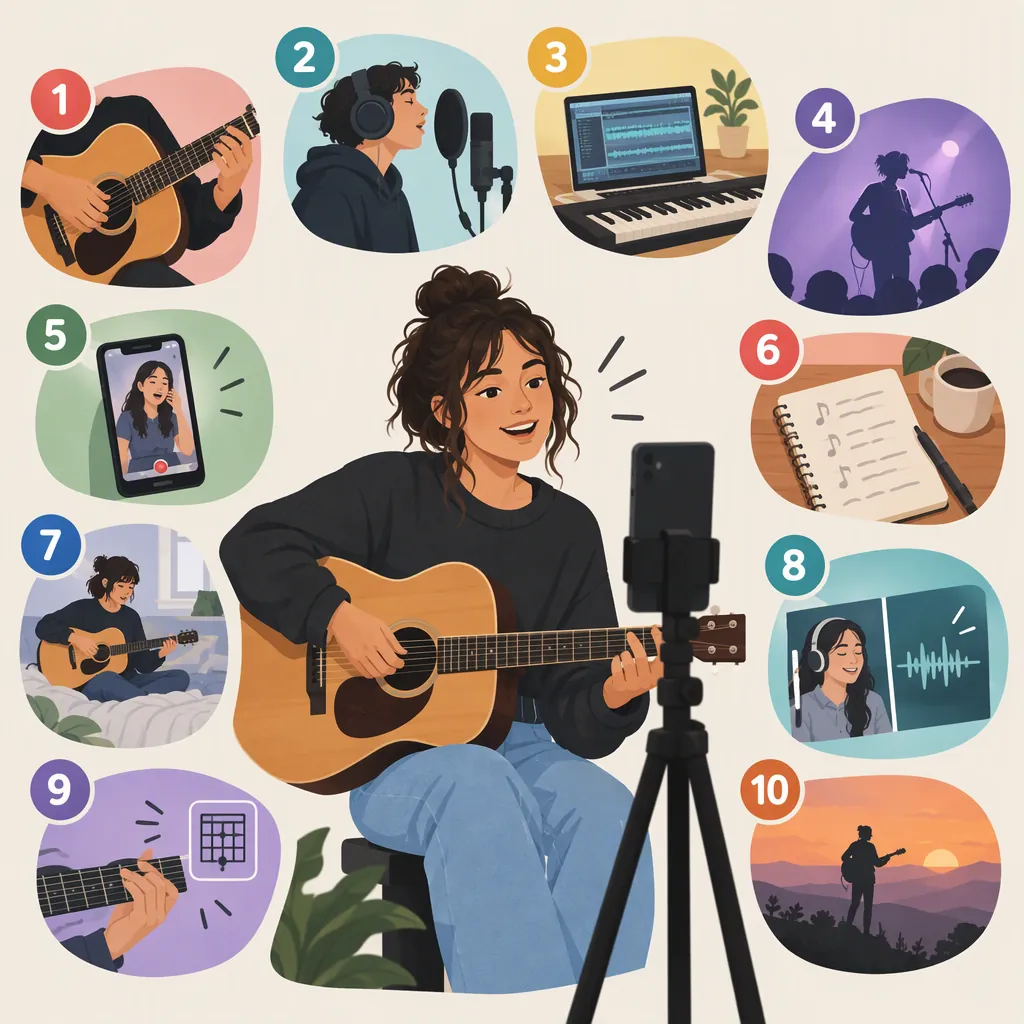
TikTok content ideas for musicians include short performances, studio decisions, tiny tutorials, demo-to-finished comparisons, trend reinterpretations, musical breakdowns, collaboration clips, songwriting stories, rehearsal moments, and music-related humor. The supplied guide discusses these broader formats. The prompts below adapt them into practical filming exercises, not a formula for reach or streams. [c1]
Start with One Musical Moment
Instead of planning a video about your entire musical identity, choose one thing a viewer can hear or understand: a changed lyric, an added harmony, a difficult transition, or a production decision.
The supplied guide recommends specific studio moments, focused lessons, and audible before-and-after comparisons. [c1] A useful planning question is: What will this video demonstrate?
For example, replace “a day in the studio” with “the pause that changed this chorus.” That gives the clip a concrete subject without requiring a release announcement or promotional message.
One-Moment Planning Card
Subject: [one musical decision]
Opening text: [what the viewer will hear]
First example: [original version]
Explanation: [one sentence about the change]
Second example: [revised version]
Filming boundary: [people, screens, or material that should remain private]
Five Performance and Process Ideas
These original prompts adapt the guide’s performance, studio, tutorial, transformation, and lifestyle categories. [c1]
- One phrase, three interpretations. Perform the same original line softly, rhythmically, and with a different emphasis. Label the versions so the distinction is clear.
- The lyric revision. Show an earlier lyric and its replacement, then sing both. Explain the choice without presenting personal taste as a universal rule.
- A tiny technique lesson. Demonstrate one chord voicing, picking pattern, breath placement, or drum accent. Keep the explanation within your expertise.
- Demo versus arrangement. Play the same passage before and after adding one element. Identify what changed rather than listing every tool used.
- The object behind a song. Film a notebook page, instrument, or location that relates to your writing process. Pair it with your own music and a specific explanation rather than an unexplained montage.
For comparisons, keep playback volume reasonably similar so loudness is not mistaken for an arrangement improvement. Avoid exposing private messages, session files, or other people’s unreleased work.
Demo Comparison Script
Opening text: “Same chorus, one arrangement change.”
Clip A: Play the original passage.
Explanation: “I removed [element] to leave more room for [element].”
Clip B: Play the revised passage.
Closing text: “The change is in [specific musical detail].”
Five Trend and Collaboration Ideas
The guide also discusses trending-audio reinterpretations, reactions, Duet and Stitch collaborations, music-related trend formats, and collaborative challenges. [c1] These prompts use those categories without assuming a trend will improve distribution.
- Rearrange a familiar musical idea. Where use is permitted, reinterpret a sound in your style: a sparse acoustic arrangement, a different meter, or a new harmonic setting. Make the musical change the subject.
- Explain one arrangement detail. Discuss a pause, bass entrance, or vocal layer. If permission to include someone else’s recording is uncertain, demonstrate the concept with your own example instead.
- Leave space for another part. Record an original progression with an empty section. Display the key, tempo, and intended contribution. Use collaboration features only where available and appropriate.
- Translate a visual trend into music. Adapt a recognizable before-and-after or text format to a rehearsal problem. The video should remain understandable without knowledge of the trend.
- Show a rehearsal puzzle. Demonstrate a transition that feels awkward, then perform two alternatives. This can stand alone or become a collaboration exercise with agreed participation terms.
Credit is not a substitute for permission. Before using another person’s recording or reposting a contribution, check the relevant permissions and current platform terms.
Open-Part Recording Brief
Material: [original progression or cleared material]
Key: [key]
Tempo: [BPM]
Structure: [number of bars and entry point]
Missing part: [harmony, percussion, melody, or verse]
On-screen labels: [key, tempo, entry cue]
Participation terms: [permitted uses and whether reposting requires separate approval]
Choose Trends That Fit the Music
A trending sound and a trending format are different starting points. The supplied guide distinguishes reinterpreting audio from adapting a visual or text-based trend. [c1]
For an audio idea, identify what you can contribute musically. For a format idea, identify the story your music can tell within that structure.
Use these questions as an editorial filter:
- Can you describe the musical contribution in one sentence?
- Does the format suit your performance style or sense of humor?
- Can you make it without interrupting essential music work?
- Is the material yours to use, or have you checked permission?
- Would the clip still make sense if the trend reference disappeared?
Observing a sound repeatedly in your feed is not proof of platform-wide popularity. The provided references do not establish which sounds are currently rising, how long a trend will last, or whether using it will increase reach.
Trend Observation Log
Date observed: [date]
Sound or format: [description]
Examples observed: [notes]
Musical adaptation: [your contribution]
Permission question: [what needs checking]
Production effort: [estimated time]
Decision: [adapt, save, or skip]
Reason: [fit with your music, not an assumed reach benefit]
Build a Small, Repeatable Plan
The supplied guide recommends choosing repeatable formats and reviewing results by format. [c1] A manageable starting exercise is to choose two categories: one that demonstrates the music and one that explains the process.
For example, record a short performance and a lyric revision during the same setup. Treat this as a workload experiment, not a required posting frequency.
After publishing, record the measurements available to you alongside qualitative notes: Were viewers confused? Did the audio communicate the difference? Did the clip attract questions about the musical subject?
Compare several examples before making a strong conclusion. Different passages, opening text, timing, and audiences make individual posts imperfect comparisons. Views alone do not establish that a video caused additional listeners or streams.
Two-Format Review Sheet
Format A: [performance idea]
Format B: [process idea]
Shared recording setup: [location and equipment]
Question being tested: [clarity, feasibility, or audience interest]
For each post, record: [date, subject, opening text, available metrics, relevant comments, production time]
Review note: [what to keep, simplify, or test again]
Limitation: [other factors that prevent a causal conclusion]
What the Evidence Supports
This article uses the supplied Viral.new guide as evidence for content-format categories. [c1] The filming prompts and worksheets are original editorial suggestions.
The reference is a third-party blog, not official TikTok documentation. Its performance predictions, algorithm assertions, and references to studies are not treated here as verified findings. No current trending-sound ranking, ideal posting frequency, or guaranteed audience outcome is established by the supplied material.
FAQ
What Are Simple TikTok Content Ideas for Musicians?
Try one short performance, one lyric revision, or one before-and-after arrangement comparison. These adapt categories in the supplied guide and can use material from a single recording session. Choose the idea that requires the least additional setup. [c1]
Do Musicians Need Trending Sounds for Every Video?
No. The supplied guide includes studio sessions, tutorials, performances, and production comparisons alongside trend-based formats. It does not establish that trending sounds are necessary for success. Original music and process demonstrations are alternative subjects. [c1]
What Can a Musician Film Without Showing Their Face?
Possible adaptations include hands playing an instrument, an annotated lyric sheet, or a before-and-after audio comparison with text labels. The guide’s tutorial and production-transformation categories provide starting points; these specific filming choices are editorial suggestions. Check that screens and documents do not reveal private material. [c1]
Which Content Idea Will Get the Most Views?
The provided material does not establish a reliable winner. Use the guide’s categories as options to test, not a ranking of guaranteed results. Review multiple posts, their production cost, and the responses relevant to your musical goals. [c1]