YouTube New, Casual, and Regular Viewers Explained
Use YouTube’s viewer groups to separate discovery from repeat viewing. To check yours, open YouTube Studio → Analytics → Audience.
Here’s what each group means:
- New: First-time viewers during your selected reporting period. YouTube may also count people as new after a long absence or changes to their watch history.
- Casual: People who watched at least once a month for 1–5 months in the past year.
- Regular: People who watched at least once a month for more than 6 months in the past year.
The key distinction: monthly audience covers a rolling 28 days, while casual and regular groups use a year of viewing history. Returning viewers is a separate metric - not another name for regular viewers.
Compare these groups over time alongside audience size, topics, and formats to plan content. A small regular-viewer share alone doesn’t mean a channel is doing poorly, and repeat viewing doesn’t prove sales.
New Viewer Metrics to Boost Content: See New, Casual and Regular Viewer Metrics in the Audience Tab
How YouTube Defines Each Viewer Group
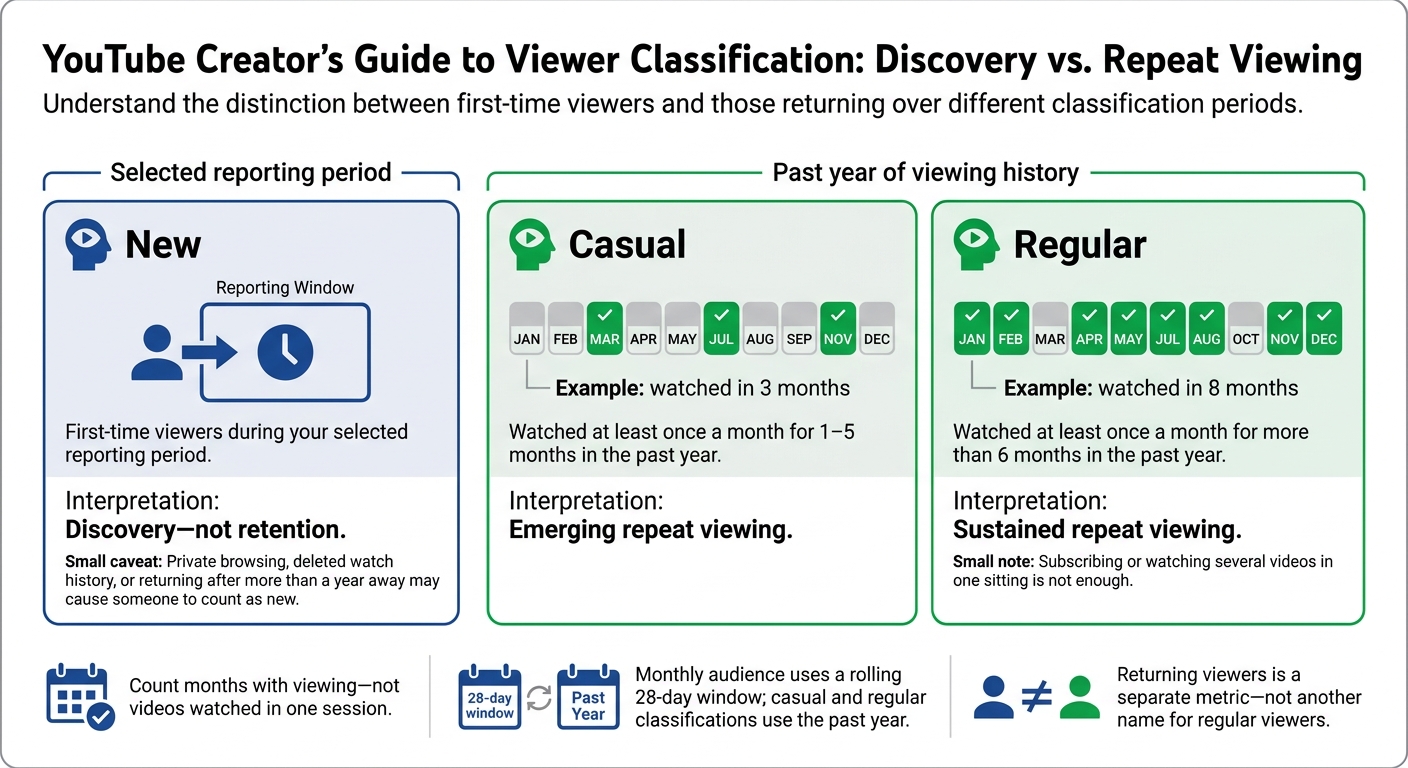
YouTube uses two time frames to group viewers. New viewers are counted within your selected reporting period. Casual and regular viewers are grouped by their monthly viewing over the past year.[6][7]
The difference matters: one measures discovery, while the others track repeat viewing.
New Viewers: First-Time Viewing in the Selected Period
New viewers watched your channel for the first time during your selected reporting period. YouTube may also count someone as new if they use private browsing, delete their watch history, or return after more than a year away.[6][8]
A high share of new viewers points to discovery - not retention.[6][8]
Casual Viewers: Monthly Viewing for 1–5 Months
Casual viewers watched your channel at least once a month for 1–5 months during the past year. This measures how many months they returned, not how many videos they watched in one session.[6][7][9]
That past-year viewing history is separate from the rolling 28-day window YouTube uses to measure monthly audience.[6][7][9]
Regular Viewers: Monthly Viewing for More than 6 Months
Regular viewers watched at least one video on your channel per month for more than 6 months during the past year.[6][7]
Subscribing or watching several videos in one sitting isn't enough. Viewers must return across enough months to meet this requirement.[6][7]
Viewer Groups Compared
Use this table to distinguish short-term discovery from longer-term viewing habits.
| Viewer segment | Classification period | What it indicates |
|---|---|---|
| New | Selected reporting period | Discovery - not retention.[6][8] |
| Casual | Past year | Emerging repeat viewing.[6][7] |
| Regular | Past year | Sustained repeat viewing.[6][7] |
Next, check where these groups appear in YouTube Studio.
Where to Find Viewer Groups In YouTube Studio
Go to YouTube Studio → Analytics → Audience and look for “New, casual, and regular viewers.”[3][8]
Controls and labels can differ by device and Studio update, so follow the labels in your Audience tab.[3][2]
Reporting Periods and Data Updates
YouTube offers 7-, 28-, and 90-day audience views where supported. Changing the reporting window won’t turn monthly audience into a 90-day total. It also won’t change the past-year criteria for casual and regular viewers.[2]
Monthly audience is a rolling 28-day estimate updated daily, not a calendar-month count. Audience analytics typically lag by 1–2 days.[3][7][2]
Monthly Audience, Returning Viewers, and Regular Viewers
Read these metrics together, but keep their meanings separate. Returning viewers and regular viewers are not interchangeable.[3][4]
| Metric | How to read it | Key limitation |
|---|---|---|
| Monthly audience | Your estimated active audience size | Not a subscriber count.[3][7] |
| Returning viewers | Repeat viewing during the selected reporting period | A return visit doesn’t make someone a regular viewer.[3][4] |
| Regular viewers | Sustained monthly viewing across the past year | The threshold is high, so recent repeat viewers may not qualify yet.[2][8] |
How to Use Viewer Groups to Plan Content
Once you’ve found these metrics in Studio, use them to distinguish discovery from repeat viewing.
Read the three groups together, not as separate scores. New viewers signal discovery, while casual and regular viewers add context about repeat viewing. Consider that mix alongside audience size, channel age, upload frequency, topic, and format. Search-driven tutorials and Shorts may bring in many newcomers. An established series may draw more repeat viewers. Neither mix is a universal benchmark for success.[8][2][3]
Track Discovery and Repeat Viewing
Log the same metrics each month: reporting window, viewer mix, monthly audience, returning viewers, top videos, format, topic, traffic sources, upload date, and major promotions.
Use shorter windows to spot recent changes and longer comparisons to check whether patterns last. Compare videos with similar topics and formats to see which attract newcomers and which bring viewers back. Don’t measure every upload against a breakout hit.[6][5]
Understand Measurement Limits
“New” does not always mean first-ever exposure. Private browsing, deleted watch history, or more than a year away can cause someone to count as new.[6][5]
Audience reports may also have limits when there isn’t enough relevant data. This can affect some smaller channels or restricted report dimensions.[10][11][12] A small regular-viewer share doesn’t mean poor performance, especially for a newer channel.
These groups don’t show demographics, buying intent, revenue, or cause and effect. Use separate audience reports and campaign evidence to answer those questions.[10][12]
Use Audience Patterns in Business Planning
Give each content type a role. Use the viewer mix to help decide whether to publish more discovery content or more series aimed at return visits. Discovery topics reach newcomers; related explainers, playlists, and recurring series give interested viewers reasons to come back.[8]
In brand discussions, pair viewer trends with audience size, relevant topics, and verified campaign results. Don’t claim that repeat viewing guarantees sales.
Conclusion: Review Discovery and Repeat Viewing
New viewers reflect discovery, while casual and regular viewers reflect repeat viewing. Monthly audience is a rolling 28-day estimate. Casual and regular viewer groups use viewing history from the past year - not the selected report window.[6][7]
Open YouTube Studio → Analytics → Audience to compare all three groups. Track how the mix changes over time to assess discovery and repeat viewing rather than relying on one report alone.
FAQ
Do Regular Viewers Need to Watch in Consecutive Months?
YouTube defines regular viewers as people who watched at least once per month for more than six months in the past year. Its published definition does not specify whether those months must be consecutive, so avoid assuming a rule either way. See the current YouTube Help definition.
Why Can My Regular-Viewer Share Drop as My Channel Grows?
As your channel grows, it may reach more people outside your established audience. That influx can increase the share of non-regular viewers and reduce your regular-viewer share.
A lower share isn’t always a bad sign. Check your audience segments in YouTube Studio and compare new versus returning viewers. This helps you see whether your content still connects with your core audience while reaching new people.
How Can I Turn New Viewers into Repeat Viewers?
Focus on content that helps viewers and holds their attention. Use YouTube Studio’s audience retention report to see where interest stays steady, which segments viewers rewatch, and where they leave. Test changes by shortening slow openings, cutting repetition, moving useful content earlier, or making instructions clearer.
Compare how new and returning viewers watch in YouTube Analytics, then use those results to guide your next changes.