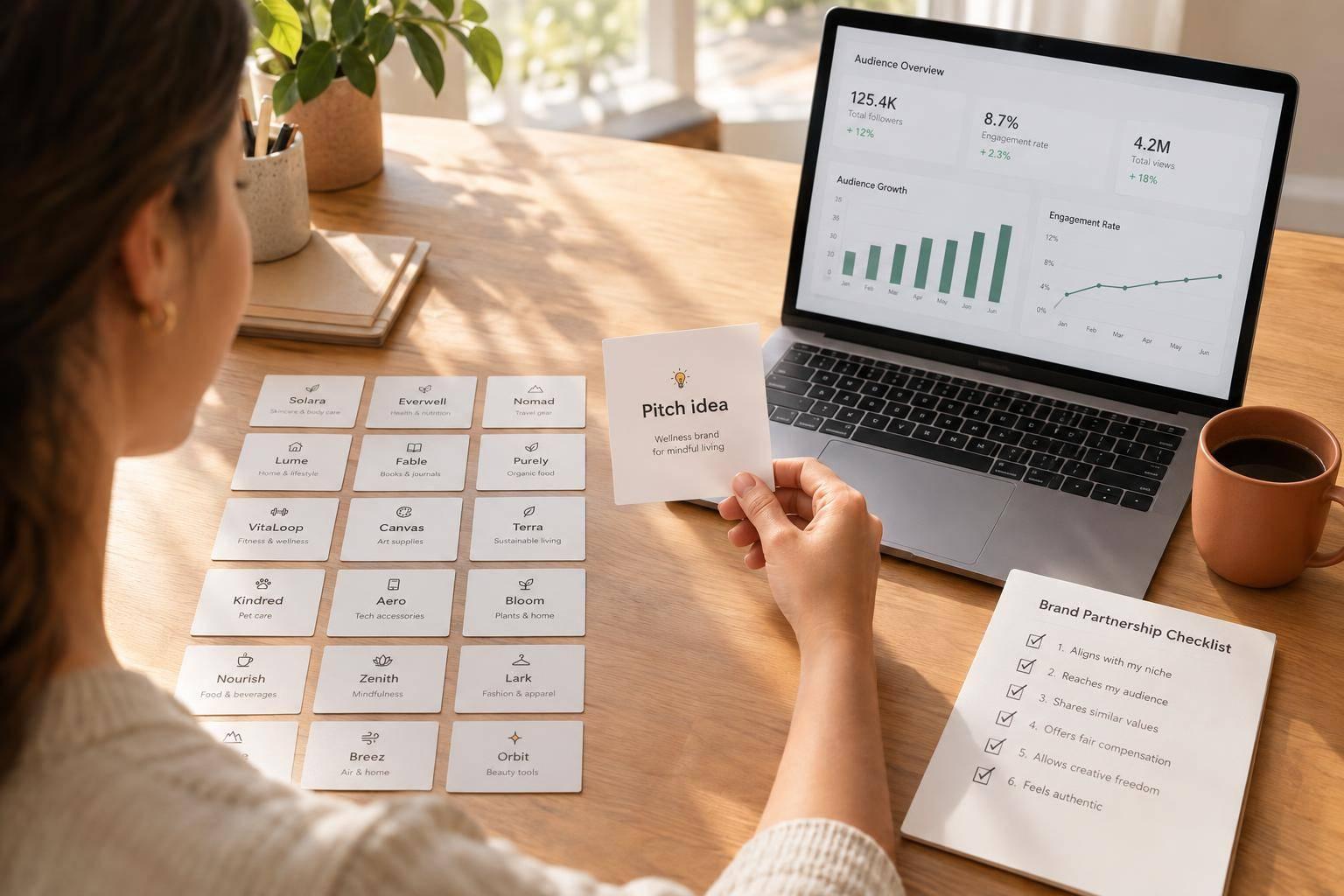
How to Find Brand Deals That Match Your Content
Start with brands that fit your audience, not simply brands that offer payment. Review your last 10–20 posts and 30–90 days of audience data to see which products, topics, and formats fit.
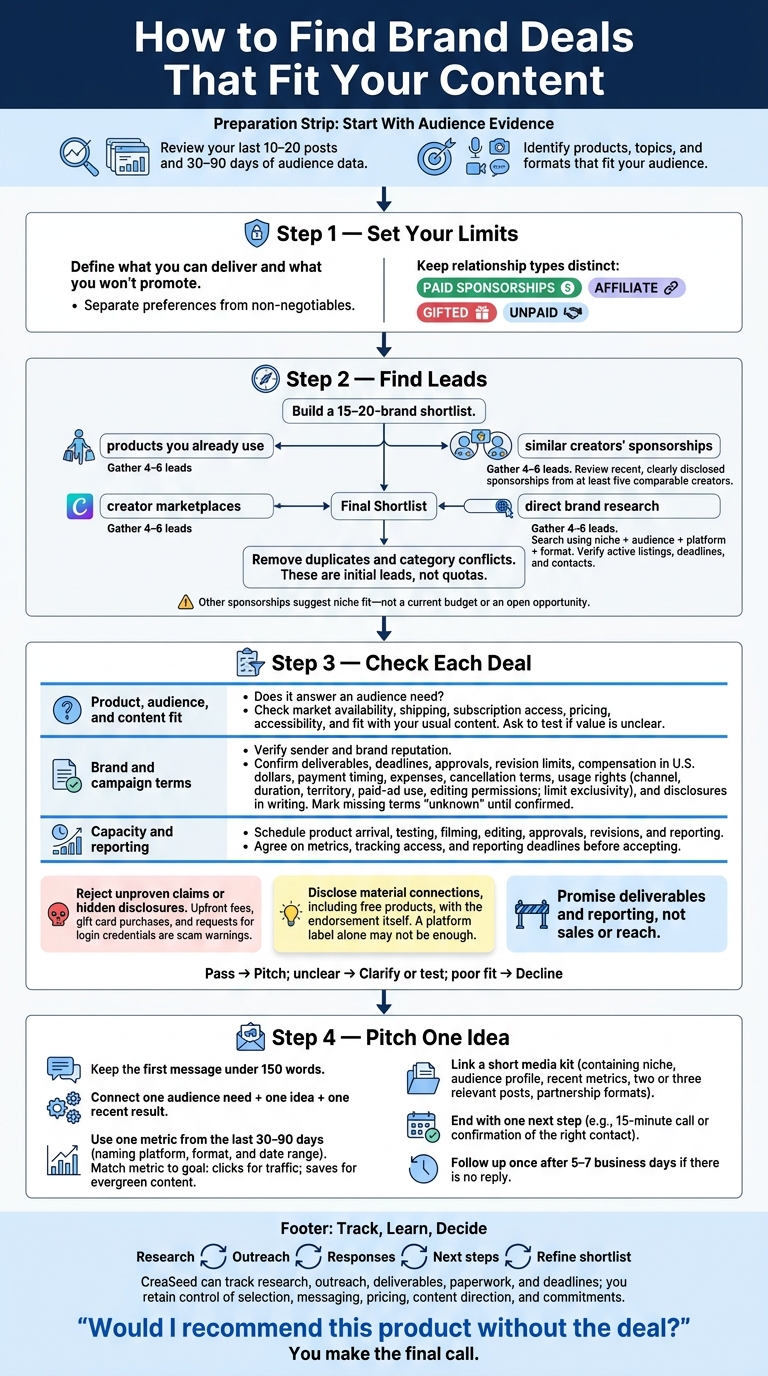
Then I follow four steps:
- Set your limits: Define what you can deliver and what you will not promote.
- Find leads: Build a 15–20-brand shortlist from products you use, similar creators’ sponsorships, campaign listings, and brand websites.
- Check each deal: Review product fit, brand reputation, payment, usage rights, disclosures, and your schedule. Keep paid sponsorships separate from affiliate, gifted, and unpaid offers.
- Pitch one idea: Connect one audience need to one recent result in fewer than 150 words, then follow up once after 5–7 business days.
A tool such as CreaSeed may help surface or organize opportunities, depending on its current setup. Keep the final choice yours: Would you recommend this product without the deal?
Where to Find Brands to Work with as an Influencer | Where Content Creators Find Brands
Find Brands That Match Your Content
Use your partnership profile to build a shortlist of 15–20 brands. Draw from four sources: products you already use, similar creators’ sponsorships, creator marketplaces, and direct brand research. Gather 4–6 leads from each, then remove duplicates and category conflicts.
Start with Products You Already Use
Review your videos, captions, descriptions, tags, storefronts, affiliate links, and disclosures for brands you already feature. Start with products your audience asks about often. Then check each brand’s creator, partnership, ambassador, or affiliate page for an application or contact.
Keep fixed-fee sponsorships separate from commission-only, gifted, and unpaid offers. An affiliate program doesn’t mean the brand has a sponsorship budget. Record whether each relationship is paid, affiliate, gifted, or unpaid so you can label the opportunity correctly.
Add brands that fit your content to the shortlist, then look for signs of active creator campaigns.
Review Similar Creators’ Sponsorships
Review recent, clearly disclosed sponsorships from at least five comparable creators. Record each brand, the creator’s size and audience, the platform, posting frequency, integration format, and campaign concept.
Look for categories that suit your content:
Cooking creators might research cookware and kitchen appliances; fitness creators might explore training apps and recovery equipment.
These sponsorships suggest a niche fit - not a current budget or an open opportunity. Don’t copy other creators’ concepts, and check for category exclusivity before reaching out. Then confirm whether the brand is actively recruiting creators.
Search Campaign Listings and Brand Websites
Search creator marketplaces, platform collaboration tools, brand channels, and professional networks using niche + audience + platform + format. Check that listings are active, record application deadlines, and verify contacts through the brand’s website.
Rank leads in a tracker you choose by niche relevance, audience fit, content style, and past performance. If you use CreaSeed, confirm the current fields and filters support your needs. Keep one record per brand with fit evidence, source, contact, objective, platform, proposed format, deliverables, deadline, compensation, usage rights, exclusivity, status, and next action. Mark missing terms as “unknown” until the brand confirms them.
Screen Each Deal with a Fit Checklist
Once you shortlist a brand, screen the offer before you reply. Use this checklist to turn down poor-fit deals before you pitch.
Check Product, Audience, and Content Fit
Look at audience questions, comments, DMs, and poll responses. Does the product solve a problem your viewers already mention? Check availability in your audience’s main markets, including shipping limits, subscription access, pricing, and accessibility.
The product should fit your usual tone and format without a forced explanation. If its value to your audience isn’t clear, ask to test it before committing.
If it passes the audience check, review the brand and contract terms.
Review the Brand and Campaign Terms
Verify the sender through contact details on the company’s official website. Read product documentation, refund policies, support options, and independent customer feedback. Look for repeated complaints about billing, quality, or privacy.
Ask for evidence to support health, financial, environmental, or performance claims. Reject requests to make unproven claims or hide disclosures. Treat upfront fees, gift card purchases, and requests for login credentials as scam warnings.
Before work starts, confirm these terms in writing:
- Deliverables, deadlines, approvals, and revision limits
- Compensation in U.S. dollars, payment timing, expenses, and cancellation terms
- Usage rights, exclusivity, and disclosure requirements
Spell out usage rights by channel, duration, territory, paid-ad use, and editing permissions. Limit exclusivity to specific categories and dates, and negotiate added rights separately.
FTC guidance calls for clear disclosure of material connections - including free products - with the endorsement itself. A platform label alone may not be enough.[1][2]
Check Your Capacity and Reporting Plan
Map product arrival, testing, filming, editing, approvals, revisions, and reporting against your current schedule. Match the campaign goal to the platform and format that already perform well for similar content.
Agree on metrics, tracking access, and reporting deadlines before accepting. Promise deliverables and reporting, not sales or reach. If the schedule leaves no room for testing or revisions, reduce the deliverables or extend the deadline.
Pitch a Brand That Fits
Once a brand passes your fit checklist, build your pitch around one audience need and one recent result. If you can’t find a clear angle or set a realistic scope, move the brand to a follow-up list. Let the fit evidence guide a focused idea - not a broad request to partner.
Pitch One Idea with Recent Results
Keep your first message under 150 words. Name the product, explain one audience need, and suggest one idea in your usual format. Choose one goal - product education, clicks, or trial sign-ups - but don’t promise results.
Support your pitch with one metric from the last 30 to 90 days. Include the platform, format, and date range. Match the metric to the goal: clicks for traffic pitches and saves for evergreen content.
Link to a short media kit that covers your niche, audience profile, recent metrics, two or three relevant posts, and partnership formats. Check the brand’s website for contact details, then send your pitch to the person handling creator partnerships, influencer marketing, or PR.
End with one next step, such as a 15-minute call or confirmation that you’ve reached the right contact. No reply? Follow up once after 5 to 7 business days. Keep the fit evidence, pitch draft, and outreach tracking in one place.
Use CreaSeed for Creator-Reviewed Workflow Preparation
CreaSeed may support opportunity organization, workflow preparation, and creator-reviewed drafts. Confirm its current setup before relying on it for full outreach, deliverable, paperwork, and follow-up tracking. You remain in charge of brand selection, messaging, pricing, content direction, and commitments.
Before you send, check audience fit, the idea, deliverables, current metrics, contact details, compensation assumptions, and the next step. Record both the send date and follow-up date.
When a reply comes in, use the workflow to flag missing brief details and track tasks - not to accept terms without reviewing them.
Conclusion: Check Fit Before You Pitch
Build a focused shortlist instead of sending bulk outreach. Choose only brands that pass your fit checklist.
Check product relevance, audience need, content style, brand reputation, and realistic campaign terms. Separate preferences from non-negotiables: a bigger budget shouldn’t sway you toward a product you can’t honestly recommend. Send each best-fit brand one pitch idea.
Use response patterns to shape your next shortlist. Keep a decision log in a tracker you use, with outreach, responses, and next steps. Review it to see which categories and angles get replies without lowering your standards. You make the final call.
FAQ
Can I Land Brand Deals with a Small Audience?
Yes. Small creators can land brand deals by showing how their audience and content fit the brand, making a focused, realistic outreach request, and backing it up with evidence from recent content.
Start with a few brands already working with creators in your category. Their products should meet your audience’s needs and fit the content you can make. If you can’t explain that fit in 1–2 sentences, the opportunity is probably too weak.
How Do I Price a Niche Brand Partnership?
Before you discuss rates, make sure the opportunity fits your niche, audience, and brand. Finding and vetting opportunities is one task. Setting your price is a separate business decision.
When pricing the work, weigh production complexity, content volume, exclusivity requirements, and usage rights. Personally approve all financial terms, and agree on deliverables, timelines, and payment before committing to the partnership.
How Can I Test Sponsored Content Without Losing Audience Trust?
Before you apply or reply to an opportunity, check niche fit, audience fit, and brand fit. Does the partnership feel natural? Would your audience find the product useful? Would you feel comfortable featuring the brand alongside your current content?
Focus on products that fit your routines or content themes. Personally review and approve every commercial commitment and outgoing message so each reflects your brand’s voice and values.