Net 0 Payment Terms: What They Mean for a Collaboration
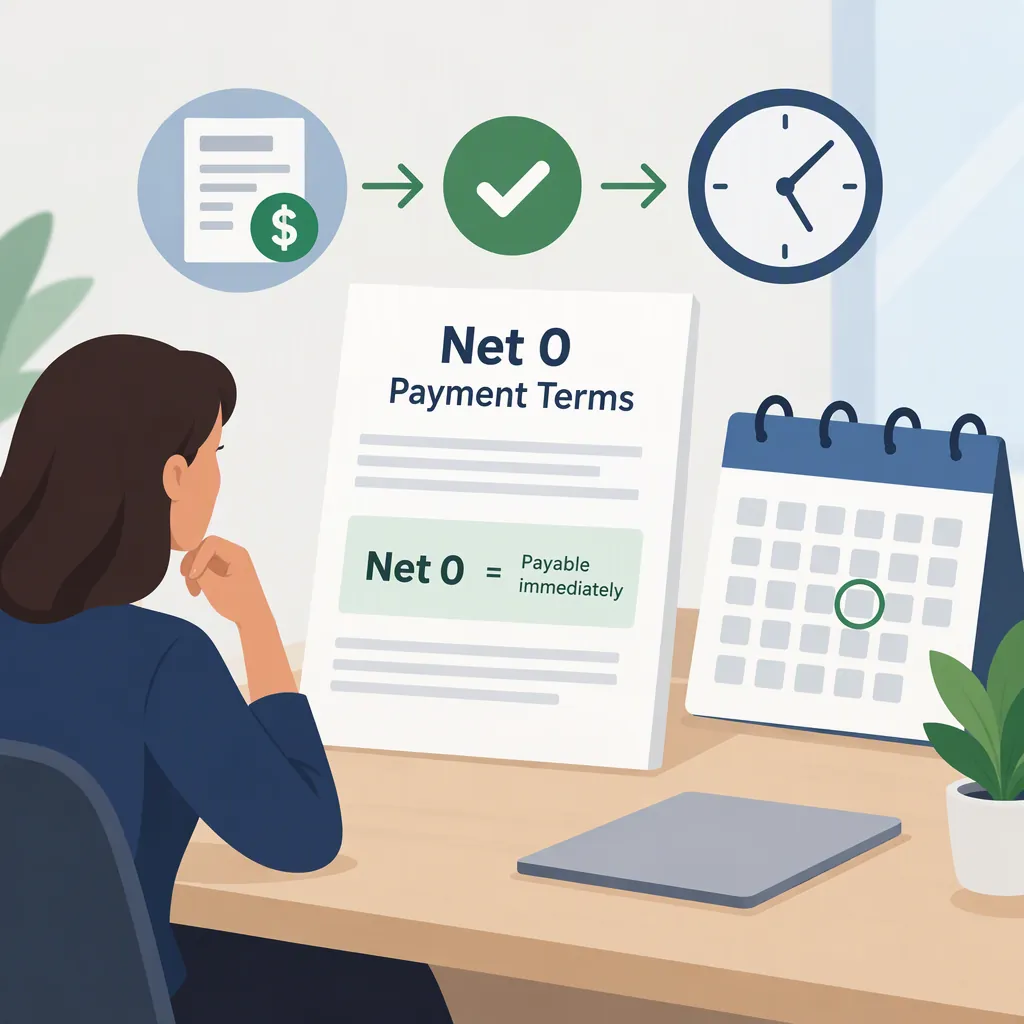
Net 0 payment terms mean no additional days to pay after the agreed starting event. If that event is invoice receipt, payment is due upon receipt; if it is approval, payment is due at approval. This interpretation follows the net-days convention, rather than an explicit Net 0 definition in the provided sources. The agreement should identify the trigger and actual due date. [c1] [c2]
What Net 0 Means
Net terms express the number of days allowed for payment after an agreed starting event. Invoicera explains that Net 15 generally means the full invoice amount is due 15 days after that event, with Net 30 and Net 60 following the same pattern. Applying that convention to zero days gives Net 0: no added payment window. [c1]
The provided references explain net terms and immediate payment, but do not explicitly define Net 0. Treat the label as shorthand that needs a written explanation, not as a complete payment clause.
For a creator, freelancer, agency, or other collaboration, the key question is “Zero days after what?” An invoice date, invoice receipt, deliverable acceptance, or another agreed event can produce different deadlines. The starting event must be explicit. [c1]
Net 0 Vs. Due Upon Receipt and Advance Payment
| Wording | Payment Timing |
|---|---|
| Net 0 from invoice receipt | No added days after receipt; aligns with due upon receipt. |
| Net 0 from invoice date | No added days after the stated invoice date. |
| Net 30 from invoice date | Payment is due within 30 days of the invoice date. |
| Due upon receipt | Payment is expected immediately when the invoice is received. |
| Payment in advance | Payment is required before work begins. |
Resolve defines due upon receipt as immediate payment when the customer receives the invoice and cash in advance as payment before work begins. These are different triggers. Net 0 is therefore not automatically an advance-payment requirement. [c2]
The Net 0 rows above illustrate the net-days interpretation; they are not quoted source definitions. Specify the trigger rather than assuming these labels are interchangeable.
Clarify the Trigger Before Work Starts
For a collaboration, use the following checklist to make a proposed Net 0 arrangement understandable:
- Amount: Identify the fee, currency, and any separately agreed charges.
- Trigger: State whether payment becomes due on invoice receipt, delivery, written acceptance, or another event.
- Approval: If acceptance is the trigger, define the review process and approval deadline separately.
- Due Date: Show the resulting date on the invoice instead of relying only on “Net 0.”
- Payment Method: Specify how payment should be made.
- Completion Standard: Clarify whether timely payment means initiation or receipt of funds.
- Exceptions: Define any weekend, holiday, or approved-extension rule.
This is a drafting checklist, not a claim that every collaboration uses these conditions. Invoicera recommends defining the starting event, showing the calculated due date, and preserving approved exceptions. Resolve distinguishes payment terms—when payment is due—from payment methods—how it is paid. [c1] [c2]
If the payer needs an internal review before payment, describe where that review fits. “Net 0 after approval” does not itself provide an approval deadline; adding one makes the proposed schedule clearer.
Illustrative Net 0 Payment Block
Payment terms: Net 0, meaning payment is due on receipt of the invoice.
Invoice receipt event: [agreed delivery channel and receipt rule].
Amount and currency: [amount and currency].
Due date: [date determined under the agreed receipt rule].
Accepted payment method: [method].
Payment is considered completed when: [agreed initiation or funds-receipt standard].
Weekend and holiday rule: [agreed rule].
Approval or acceptance requirements, if any: [separate requirements and deadline].

Drafting aid only. Fill in the brackets and check consistency with the governing agreement.
A Due Date Is Not Proof of Payment
Net 0 describes a deadline; it does not establish that delivery, acceptance, or payment has occurred. Invoicera explicitly distinguishes payment timing from evidence of those events. [c1]
If payment appears overdue, first check the agreed trigger, invoice delivery, current due date, payment status, and any dispute or approved change. Follow-up should use the current approved date while preserving the original terms and the reason for an amendment. [c1]
Do not read an automatic late fee into “Net 0.” Any proposed fee policy needs separate wording and a check against applicable rules. Resolve notes that commercial late-fee requirements and limits vary by jurisdiction. This article explains terminology, not the legal enforceability of a particular agreement. [c2]
FAQ
Does Net 0 Mean Same-Day Payment?
Under the zero-day interpretation, payment is due on the date of the agreed trigger. That might be the invoice date or receipt date. The label alone does not define whether payment initiation or receipt of funds satisfies the deadline, so state that separately. The sources support the net-days convention but do not explicitly define Net 0. [c1]
Does Net 0 Require Payment Before Deliverables Are Sent?
Not by itself. Timing depends on the agreed trigger. If payment must occur before work begins, use explicit advance-payment wording; Resolve defines cash in advance that way. If payment is due before deliverables are released, state that condition directly rather than relying only on Net 0. [c2]
Can the Parties Change Net 0 to a Longer Payment Term?
They can agree to an amendment. Record the original term, revised due date, reason, and approval rather than silently replacing the invoice history. Use the approved current date for reminders and follow-up. [c1]