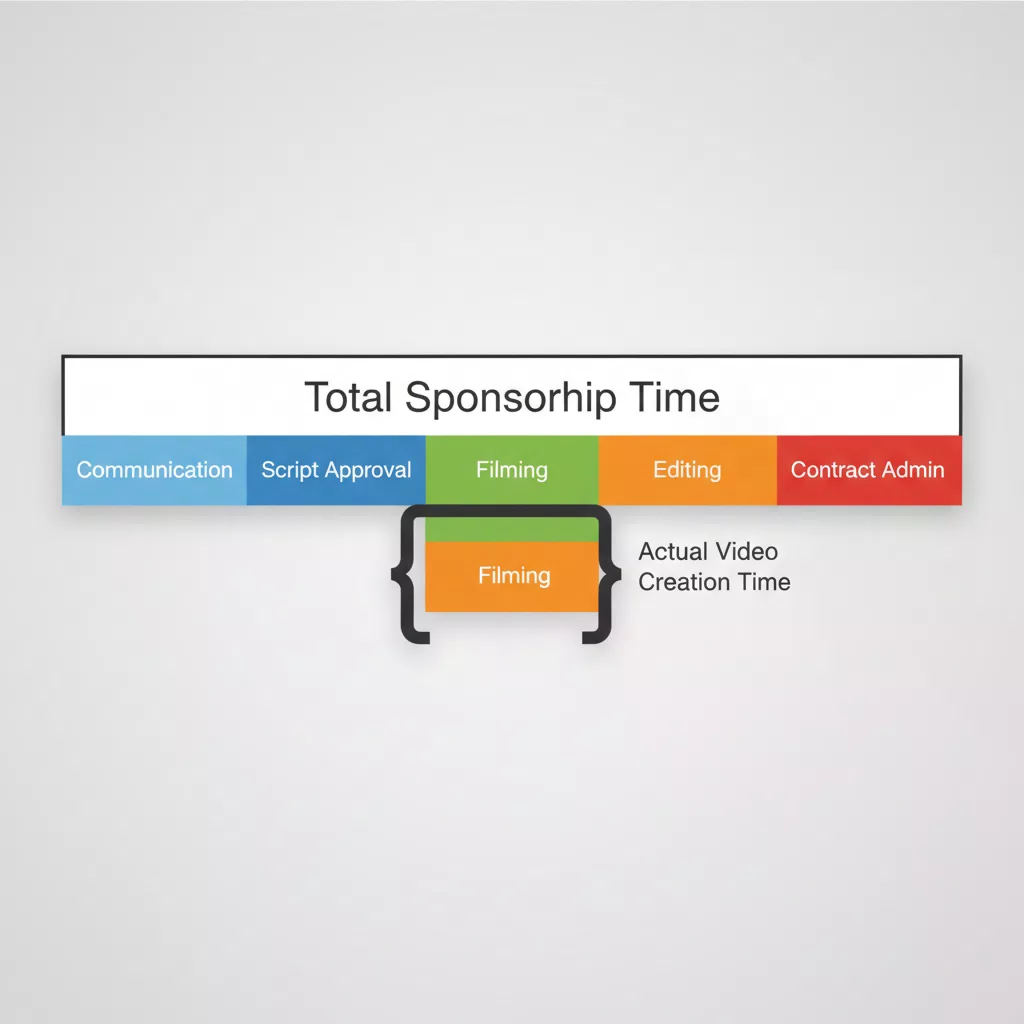
What to Stop Selling in 2027: Review Low-Margin Sponsorship Work
A one-off brand integration can take more time than its payout justifies.
To stop selling low-margin sponsorship work by 2027, you need to audit past brand deals using your effective hourly rate, cut high-revision product categories, and replace single posts with structured retainer packages. Track the actual hours spent on emails, revisions, and administration to compare deal formats using your own records.
Here is a quick look at how traditional one-off deals compare to high-margin retainer packages:
Quick Comparison: Sponsorship Formats
| Deal Format | Admin & Production Effort | Revision Friction | Income Stability |
|---|---|---|---|
| One-Off Integration | Depends on brief and client history | Depends on the agreed revision scope | One-time payout |
| Multi-Month Retainer | Depends on ongoing deliverables | Depends on the agreed revision scope | Recurring payments if the contract is fulfilled |
Here are the four key actions to streamline your brand operations:
- Audit effective hourly rates: Track every hour spent on communication, filming, and edits to find your real earnings per deal.
- Eliminate high-friction categories: Stop working with brand niches that demand endless approval loops.
- Shift to retainer packages: Stop selling standalone reviews and focus on recurring, cross-platform deliverables.
- Cap monthly inventory: Set strict limits on sponsored slots to protect content quality and channel reach.
Let’s dive into how you can review your past collaboration records and set up a profitable strategy for 2027.
Audit Sponsorship Margins Using the Effective Hourly Rate Method
Most creators look at a $1,500 payout and assume it is a great deal. That is a dangerous trap.
If a $1,500 integration takes you 30 hours of total work across three weeks, your true earnings are only $50 per hour. Meanwhile, a $600 deal that takes just two hours yields $300 per hour. To build a profitable business for 2027, you must stop measuring success by gross deal size and start evaluating your effective hourly rate.
Calculate Real Time Invested per Deliverable
When calculating your time, do not just count the minutes you spend filming or editing.
You need to track every single minute spent on:
- Reading and responding to brand emails
- Participating in onboarding or strategy calls
- Drafting scripts and waiting for compliance approvals
- Re-filming cuts due to strict legal guidelines
- Invoicing, contract administration, and payment chasing
For an illustrative example: Imagine you secure a $2,000 YouTube integration. You spend 4 hours filming and editing. But you also spend 3 hours in email threads, 2 hours re-writing scripts to satisfy legal claims, 4 hours re-shooting footage after feedback, and 1 hour on invoicing. Your total invested time isn't 4 hours—it is 14 hours.
To calculate your actual return, divide the total net payout by the total hours spent from initial pitch to final invoice payment.
Identify Low-Margin Deal Formats
Not all deliverables are created equal. Some formats look lucrative on paper but collapse under administrative weight.
Look back over your last 12 months of brand deals. Group your deliverables by format to see which ones consistently drag down your hourly earnings.
Here is an illustrative worksheet comparing how different deal formats perform when accounting for hidden administrative overhead:
| Deal Deliverable Format | Gross Fee (Illustrative) | Direct Production Hours | Admin & Revision Hours | Total Hours | Effective Hourly Rate |
|---|---|---|---|---|---|
| Dedicated Multi-Cut Short-Form Reel | $1,200 | 4 hrs | 8 hrs | 12 hrs | $100 / hr |
| 60-Second In-Feed YouTube Integration | $2,500 | 5 hrs | 3 hrs | 8 hrs | $312.50 / hr |
| 3-Month Multi-Channel Retainer | $9,000 | 18 hrs | 6 hrs | 24 hrs | $375 / hr |
Notice how the dedicated short-form video generated the lowest effective rate because of back-and-forth revision rounds, despite taking fewer production hours than a longer YouTube integration.
Analyze Historic Brand Category Performance
Beyond deal formats, brand categories heavily dictate your friction level. Certain industries carry intense legal compliance, micro-management tendencies, or strict brand safety requirements that double your approval timelines.
Map Revision Cycles by Product Category
Review your past collaboration history and categorize every brand you worked with over the last year. Count the exact number of revision rounds required before final sign-off.
Categories like heavily regulated skincare, financial apps, or supplement brands often require multi-tiered legal reviews. A single claim can trigger three rounds of script edits. On the flip side, direct-to-consumer lifestyle, productivity tools, or gaming hardware brands often approve assets after a single light review.
If a specific product category routinely demands more than two revision cycles, you must either double your pricing for that category or cut it entirely from your 2027 strategy.
Evaluate Audience Retention and Engagement Impact
Hidden costs are not limited to your calendar—they also hit your analytics.
Some brand integrations feel so forced that they damage your viewer retention graphs or cause follower drop-off. Check your video retention charts at the exact timestamp where sponsored integrations begin:
- If viewer drop-off spikes by more than 15% during a specific product integration, that category is actively hurting your reach.
- Lower overall channel reach directly reduces the market value of future organic and sponsored uploads.
When a brand niche disrupts your core content flow, the long-term audience decay costs far more than the short-term sponsorship fee.
Transition from One-Off Posts to Retainer Packages
To scale your earnings without working 80 hours a week, you must phase out one-off sales and sell long-term partnerships.
Phase Out High-Effort Single Deliverables
Single-video sponsorships are inherently inefficient. You spend hours negotiating contracts, getting onboarded to brand guidelines, and establishing communication channels—all for a single payout.
Starting in 2027, stop selling standalone reviews or one-off dedicated posts to new clients. If a brand wants a single post, charge a steep single-deliverable premium or direct them toward a multi-post package.
Example Transition Rule: Single-post integrations require 100% of the same contract and onboarding overhead as a quarterly campaign. Require a 40% single-deliverable surcharge on all one-off requests to incentivize brands to commit to multi-month packages.
Structure High-Margin Retainer Packages
Instead of piecemeal deliverables, offer structured quarterly or annual retainer packages.
A high-margin retainer bundles consistent organic mentions across multiple touchpoints over time. For example, an illustrative 3-month retainer could include one YouTube integration per month, two supporting short-form videos, and separately priced usage rights for paid ad amplification.
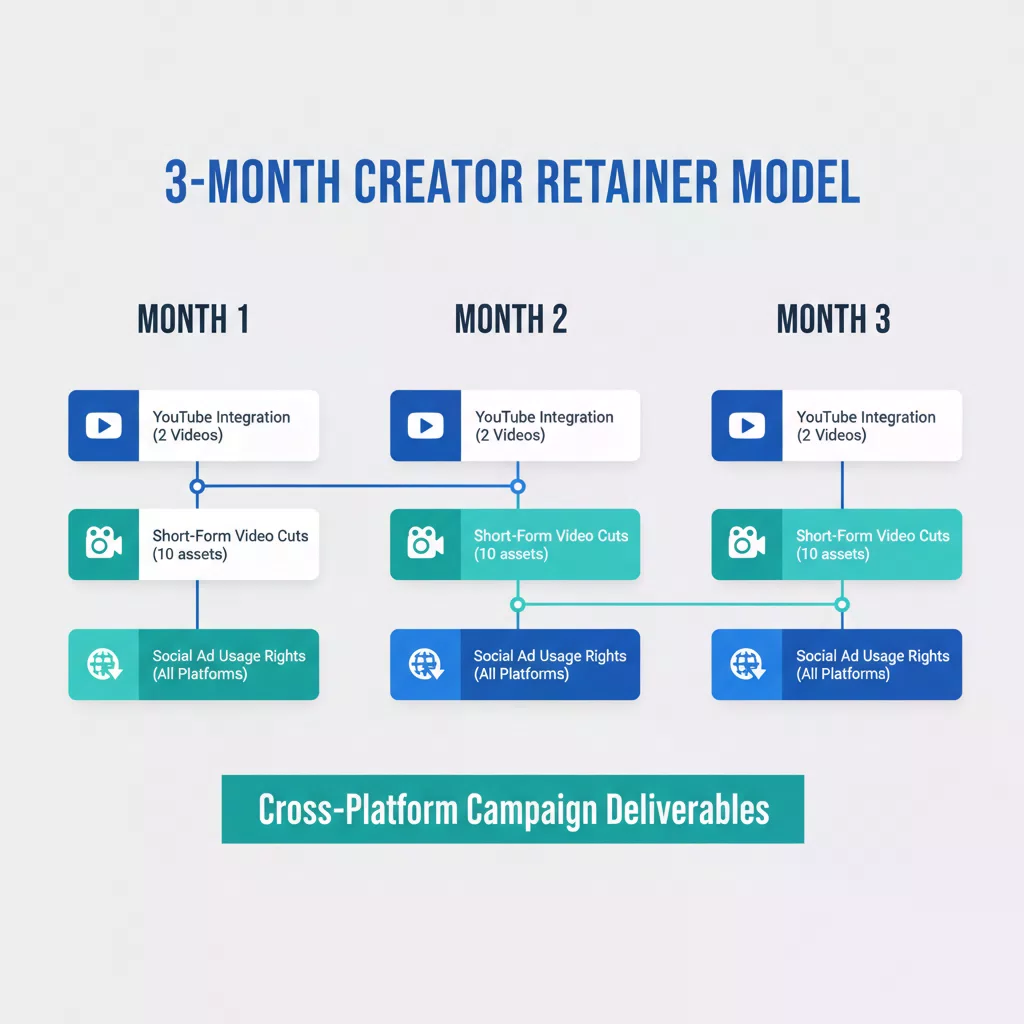
Retainers benefit both sides:
- For brands: Better conversion performance because audience exposure builds trust over time.
- For creators: Drastically lower onboarding friction, guaranteed recurring revenue, and streamlined production batching.
Build a 2027 Sponsorship Pipeline and Reservation Model
To avoid burnout and preserve content quality, treat your sponsorship slots like flight seats: limited, highly valuable, and strictly controlled.
Cap Monthly Sponsorship Capacity
Establish a strict monthly sponsorship limit. For example, if you publish eight videos a month, cap your sponsored integrations at no more than two per month.
Capping your available inventory creates natural scarcity. When brands know you only accept two sponsors per month, your pricing leverage increases, and your channel remains authentic to your core audience.
Set Outbound Lead Qualification Filters
Before accepting an inbound inquiry or reaching out to prospective sponsors for 2027, screen every opportunity against strict criteria.
Filter leads using these four qualification questions:
- Minimum Budget Floor: Does the campaign meet your minimum retainer threshold?
- Revision Terms: Is the brand agreeing to a maximum of one draft review with a 48-hour turn-around window?
- Category Alignment: Does the product fit seamlessly into your existing content workflow without tanking retention?
- Deliverable Scope: Does the contract require exclusive rights or broad usage rights that restrict future deals?
Example Outbound Screening Response Wording: Thanks for reaching out! We are currently locking in our Q1 2027 brand partners. To maintain the highest quality for our audience, our minimum partnership commitment starts at a 3-month retainer package. If your campaign budget aligns with structured multi-post packages, we would love to review your brief!
Key Takeaways for Streamlining 2027 Brand Operations
Streamlining your business before 2027 is not about working harder—it is about cutting low-margin noise.
Here is your quick roadmap to transform your sponsorship operations:
- Calculate your true hourly rate: Include every email, revision call, and administrative task to find your real earnings.
- Eliminate high-revision categories: Drop brand niches that drag you into multi-round compliance approvals.
- Sell retainers, not posts: Shift all outreach away from single one-off integrations to multi-month recurring packages.
- Cap your monthly inventory: Limit sponsored slots to maintain content health and create pricing leverage.
By focusing on high-margin retainers and setting firm boundaries, you can build a predictable, highly profitable creator business for 2027.
FAQ
How Do I Calculate My Effective Hourly Rate If I Haven't Tracked Time Previously?
Review your past calendar entries, email threads, and video output for three recent deals. Estimate the exact hours spent on communications, script revisions, filming, editing, and invoicing, then divide your payout by those estimated total hours.
How Do I Pitch Multi-Month Retainers to Brands Used to Buying Single Posts?
Explain to brands that repetitive exposure across multiple videos builds audience trust and drives significantly higher conversion rates than a single high-friction post.