TikTok Creator Marketplace Vs. Direct Email: How to Inspect Inbound Briefs and Spot Fake Invites
Evaluating an inbound brand deal safely comes down to one crucial step: verifying the sender and brief details before signing a contract or handing over usage rights.
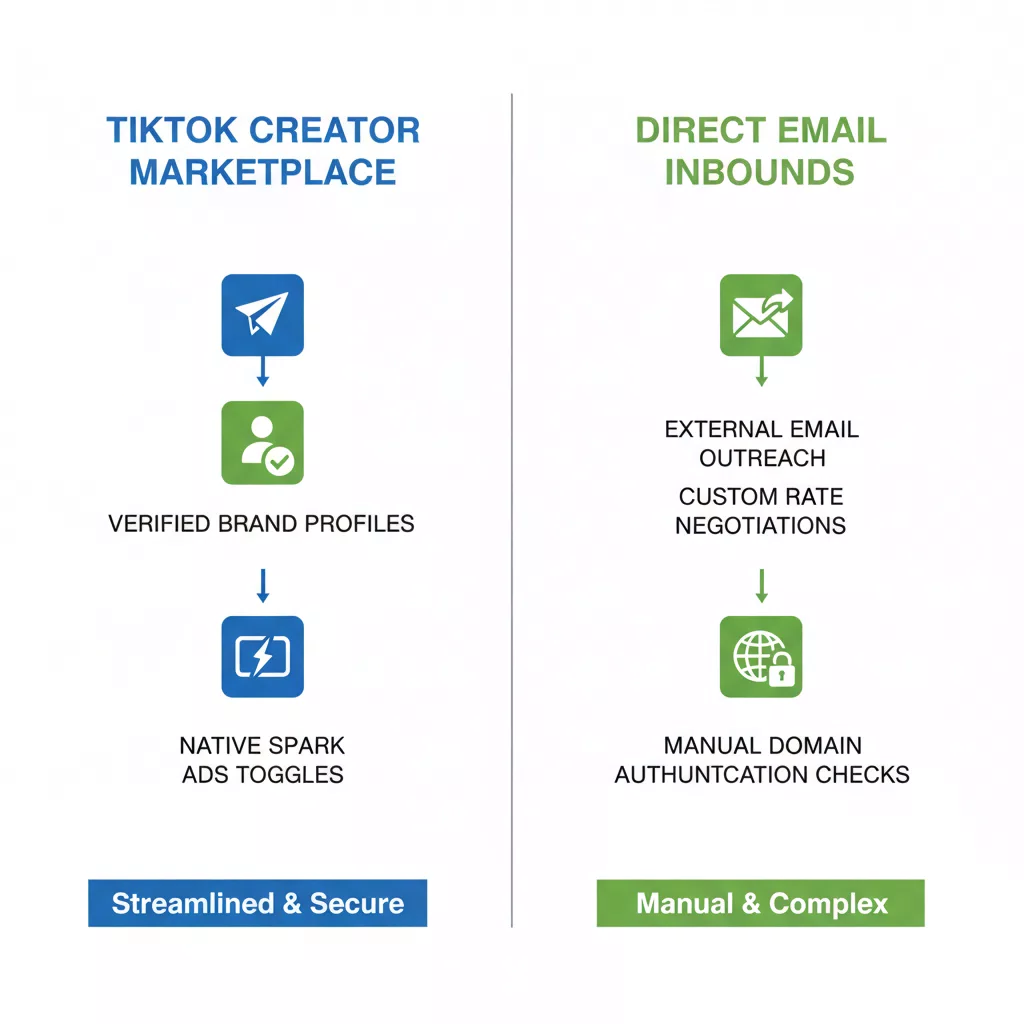
TikTok Creator Marketplace (TTCM) provides built-in brand verification and standardized campaign workflows, though it limits your pricing flexibility. Direct email outreach allows you to negotiate custom deliverables and higher rates, but it carries an elevated risk of phishing scams, fake portals, and vague contract terms.
Quick Comparison: Ttcm Vs. Direct Email Inbounds
| Feature / Criteria | TikTok Creator Marketplace (TTCM) | Direct Email Inbound |
|---|---|---|
| Sender Verification | Built-in (Platform-verified brand accounts) | Manual check required (SPF/DKIM headers & LinkedIn) |
| Rate Flexibility | Standardized / Platform-guided | High (Full negotiation for custom deliverables) |
| Phishing & Scam Risk | Very Low (Native in-app messages) | High (Potential executable files or fake login portals) |
| Usage Rights & Spark Ads | Automated native authorizations | Requires explicit custom contract clauses |
| Payout Security | Native platform tracking | Depends on upfront deposits and net payment terms |
Whether an offer arrives inside TikTok or directly in your inbox, auditing the sender's identity and contract terms protects your channel and your revenue. Here is how to inspect every inbound brief step-by-step.
Channel Breakdown: TikTok Creator Marketplace Vs. Direct Email Inbounds
TikTok Creator Marketplace Inbound Workflow
When an offer lands inside TikTok Creator Marketplace (TTCM), TikTok handles the heavy lifting of identity verification. You get direct messages from verified brand profiles, structured briefs, and clear deliverable deadlines.
Managing Spark Ads permissions is built right into the app workflow. You do not need to generate custom ad codes or paste raw keys into third-party forms. Instead, you simply toggle access directly within TikTok when uploading your approved asset.
The main trade-off? Platform workflows follow rigid pricing guidelines and standardized terms. While this keeps transactions safe, it can cap your earnings if your rate card exceeds standard marketplace baselines.
Direct Email Inbound Workflow
Direct email inbounds give you maximum control over your rate and deliverable package. For example, if a brand approaches tech creator Alex for an illustrative $2,000 campaign involving 1 TikTok video and 30 days of paid usage, email gives Alex the flexibility to charge extra for script revisions or rush delivery.
However, direct email outreach operates completely outside TikTok's ecosystem. Anyone can buy a domain name, put a corporate logo in an email signature, and pretend to represent a major brand.
Without platform escrow, you assume full responsibility for auditing the client, drafting legal agreements, and securing payment deposits before publishing content.
How to Inspect Inbound Briefs and Spot Fake Invites
Verifying Email Sender Identity and Domain Records
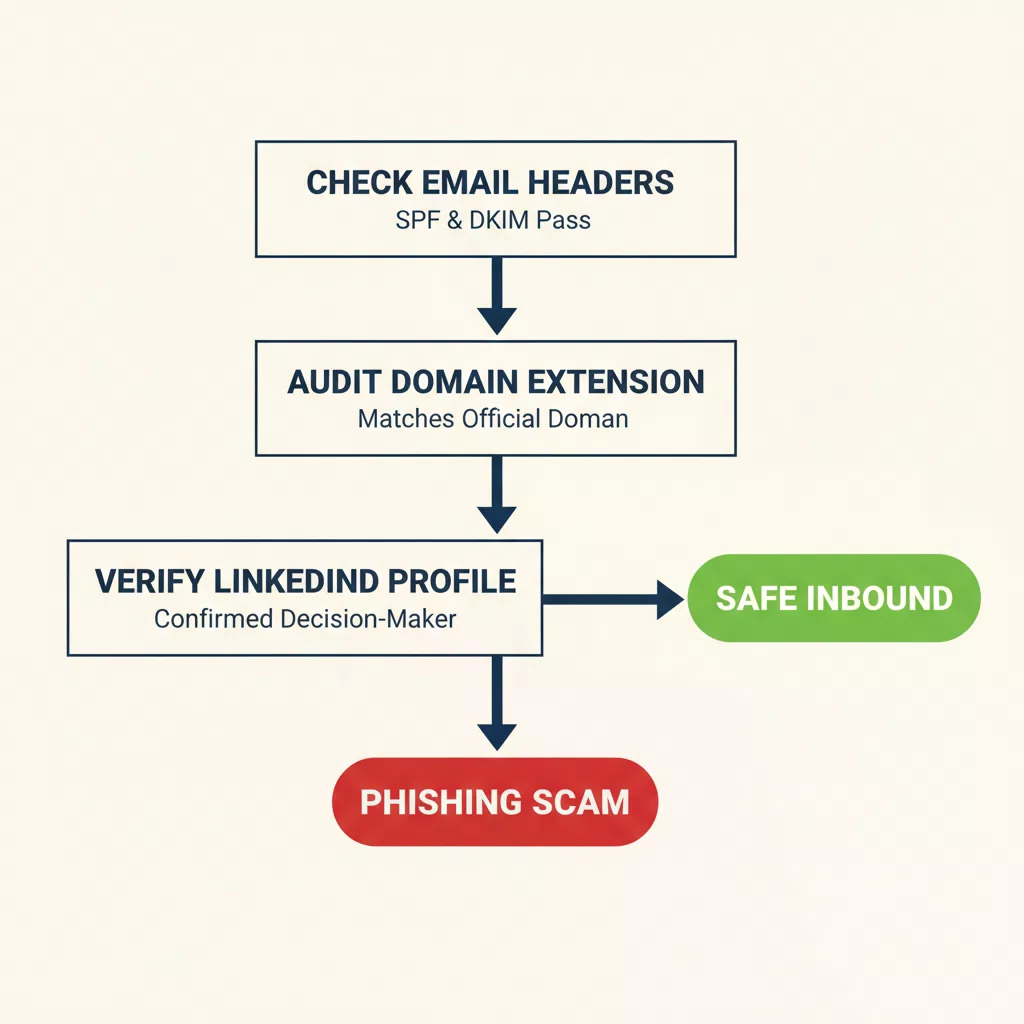
Scammers frequently impersonate public relations agencies and corporate brand managers. Before responding to a high-paying offer, inspect the sender's raw email headers to verify their domain records.
Look specifically at the DKIM alignment and SPF authentication entries in your email client. If an email claims to come from nike.com but the underlying sender domain is nike-campaigns-agency.net, treat the message as a scam.
Sample Sender Verification Request: "Hi [Sender Name], thanks for reaching out regarding the illustrative $2,000 campaign brief. To verify this outreach for our internal security records, please send a quick confirmation message from your corporate profile on [Brand]'s official LinkedIn company page or re-send the brief directly from a main corporate email address."
Next, cross-reference the sender on LinkedIn. A real PR representative will have a visible work history, connections in your industry, and an active corporate profile.
Identifying Phishing Scams and Malicious File Attachments
Fake brand invites often lure creators with attractive payouts, such as our illustrative $2,000 fee for a single post, but hide malicious code inside attached campaign files.
Watch out for these high-risk attachment patterns:
- Password-protected ZIP archives: Scammers use passwords so email security scanners cannot inspect the hidden files inside.
- Executable files: Real brand briefs arrive as standard PDFs or Google Docs. Never open files ending in .exe, .scr, .bat, or .iso.
- Fake portal login links: Be suspicious of links requiring you to log into your TikTok, Instagram, or Google account to "view the brand guidelines."
If a brand demands that you log in or download an archive file just to view a brief, delete the email immediately.
Comparing Key Contract Terms: Ttcm Vs. Direct Email
Exclusivity Clauses and Paid Usage Rights
When reviewing a contract outside TTCM, paid usage rights can turn a profitable deal into a financial trap.
Organic posting rights only allow you to post the video on your own feed. Paid usage rights grant the brand permission to run your content as paid ads. If a brand wants 30-day Spark Ads usage in our illustrative $2,000 scenario, ensure the contract limits ad usage strictly to those 30 days.
Pay close attention to competitor exclusivity windows. A clause restricting you from working with any tech brand for 12 months limits your future revenue potential far beyond the value of a single deal.
Payment Schedules, Revision Limits, and Payout Security
In direct email deals, standard invoice terms often default to Net-30 or Net-60, meaning you wait 30 to 60 days after publishing before receiving funds.
To protect your business against non-payment:
- Require an upfront deposit: Ask for a 50% deposit before filming begins, with the remaining 50% balance paid upon final draft approval before posting.
- Cap script revisions: Limit free script and video edits to 2 revision rounds. Charge an hourly or flat fee for additional edits.
- Avoid performance-only payouts: Do not agree to replace guaranteed flat fees with affiliate links unless that was the original agreed arrangement.
| Contract Clause | Red Flag Warning | Safe Industry Standard | Action Needed |
|---|---|---|---|
| Paid Usage Rights | Perpetual worldwide usage rights for flat fee | 30 to 90-day limited usage rights with defined budget cap | Set a firm end date or charge additional monthly licensing fees. |
| Payment Schedule | Net-90 terms or payment tied to brand sales goals | 50% upfront deposit with Net-30 balance after posting | Require upfront deposit and clear invoice due dates. |
| Deliverable Revisions | Unlimited edits until brand client is satisfied | Maximum 2 revision rounds for script and rough cut | Add explicit fees for third and subsequent edit requests. |
| File Format Delivery | Password-protected archive containing script scripts | PDF brief hosted on official drive or attached directly | Refuse executable downloads; request standard PDF documents. |
Five-Step Audit Framework for Inbound Creator Campaigns
Follow this quick checklist every time an inbound sponsorship offer hits your inbox:
- Header Check: Verify that sender domain headers pass SPF and DKIM authentication.
- Identity Verification: Confirm the sender's role on LinkedIn or through an official corporate email.
- Asset Safety: Ensure briefs arrive as standard PDFs or viewable cloud links—never executable files or password-protected archives.
- Scope & Rights Audit: Confirm posting dates, usage authorization caps (e.g., 30-day limit), and exclusivity rules.
- Payment Terms: Secure a 50% deposit and lock in Net-30 maximum payment windows before delivering final files.
Conclusion: Essential Points for Safe Inbound Sponsorship Evaluation
Evaluating inbound briefs boils down to protecting your channel while maintaining direct control over your deal value.
While TikTok Creator Marketplace offers safe, automated campaign tools, direct email opens doors to higher rates when backed by direct domain verification, clear usage rights, and strict payment terms. Audit every offer before you sign, and your creator business will stay protected and profitable.
FAQ
Is TikTok Creator Marketplace Safer than Direct Email for Brand Deals?
Yes. TTCM provides platform-verified brand accounts, native in-app messaging, and automated Spark Ads authorization, making phishing scams and contract fraud significantly less likely than via direct email.
What Should I Do If a Brand Sends a Password-Protected Zip File for a Brief?
Do not extract or open password-protected archive files. Ask the representative to re-send the brief as an unencrypted PDF file or a viewable Google Drive link, as archive passwords bypass standard email antivirus scans.