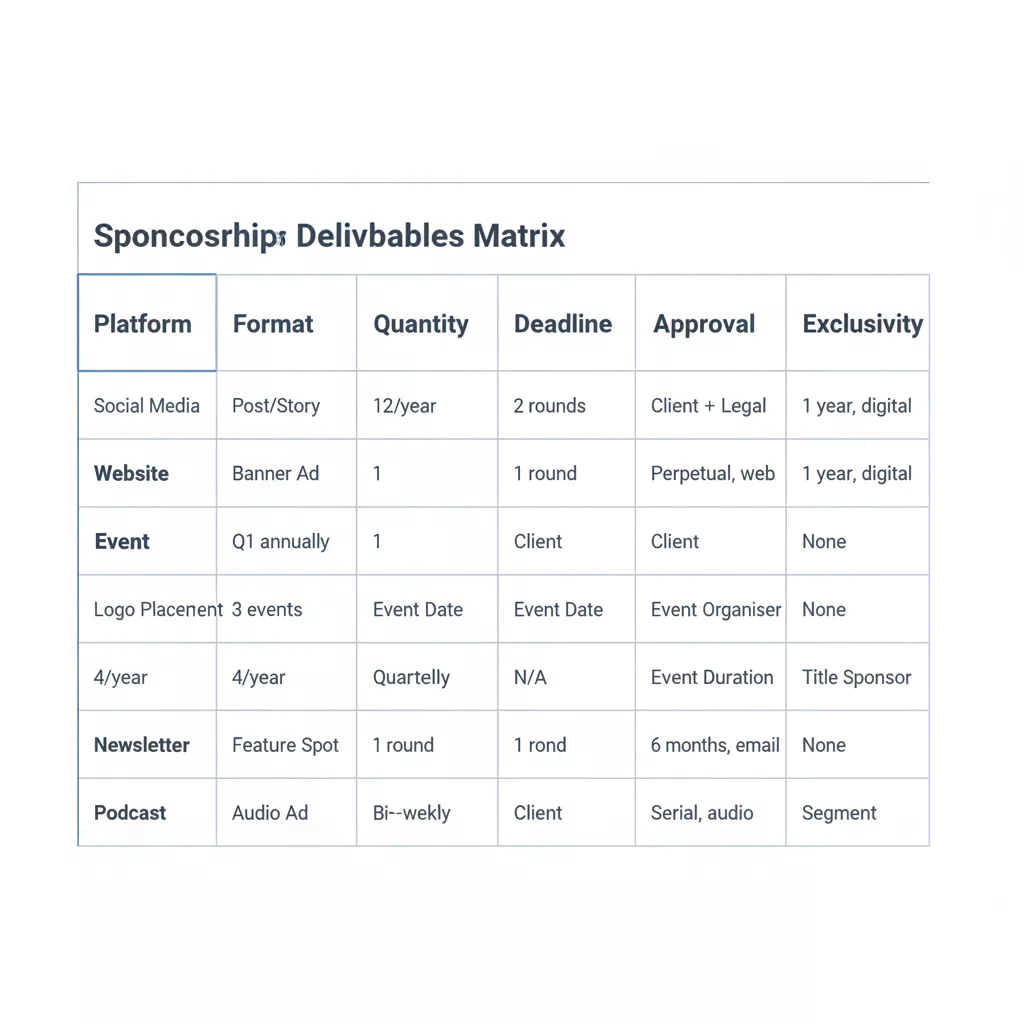
Sponsorship Deliverables Matrix: Turn a Brand Email into a Scoped Offer
When a brand emails you with a vague offer like “$500 for a video,” accepting it right away usually leads to unpaid extra work, endless edits, and lost revenue.
The fix? A sponsorship deliverables matrix.
A sponsorship deliverables matrix turns ambiguous brand emails into structured, accurately priced counteroffers. By defining exact parameters upfront, you stop scope creep before it starts and protect your earnings.
Every solid sponsorship matrix includes these 8 core fields:
- Platform: Where the content will be posted (e.g., TikTok, Instagram, YouTube)
- Format: The exact content type (e.g., 60-second integration, dedicated Reel)
- Quantity: The total number of assets
- Delivery Deadline: Clear dates for initial drafts and final publishing
- Revision Limits: The maximum number of included edit rounds (e.g., 1 round of minor edits)
- Approval Window: The time frame a brand has to review drafts before automatic approval
- Usage Rights: How long and where the brand can run your video as an ad (e.g., 30-day organic vs. paid digital rights)
- Exclusivity: Specific category and duration limits on working with direct competitors
Here is how to deconstruct a vague brand email, map it into a deliverables matrix, and calculate a profitable counteroffer step by step.
The Sponsorship Deliverables Matrix Framework
Accepting a deal without defined boundaries is the fastest way to turn a quick video project into weeks of unpaid revisions. A sponsorship matrix acts as your contract blueprint before formal paperwork is drawn up.
Core Fields Required in Every Matrix
When you map every inquiry into a matrix, you immediately uncover missing terms that usually cause scope creep.
By defining limits on revision rounds, approval turnaround, and ad usage upfront, you maintain total control over your schedule and pricing structure.
Step-By-Step: Converting a Vague Brand Email into a Scoped Counteroffer
Let's walk through a realistic scenario to see how this works in practice.
Deconstructing a Sample Inbound Sponsorship Inquiry
Imagine receiving this short email in your inbox:
Illustrative Brand Email: "Hey Sarah! We love your channel and think you'd be a great fit for our launch. We have a $500 budget for a video and usage rights. Let us know if you're interested so we can send the product!"
At first glance, $500 sounds easy for a quick integration. But look closely at what is missing:
- Which platform and format? Is it a 60-second YouTube integration or a dedicated TikTok video?
- What does "usage rights" mean? Are they asking for organic reposts, or full digital ad rights?
- How many edits are expected? Without limits, they could request five complete re-shoots.
If you accept this offer as written, the brand could run your video as a paid ad for years without paying another dollar.
Filling Out the Matrix and Setting Scoped Rates
To turn this vague offer into a profitable counteroffer, map the request into your matrix framework and add specific constraints:
| Matrix Field | Inbound Brand Offer | Matrix Counteroffer Scope | Pricing Breakdown |
|---|---|---|---|
| Platform & Format | "A video" | 1x 60-second YouTube Integration | $800 base rate |
| Revision Limits | Unspecified | 1 round of minor edits | Included in base |
| Approval Window | Unspecified | 3 business days | Included in base |
| Usage Rights | "Usage rights" | 30-day organic social posting | Included in base |
| Paid whitelisting | Unspecified | 30-day paid digital ad rights | +$400 add-on |
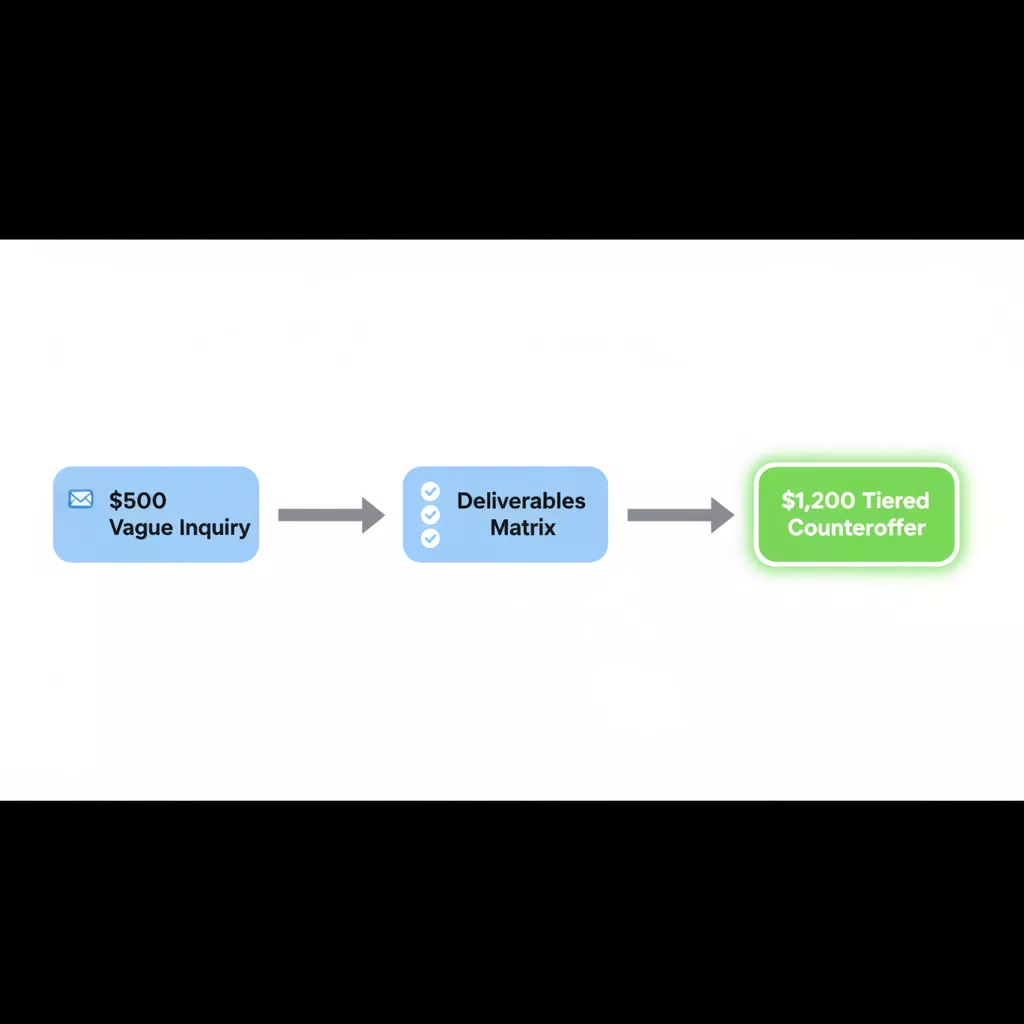
By structuring the deal this way, you turn a vague $500 inquiry into a $1,200 tiered counteroffer ($800 base + $400 paid ad rights). Here is how to present it back to the sponsor:
Example Counteroffer Email Template: "Hi Alex, thanks for reaching out! I would love to feature your brand on my channel. Based on your goals, my standard rate for a 60-second YouTube integration (including 1 round of minor edits and 30 days of organic usage) is $800. If you would like to run the video as a paid ad via creator whitelisting for 30 days, my total package price is $1,200. Let me know which option works best for your launch timeline!"
Automating Scope Evaluation and Negotiation with CreaSeed
Manually building a matrix and calculating rates for every incoming email takes hours. You can automate this process using CreaSeed's unified chat interface.
Calculating Market Value via CreaSeed Chat
Instead of guessing what to charge for usage add-ons or reach, open CreaSeed and run the Account Valuation tool. CreaSeed analyzes your account performance metrics—including average views, engagement rate, and audience growth trends—to output a fair market value range for your content formats.
Generating Automated Negotiation Replies
Once you set your scope parameters, CreaSeed helps you draft professional, scope-aware counteroffers in seconds.
The chat assistant generates tailored negotiation responses based on your deliverable limits, creates necessary paperwork, and tracks deal progress. Because CreaSeed operates on a 0% commission model, you keep 100% of the increased deal revenue without paying agency management fees.
Key Takeaways for Scoping Brand Sponsorships
- Never accept vague briefs: Always map inbound emails into a structured 8-field deliverables matrix before agreeing to a price.
- Separate content from ad rights: Charge base rates for content creation and add premium fees for usage or whitelisting rights.
- Cap your revisions: Limit edit requests to one minor round with a short review window to keep projects moving forward.
- Leverage AI workflow tools: Use CreaSeed's chat interface to calculate market value, negotiate counteroffers, and manage contracts while keeping all your earnings.
Use the creator usage rights checklist to fill in the permission fields. Then bring the scoped offer into CreaSeed to manage the brand discussion and follow-up.
FAQ
What Should I Do If a Brand Requests Extra Revisions Beyond My Matrix Limit?
Politely inform the brand that the included revision round has been completed according to the agreed brief, and quote your own additional editing fee before starting any new changes.
How Long Should Standard Usage Rights Last in a Sponsorship Counteroffer?
Standard organic usage rights should have a specific duration that both sides agree to. If a brand requests perpetual usage or paid ad rights, charge an additional licensing fee calculated as a percentage of your base rate.