Pricing Pinterest Brand Deals: How to Charge for Usage Rights and License Duration
Thinking flat-rate pricing works for Pinterest brand deals?
Here is something that might surprise you: bundling your creation fee with unlimited usage rights is cutting your revenue in half.
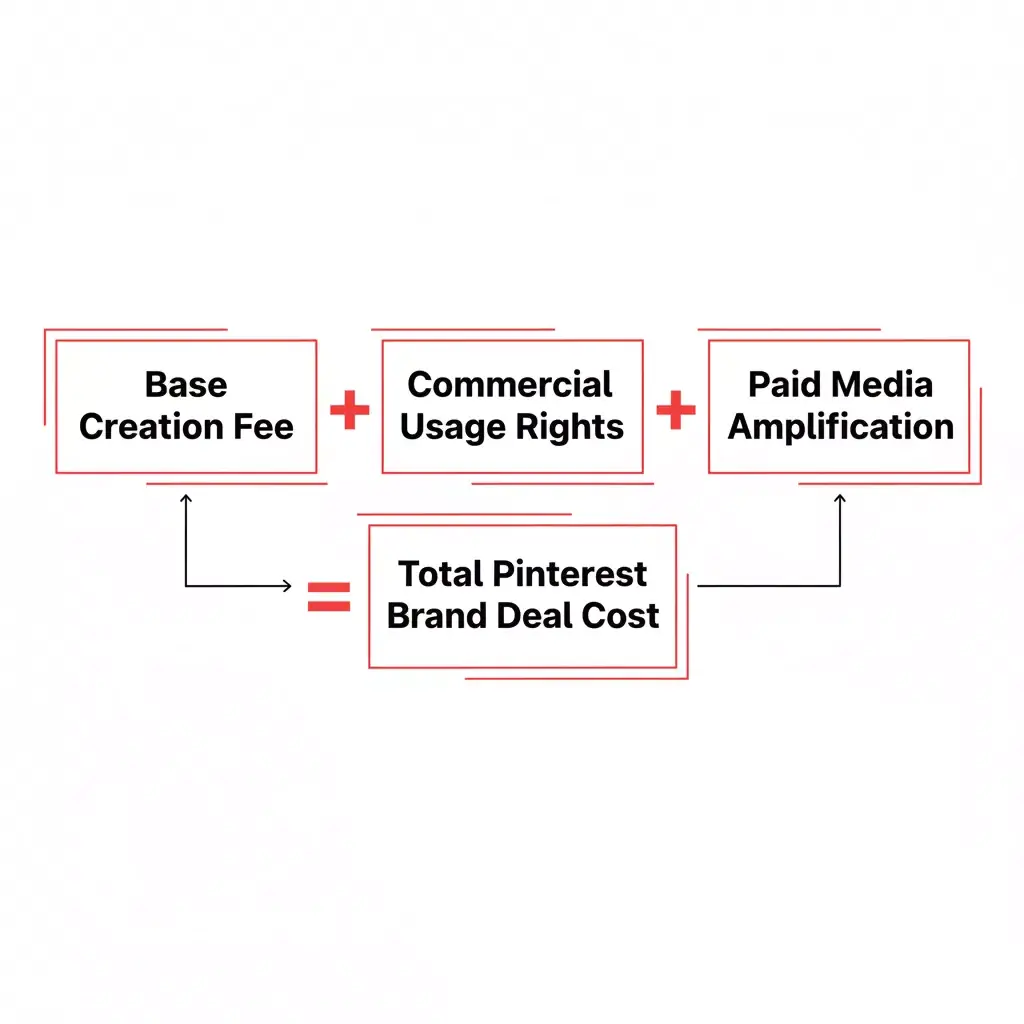
To price Pinterest brand deals effectively, you need to separate your base creation fees from your usage rights and licensing duration.
Instead of quoting a single flat rate, split your proposal into clear, modular components:
- Base Fee: Covers asset creation (graphic design, video shooting, copy) and native posting to your organic boards.
- Usage Rights: Covers where the brand reuses your asset (their website, social channels, or email marketing).
- License Duration: A time-limited fee (such as an added 20% to 50% monthly rate) based on how long the brand uses your asset.
- Paid Amplification: Additional licensing fees when brands run paid campaigns using Pinterest Partnership Ads.
Quick Comparison: Base Rate Vs. Usage Licensing
| Pricing Component | What It Covers | How to Charge |
|---|---|---|
| Base Creation & Posting | Asset creation and organic publishing to your boards | Fixed single fee |
| Commercial Licensing | Repurposing visual assets on brand-owned channels | Time-limited percentage markup |
| Paid Media Usage | Boosting Pins via Pinterest Partnership Ads | Duration-based licensing multiplier |
| Contract Renewal | Extending asset usage rights beyond initial term | Discounted recurring licensing fee |
Here is how to structure your Pinterest rate card, protect your content's value, and build recurring revenue from every campaign.
Base Creation Vs. Usage Rights on Pinterest
When you price a Pinterest sponsorship, you are delivering two completely different products.
First, you deliver your effort to create and publish content.
Second, you deliver the legal right for the brand to commercialize your intellectual property.
If you bundle these two elements into one single flat rate, you leave revenue on the table.
Creation and Posting Vs. Commercial Licensing
Your base fee covers production and native publishing.
This includes:
- Researching vertical visual formats and high-performing keywords.
- Shooting custom video content or designing high-resolution graphics.
- Drafting search-friendly titles and descriptions.
- Publishing the Pin organically to your own profile boards.
Once that Pin is live on your profile, your base contract is fulfilled.
However, brands often want to take your graphic asset off-platform. They might want to drop it into their email newsletter, place it on their ecommerce landing page, or post it to their own social channels.
That requires granting usage rights to the brand.
When a business reuses your work to drive conversions on their own platforms, you must charge a separate commercial licensing fee.
Structuring Pinterest Usage Rights and Licensing Durations
Never sell a perpetual license that lets a brand use your content forever for a single fee.
Instead, price your licensing based on time duration and channel scope.
Time-Limited Licensing Model
Structure your proposals with flexible 30-day, 90-day, or 365-day licensing options.
To calculate your licensing fee, add a percentage multiplier to your base creation rate. (Note: The numbers below are illustrative examples to show structure, not fixed market standards).
- 30-Day Digital License: Base Rate + 25%
- 90-Day Digital License: Base Rate + 50%
- 365-Day Digital License: Base Rate + 100%
Here is how to present this clearly inside your brand proposals:
Sample Licensing Proposal Clause (Illustrative): "Base Creation & Native Posting Fee: $600 (Includes 1 custom Video Pin published to Creator's profile). Digital Usage Rights: 90-day organic web and social repurposing available for an additional 50% fee ($300). Paid media rights quoted separately."
Pinterest Partnership Ads and Paid Media Usage
Pinterest lets brands promote eligible paid partnership Pins. Agree on whether promotion is allowed, which Pin it covers, how long it may run, and what fee applies before granting permission.
When a brand asks for ad usage rights, charge an additional monthly licensing fee based on the active campaign duration.
For an illustrative quote, you might add a time-limited licensing fee to the base creation fee. Set the amount around the agreed platforms, campaign duration, and scope instead of treating any percentage as a market standard.
Accounting for Scope, Revisions, and Deliverable Formats
Not all Pinterest assets require the same amount of effort.
Your rate card must account for the specific format and the number of editing rounds requested by the client.
Deliverable Types and Revision Caps
A static visual Pin takes less production time than a multi-scene Video Pin. Your base rates should reflect this difference.
Furthermore, always cap the number of included revisions in your contract.
Without a revision cap, minor feedback rounds can quickly ruin your hourly profit margin.
| Deliverable Format | Standard Scope | Included Revision Cap | Extra Revision Fee (Illustrative) |
|---|---|---|---|
| Static Graphic Pin | 1 vertical high-res design + copy | 1 minor edit round | +15% of base creation rate |
| Video Pin | 1 vertical video asset (15-30s) | 1 storyboard edit, 1 video edit | +20% of base creation rate |
| Multi-Pin Board Curation | 5 thematic Pins saved to board | 1 initial board layout review | +25% of base creation rate |
If a brand requests extra editing rounds beyond your cap, charge a flat administrative fee per additional round before making changes.
Managing License Renewals and Contract Terms
Pinterest content has a long traffic life cycle compared to short-lived social feeds.
A Pin created today can continue generating traffic and sales for a brand six months down the road.
This makes Pinterest ideal for building recurring licensing revenue.
Setting up Renewal Rates Upfront
Do not wait for a license to expire to talk about contract extensions.
Include a clear licensing renewal clause in your original agreement.
Offer a small discount if the brand locks in a licensing extension before their current term ends.
For example, if your standard 90-day usage extension is 50% of your base rate, offer a 40% early-renewal rate if extended 14 days before expiration.
This creates a predictable recurring income stream from content you have already created.
Summary: Essential Rules for Pricing Pinterest Brand Deals
To maximize your Pinterest sponsorship revenue, stick to these core rules:
- Separate creation from licensing: Quote asset creation separately from off-platform usage.
- Avoid perpetual terms: Sell time-limited licenses (30, 90, or 365 days).
- Charge extra for paid ads: Use multipliers for Pinterest Partnership Ads.
- Cap revision rounds: Protect your production time with explicit edit limits.
- Lock in renewals early: Include a clear renewal process in your initial contracts.
For the broader pricing picture, see Pinterest Creator Sponsorship Pricing.
FAQ
How Do I Handle a Brand That Demands Full Ownership of My Pinterest Content?
Avoid selling full copyright ownership whenever possible. If a brand insists on buying full ownership (a work-for-hire model), increase your base creation fee significantly—based on the broader rights you would give up and the value of future uses.
Should I Charge Differently for Idea Pins Versus Static Image Pins?
Yes. Video content requires more scripting, filming, and editing effort. Set your base creation fee for Video Pins higher than static graphic Pins to reflect the extra production labor.
What Happens When a Brand Continues Running Partnership Ads After the Licensing Term Ends?
Your contract should define the license end date and how the parties handle renewal or use beyond the agreed scope. If use continues after expiry, document it and ask the brand to stop or negotiate an extension; seek legal advice if a dispute remains.