The Inbound Brief Audit: 5 Red Flags to Check Before Replying to an Instagram Creator Marketplace Offer
Receiving an inbound brand offer on Instagram Creator Marketplace feels like a major win. But accepting a brief without checking the fine print can quickly lock you into unfair terms, endless revisions, or underpaid ad usage.
To safely audit a marketplace offer before replying, you need to inspect the brief for five critical red flags: vague deliverable specifications, unverified brand accounts, perpetual usage rights, broad category exclusivity, and performance-only payment models without a guaranteed base rate.
Here is a quick checklist of the 5 red flags to spot before you respond:
- Vague Deliverables: Briefs missing explicit content formats, reel lengths, or deliverable counts.
- Unverified Sender: Brand profiles lacking verified status or direct decision-maker contact details.
- Perpetual Usage Traps: Requests for unlimited, indefinite ad licensing without added compensation.
- Broad Exclusivity: Overly strict clauses that block you from working with entire product categories.
- Performance-Only Payouts: Affiliate or conversion-contingent structures disguised as flat-fee brand deals.
Here is your step-by-step guide to auditing these brief details, protecting your account value, and submitting smart counter-offers directly to brand managers.
Auditing Inbound Marketplace Briefs for Scope and Brand Legitimacy
When a new project offer arrives in your Instagram Creator Marketplace inbox, your immediate impulse might be to hit accept. But moving too fast can lock you into vague contracts that waste your production time.
Auditing an offer starts with verifying exactly what the brand expects you to build—and verifying who is actually sitting on the other side of the screen.
Vague Deliverables and Unclear Asset Requirements
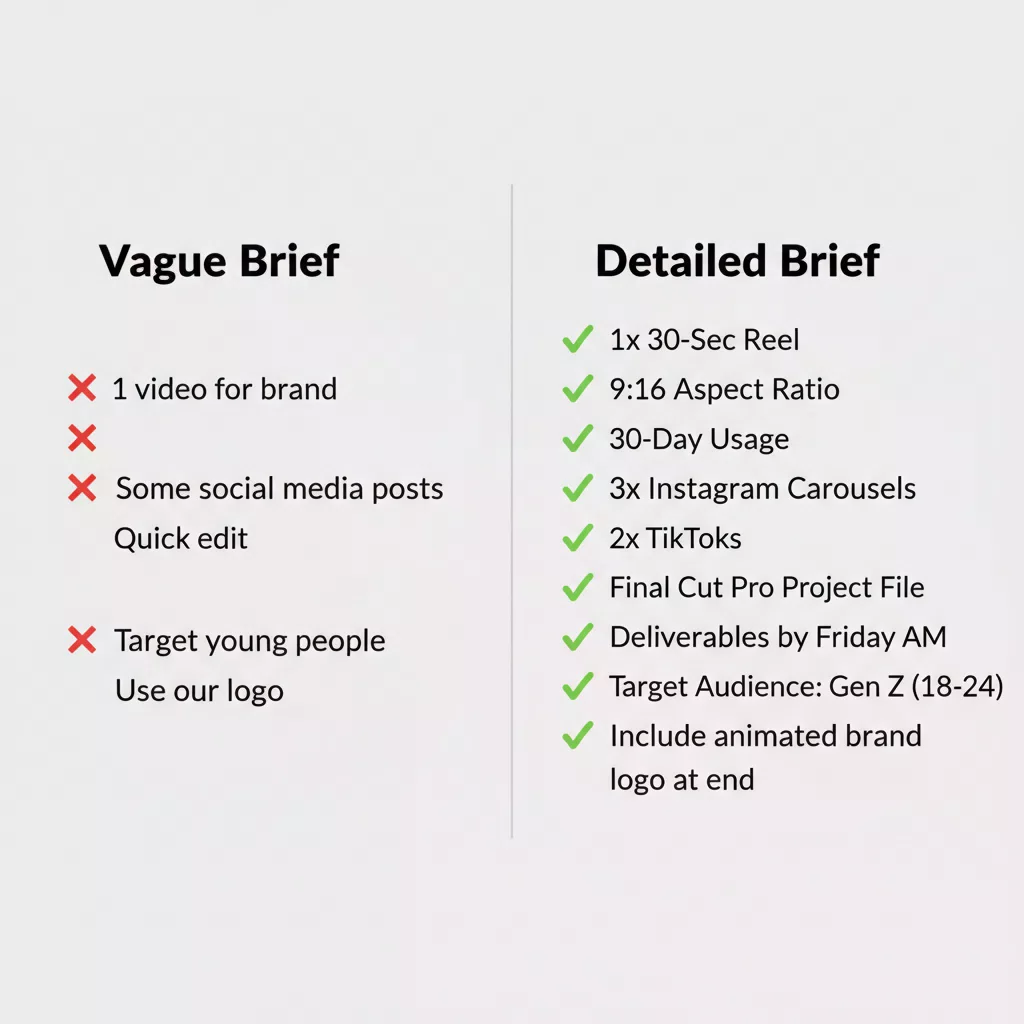
A solid campaign brief outlines the precise format, quantity, and technical specifications of your content. If a brief simply asks for "a video promoting our new moisturizer," that is an immediate red flag.
Without exact specs, a brand manager might expect a 60-second polished Reel, a 3-part Story sequence, and raw video files for their internal marketing team—all for the price of a single post.
Look for missing details in these critical areas:
- Content Format: Is it an Instagram Reel, static feed post, carousel, or Story?
- Asset Duration: Does the brief require a 15-second quick-cut Reel or a 60-second in-depth tutorial?
- Aspect Ratios & Resolutions: Are you delivering 9:16 vertical video only, or do they expect 4:5 feed cuts as well?
- Asset Quantity: Are you creating 1 final Reel or multiple variations for testing?
If any of these details are absent, pause the offer until you get clear numbers.
Unverified Brand Accounts and Missing Decision-Maker Details
Not every offer inside the marketplace comes from an official brand team. Agencies, third-party brokers, and fake business profiles frequently send mass brief invitations to creators.
Before responding, tap on the brand's profile attached to the marketplace offer. Check for an official verification checkmark and review their active content. If the profile has zero posts, suspicious follower ratios, or vague contact details, exercise caution.
Always locate the name and official business email address of the actual campaign manager. Working directly with a named decision-maker ensures you have a legitimate point of contact if payment delays or contract disputes arise later.
Identifying Usage Rights and Exclusivity Overreach
The biggest hidden financial losses in creator sponsorships do not come from low base rates—they come from buried licensing terms and overly strict non-compete clauses.
Perpetual Usage Rights and Partnership Ad Licensing Traps
There is a massive difference between posting a organic branded Reel on your profile and granting a brand usage rights to put advertising budget behind your content.
When a brand requests partnership ad permissions (sometimes called whitelisting), they can run paid ads using your Instagram handle. If the brief asks for perpetual usage rights, it means the brand can run paid ads featuring your face and voice forever without ever paying you another dollar.
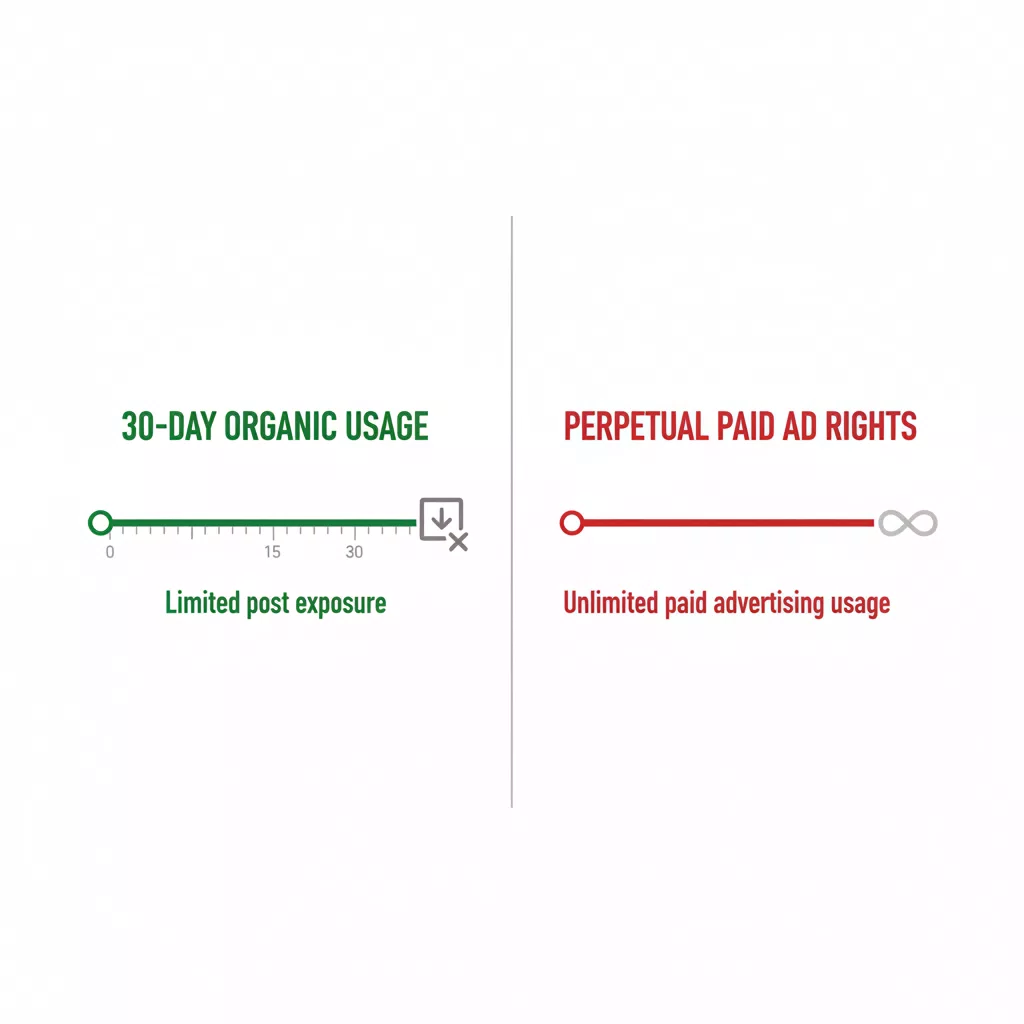
There is no universal 30-to-90-day license for a $500 Reel. Set the duration, channels, territory, paid-ad permissions, and fee in the agreement; broad perpetual rights can limit future options.
Broad Category Exclusivity Without Fair Compensation
An exclusivity clause prevents you from taking sponsorships from competitors. If the brief includes exclusivity, broad restrictions can block future work.
For example, an illustrative $500 offer from a hydration brand might ask for "180 days of exclusive promotion across all beverage and wellness categories." Accepting that clause means you cannot work with coffee brands, athletic drinks, vitamin supplements, or teas for six months.
Always narrow exclusivity down to direct product competitors (e.g., "electrolyte powder brands") rather than broad parent categories, and ensure the exclusivity timeframe matches the compensation.
Evaluating Payment Structures and Revision Clauses
Your rate should reflect both your production effort and the commercial value you deliver to the advertiser. Briefs that manipulate payout structures or leave edit limits open-ended can turn a profitable project into free labor.
Performance-Only Payouts Disguised as Flat-Fee Offers
Watch out for marketplace briefs titled "Paid Sponsorship" that bury affiliate commission mechanics in the fine print. One possible example is an offer with no fixed fee and only a commission on sales through a tracked link or discount code.
Affiliate marketing has its place, but it should never be disguised as a flat-fee brand deal. A true sponsorship guarantees compensation for your creative production time regardless of algorithm distribution.
Use the table below as an illustrative negotiation example, not a market standard:
| Brief Term Category | High-Risk Red Flag | Illustrative Narrower Term |
|---|---|---|
| Deliverable Scope | "1 Video for Instagram" (Unclear format) | 1x 30-Second Instagram Reel (9:16 format) |
| Usage Rights | Perpetual, worldwide usage across all media | Organic posting plus separately priced, time-limited paid ad rights |
| Exclusivity | 6 months across all Skincare & Beauty brands | A defined period limited to direct competitors |
| Payment Model | 100% affiliate commission / performance-only | Fixed guaranteed base rate + optional performance bonus |
| Revision Terms | Unlimited edits until brand approval | Up to 1 round of minor edits (visual/audio tweaks only) |
| Payment Schedule | Net-90 days after content approval | A payment date and any deposit agreed in writing |
Uncapped Revision Requests and Extended Payment Timelines
Without explicit edit limits in the brief, brand managers can request endless re-shoots over minor subjective preferences, like changing your outfit or re-recording audio tracks.
Set a clear limit on minor edit rounds that fits the project. Major revisions—like changing the agreed creative script after filming—must require an added re-shoot fee.
Additionally, check the payout timeline. Briefs specifying Net-60 or Net-90 payment terms force you to wait two to three months after content approval to get paid. Aim for Net-30 terms at maximum.
Executing a Clarification and Counter-Offer Strategy
Spotting red flags does not mean you have to reject the brand offer immediately. Most brand managers submit generic brief templates inside Instagram Creator Marketplace and are open to adjusting terms.
Drafting Precise Clarification Questions for Brand Managers
Instead of sending a vague message asking for "more money," send a structured, professional inquiry that addresses each red flag directly.
Sample Clarification Message: "Hi [Brand Manager Name], thanks for reaching out! I love [Brand Name] and would be excited to feature your new product line. Before confirming the offer, I noticed a few terms in the brief I'd like to align on:
- Deliverables: Can we confirm this offer covers 1x 30-second Instagram Reel and 1x Story frame?
- Usage Rights: The brief lists perpetual rights. My base rate includes 30-day organic usage. For paid ad licensing, my rate is an extra $150/month.
- Exclusivity: I can offer 30-day exclusivity for direct hydration powders, rather than broad beverage categories.
Let me know if we can update the brief to match these parameters!"
Adjusting Rates and Contract Terms in the Marketplace Interface
Instagram Creator Marketplace allows creators to submit modified terms directly within the deal workflow.
Do not click "Accept" on an unadjusted brief hoping to fix terms later in direct messages. Use the interface tools to edit the proposed base payout, adjust deliverable counts, and attach your revised usage timeline.
Submitting your counter-offer inside the platform keeps the formal agreement binding and protects your account if a contract dispute occurs down the line.
Summary: Essential Steps Before Accepting Marketplace Offers
Protecting your creator business takes less than five minutes per inbound offer. Before you accept any Instagram Creator Marketplace brief, run through these final audit checks:
- Confirm exact deliverables: Ensure format, length, and item count are explicitly stated.
- Verify the account: Make sure you are speaking to a real decision-maker from an authorized brand profile.
- Cap usage rights: Limit paid ad licensing to 30–90 days and charge extra for ad rights.
- Restrict exclusivity: Keep non-compete windows short and limited to direct product competitors.
- Require a guaranteed base rate: Never accept performance-only affiliate structures framed as flat-fee brand deals.
- Limit edits: Specify a single round of minor revisions and set Net-30 payment terms.
FAQ
What Should I Do If an Instagram Creator Marketplace Offer Has No Budget Listed?
If an offer arrives without a specified budget or asks for free content in exchange for product gifting, do not accept the brief immediately. Reply using the marketplace messaging feature to share your media kit and base rates for the requested deliverables, asking the brand manager if they have a dedicated sponsorship budget for the campaign.
Can I Charge Extra If a Brand Wants to Run Partnership Ads with My Handle?
Yes. Granting partnership ad access allows a brand to run paid advertising through your handle to reach targeted audiences. Creators typically charge an additional monthly licensing fee (often 20% to 50% of the base production fee per 30-day period) for paid ad amplification rights.
What Happens If a Brand Requests Revisions Not Specified in the Original Brief?
If a brand asks for major re-shoots or edits that fall outside the agreed brief specs (such as changing the script or scene setting after approval), politely inform them that your contract includes one round of minor edits. Offer to complete the extra changes for an additional re-shoot fee.