The Inbound Sponsorship Brief Checklist: 5 Questions to Ask Before Signing Any Creator Offer
Before you sign any inbound sponsorship brief, here is something every creator needs to know: accepting a brand deal without auditing the fine print can cost you money, time, and creative freedom.
Whether an offer arrives via direct email or through platforms like TikTok One, Instagram Creator Marketplace, or YouTube Creator Partnerships, you must evaluate the exact scope before agreeing to terms.
Here is the 5-question vetting checklist to run before signing any deal:
- 1. Identity & Authority: Is the sender an official brand representative with real budget authority, or an unverified third-party contact?
- 2. Deliverables & Rights: What are the exact video formats required, and does the brief demand paid amplification like TikTok Spark Ads or Instagram Partnership Ads?
- 3. Compensation & Payment Terms: Does the fee account for usage rights and exclusivity, and are payment schedules (such as Net 30 or Net 60) clearly stated?
- 4. Revisions & Approvals: Is there a strict cap on free draft edits and an automatic approval deadline?
- 5. Platform Permissions: How do rules, ad permissions, and payout structures compare across direct contracts and creator marketplaces?
Quick Comparison: Sponsorship Channels
| Channel | Payment Workflow | Usage Rights Control | Revision Management |
|---|---|---|---|
| Direct Email | Custom negotiated terms (e.g., Net 30/60) | Explicitly defined in legal contract | Defined via written scope agreement |
| TikTok One | Managed platform payout system | Native TikTok Spark Ad authorizations | In-app draft submission and feedback |
| Instagram Creator Marketplace | Platform-linked or direct terms | Partnership Ads permissions and codes | In-app campaign deliverable tracking |
| YouTube Creator Partnerships | Platform and brand-direct agreements | YouTube BrandConnect / Usage licenses | Platform agreement and custom terms |
Let's break down each of these five questions step-by-step so you can protect your business and land better terms.
Why Vetting Inbound Sponsorship Offers Matters
When a brand slides into your inbox or sends a campaign invitation through TikTok One, Instagram Creator Marketplace, or YouTube Creator Partnerships, it feels like a massive win.
However, accepting an offer blindly can turn a promising payday into a costly nightmare. An unvetted brief might grant a brand full ownership of your image forever, tie you down with a vague exclusivity clause, or force you into weeks of unpaid reshoots.
Vetting an inbound offer isn't about being difficult—it is about protecting your business, your creative voice, and your future revenue stream.
Question 1: Is the Brand Authentic and Who Holds Final Decision Power?
Before you spend time negotiating rates or drafting scripts, you need to verify who is sitting on the other side of the screen. Scammers frequently impersonate major brands to extract free content or personal data.
Verifying Email Domains and Official Platform Invites
Start by checking the sender's email address. Legitimate brand managers use official corporate domain names (such as name@companybrand.com), not free webmail accounts like @gmail.com or @yahoo.com.
Inspect the email headers to confirm SPF and DKIM records align with the brand's official web domain. On marketplace platforms like TikTok One or Instagram Creator Marketplace, look for official platform verification badges on the campaign brief. If an invite arrives via direct message, ask the sender to confirm the brief through an official corporate email address before sharing personal or bank details.
Identifying Agency Roles Vs. In-House Brand Contacts
Always determine whether your point of contact is an in-house brand marketer or a third-party talent agency representative.
An in-house representative usually has direct budget authority and immediate decision-making power. A third-party agency representative acts as a middleman between you and the brand client. Agency representatives often need extra time to route creative concepts and drafts back to the brand's internal team for sign-off. Knowing this distinction upfront helps you establish realistic review schedules and avoid unexpected feedback delays.
Question 2: What Are the Exact Deliverables, Usage Rights, and Exclusivity Scope?
The biggest financial traps in creator contracts usually hide in the fine print covering creative assets, ad permissions, and competitor bans.
Defining Deliverable Specs and Platform Formats
Your agreement must clearly outline every single asset you are expected to produce. Specify exact parameters like:
- Quantity: Total number of posts, stories, or dedicated video segments.
- Format: 9:16 vertical video, 16:9 horizontal video, or static image carousel.
- Duration: Exact length constraints (e.g., 30-second integration vs. 60-second dedicated video).
- Posting Destination: Organic main feed, TikTok handle, or YouTube channel.
For example, consider an illustrative scenario where Alex, a tech creator, receives an inbound campaign offer for $1,500. The initial email asks for "a short video reviewing our wireless earbuds." Before signing, Alex clarifies the requirement in writing: One 60-second dedicated vertical video posted organically to TikTok, plus one Instagram Story frame with a link sticker.
Inspecting Usage Rights, Ad Amplification, and Spark/Partnership Ad Terms
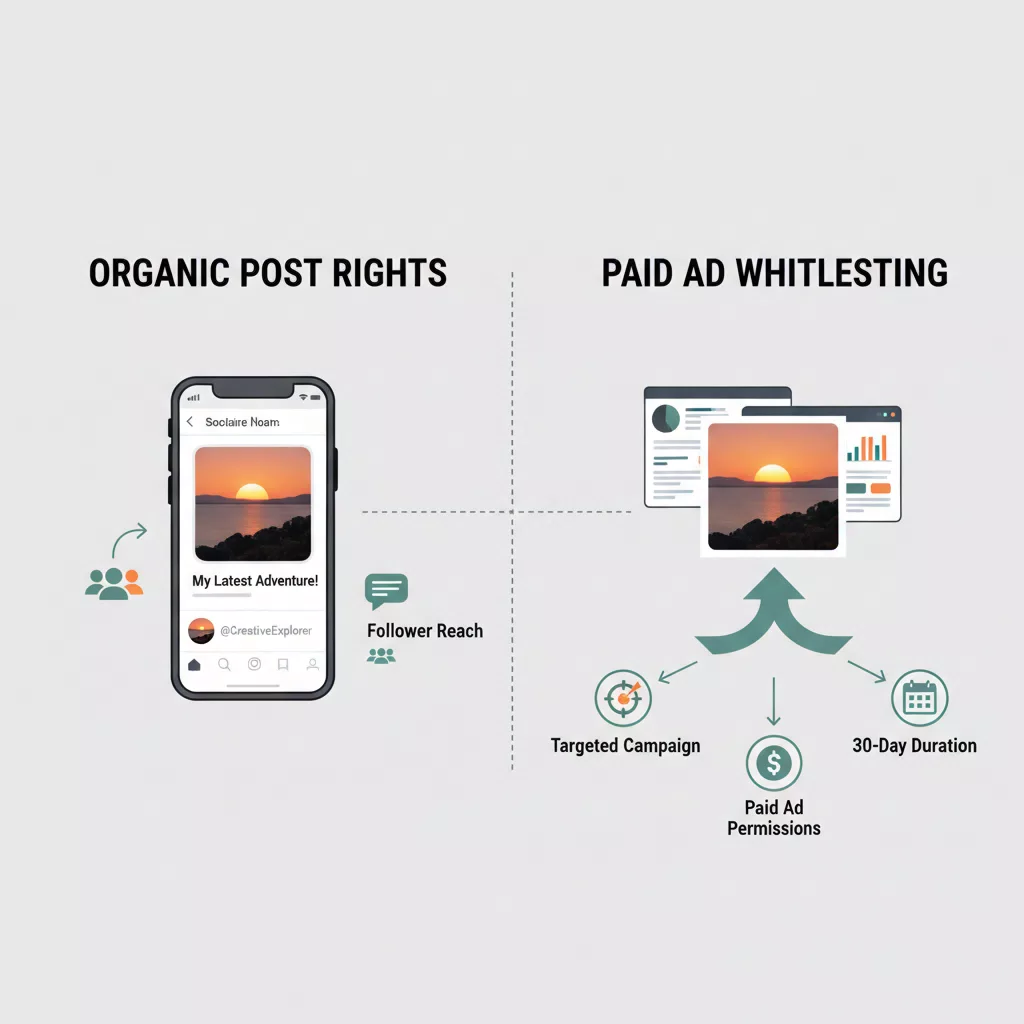
Never confuse organic publishing with paid advertising. Organic posting allows you to upload the content to your profile. Paid usage rights allow the brand to use your video inside paid ad campaigns across digital channels.
If a brand wants to run your video as a paid ad through your handle—such as TikTok Spark Ads or Instagram Partnership Ads—that requires explicit platform permissions and additional fee negotiation. Granting paid ad permissions without a time limit or geographic cap lets brands profit off your likeness indefinitely.
Example Contract Wording: "Brand receives non-exclusive paid usage rights to amplify the approved TikTok video via TikTok Spark Ads for thirty (30) consecutive days starting from the public posting date. All paid amplification permissions automatically expire on Day 31 unless extended by a written amendment and additional compensation."
When a brand requests backend advertising permissions to run campaigns through your account, this process is known as whitelisting. Always charge an additional fee for whitelisting access beyond your base creation rate.
Evaluating Category Exclusivity and Timeframe Restrictions
Broad competitor restrictions can drastically freeze your future earnings. If a contract includes an exclusivity clause banning you from working with any "lifestyle or tech brand" for six months, you could lose thousands of dollars in potential income.
Narrow down exclusivity provisions using three strict boundaries:
- Specific Product Category: Limit restrictions to identical products (e.g., "active noise-canceling wireless earbuds") rather than broad categories like "consumer electronics."
- Defined Duration: Keep exclusivity timeframes short, ideally matching the campaign window or capping at 30 to 60 days post-publish.
- Geographic Scope: Specify target regions where restrictions apply.
Question 3: Does the Fee Match the Scope and What Are the Payment Schedule Terms?
A $1,500 base payout sounds great for a single video, but if the brief requires paid ad rights, broad exclusivity, and 60-day payout terms, that flat rate quickly turns into an underpaid assignment.
Aligning Base Rates with Deliverables and Licensing
Calculate your total fee by separating your creative creation rate from licensing add-ons. Use a structured pricing model to evaluate inbound offers:
| Deliverable Scope Component | Illustrative Pricing Standard | Illustrative Offer Breakdown |
|---|---|---|
| Organic Dedicated Video Creation | Base creation rate | $1,500 |
| 30-Day Paid Usage Rights (Spark Ads) | 30% of base rate | $450 |
| 30-Day Category Exclusivity | 20% of base rate | $300 |
| Total Adjusted Campaign Rate | Combined deliverable value | $2,250 |
By breaking down the baseline $1,500 offer, Alex shows the brand that requesting paid ad rights and category exclusivity increases the contract value to $2,250.
Establishing Clear Payment Schedules and Net Terms
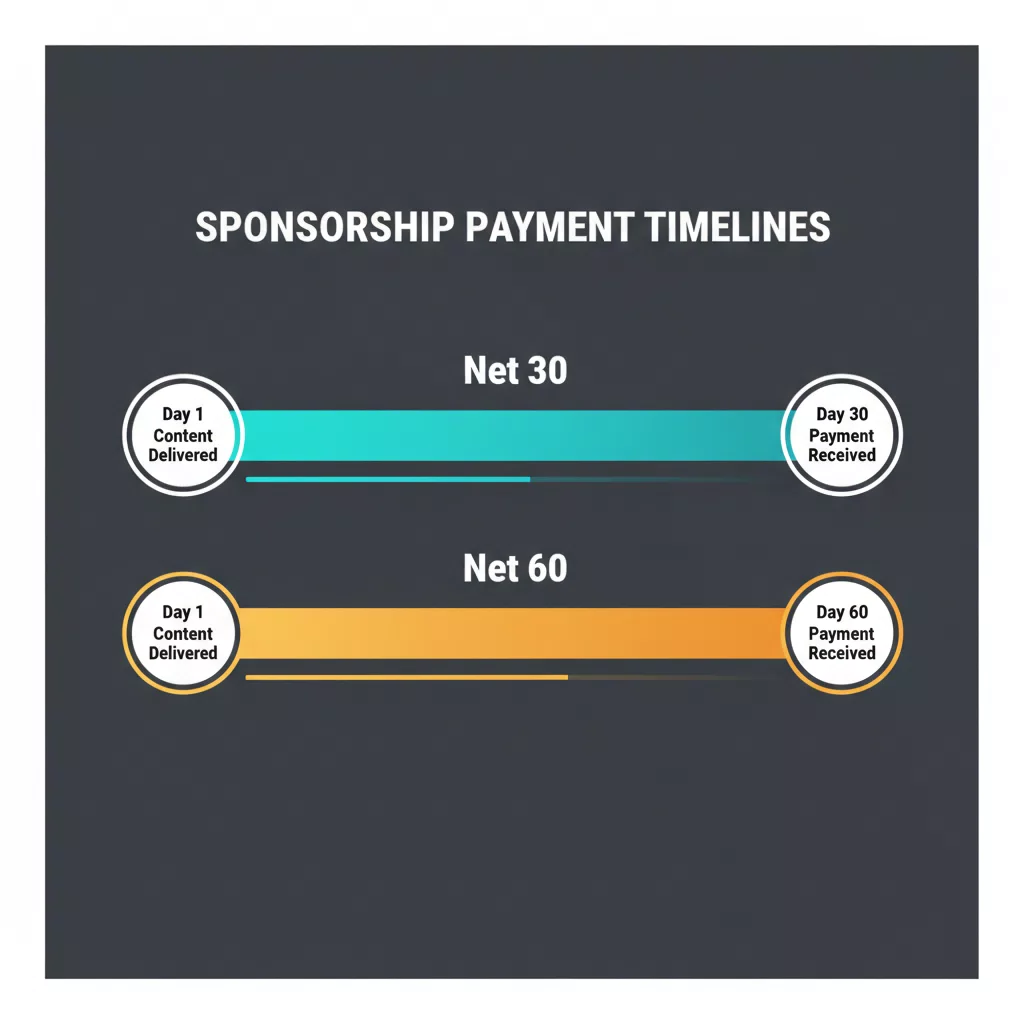
Always check the payment payout schedule. Brands frequently try to enforce Net 60 or Net 90 terms, meaning you won't see payment for 2 to 3 months after delivering final assets.
Push for Net 30 terms at a maximum. For larger contracts (such as deals over $2,000), require a 50% upfront deposit before filming begins, with the remaining balance due within 30 days of draft delivery.
Question 4: What Are the Revision Limits and Approval Criteria?
Without clear boundaries on creative feedback, endless edit requests can turn a 5-hour video shoot into a 30-hour exhausting headache.
Capping Creative Revisions and Draft Edits
State clearly in your contract that your base fee includes one round of minor creative revisions (such as adjusting text placement or modifying a voiceover line).
Specify that any structural changes—such as reshoots required due to script alterations provided after video approval—incur a dedicated reshoot fee (for instance, 50% of the original video creation fee).
Setting Approval Timelines and Auto-Approval Windows
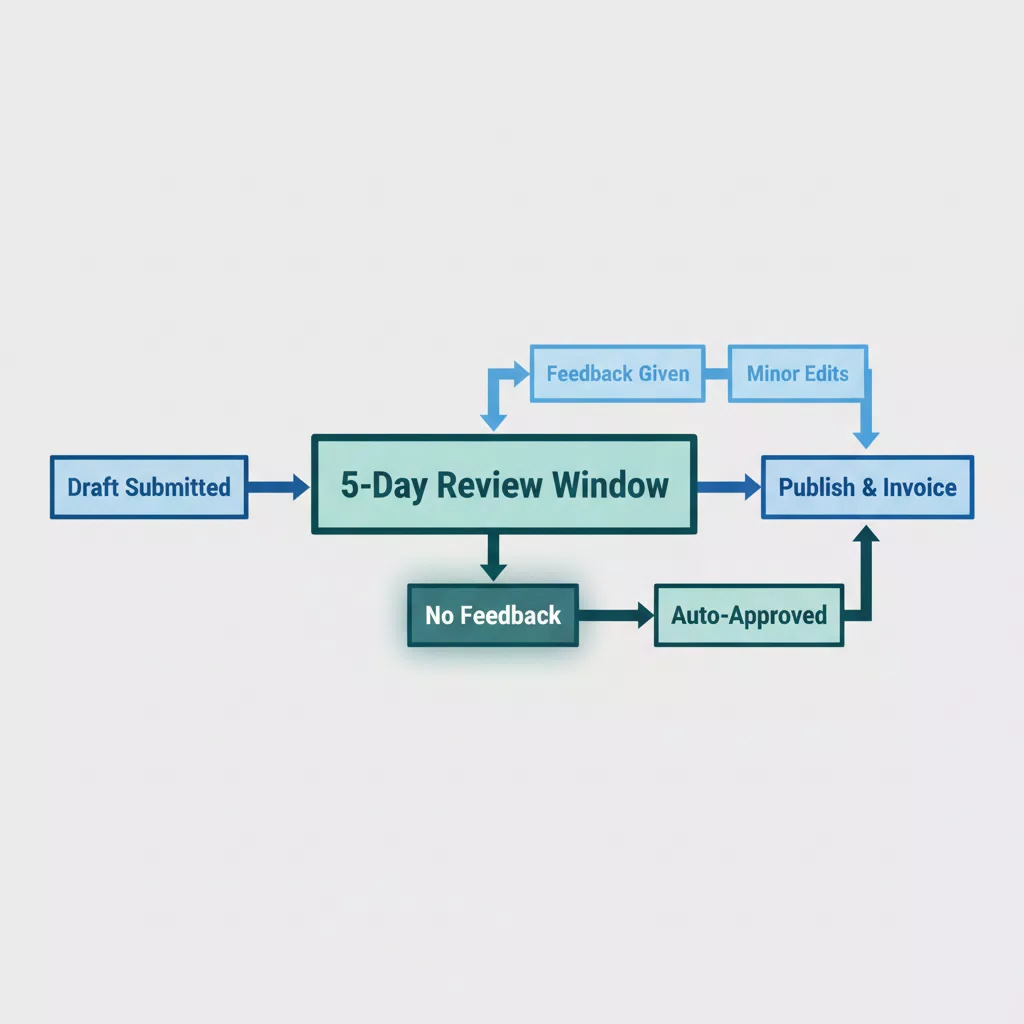
Brands sometimes take weeks to review draft submissions, which delays your posting schedule and invoice payment date. Protect your calendar by inserting an automatic approval clause into your scope agreement.
Takeaway Template: "The Brand shall review submitted draft assets within five (5) business days of receipt. If no written feedback or requested edits are provided within this 5-day window, the submitted draft shall be deemed automatically approved, and the Creator may proceed with scheduled posting and invoicing."
Question 5: How Do Terms Compare Across Direct Emails and Creator Marketplaces?
Vetting offers varies significantly depending on whether the deal lands in your inbox or inside an official marketplace app.
Comparing Platform Features, Ad Rights, and Payout Structures
Each channel handles campaign contracts, rights permissions, and payouts differently:
- Direct Email: Provides total flexibility to negotiate custom pricing, upfront deposits, and strict exclusivity limits. However, you must handle invoicing, manual contracts, and payment follow-ups yourself.
- TikTok One: Integrates draft submissions, campaign briefs, and payout tracking in-app. Spark Ad permissions are streamlined natively, but payment schedules follow fixed platform cycles.
- Instagram Creator Marketplace: Connects creators directly with brand campaign briefs. Paid amplification permissions for Instagram Partnership Ads can be configured in-app, though terms should still be reviewed carefully in written scopes.
- YouTube Creator Partnerships: Bridges brand integrations and platform tools like YouTube BrandConnect. Usage rights often involve longer content lifespans, so licensing language requires thorough evaluation.
Key Takeaways for Vetting Sponsorship Offers
Before signing any inbound sponsorship offer or campaign brief, walk through these fundamental steps:
- Verify Sender Authority: Confirm official email domain authentication and clarify if you are talking to an in-house decision-maker or an agency rep.
- Audit Deliverables & Usage Rights: Separate organic posting from paid ad usage rights like TikTok Spark Ads or Instagram Partnership Ads.
- Price Extra Scope: Add licensing fees for paid ad permissions, whitelisting, and product exclusivity.
- Cap Edits & Deadlines: Limit free revisions to one round and establish a 5-day auto-approval window.
- Enforce Fair Payment Terms: Standardize on Net 30 payment terms and request upfront deposits on larger deals.
By applying this 5-question vetting framework to every inbound deal, you protect your creator business, maintain full creative authority, and ensure your compensation reflects the true value of your work.
FAQ
What Should I Do If a Brand Refuses to Pay an Upfront Deposit?
If a brand declines an upfront deposit, negotiate shorter payment terms like Net 15 or stipulate that final high-resolution assets or posting permissions will only be released once full payment is received.
How Do I Charge Extra for Paid Ad Rights After Signing an Organic Deal?
Send a written contract amendment specifying the additional fee and duration before granting backend advertising permissions or Spark Ad authorization codes.