How to Vet Direct Brand Sponsorship Emails: Spotting Real Decision-Makers Vs. Low-Ball Bots
Not every sponsorship email hitting your inbox is a legitimate deal—many are automated bots offering underpriced rates, demanding predatory usage terms, or attempting phishing scams.
To quickly vet direct brand sponsorship emails, verify sender domain authentication (SPF/DKIM headers), cross-reference the sender’s title on professional networks like LinkedIn, inspect the brief for restrictive usage rights, and reply with targeted qualification questions to test their budget and intent.
Here is a quick summary of what to check before replying to or signing an inbound offer:
| Vetting Area | Genuine Decision-Maker | Automated Low-Ball Bot |
|---|---|---|
| Domain Headers | Authenticated SPF/DKIM matching official brand domain | Unverified headers, lookalike domains, or free webmail |
| Sender Identity | Verifiable role on LinkedIn or company site | Generic signature, unlinked title, or unreachable agency middleman |
| Brief & Terms | Clear scope, explicit usage duration, reasonable revisions | Perpetual usage rights, vague deliverables, unbounded exclusivity |
| Intent Test | Answers specific budget and timeline qualification questions | Ignores questions or sends automated generic templates |
Let’s dive into how you can execute each verification step to safeguard your account and negotiate fair deal terms.
Sender Domain and Header Inspection
When an exciting sponsorship inquiry lands in your inbox, your first reaction might be to celebrate. But before you click any links or download attached briefs, you need to check who actually sent the message.
Scammers and automated bots frequently use spoofed domain names to mimic famous brands. Performing a quick technical check takes less than 60 seconds and can save you from account takeover attacks or unpaid work.
Verifying Domain Authentication and Headers
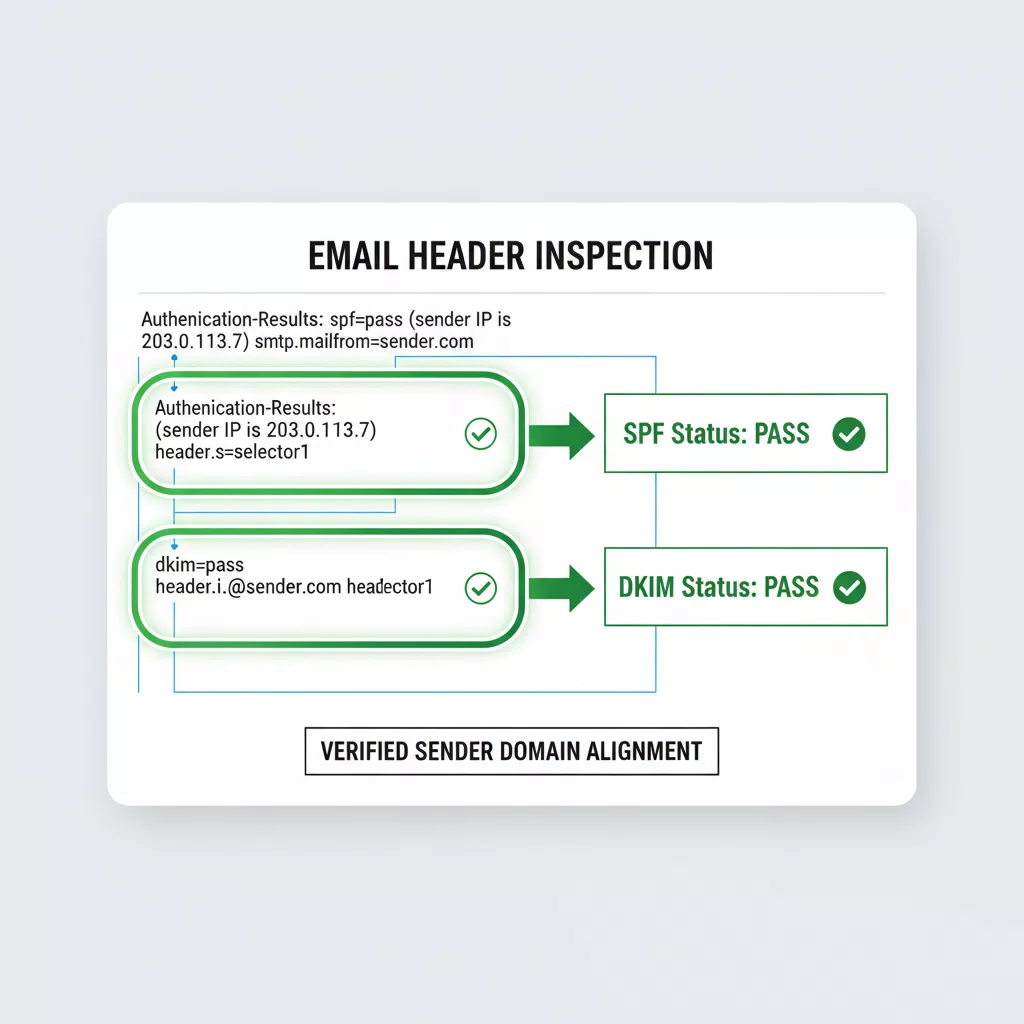
To check if an email is legitimate, open the raw email headers in your email provider. Look specifically for DKIM and SPF verification tags.
Here is what to look for in your email client's "Show Original" or header view:
- Pass Status: The
spf=passanddkim=passlines confirm that the sending server is authorized by the domain owner. - Domain Alignment: Ensure the
From:email address matches the domain listed in the authentication lines. If an email claims to come fromnike.combut the headers showspf=passformail-outbound-marketing32.biz, you are dealing with a fake domain or unauthorized middleman. - Lookalike Domains: Watch out for subtle typos, such as
partnships-nike.cominstead of the official corporate domain.
Recognizing Automated Bulk Outreach Indicators
Mass outreach bots send thousands of identical emails to creators every day. These bots rarely care about your specific content—their goal is to lock you into low-paying or predatory contracts at scale.
Pay attention to these obvious bot signals:
- Generic Greetings: Openers like "Dear Creator" or "Hello [Channel Name]" strongly indicate an unsegmented mailing list.
- Vague Niche References: Messages mentioning "your amazing recent videos" without naming a single specific topic or post.
- Mismatched Signatures: The sender's name in the greeting doesn't match the signature block or the email address.
Decision-Maker Identity Verification
Once the sending domain checks out, the next step is confirming whether the person behind the email actually has authority to hire you.
Cross-Referencing Roles on Professional Networks
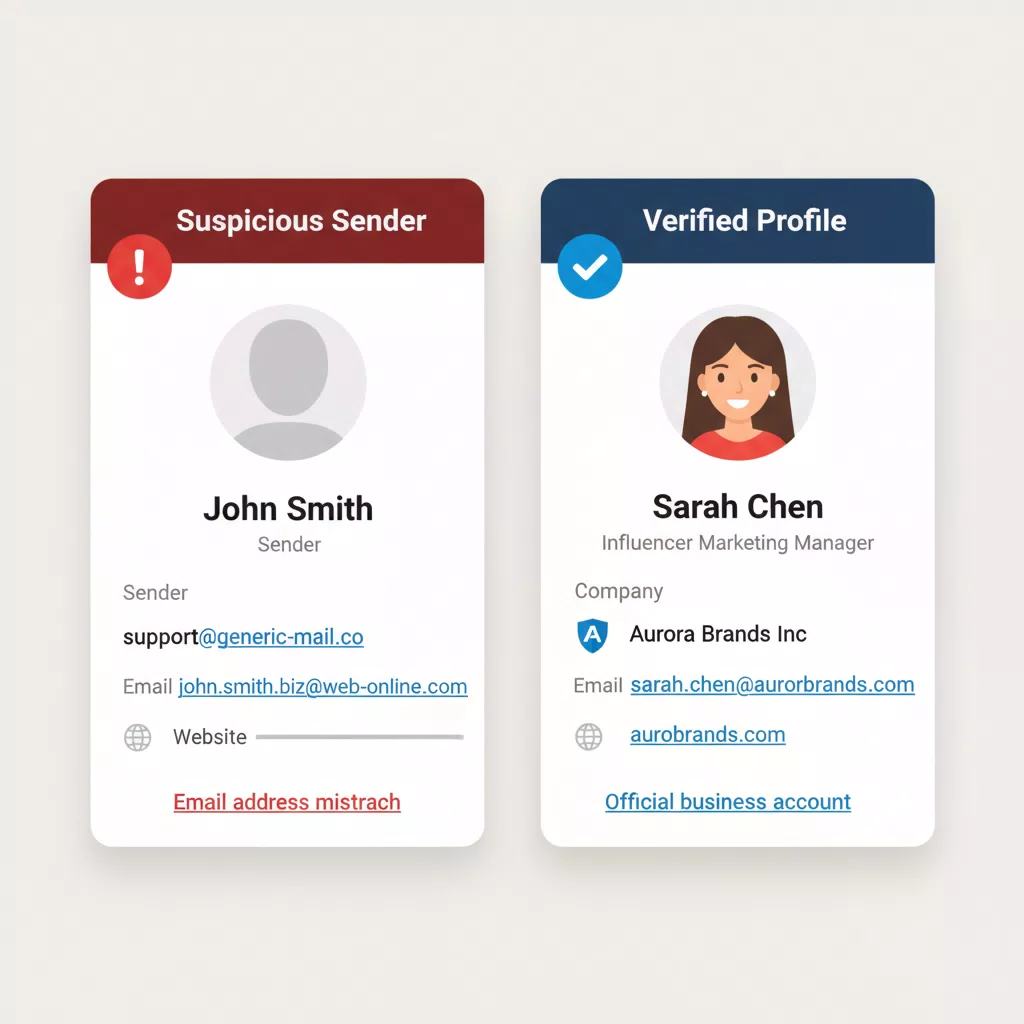
Do not rely solely on the email signature block. Take the sender's full name and job title, then search for them on professional networks like LinkedIn.
Check for these concrete verification signals:
- Current Employment: Confirm their current company matches the brand or agency sending the email.
- Relevant Role: Look for titles like Influencer Marketing Manager, PR Coordinator, or Brand Partnerships Lead.
- Activity and Connections: Active brand managers usually have mutual connections in the creator industry or visible post history discussing recent campaigns.
If the sender has zero social presence, no corporate profile, or a title completely unrelated to marketing (such as an unverified personal account), proceed with extreme caution.
Distinguishing In-House Managers from Agency Brokers
Inbound offers generally come from one of two sources: direct in-house brand team members or third-party agency brokers.
Knowing who you are talking to alters your negotiation dynamic:
- In-House Managers: They work directly for the brand, have direct control over marketing budgets, and can approve custom deliverables or higher rates faster.
- Agency Brokers: They act as intermediaries between brands and creators. While legitimate agencies connect you with high-tier opportunities, low-quality brokers often cut creator fees drastically to keep a high margin for themselves.
When dealing with agency representatives, always ask which specific brand team they represent and request a formal client brief before sharing your rates.
Evaluating Campaign Briefs and Deliverable Terms
Not all low offers come from bots—some come from real brand managers hoping creators won't read the small print. You must carefully audit campaign briefs for hidden demands that strip away your rights.
Auditing Scope, Deadlines, and Usage Rights
Always inspect the contract terms before discussing final deliverables. Pay close attention to these critical areas:
- usage rights: Does the brand want to reuse your video on their own social pages, website, or paid ads? Standard agreements specify a fixed timeframe (such as 30 or 90 days). Never grant perpetual usage rights without significant extra compensation.
- whitelisting: Whitelisting lets a brand run paid advertisements through your handle. This requires a dedicated ad authorization agreement and a separate usage fee.
- Exclusivity Clauses: Check if the contract restricts you from working with competing brands. Broad exclusivity across an entire category for months can severely hurt your overall earnings.
- Unreasonable Revisions: Ensure the brief limits free revisions to 1 or 2 minor edits (like fixing a brand name pronunciation). Avoid open-ended edit clauses.
Comparing Offers Against Account Market Valuation
To spot low-ball offers, compare incoming proposals against clear market benchmarks for your channel performance. Consider this hypothetical scenario for a creator account with 50,000 average views per post:
| Deliverable / Term | Low-Ball Bot Offer (Illustrative) | Market Valuation Baseline (Illustrative) |
|---|---|---|
| Proposed Scope | 1 TikTok + 1 Instagram Reel | 1 TikTok + 1 Instagram Reel |
| Usage Rights | Perpetual, worldwide usage across all media | 30-day organic social usage only |
| Paid Whitelisting | Mandatory 90-day whitelisting included | Optional add-on (+30% to base rate) |
| Exclusivity | 6 months category exclusivity | 14 days post-publication exclusivity |
| Offered Fee | $100 flat rate | $800 base rate + usage fees |
When an offer looks like the middle column, you are looking at a predatory deal structure designed to extract long-term asset value for a fraction of its market worth.
The Intent-Testing Response Strategy
Instead of ignoring low-ball or vague emails entirely, send a direct response designed to test whether a human decision-maker is listening.
Asking Specific Qualification Questions
Automated bots and bulk outreach tools usually cannot handle tailored qualification questions. Send a brief reply using this exact template format:
Sample Qualification Response:
"Hi [Name],
Thanks for reaching out! This campaign sounds interesting. To see if our schedules and deliverables align, could you clarify a few details?
- What is your approved budget range for this initiative?
- What are the specific usage duration requirements (e.g., 30-day organic vs. paid whitelisting)?
- What is your target publishing deadline?
Once you share those details, I can send over my media kit and baseline rate card.
Best, [Your Name]"
If the sender ignores your questions and simply sends back an automated link or a copy-pasted generic reply, mark it as spam and move on.
Negotiating Terms and Redlines
If a real human responds, use your counter-proposal to test their flexibility. Request adjustments on key deal points:
- Remove Perpetual Terms: Request a strict 30-day or 60-day usage window.
- Adjust Exclusivity: Limit exclusivity strictly to direct brand competitors, not entire industry verticals.
- Structure Fair Revision Caps: Specify that major re-shoots due to brief changes after approval will incur additional charges.
A genuine brand manager will negotiate these terms reasonably. A buyer who refuses to compromise on aggressive terms is rarely worth working with.
Inbound Sponsorship Email Vetting Checklist
Keep this checklist handy whenever a new sponsorship offer hits your inbox:
Core Verification Takeaways
- Header Inspection: Check
spf=passanddkim=passrecords in the raw header. - Domain Matching: Match the sender address domain exactly against the brand's official web domain.
- LinkedIn Check: Confirm the sender's job title and employment history on professional networks.
- Usage Audit: Ensure usage rights, whitelisting, and exclusivity are clearly defined and time-bound.
- Intent Test: Reply with specific budget and scope questions before sharing detailed proposal ideas.