How to Stop Scope Creep: Contract Boundaries That Limit Free Creator Reshoots
Ever finished a brand deal video only to have the sponsor ask for a full re-shoot because their messaging changed? Unpaid revisions ruin your profitability and waste precious time.
To stop scope creep and eliminate free creator reshoots, you must set strict legal and financial boundaries before turning on your camera. The key is securing written sign-offs on scripts upfront, capping minor post-production tweaks to 1–2 rounds, and charging a strict reshoot fee (50% to 100% of your base rate) for late client-side changes.
Here are the three core boundaries every creator contract needs:
- Pre-Production Approval: Get written client sign-offs on scripts, talking points, and visual briefs before filming begins.
- Revision Caps: Limit free post-production edits to 1–2 rounds of minor tweaks (like fixing captions or trimming clips) within 5 business days.
- Out-of-Scope Reshoot Fees: Set a standard 50%–100% re-filming fee for changes requested after script sign-off.
Here is how to set up these contract clauses, handle client extra requests professionally, and protect your hard-earned deal margin.
What Scope Creep Looks Like in Creator Brand Deals
Scope creep happens when a brand slowly expands the agreed project requirements without increasing your pay. It usually starts with a simple request like "Can you just change this one sentence?" and quickly escalates into hours of unpaid work.
When you accept extra tasks for free, your profit margin disappears.
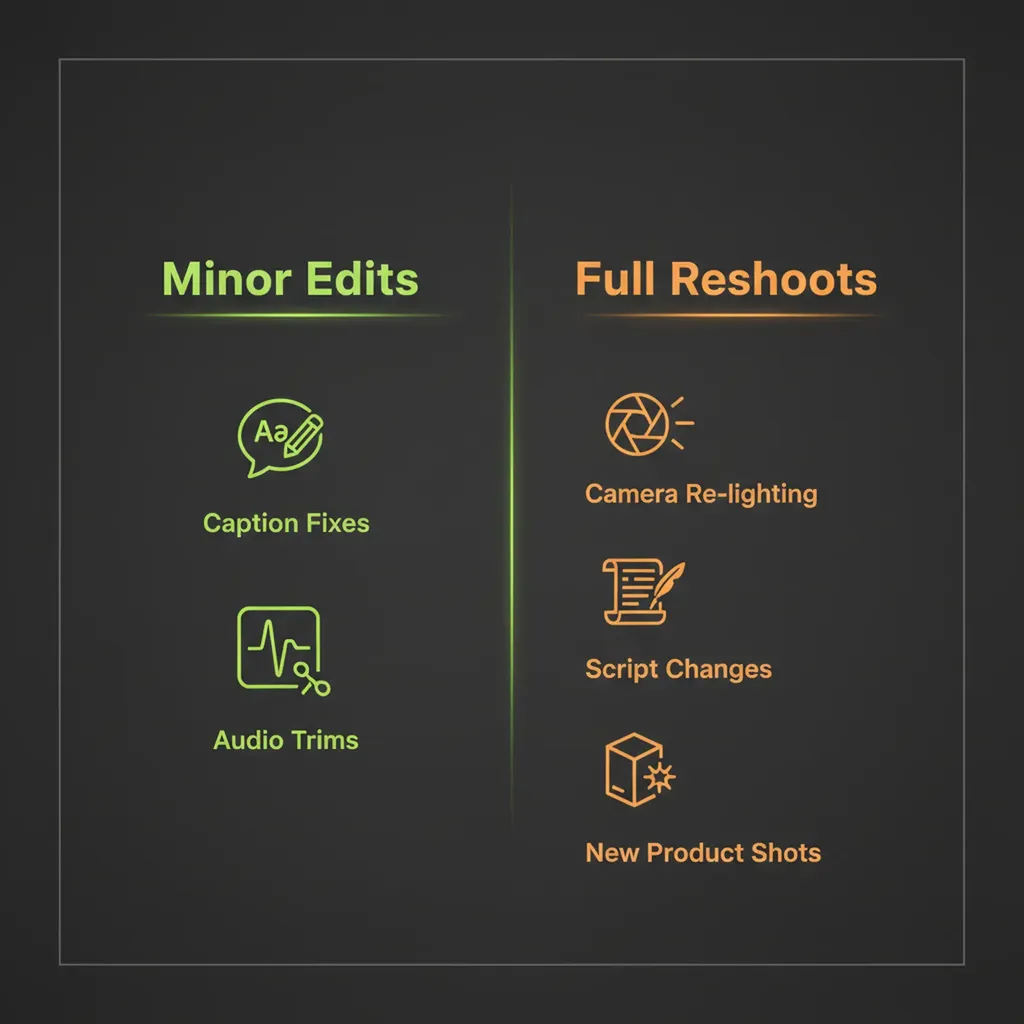
Minor Video Edits Vs. Full Reshoots
To protect your workload, you need a clear definition of what is included in your standard fee.
Minor edits are quick adjustments made during post-production. They do not require you to pick up your camera or reset lighting. In contrast, a full reshoot requires setting up equipment, re-recording audio, and starting the visual assembly over.
Here is how to separate minor tweaks from out-of-scope work:
| Request Type | Included in Base Fee? | Concrete Example |
|---|---|---|
| Minor Edit | Yes (1–2 rounds) | Trimming a 2-second pause, updating text captions, or adjusting audio levels. |
| Visual Swap | No | Replacing b-roll footage because the brand wants a different background angle. |
| Script Change | No | Re-filming product audio after the brand changes its core messaging. |
| Full Reshoot | No | Re-filming the entire video because the brand updated its product packaging. |
The Real Cost of Unpaid Revisions
Unbudgeted revisions destroy your effective hourly rate.
Imagine signing a brand deal for $1,000. You spend 5 hours writing, filming, and editing the first draft. That equals a solid $200 per hour rate.
If the brand requests a complete reshoot because their team changed marketing priorities, that adds another 5 hours of work. Your effective rate drops to $100 per hour—and your calendar gets delayed for other clients.
Every project needs a strict statement of work to lock down expectations before you shoot a single frame.
3 Essential Contract Clauses to Prevent Free Reshoots
You do not need to rely on good faith to prevent extra work. [Adding specific language to your agreements]/resources/collaboration-contract-influencer-review-main) protects your schedule and income legally.
1. The Revision Cap and Window Clause
Limit post-production edits to a specific number of rounds and a strict timeframe.
Explicitly state that your fee includes up to two rounds of minor edits. Require the brand to send all feedback in one combined document within 5 business days of receiving the initial draft.
If the brand does not submit feedback within that window, the draft is marked as approved, and the remaining payment is due.
2. Pre-Production Approval Triggers
Make brand sign-offs mandatory before starting production.
During pre-production, send the brand your script, storyboard, and outline. Do not press record until you receive explicit email approval on these items.
Once the client approves the plan in writing, any later changes to the script or visual direction automatically qualify as out-of-scope work.
3. The Out-Of-Scope Reshoot Fee Schedule
Define the costs for extra work in advance so there are no surprises.
Set a clear fee structure for client-driven reshoots. For example, charge 50% of the base deal rate for a partial reshoot and 100% of the base rate for a full reshoot caused by late messaging changes.
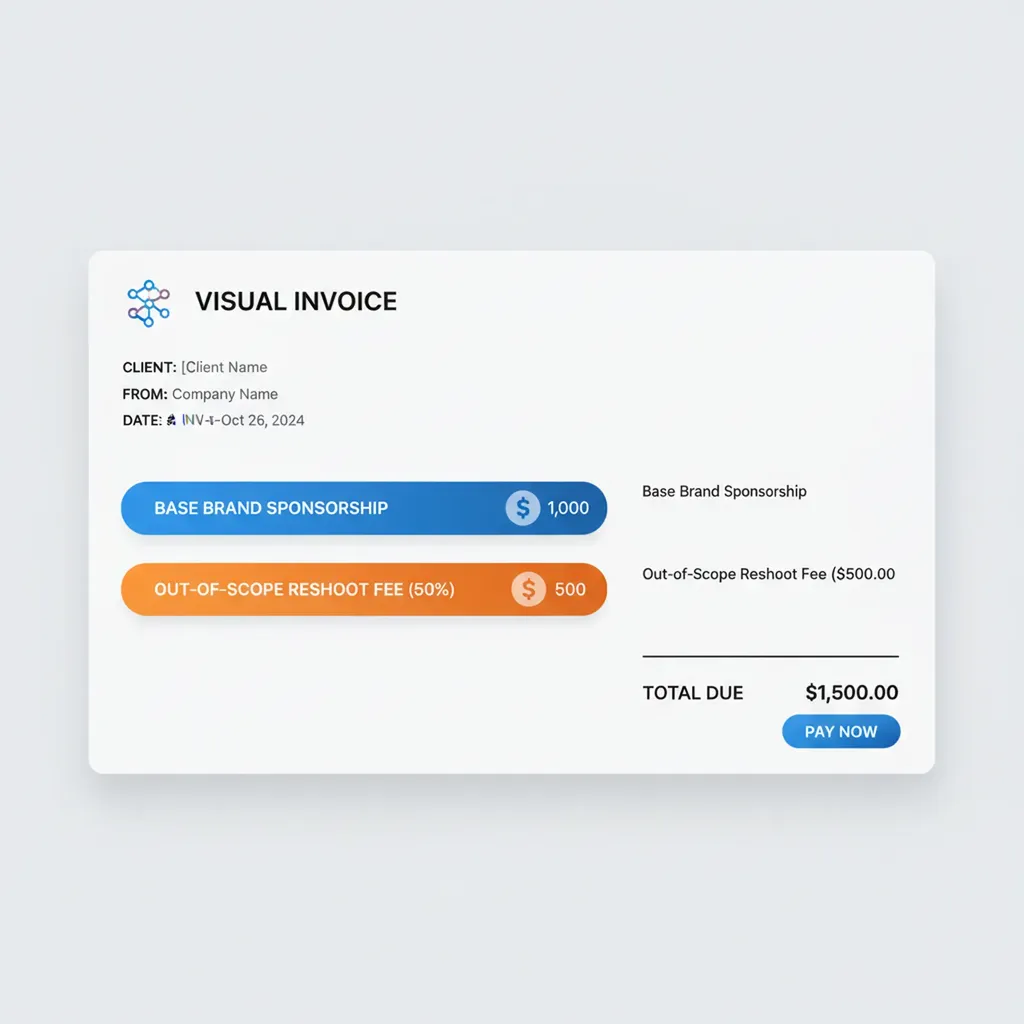
When pricing is documented upfront, brands review scripts far more carefully before giving approval.
How to Respond When Brands Request Extra Work
Enforcing boundaries does not mean being confrontational. You can stay professional, maintain a great relationship, and still get paid for extra effort.
The Change Order Script Strategy
When a sponsor [asks for edits outside your agreement]/use-cases/creator-deal-negotiation-when-brand-changes-scope), acknowledge their feedback immediately. Then, remind them of your contract terms and provide a price quote to complete the request.
Use this template response when handling out-of-scope edits:
"Thanks for the feedback! Since the script was approved on [Date], adding this new talking point requires a partial reshoot. Per our agreement, we can complete a re-filming round for [Fee Amount / 50% of base rate]. Let me know if you would like me to send over an updated invoice so we can stay on schedule!"
This approach shifts the decision back to the brand. They can choose to pay for the change or proceed with the original approved draft.
Automating Contract Boundaries and Communications
Managing business logistics, pitching, and negotiating contracts manually can take upwards of 12 hours every week.
Tools like CreaSeed act as an AI business partner to simplify these administrative steps. Creators use its unified chat interface to manage brand communications, assess account value, and handle paperwork effortlessly.
Automating your workflow ensures your contract boundaries remain clear, helping you hold your rate without spending hours writing emails.
Summary: Protecting Your Time and Margin
Stopping scope creep comes down to clear preparation and consistent enforcement. You protect your time and business margin when you:
- Define the boundary between minor edits and full reshoots in writing.
- Require pre-production approval on scripts and visual outlines.
- Set a fixed fee schedule (50% to 100% of base rate) for out-of-scope reshoots.
- Send polite, professional change orders whenever a brand expands the original request.
FAQ
What If a Brand Refuses to Pay a Reshoot Fee for a Script Change?
Refer to the signed contract and the approved script confirmation email. Politely explain that you filmed the content exactly as approved, and offer to publish the approved draft as planned or move forward with a reshoot once the fee is finalized.
How Many Revision Rounds Should I Include in a Standard Brand Deal?
Include 1 to 2 rounds of minor post-production edits in your base price. Make sure feedback is delivered in a single consolidated document within 5 business days.