How to Reply When a Brand Marketplace Invite Asks for a Free Trial Video
When a brand asks for a free trial video in a marketplace invite, you should never produce custom content for free.
Instead, decline the uncompensated spec work and pivot the brand to your existing video portfolio, performance metrics, or a structured paid pilot proposal with clear usage terms.
When creators see a free trial request, they often THINK they must accept it to build a relationship.
However, sending free video deliverables usually leads to unpaid labor and uncompensated ad usage.
Here is how to handle unpaid trial video invites:
- Decline Unpaid Spec Work: State clearly that you do not create custom content without compensation or a contract.
- Showcase Existing Proof: Direct the brand to your past brand work, engagement metrics, and audience data.
- Propose a Paid Pilot: Offer a low-risk, single-video pilot with defined revision limits and usage rights.
Quick Comparison: Spec Work Vs. Counter-Proposals
| Strategy | Deliverable Required | Creator Protection |
|---|---|---|
| Free Spec Request | Finished custom video without payment | None (high risk of unauthorized ad usage) |
| Portfolio Redirect | Existing video links and metric data | Complete ownership of past assets |
| Paid Pilot Proposal | Discounted or scoped single video | Clear contract, revision cap, and usage duration |
Read on to learn how to audit inbound briefs, protect your Spark Ads and Partnership Ads rights, and use exact scripts to convert free requests into paid partnerships.
Evaluating Inbound Free Trial Video Requests
When an invite lands in your inbox or platform marketplace, it often looks like a golden opportunity. But many briefs hide requests for uncompensated spec work, asking you to film full videos before signing a contract.
Identifying Uncompensated Spec Work Red Flags
Watch out for briefs that ask for finished deliverables under the guise of an "audition" or "trial." Brands using automated campaign invites on TikTok Creator Marketplace or Instagram Creator Marketplace sometimes set up standard forms asking every creator for a free draft.
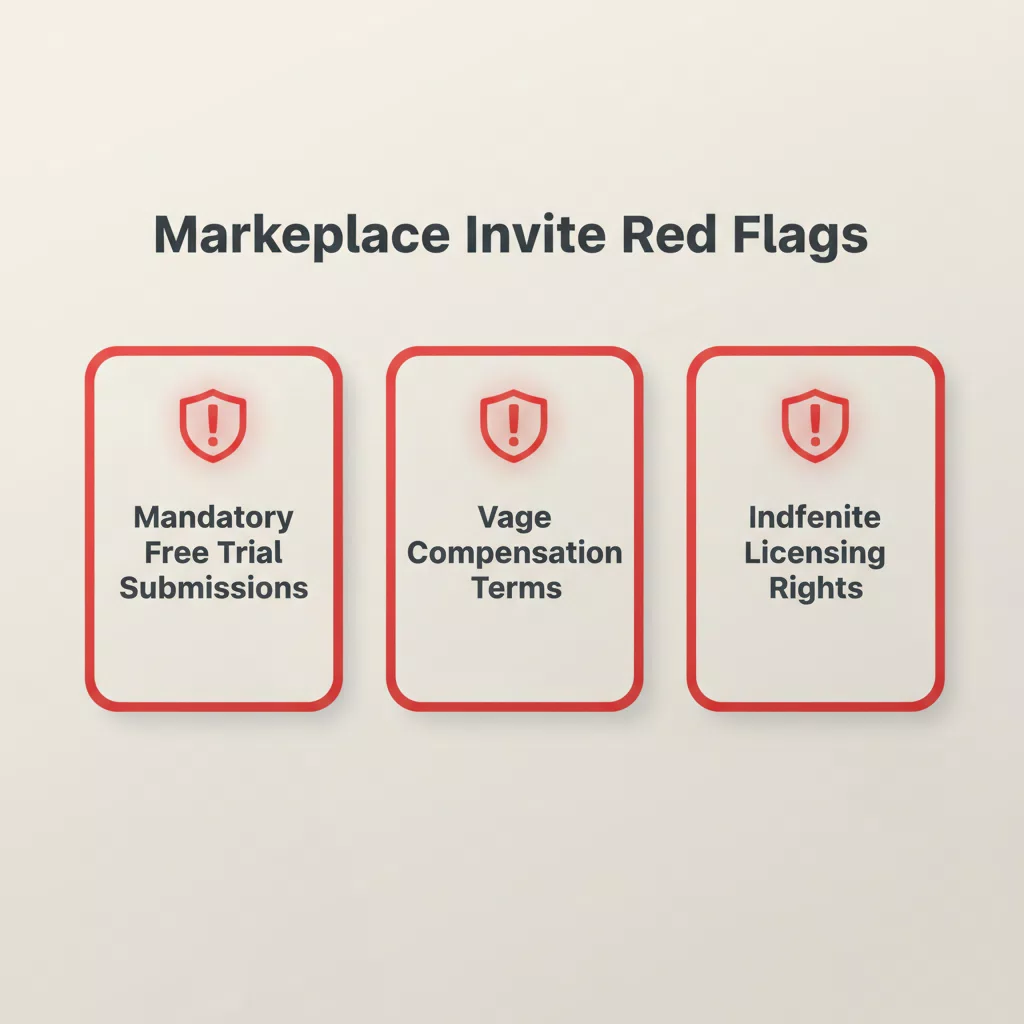
Look for these explicit warning signs in inbound briefs:
- Mandatory video submissions required to apply or move to the next campaign stage.
- Vague compensation clauses promising "future paid opportunities" or "exposure" if the trial performs well.
- Full ownership clauses buried in application terms that give the brand broad license rights to your submission regardless of selection.
Auditing Usage Rights and Ad Sparking Terms
Brands often use trial requests to collect high-converting assets for paid advertising without paying licensing fees. On TikTok, a brand might ask you to submit a video and generate a code for Spark Ads. On Instagram, they may request partner permissions for Partnership Ads.
If a brand gets access to your code or raw asset without a paid agreement, they can run thousands of dollars in ad spend against your image while you receive zero revenue. Always check whether the campaign brief requires ad code authorization or organic posting permissions before agreeing to send any file.
Verifying Brand Authenticity and Decision-Maker Authority
Not every free request comes from bad intentions. Sometimes junior marketing associates or external agencies misconfigure marketplace briefs or use templated outreach scripts.
Vetting Direct Brand Contacts Vs. Agency Intermediaries
Before drafting a response, confirm who sent the invite. Check if the email address matches the brand's official corporate domain rather than a generic public email provider.
When dealing with third-party talent agencies or influencer networks, verify whether the representative has direct budget authority for the campaign. Agency coordinators frequently gather free assets to present options to their clients, whereas direct brand managers usually possess allocated budgets to pivot to a paid pilot immediately.
Matching Demographic Fit and Performance Data
To show brands why your work is worth paying for, prepare your account metrics in advance. Highlight your core audience demographics, average video view counts, and engagement rates.
For instance, consider an illustrative scenario where creator Alex (45,000 followers in the skincare niche) receives a free trial invite from skincare brand GlowLab. Instead of arguing about rates, Alex pulls demographic data showing a 6.2% engagement rate and an 82% target audience match in GlowLab's primary market. Presenting concrete audience data shifts the conversation from free content testing to commercial performance value.
Response Framework: Pivoting Free Work to Paid Pilots
Turning down unpaid work doesn't mean burning a bridge. You can politely decline uncompensated labor while offering a professional, low-risk alternative.
The Portfolio and Paid Pilot Counter-Script
Your goal is to shift the brand's focus from unvetted custom spec creation to your proven track record. Offer a discounted or tightly scoped single-video pilot project instead of free work.
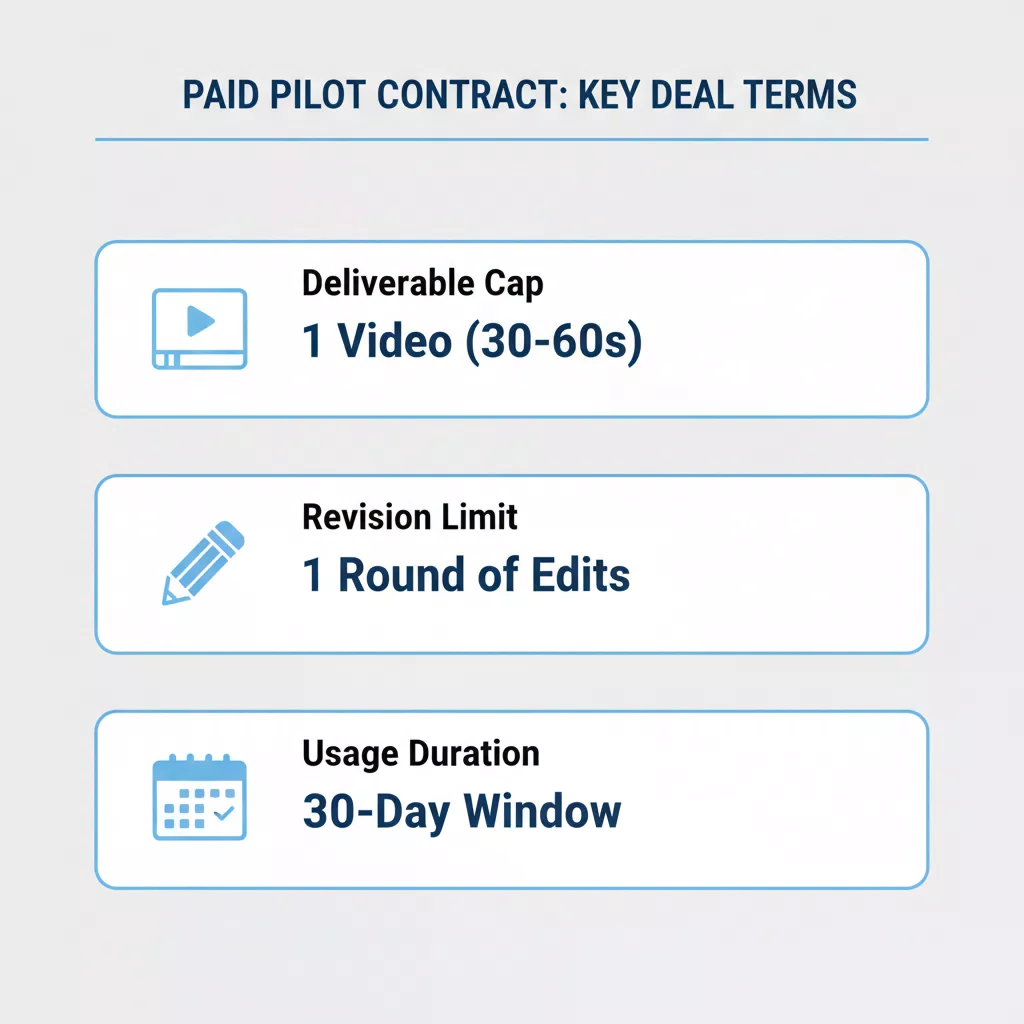
Sample Counter Script: "Thank you for the invitation! I don't produce custom trial videos without a paid contract, but I'd love to collaborate. You can review my past campaign deliverables and performance data here [Portfolio Link]. I can offer a single-video paid pilot for $300, which includes 30 days of organic distribution and one round of minor revisions."
Defining Essential Deal Scope and Usage Boundaries
When presenting a paid pilot, clearly outline the deal parameters so the brand understands what is included. Setting firm boundaries protects your time and prevents scope creep.
| Terms Parameter | Unpaid Trial Request (High Risk) | Structured Paid Pilot (Recommended) |
|---|---|---|
| Deliverable | Full custom video with unknown edits | 1 short-form video (30-60s) |
| Revision Cap | Unlimited revisions requested by brand | Maximum of 1 round of minor textual edits |
| Raw Footage | Brand demands unedited source video files | Excluded or charged at an additional fee |
| Usage Window | Perpetuity or indefinite ad rights | 30-day organic and paid ad usage period |
| Whitelisting | Unrestricted ad access without code limits | Specific 30-day code authorization for Spark Ads |
Streamlining Creator Valuation and Negotiation Workflows
Managing brand back-and-forth, auditing briefs, and calculating rate cards manually takes hours every week. AI business tools streamline these workflows so creators can run their businesses smoothly without giving up manager commissions.
Calculating Market Value and Baseline Rates
Setting rates based on guesswork can cost you thousands in lost earnings or cause you to price yourself out of brand budgets. Using data-driven valuation tools allows creators to analyze engagement rates, average views, and audience location to establish fair baseline rates.
Platforms like CreaSeed analyze account metrics to give creators accurate market values for short-form video deliverables and paid ad usage rights. Knowing your baseline pricing gives you the confidence to turn down free trial requests and justify counter-offers grounded in actual account performance.
Automating Brand Communications and Paperwork
Responding to every cold outreach or marketplace brief manually consumes valuable time. By using unified chat tools to generate professional counter-scripts, agreement outlines, and follow-up notes, you maintain a consistent business presence without administrative overhead.
CreaSeed acts as a 24/7 AI business partner that assists creators with outreach, rate recommendations, counter-offers, and deal management directly inside a chat interface. This lets creators manage business admin, execute contracts, and retain 100% of their earnings without relying on traditional talent agencies.
Key Takeaways for Handling Unpaid Video Invites
Handling free trial video requests requires firm professional boundaries and strategic counter-proposals.
- Say No to Free Spec Work: Never create custom content without compensation or a formal agreement.
- Leverage Proven Portfolio Assets: Redirect brands to your past campaign metrics and demographic fit to prove commercial value.
- Propose Structured Paid Pilots: Offer a single-video test package with capped revisions and clear 30-day usage rights.
- Use Automated Tools for Admin: Leverage AI tools like CreaSeed to calculate account valuation, draft negotiation scripts, and streamline deal paperwork while keeping 100% of your earnings.
FAQ
What If a Brand Refuses to Pay for a Trial Video?
Politely decline and direct them to your public portfolio. If a brand isn't willing to fund a low-cost paid pilot, they are unlikely to become a profitable long-term partner.
Can I Send an Unedited Draft with a Watermark Instead of Declining?
Watermarked drafts still require uncompensated time and effort. It is far better to show existing finished portfolio pieces than to produce custom unpaid work.