How to Pitch a Sponsorship Renewal (Without Waiting for the Brand to Re-Engage You)
Want to turn a one-off brand deal into a recurring revenue stream? Don't wait for the brand to reach out to you first.
To pitch a sponsorship renewal proactively, send a data-packed performance recap after the agreed measurement window for your content. Highlight both quantitative metrics and real audience sentiment, then pitch a fresh campaign scope aligned with the brand's upcoming marketing goals before their next budget allocation closes.
Here is what the renewal workflow looks like:
- Choose a reporting window agreed with the brand: Allow organic reach, long-tail impressions, and link clicks to stabilize before pulling metrics.
- Combine data with sentiment: Pair core performance numbers (like views and click-through rates) with screenshots of audience comments showing intent to buy.
- Align with brand milestones: Position your next pitch directly around the brand's upcoming product launches or seasonal sales.
- Pitch fresh formats: Offer multi-video bundles or alternative content angles rather than repeating your initial deliverable.
- Adjust rates with proof: Use documented campaign overperformance to justify updated rates and clear usage rights.
Let's dive into how to package your performance data, format your renewal pitch, and lock in repeat sponsorship deals.
Establish the Post-Campaign Measurement Window
Most creators send their campaign analytics the exact day a sponsored post goes live. That is a huge mistake.
Pulling data immediately cuts your true campaign performance short. Social algorithms take days—sometimes weeks—to distribute content across feeds, discover pages, and search engines.
If you report your numbers within 24 hours, you present an incomplete picture that understates your real return on investment.
Wait 7 to 14 Days for Metric Stabilization
Use the reporting date agreed with the brand, and label earlier figures as interim results.
Reach and purchases can continue after publication, but timing varies by campaign. Compare dated snapshots instead of assuming a fixed peak.
A later report can include additional engagement or conversion data if the brand shares it; it will not capture every future result.
Report Incomplete or Lagging Platform Analytics
Sometimes platform analytics dashboards delay backend reporting. Affiliate link tracking or custom promo code redemptions might lag behind your live view counts.
Do not delay your outreach indefinitely waiting for perfect platform data. Instead, establish a standard reporting protocol:
- Pull verified live metrics (views, likes, shares, comments) at day 14.
- Note any lagging backend variables directly in your report (for example: "Promo code redemption figures reflect platform data through day 10 and will be updated in the final monthly sync").
- Present verified initial figures with clear context rather than educated guesses.
This keeps your communication professional and transparent while ensuring you don't miss the brand's immediate planning window.
Build a Data-Backed Campaign Performance Recap
Brands do not buy deliverables; they buy business results.
When you pitch a renewal, your campaign recap needs to prove that your audience actively responded to the brand's message.
Combine Quantitative Metrics with Qualitative Sentiment
Numbers tell part of the story, but customer sentiment closes the deal. To build a compelling recap, pair core metrics like view counts and Click-Through Rate with direct proof of viewer purchase intent.
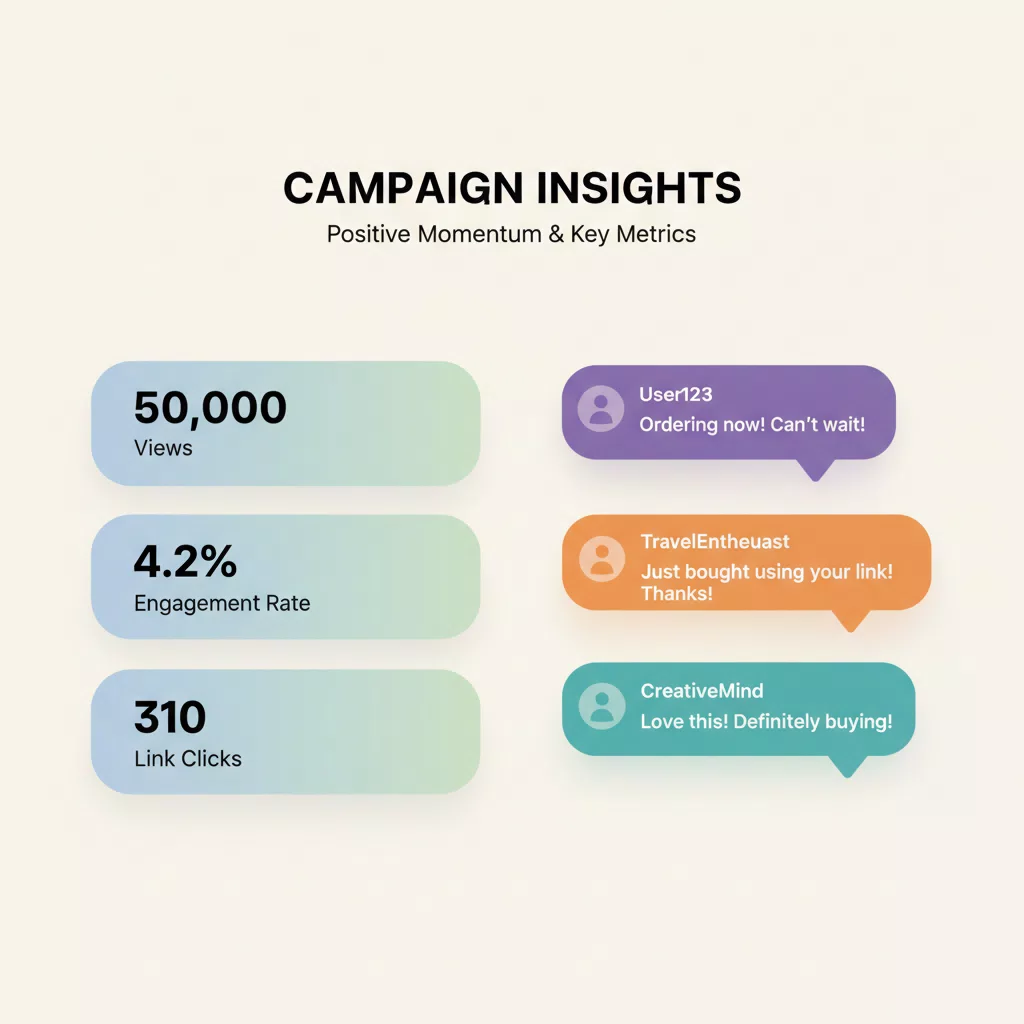
Consider this illustrative scenario: A skincare creator completes a $1,200 initial sponsorship for a hydration serum, delivering 1 Instagram Reel and 1 Story set.
- Views: 50,000 (125% of agreed baseline)
- Engagement Rate: 4.2%
- Link Clicks: 310 direct clicks
While these figures are strong, pairing them with qualitative screenshots transforms the recap:
Include cropped screenshots of real comments where viewers ask: "Does this work on sensitive skin? Ordering now!" or "Just bought using your link!"
This combination proves your content generated genuine commercial intent.
Evaluate Brand Fit and Audience Resonance
Show the brand manager why your community responded so strongly. Highlight demographic alignment, such as geographic breakdown, age ranges, or interest categories pulled directly from your account analytics.
When you explain that 78% of your audience falls into their exact target customer profile, you remove perceived risk from their next marketing expenditure.
Structure the Renewal Proposal and Campaign Scope
Never ask a brand: "Do you want to work together again?"
Instead, present a concrete proposal tailored to their upcoming business objectives.
Align Deliverables with Upcoming Brand Milestones
Before drafting your pitch, research what the brand is preparing for next. Look for public hints such as:
- Upcoming product line extensions or seasonal sales
- Major brand refresh initiatives
- Q3 or Q4 marketing pushes
Position your follow-up directly around these milestones. If you know the brand typically launches a holiday gift set in November, pitch your renewal in early autumn to secure budget before allocations close.
Pitch Expanded Formats and Fresh Content Angles
Do not simply repeat your initial deliverable package. Propose strategic variations based on your initial campaign learnings.
If a single integrated placement performed well, pitch a multi-video bundle or a dedicated product deep-dive. For example, transition from a standard product showcase to an educational tutorial or a "30-day challenge" narrative.
Offering bundled packages lowers the brand's customer acquisition costs while locking in predictable revenue for your business.
Negotiate Rates and Commercial Terms for Repeat Deals
When your initial campaign overperforms, your commercial value increases. You should adjust your baseline pricing accordingly.
Adjust Rates Using Historical Performance Data
Use your documented campaign metrics to justify updated pricing transparently.
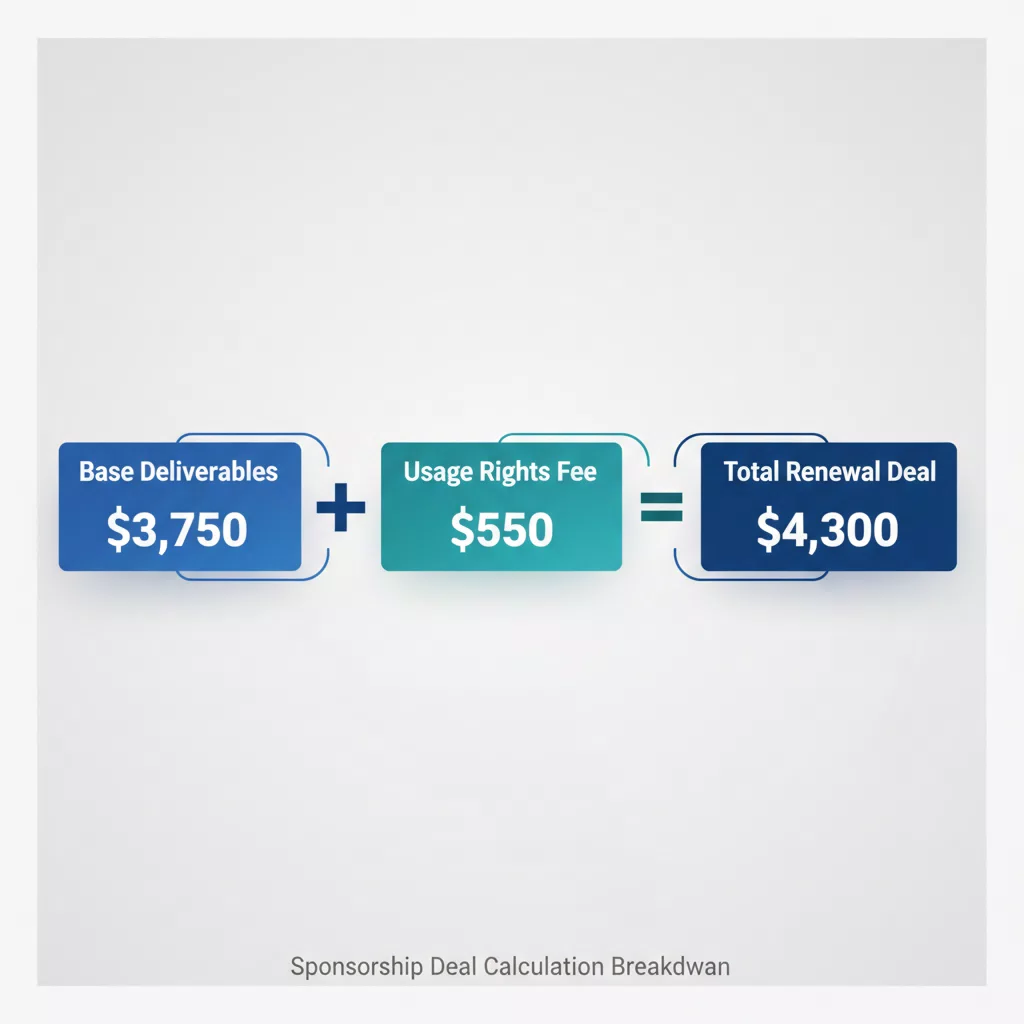
In our illustrative scenario, the initial campaign generated 50,000 views against a standard 40,000 baseline. The 25% difference is one data point to discuss when proposing a new scope and price; it does not predict the next campaign.
| Deliverable Scope | Illustrative Initial Deal | Illustrative Renewal Proposal |
|---|---|---|
| Content Deliverables | 1 Instagram Reel | 3 Instagram Reels (Bundle) |
| Planning Benchmark (not a guarantee) | 40,000 baseline | 120,000 aggregate baseline |
| Licensing Rights | Organic distribution only | 30-day partnership-ad permission |
| Total Investment | $1,200 | $4,300 ($1,250/video + $550 usage fee) |
Past performance can support a renewal proposal, but does not guarantee future reach or eliminate price objections.
Clarify Usage Rights and Exclusivity Clauses
Always define clear parameters around usage rights and category exclusivity in your renewal contract scope:
- Usage Rights: Specify exact duration (e.g., 30, 60, or 90 days) and platforms where the brand can run paid ads using your content.
- Category Exclusivity: Limit exclusivity clauses tightly to direct product competitors rather than broad industry categories, ensuring you retain revenue flexibility.
Clear commercial terms prevent scope creep and ensure both parties maintain shared expectations.
Essential Steps for Pitching Sponsorship Renewals
To turn one-off sponsorships into recurring long-term partnerships, follow this systematic renewal workflow:
- Track the Window: Choose a reporting window agreed with the brand post-publication before pulling performance reports.
- Package the Proof: Combine verified quantitative metrics with qualitative audience comments showing purchase intent.
- Identify Opportunities: Research upcoming brand product launches or seasonal campaigns.
- Propose the Scope: Pitch bundled deliverables and updated content formats tailored to their goals.
- Refine Commercial Terms: Adjust pricing based on historical overperformance and define explicit licensing windows.
Here is a practical email template you can adapt for your proactive renewal outreach:
Subject: Campaign Performance Recap + Q3 Content Strategy for [Brand Name]
Hi [Brand Manager Name],
It’s been 14 days since our recent campaign for [Product Name] went live, and the community response has been fantastic!
Here is a quick snapshot of our performance metrics:
- Total Views: 50,000 (125% of baseline target)
- Engagement Rate: 4.2%
- Direct Link Clicks: 310
Beyond the numbers, our audience showed strong purchase intent (I've attached a slide with performance charts and comment screenshots for your team).
Seeing how well this resonated, I’d love to help support your upcoming fall product launch. I’ve put together a 3-part content bundle designed to highlight [Product Feature] across Q3.
Do you have 10 minutes next Tuesday to discuss the proposed scope?
Best regards,
[Your Name]
FAQ
When Is the Best Time to Send a Sponsorship Renewal Pitch?
Send your renewal pitch after an agreed measurement window following your sponsored content goes live. This timeframe allows initial organic reach and engagement metrics to stabilize while keeping the campaign fresh in the brand manager's mind.
How Do You Handle Rate Increases for Repeat Brand Sponsorships?
Justify rate increases by citing documented performance data from your previous campaign, such as exceeding view targets or delivering high click-through rates, alongside added deliverables or extended licensing rights.
What Should Be Included in a Campaign Performance Recap Slide?
Include total views, engagement rate, click-through rate, and conversion numbers if available, alongside cropped screenshots of positive viewer comments that demonstrate clear purchase intent.