How to Manage Overlapping Holiday Posting Slots Without Triggering Exclusivity Clauses
Overlapping holiday brand deals in Q4 can easily trigger non-compete clauses and jeopardize your revenue if you aren't careful.
Most contract violations don't happen because of duplicate upload dates. They happen because hidden pre- and post-posting "rest period" blackout windows collapse into the same calendar weeks.
To manage high-volume holiday posting slots without breaching exclusivity clauses, you need to:
- Audit category scope: Swap broad category bans (like "all color cosmetics") for narrow product-level carve-outs (like "hydrating lip oils").
- Map rest period blackouts: Track mandatory pre- and post-posting blackout buffers (such as 14-day pre/post windows) on a single Q4 visual calendar.
- Stagger live slots: Propose revised post dates to brand managers that align with promotional pushes (like Black Friday runs) without touching active rest windows.
- Separate paid ad permissions: Differentiate TikTok Spark Ads licensing from Instagram Partnership Ads usage to prevent overlapping paid ad rights.
Here is exactly how to review incoming Q4 briefs and keep your calendar conflict-free.
The Holiday Exclusivity Risk: Why Q4 Scheduling Triggers Contract Violations
Q4 is peak monetization season for creators. Brands dump massive promotional budgets into Black Friday and holiday campaigns. But packed calendars bring serious legal traps.
The biggest threat to your Q4 revenue isn't missing an upload deadline. It's accidental exclusivity breaches.
When you accept multiple sponsorships in a short timeframe, non-compete terms hidden in your agreements can easily collide.
Category Scope Vs. Brand Scope
Many brands include broad non-compete clauses by default. If you aren't vigilant, a brand will lock you out of an entire industry.
For instance, an agreement might prohibit you from partnering with "any beauty or personal care brand."
That single phrase kills your earnings potential. It stops you from accepting deal offers for shampoo, perfume, body wash, or lip gloss for weeks.
Instead, you want your non-compete tied strictly to product-level exclusions.
If you promote a hydrating lip oil, your lock-out should only cover competing lip oils—not all color cosmetics or skincare lines.
The Hidden Threat of Exclusivity Rest Periods
Here is where most creators get burned: the timeline buffer.
Exclusivity rarely starts and ends on the exact day your video goes live. Contracts usually demand a mandatory pre-posting and post-posting rest period.
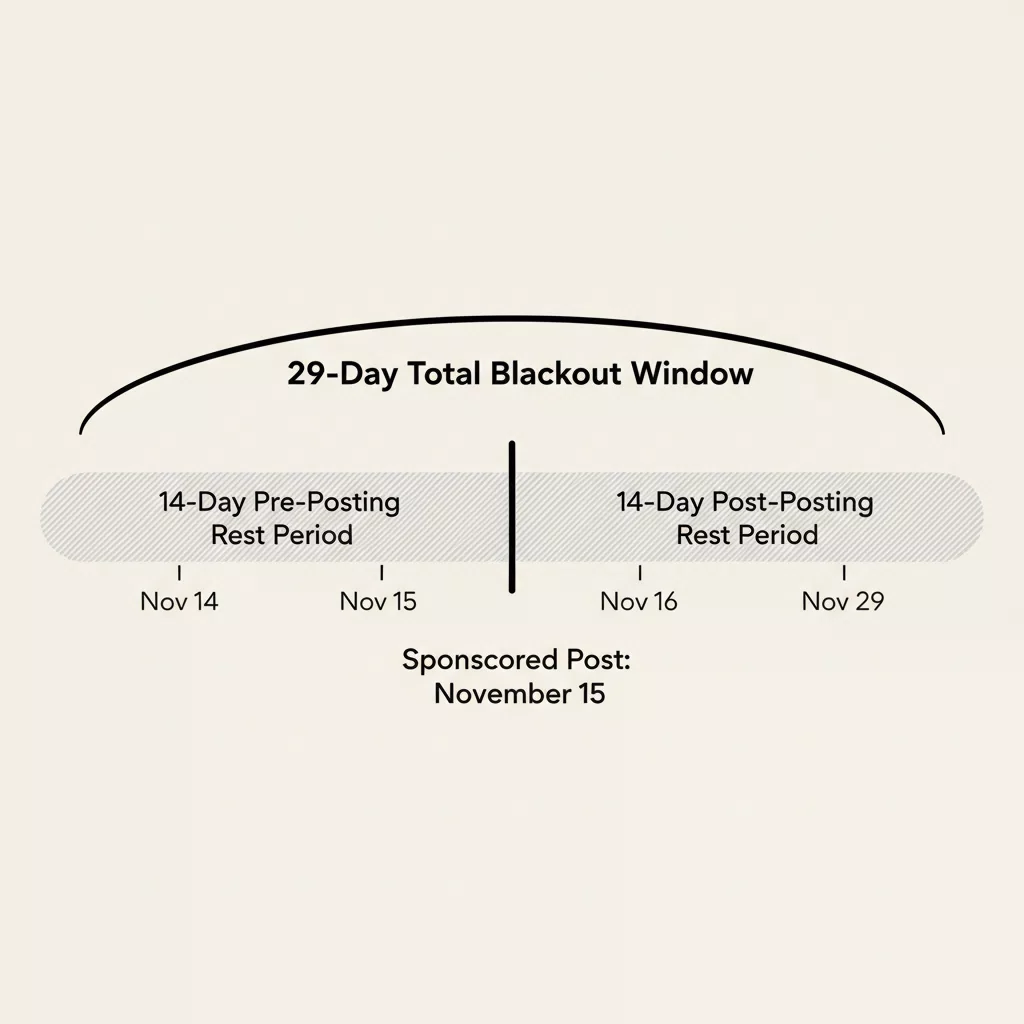
Consider an illustrative scenario: Creator Maya signs a brand deal for a lip product launching on November 15. Her contract includes a 14-day pre-posting blackout and a 14-day post-posting blackout.
Even though Maya only posts one video on November 15, her exclusivity window spans 29 total calendar days (November 1 through November 29).
If Maya signs a second holiday sponsorship on November 20 for a different cosmetic brand, she has breached her contract—even though the upload dates don't touch.
Auditing Q4 Briefs for Schedule and Category Conflicts
Before accepting deliverables or signing an incoming campaign brief, you must audit your entire Q4 calendar.
Never treat brand briefs as isolated deals. Every new contract impacts every other partnership on your schedule.
Mapping Launch Dates and Exclusivity Blackouts
To catch legal overlaps before they happen, you need a single master schedule.
Plot the exact date your sponsored content goes live. Then, shade the entire pre-posting and post-posting blackout period around that date.
When you layer multiple brand briefs onto one calendar, overlapping blackout windows will immediately stand out in red.
If shaded blocks overlap, you have a direct non-compete conflict that must be fixed before signing.
Identifying Red-Flag Contract Language
Watch out for standard brand agreements that claim excessive control over your channel.
Scan incoming contracts specifically for these three major red flags:
- Uncapped exclusivity windows: Terms stating you cannot work with competitors "indefinitely" or for "12 months following publication."
- Vague industry definitions: Broad phrases like "any lifestyle, wellness, or retail company."
- Unilateral exclusivity shifts: Clauses allowing the brand to push back launch dates without resetting your exclusivity blackout end-date.
Tactics for Negotiating Exclusivity Adjustments and Carve-Outs
When a high-paying holiday offer conflicts with an existing deal, don't automatically decline it. Negotiate the boundaries.
Brand managers want access to your holiday audience. Many are willing to trim exclusivity demands to secure your slot.
Negotiating Narrow Product-Level Carve-Outs
Ask the brand manager to replace generic category bans with a narrow contractual carve-out.
Explain that a narrow definition protects their core product focus without freezing your entire business during peak sales weeks.
Sample Negotiation Email: "Hi [Brand Manager Name], I’m thrilled to partner on this Q4 launch! To keep our agreement clear while honoring existing commitments, I’d like to update Section 4 (Exclusivity) from 'all skincare products' to specifically cover 'hydrating hyaluronic acid serums.' This ensures your serum launch gets exclusive category coverage while allowing me to fulfill non-competing body care slots. Let me know if this update works for your legal team!"
Staggering Post Dates Outside Blackout Windows
If a brand cannot alter its category scope, adjust the calendar placement.
Offer to shift your live posting date earlier or later so the rest periods no longer overlap.
For example, moving a post five days earlier can push your pre-posting rest period completely clear of an active post-posting blackout from another campaign.
Managing Paid Amplification Conflicts Across Platforms
Organic post schedules are only half the battle during the holidays.
Paid ad usage rights—such as creator account whitelisting—can cause serious exclusivity breaches behind the scenes.
TikTok Spark Ads Vs. Instagram Partnership Ads Exclusivity
When you grant a brand permission to boost your post as an ad, your content remains active in ad auctions long after it leaves your organic feed.
If Brand A runs an active boosted ad through your account while Brand B launches an organic campaign in the same category, Brand A's ad can pop up right next to Brand B's content.
Understanding how platform usage rights handle exclusivity buffers helps avoid these backend collisions:
| Feature / Platform | TikTok Spark Ads | Instagram Partnership Ads | YouTube Creator Partnerships |
|---|---|---|---|
| Authorization Mechanism | Video Access Code generated in app | Partnership Label tag & access grant | Embedded sponsored segment in video |
| Exclusivity Buffer Risk | High; paid ad delivery can run past organic rest periods | High; ad sets run inside creator handle via Meta Ads Manager | Low; limited to organic video upload duration |
| Recommended Exclusivity Scope | Tied strictly to code expiration date (e.g., 30 days) | Tied strictly to ad set campaign end-date | Organic posting date + defined rest buffer |
| Resolution Strategy | Set mandatory code deletion dates in contract | Specify exact ad run dates in Meta partner permissions | Define separate licensing fees for extended usage |
Always specify that paid amplification usage windows must run concurrently with your organic post exclusivity period—not after it ends.
Checklist for Conflict-Free Q4 Content Scheduling
Follow this simple workflow for every incoming Q4 brief to protect your revenue and stay compliant:
- Audit category breadth: Reject broad industry bans. Define exclusivity by specific product active ingredients or sub-types.
- Calculate full blackout dates: Add pre-posting buffers and post-posting buffers to the target live date to establish the true blackout range.
- Map on a master visual grid: Plot every campaign's active blackout range on a unified Q4 calendar.
- Align paid usage rights: Ensure TikTok Spark Ad permissions and Instagram Partnership Ad permissions expire on the exact same date as your organic non-compete.
- Secure written amendments: Confirm all carve-outs and date shifts in writing before creating campaign deliverables.
FAQ
What Happens If Two Brand Deals Accidentally Overlap During Q4?
Accidental overlaps can lead to breach of contract notices, demand letters for refunded fees, or loss of future campaign opportunities. If you notice an overlap early, contact the brand manager immediately to adjust your upload date or narrow the product category scope.
Does Organic, Un-Sponsored Content Trigger Brand Exclusivity Clauses?
Yes, if the contract prohibits featuring competing products overall. Always check if your non-compete language restricts all mentions of competitor items or only paid commercial partnerships.
Can I Negotiate Contract Exclusivity After Signing a Deal?
You can request a contract amendment, but brands are not legally required to agree once the original agreement is signed. It is best to negotiate carve-outs and rest periods before signing the brief.