How to Evaluate TikTok One and Instagram Creator Marketplace Invites (Before Accepting Bad Terms)
Getting an inbound invite on TikTok One or Instagram Creator Marketplace feels like an easy win.
But accepting an offer without auditing the brief can trap you into doing double the work for half the pay.
To protect your business, you must verify the brand's identity, audit deliverable specs against whitelisting rights, and review payment terms before hitting accept. Always check whitelisting durations, revision caps, and exclusivity clauses to make sure your compensation matches the true scope of work.
Quick Deal Comparison
| Evaluation Criterion | Low-Risk Organic Deal | High-Risk Commercial Deal |
|---|---|---|
| Usage Rights | Organic in-feed posting only | TikTok Spark Ads or Instagram Partnership Ads |
| Exclusivity | Specific product niche (e.g., 30 days) | Broad category non-compete (e.g., 6+ months) |
| Revisions | Capped at 1–2 minor rounds | Unlimited revisions or reshoots |
| Payout Terms | Guaranteed flat fee (Net-30) | Performance-only payouts or Net-60+ |
Here is how to analyze every inbound platform invite step-by-step before accepting.
Audit the Campaign Brief and Deliverable Requirements
When an inbound notification pops up in your dashboard, it is tempting to review the dollar figure and immediately hit accept.
That is usually a mistake.
Briefs often bundle heavy production demands and long-term licensing into what looks like a quick post. Auditing the contract terms upfront protects your time, account reach, and income.
Identify Deliverable Counts and Format Specifics
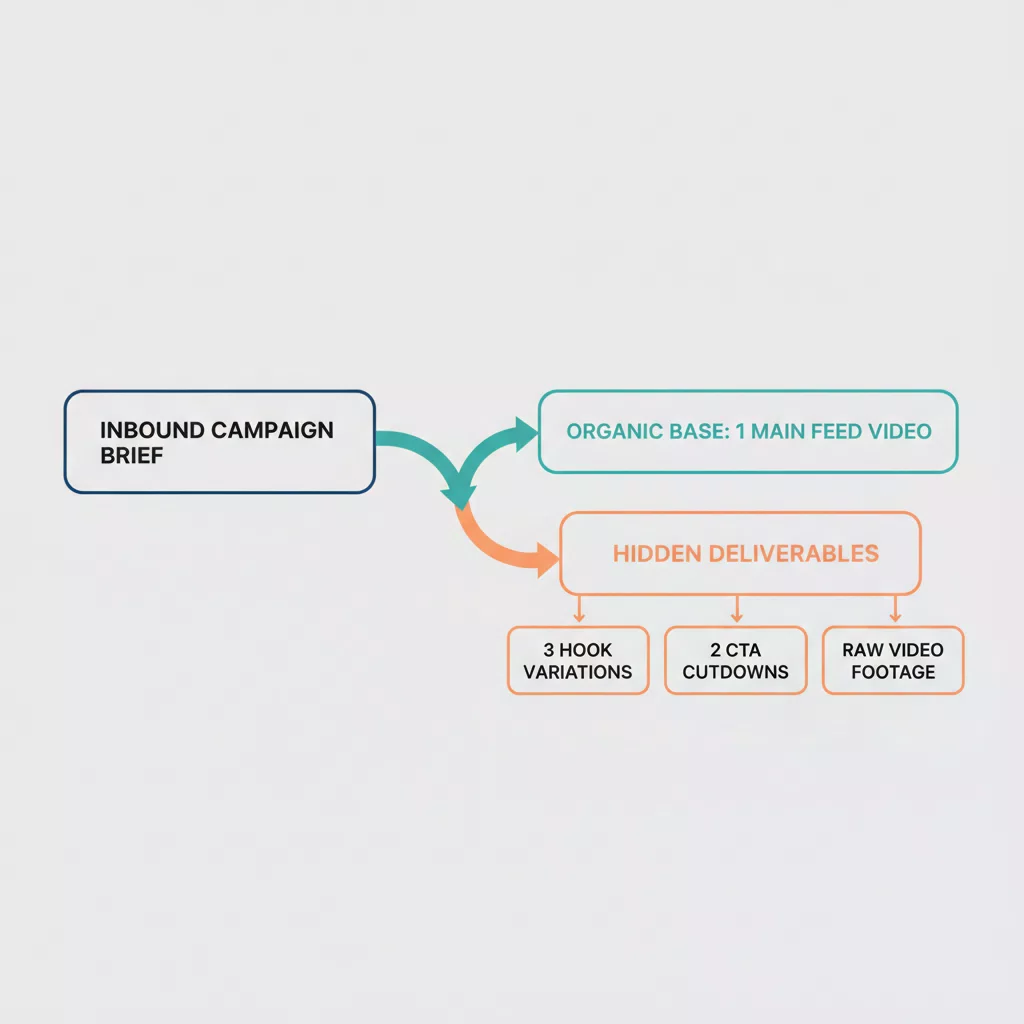
Never assume an invite for "1 video" means a single 30-second clip. You need to inspect the exact asset breakdown inside the campaign brief.
For example, an illustrative brand offer paying $500 for "1 TikTok video" might actually demand:
- 1 Main Feed Video (60 seconds, 9:16 aspect ratio)
- 3 Alternate Hook Variations (the first 3 seconds rewritten and re-shot)
- 2 Call-To-Action (CTA) Cutdowns (different endings targeting different buyer types)
- Raw Video Footage (unedited A-roll and B-roll files delivered via cloud storage)
That isn't one deliverable. That is six separate video assets.
Check audio requirements as well. If a brand requires trending commercial tracks, verify whether they provide licensed audio. Using unauthorized audio on a brand-sponsored post can lead to content muted by the platform or copyright strikes.
Examine Whitelisting and Partnership Ad Rights
Organic feed reach and paid advertising rights are two completely different products.
Organic posting reaches only your existing audience and feed recommendations. whitelisting gives a brand backend access to run paid ad spend behind your account handle.
On TikTok One, brands request this permission via TikTok Spark Ads authorization codes. On Instagram Creator Marketplace, they request Instagram Partnership Ads access directly in your dashboard permissions.
Running paid ads behind your handle increases your account's frequency in user feeds. If a brand runs high-frequency ad campaigns with a aggressive sales pitch, it can cause audience fatigue and unfollows.
Always verify:
- Is ad access requested?
- How long will the ad run? (e.g., 30 days vs. unlimited/perpetual)
- What paid media spend is attached?
Never give away ad amplification rights for free. If a brand wants to run Spark Ads or Partnership Ads, charge a separate licensing fee on top of your content creation rate.
Verify Decision-Makers and Offer Legitimacy
As creator marketplaces grow, so do phishing scams and fake brand representatives.
Before sharing personal contact details or accepting project terms, confirm that the campaign offer comes from an authorized contact.
Distinguish Platform Marketplaces from Off-Platform Outreach
Legitimate platform invites stay inside the official dashboard.
TikTok One and Instagram Creator Marketplace have built-in system notifications, campaign tabs, and native messaging systems.
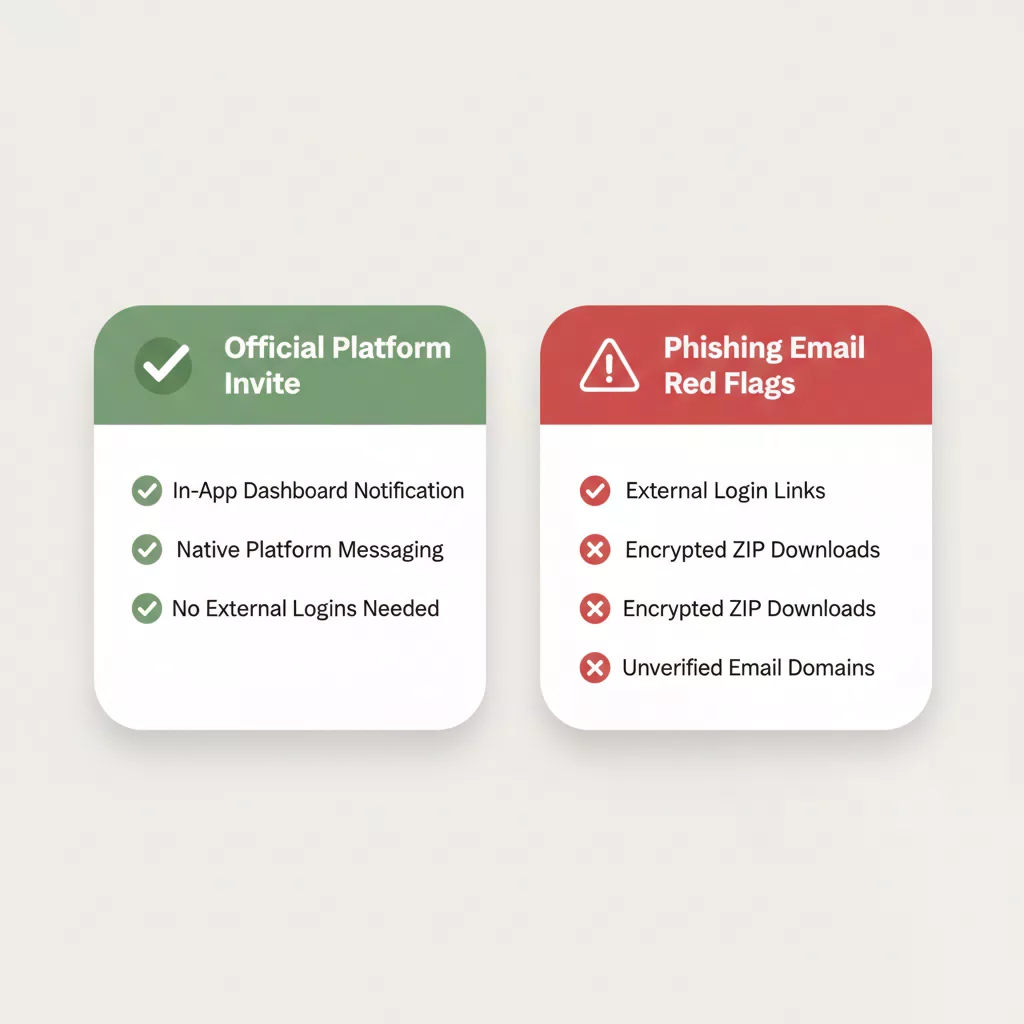
Be cautious if an email claims to be a marketplace offer but asks you to click an external link, log into a third-party website, or download an encrypted ZIP file containing a "creative brief."
Real platform invites do not require external credentials or file downloads to review campaign specs.
Confirm Decision-Maker Authority on Direct Inquiries
If a campaign starts inside a marketplace but moves to email, inspect the representative's business credentials:
- Check email domains: Official brand managers send emails from corporate domains (e.g.,
name@brandname.com), not free email providers. - Verify agency handles: Agencies representing brands on marketplaces should match official directory records or verified agency handles.
- Confirm role titles: Search the contact on professional networks to ensure their title matches brand marketing or influencer partnerships management.
If anything looks suspicious, send a quick message through the brand's verified website contact page to confirm the representative's identity.
Analyze Rates, Usage Fees, and Payment Schedules
To price an inbound invite fairly, split the total offer into two distinct line items: Production Base Rate and Usage Rights Fees.
Calculate Base Rate vs Usage Rights Value
Your base rate covers your labor: planning, scripting, filming, editing, and organic posting to your audience. Extended usage rights cover the commercial value the brand gains by using your image and content in paid marketing.
If an illustrative offer provides $500 for a video, break down the actual financial value:
| Itemized Fee Component | Scope / Usage Term | Illustrative Standard Rate | Offer Gap |
|---|---|---|---|
| Organic Base Production | 1 Video posted to main feed | $500 | Fully Covered |
| Spark Ads / Partnership Ad Rights | 30-Day Paid Ad Usage | $250 | Unpaid ($0 in brief) |
| Category Exclusivity | 30-Day Skincare Non-Compete | $150 | Unpaid ($0 in brief) |
| Total Fair Value | Full Commercial Deliverable | $900 | $400 Shortfall |
When a brief includes paid ad usage rights or extended licensing without extra pay, request a rate adjustment before accepting.
Evaluate Performance Clauses and Payment Timelines
Review the exact payout structure inside the platform dashboard. Offers generally fall into three categories:
- Guaranteed Flat Fee: A set rate paid upon asset approval or post publication.
- Performance-Tiered Bonus: A lower base fee paired with bonuses for reaching view or engagement milestones.
- Affiliate / Commission Only: Payouts tied strictly to promo code usage or affiliate link sales.
Pay close attention to payout timing. Standard commercial contracts use Net-30 terms (payment 30 days after invoice or campaign approval).
Avoid briefs with Net-60 or Net-90 payout terms, or contracts where payment depends on the brand's clients paying them first.
Counter Exclusivity, Revision, and Liability Clauses
Contract terms determine how much freedom you keep while working on a campaign.
Broad non-compete rules and unlimited revision cycles can cost you time and restrict future income.
Limit Category Exclusivity Windows
Exclusivity clauses prevent you from working with competing brands during (and after) a campaign.
Watch out for overly broad wording like: "Creator agrees not to promote any beauty, personal care, or lifestyle products for 6 months."
A broad non-compete like that can lock you out of thousands of dollars in potential brand deals across your niche.
Instead, narrow exclusivity to specific product categories and short timeframes:
- Product-Specific: Restrict non-competes to direct competitors (e.g., "hydrating facial moisturizers" rather than "all cosmetics").
- Time-Bound: Limit exclusivity to 15–30 days around the posting date.
Set Revision Caps and Strict Delivery Timelines
Without clear limits, minor feedback can quickly turn into full reshoots.
Ensure campaign briefs explicitly limit edits to 1 or 2 minor revision rounds (such as adjusting text placement, cropping, or fixing audio mix levels).
Specify that major creative changes made after initial script approval—or requests for full reshoots—require an additional production fee.
Example counter-offer wording: "I am excited to collaborate on this campaign! My listed base rate of $500 covers 1 organic feed video with up to 1 round of minor edits. For 30 days of paid ad usage rights and 30 days of product-specific exclusivity, the updated project total is $850. Let me know if this works for your budget so I can reserve your spot on my production schedule!"
Key Takeaways for Evaluating Inbound Creator Invites
Evaluating inbound brand deals comes down to matching the offer's total scope to fair pay:
- Audit deliverable details: Count all required video hooks, asset variations, and raw video requests before agreeing to a price.
- Separate usage from labor: Charge add-on fees for TikTok Spark Ads, Instagram Partnership Ads, or external advertising rights.
- Verify identity: Accept campaign offers inside official platform dashboards or through verified corporate email domains.
- Restrict exclusivity: Limit non-competes to narrow product types and short timeframes to protect future sponsorships.
- Cap revision rounds: Set a maximum of 1–2 minor edits in your agreement to prevent scope creep.
FAQ
What Should I Do If a Brand on TikTok One Requests Spark Ads Access After I Accepted the Offer?
Politely inform the brand manager that paid usage rights were not included in the original campaign brief. Provide an add-on rate sheet for 30, 60, or 90 days of Spark Ads rights before sharing your authorization code.
How Long Should I Wait for Payment After Delivering Brand Campaign Assets?
Standard payment terms across creator platforms and agency contracts are Net-30 (30 days after asset approval or post publication). If an offer lists Net-60 or Net-90, negotiate for Net-30 before hitting accept.