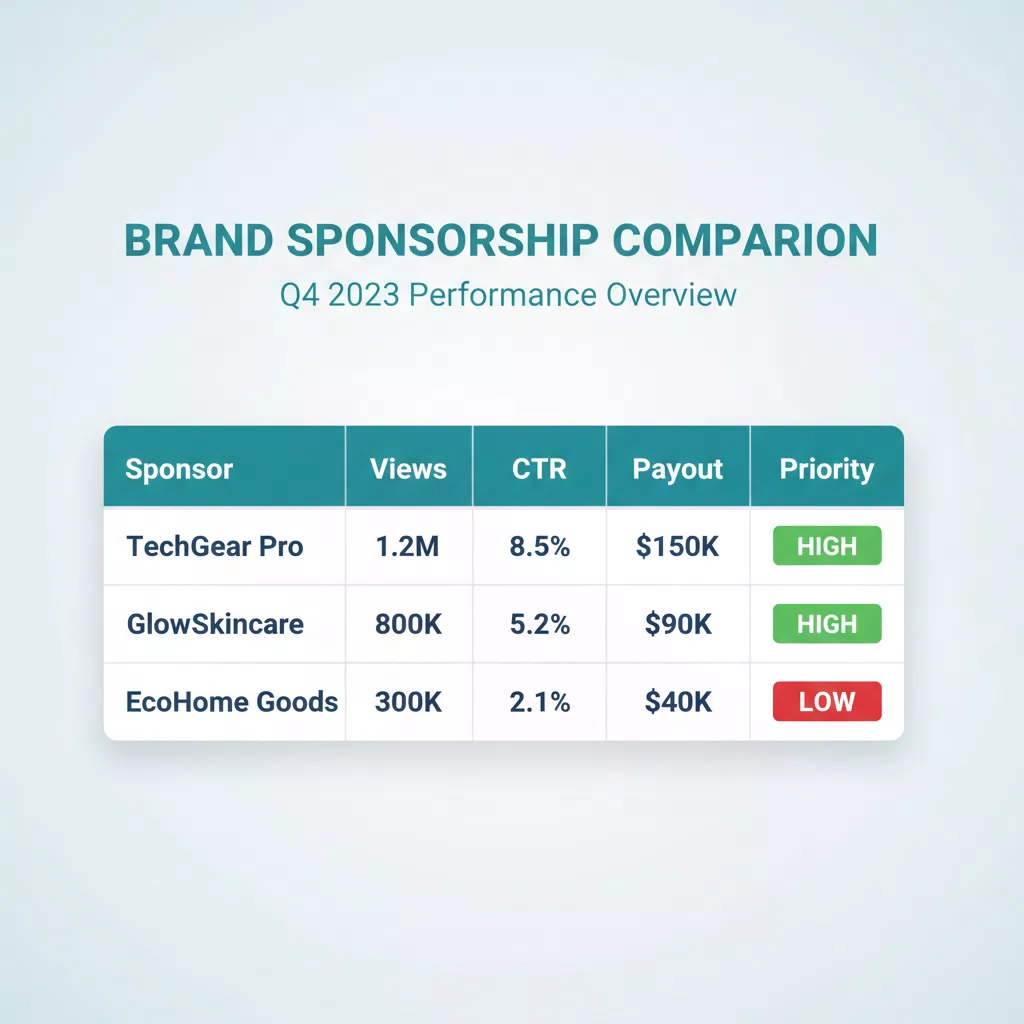
How to Choose Which Past Sponsors to Recontact Before Q1
Want to secure your Q1 brand deals before the new year even starts?
The secret isn't cold outreach—it's re-engaging your best past sponsors. Prioritize brands that delivered strong engagement, paid on time, and fit your content naturally. Pitching a 30-day performance recap along with a fresh Q1 proposal 4 to 6 weeks before the quarter begins helps you lock in early-year budgets.
Here is a quick overview of how to evaluate past sponsors:
- Quantitative ROI: High click-through rates, strong view counts, or solid conversions.
- Qualitative Signals: On-time payments, low edit friction, and positive audience feedback.
- Outreach Timing: Pitch 4 to 6 weeks before Q1 begins to secure early budgets.
Quick Comparison: High-Priority Vs. Low-Priority Past Sponsors
| Sponsor Category | Key Traits | Recommended Q1 Action |
|---|---|---|
| High-Priority | On-time payout, strong ROI, smooth communication | Send 30-day recap and customized Q1 proposal early |
| Medium-Priority | Average engagement, moderate edit cycles | Send lightweight recap report with fresh content angles |
| Low-Priority | Late payments, high friction, poor audience response | Pass on outreach and focus efforts elsewhere |
Let's dive into how to audit your past deliverables and turn early performance data into repeat deals for Q1.
Audit Campaign Metrics and Brand Fit to Shortlist High-Value Sponsors
Before reaching out to previous brand partners, you need a clear system to rank them.
Not all past deals deserve a follow-up pitch for Q1. Re-engaging the wrong partner wastes time and can tie you up in low-margin, stressful revisions.
Score Past Deliverables on Quantitative Performance
Start by looking at the hard numbers from your previous campaigns. Focus on metrics you can directly control and track, such as total impressions, view count, and click-through rates.
When analyzing link clicks and conversion data, keep the brand's attribution window in mind—the pre-agreed timeframe during which a brand credits sales or sign-ups to your specific link or promo code.
For an illustrative scenario, let's look at how three hypothetical Q4 brand integrations compare when audited across performance and workflow metrics:
| Sponsor (Illustrative Scenario) | Deliverable Views | Engagement / CTR | Payout Speed | Friction Level | Q1 Priority Score |
|---|---|---|---|---|---|
| TechGear Pro | 45,000 views | 3.2% CTR | On-time (14 days) | Low (1 quick edit) | High (Re-pitch) |
| GlowSkincare | 30,000 views | 1.8% CTR | Delayed (60+ days) | High (4 edit rounds) | Low (Skip) |
| EcoHome Goods | 25,000 views | 4.1% CTR | On-time (7 days) | Low (No edits needed) | High (Re-pitch) |
Focus your Q1 renewal efforts on sponsors like TechGear Pro and EcoHome Goods, where engagement met or exceeded expectations.
Factor in Qualitative Signals and Work Friction
Strong numbers tell only half the story. The internal effort required to close and fulfill the campaign matters just as much.
Evaluate how easy the brand team was to work with during script reviews and content approvals. If a sponsor took four rounds of edits, micromanaged video framing, or paid 60 days late, that friction eats directly into your hourly rate.
Also consider audience sentiment. Did your viewers respond enthusiastically in the comments, or did they complain that the integration felt forced? Recontact brands that felt like an organic extension of your regular content.
Timing the Measurement Window and Managing Incomplete Campaign Data
Gathering campaign performance metrics too early or too late can warp your recap numbers.
You need a consistent timeline for capturing reach while keeping Q1 outreach moving before marketing budgets are finalized.
Establish a Standard 14-To-30-Day Reporting Window
Always evaluate deliverable metrics within a standardized window after posting. For YouTube long-form content and evergreen blog reviews, a 30-day window gives search and algorithm recommendations time to build traffic.
For short-form video on platforms like Instagram Reels or TikTok, a 14-day window usually captures over 90% of total organic views and engagement.
Locking in your numbers at the 14-to-30-day mark allows you to send reports to brands while the campaign is still fresh in their minds.
Address Missing Attribution and Delayed Data
Brands often delay sharing conversion data, affiliate sales numbers, or promo code redemptions. Do not let missing client-side data halt your Q1 renewal strategy.
If a brand has not provided conversion reports, build your recap deck using top-of-funnel platform analytics you control: impression totals, average watch time, click counts, and engagement rate.
Highlight high-value qualitative proof, such as comment screenshots from viewers saying they bought or plan to buy the product. This demonstrates real audience intent even when pixel tracking falls short.
Package Performance Recaps into a High-Converting Q1 Proposal
Once you shortlist your top past sponsors, present your results alongside a clear proposal for the new year.
Brands appreciate creators who proactively make renewal simple and data-driven.
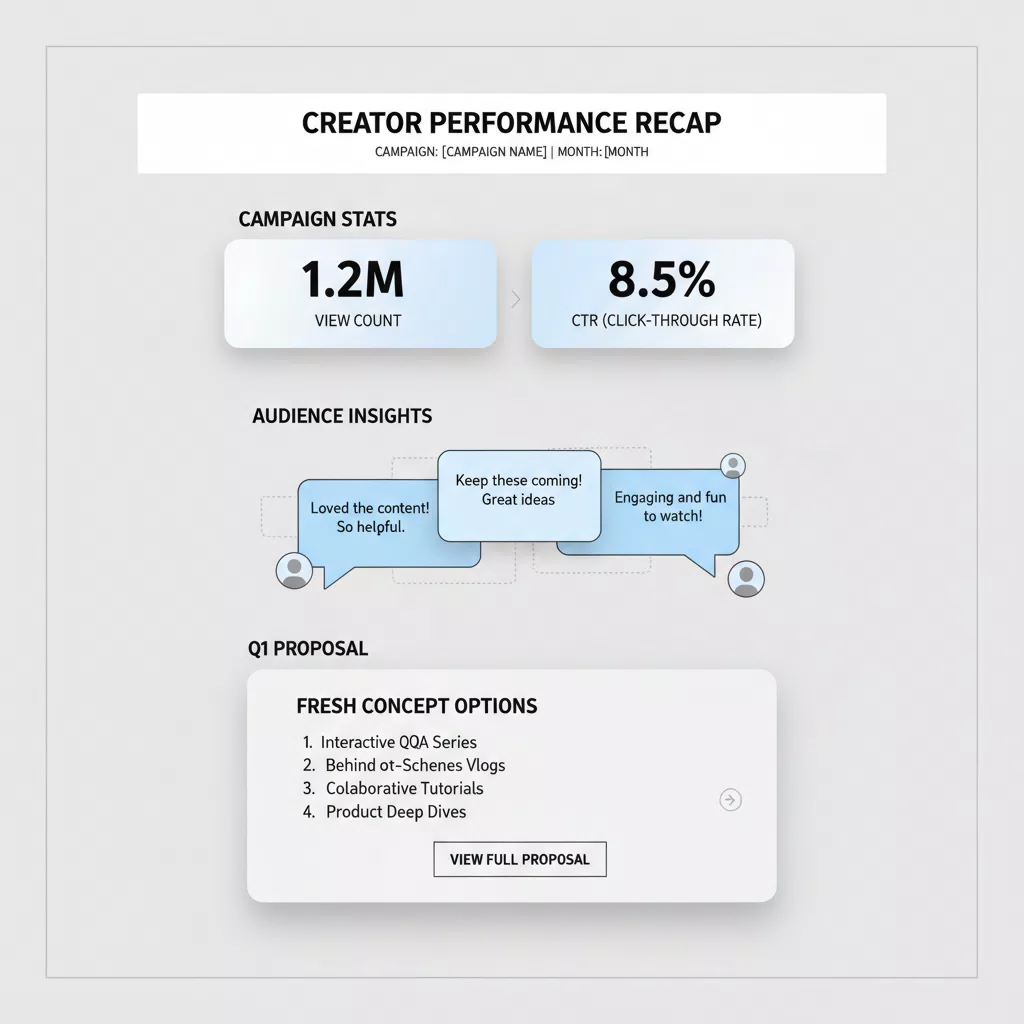
Draft a Clear One-Page Campaign Recap
Keep your recap document brief and visually clean. A single page or slide is ideal.
Include three core elements: top-line metrics (views, clicks, CTR), positive audience feedback screenshots, and a brief takeaway on what content style performed best.
Sample Pitch Wording (Illustrative Example): "Hi [Name], our Q4 integration reached 45,000 views with a 3.2% CTR, beating our initial estimate by 20%. As you finalize your Q1 budget, I'd love to share three fresh video concepts tailored for your January 'Fresh Start' campaign."
Frame Fresh Q1 Deliverables and Scopes
Do not just ask for a repeat of the Q4 video. Offer fresh concepts aligned with typical Q1 brand initiatives, such as New Year goals, organization, or habit building.
Suggest expanded scopes that add value for the advertiser. For example, pitch video usage rights for Instagram Partnership Ads or TikTok Spark Ads, or offer whitelisting access—granting the brand advertiser temporary permissions to run paid ads through your handle to reach new target segments.
Bundled packages—like a YouTube integration combined with an Instagram Reel and 30 days of ad usage rights—give sponsors an easy reason to allocate early-year budgets to your channel.
Key Steps to Retain and Re-Engage Past Sponsors for Q1
To maximize your Q1 renewals, follow this checklist before pitching:
- Audit Q4 campaigns: Filter past sponsors by view counts, click-through rates, and payment timeliness.
- Set reporting windows: Pull analytics between 14 and 30 days post-publish for consistent metrics.
- Identify workflow friction: Pass on sponsors with excessive edit requests or delayed payouts.
- Build one-page recaps: Combine platform metrics with comment screenshots showing viewer buying intent.
- Pitch early: Reach out 4 to 6 weeks before Q1 begins with new campaign concepts and ad usage options.
FAQ
When Should Creators Start Reaching Out to Past Sponsors for Q1?
The ideal time to pitch past sponsors for Q1 is 4 to 6 weeks before the new year begins (mid-November to early December). This aligns with when brand managers finalize early-year marketing budgets.
What If a Past Sponsor Hasn't Provided Conversion or Sales Figures?
Focus your recap report on metrics within your control, such as impressions, reach, watch time, and click-through rates. You can also include screenshots of positive audience comments showing buying intent.
Should You Lower Rates for Repeat Sponsors in Q1?
Rather than lowering your base rate, offer added value in your Q1 pitch—such as extra usage rights, short-form cutdowns, or bundled content packages—to secure a multi-month deal.