How Much Should You Charge for Brand Deals? a Creator’s Guide to Account Valuation
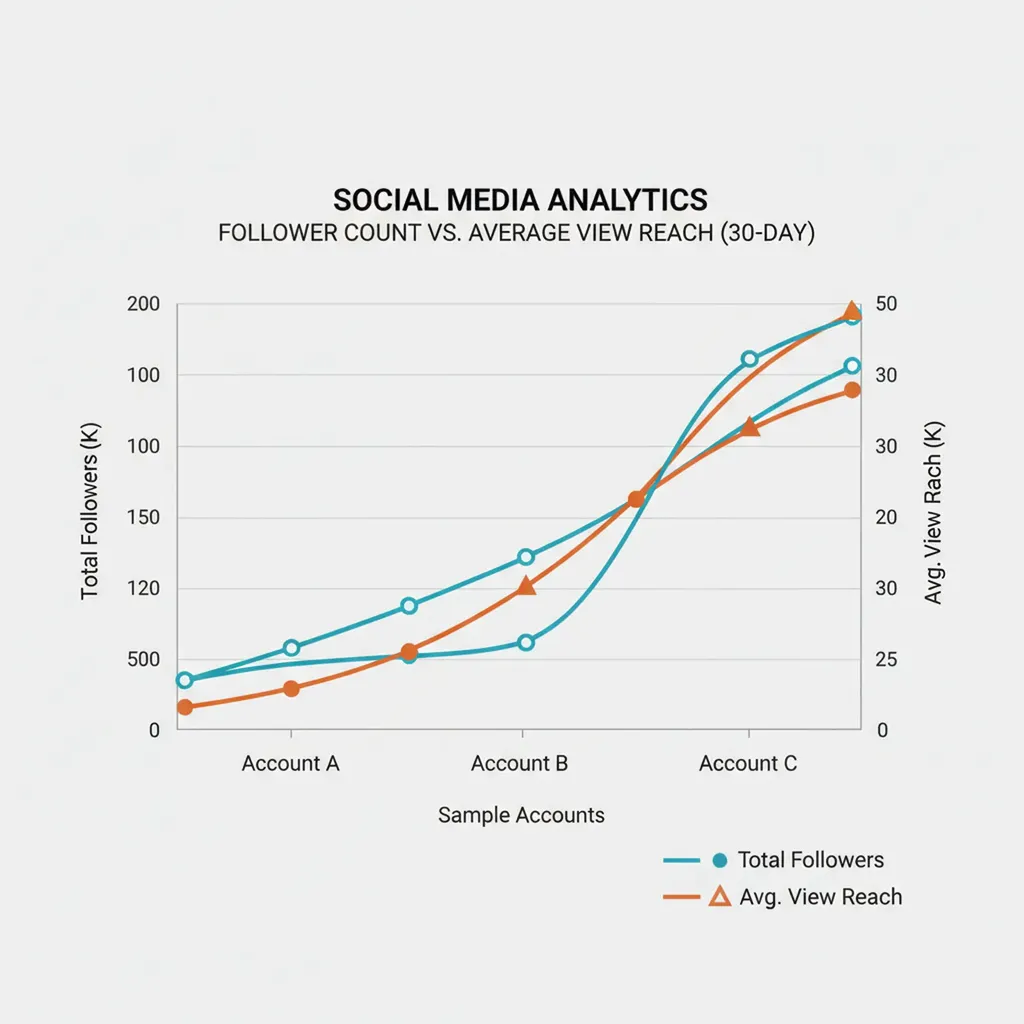
Most content creators severely undercharge for brand deals because they price their content based purely on vanity follower counts.
Here is the short answer: To accurately set your brand deal rates, start with a baseline of $100 per 10,000 followers, then adjust that figure up or down based on your 30-day average views, engagement rate, niche demand, and usage rights. Creators who price using actual performance metrics routinely land payouts 2x to 3x higher than those quoting standard flat fees.
In fact, brands care far more about actual reach and conversion potential than total followers.
Quick Comparison: Baseline Rates by Deliverable
| Platform / Deliverable | Baseline Pricing Formula | Key Value Drivers |
|---|---|---|
| Instagram Static Post | $100 – $150 per 10,000 followers | High engagement rate (>3%) |
| Instagram Reel | Base static rate + 25% to 50% | 30-day average Reel reach |
| TikTok Sponsored Video | $0.01 – $0.03 per average video view | High comment-to-view ratio |
| YouTube Integration | $20 – $30 CPM (per 1,000 avg views) | Dedicated video ($50+ CPM) |
| Usage Rights & Exclusivity | Base rate + 20% to 50% add-on fee | Paid ad whitelisting, exclusivity |
Here is your complete guide to calculating your true market value and negotiating top-tier rates without giving up a cut to traditional management agencies.
Why Follower Count Is the Wrong Metric to Price Brand Deals
When most creators pitch brands, they point straight to their follower count. That is a mistake.
Follower counts are vanity metrics. An account can have 100,000 followers, but if its content only reaches 1,000 people per post, brands are burning money on that deal.
Modern marketing teams look past total audience size. They focus on actual view performance, buyer intent, and real viewer interaction.
Engagement Rate Vs. Total Audience Size
High engagement beats a massive, passive audience every time.
To calculate your engagement rate, add up your likes, comments, shares, and saves on a post, divide that total by your reach or views, and multiply by 100.
Consider two hypotheticals:
- Creator A: 100,000 followers with a 0.5% engagement rate (500 interactions per post).
- Creator B: 10,000 followers with a 6.0% engagement rate (600 interactions per post).
Creator B delivers stronger audience activity and higher conversion potential, despite having 10% of Creator A's audience size. Brands gladly pay a premium for high-intent micro-audiences.
Average Impression and Reach Metrics
Instead of pricing off total followers, base your baseline quotes on your 30-day average views or impressions.
Pulling your analytics over a rolling 30-day window smoothes out random viral spikes and gives brands an accurate expectation of baseline deliverables.
When you quote based on reliable average reach, you establish immediate credibility during sponsorship reviews.
Niche Specificity and Commercial Intent
Not all views carry equal financial value.
A broad lifestyle or comedy channel with 50,000 average views per video might charge a $20 CPM (cost per thousand views). However, a niche software, personal finance, or luxury skincare creator with the exact same 50,000 average views can easily command a $60+ CPM.
Why? Because high-value niches attract audiences ready to spend money on specific products, making each impression worth significantly more to sponsors.
Standard Baseline Rates Across Major Social Platforms
Setting a starting price requires clear platform benchmarks so you do not underquote your effort.
Instagram Posts, Stories, and Reels Pricing
For static feed posts, a standard market starting point is $100 to $150 per 10,000 followers, assuming a healthy engagement rate above 3%.
Because the Instagram algorithm heavily prioritizes short-form video, add a 25% to 50% price increase for Instagram Reels. Reels take more production time and offer broader algorithmic reach beyond your existing feed followers.
TikTok Video Sponsorship Rates
TikTok reach fluctuates more than any other platform. Because follower counts mean very little on TikTok's main feed, price your TikTok videos directly on average views.
A reliable baseline rate is $0.01 to $0.03 per average video view (calculated across your last 10 to 15 non-viral videos).
- Example: If your videos consistently pull 40,000 views, a standard baseline quote is $400 to $1,200 per video.
YouTube Dedicated Videos Vs. Integrations
YouTube content carries a longer shelf life and higher search value than short-form social posts. Pricing on YouTube typically splits into two main formats:
- 60-Second Integrations: A mid-roll shoutout inside an otherwise non-sponsored video standardly prices at a $20 to $30 CPM.
- Dedicated Videos: A video focused entirely on the brand's product commands a $50 to $100+ CPM due to the high production effort and dedicated positioning.
How Usage Rights and Exclusivity Boost Your Deliverable Value
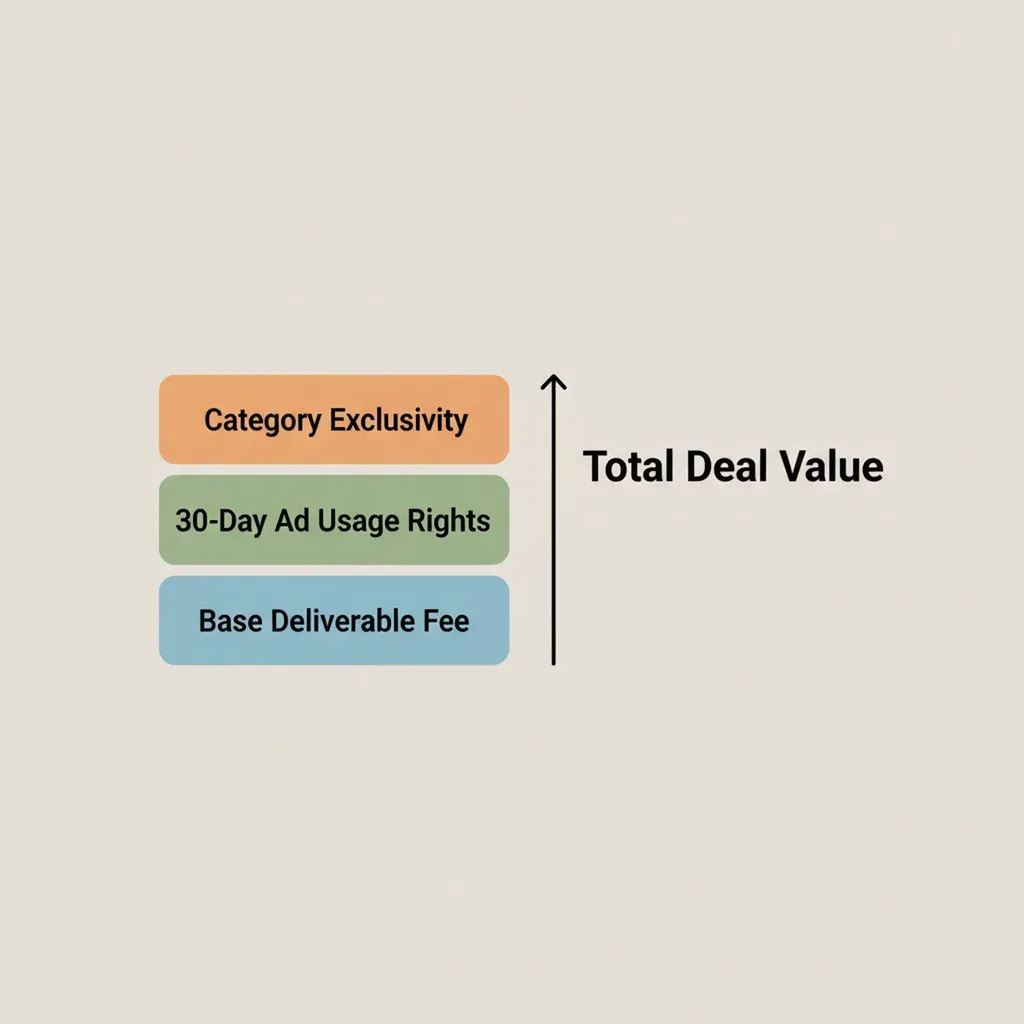
Base deliverable fees cover organic posting to your account. If a brand wants extra control over your content, charge add-on fees.
| Contract Add-On | What the Brand Receives | Standard Pricing Modifier |
|---|---|---|
| Organic Base Deliverable | Single post/video published to creator's feed | 100% (Baseline Rate) |
| 30-Day Paid Usage Rights | Brand uses video for paid ad campaigns | +30% to +50% of Base |
| Digital Dark Posting | Ads run through creator handle without profile posting | +40% to +60% of Base |
| Category Exclusivity | Creator blocks direct competitors in same niche | +20% to +40% per Month |
| Perpetual Asset License | Permanent rights to store and reuse asset forever | +100% to +200% of Base |
Ad Usage Rights and Dark Posting Fees
When a brand wants to use your video as a paid ad, charge for licensing. Standard ad usage rights add 30% to 50% on top of your base rate for a 30-day campaign run.
If the brand wants to run dark posting—running paid ads through your account handle without the post showing up on your profile grid—charge an extra 40% to 60% on top of your standard fee.
If a brand wants permission to run ads through your handle, also known as whitelisting, ensure that time limit is explicitly written into your contract.
Category Exclusivity Pricing Modifiers
Exclusivity clauses stop you from taking sponsorships from direct business competitors for a set period (such as 30, 60, or 90 days).
Since exclusivity prevents you from accepting competing revenue, charge an additional 20% to 40% monthly fee over your base quote for as long as that block remains active.
How to Value Accounts and Negotiate Deals Without Agency Fees
Traditional talent agencies routinely take a 20% cut of your deal earnings. You can calculate your true market rate and handle deal communications directly.
Automating Account Valuation and Rate Calculation
Instead of guessing your rates or spending hours building complex spreadsheets, automated tools simplify account valuation.
Platforms like CreaSeed analyze your audience metrics, 30-day view averages, and niche demand to generate personalized rate recommendations. By managing account valuations and deal tracking through a unified chat assistant, creators eliminate manual administrative tasks and keep 100% of their deal earnings with zero agency commission cuts.
Handling Brand Counteroffers and Rate Negotiations
When brands offer lower rates than your rate card, do not immediately drop your price without reducing deliverables.
If a brand lacks the budget for your full rate, offer to adjust the deliverable scope—such as removing paid ad usage rights or swapping a dedicated Reel for an Instagram Story set.
Use concrete metrics during negotiations to explain your quote:
"Thank you for the offer! Based on my 30-day average reach of 45,000 views per Reel and a 5.2% engagement rate, my base rate for a dedicated short-form video is $1,200. If your budget for this campaign is capped at $800, I can provide a single 60-second integration without paid usage rights included. Let me know if that option works for your team!"
Key Takeaways for Setting Your Brand Deal Rates
- Ignore vanity follower counts: Base your pricing structure on 30-day average views, active engagement metrics, and buyer intent within your niche.
- Unbundle usage rights: Never bundle paid ad licensing, whitelisting, or perpetual rights into your base posting fee.
- Charge for exclusivity: Add a 20% to 40% fee whenever a brand demands competitor blocking.
- Keep 100% of your earnings: Leverage automated AI valuation tools to calculate rates and negotiate directly without losing 20% of your income to talent management fees.
FAQ
How Much Should a Creator Charge for 10,000 Followers?
A standard baseline rate is $100 to $150 per 10,000 followers for static social posts, but this should be adjusted based on 30-day average views, engagement rate, and niche demand.
What Is the Difference Between Organic Posting Rates and Ad Usage Rights?
Organic posting rates cover publishing content directly to your public feed, while usage rights allow a brand to run your content as paid digital advertisements, which typically commands an extra 30% to 50% fee.
How Do You Calculate Your Engagement Rate for Brand Deals?
Calculate your engagement rate by adding total likes, comments, shares, and saves on a post, dividing that sum by your total reach or impressions, and multiplying the result by 100.