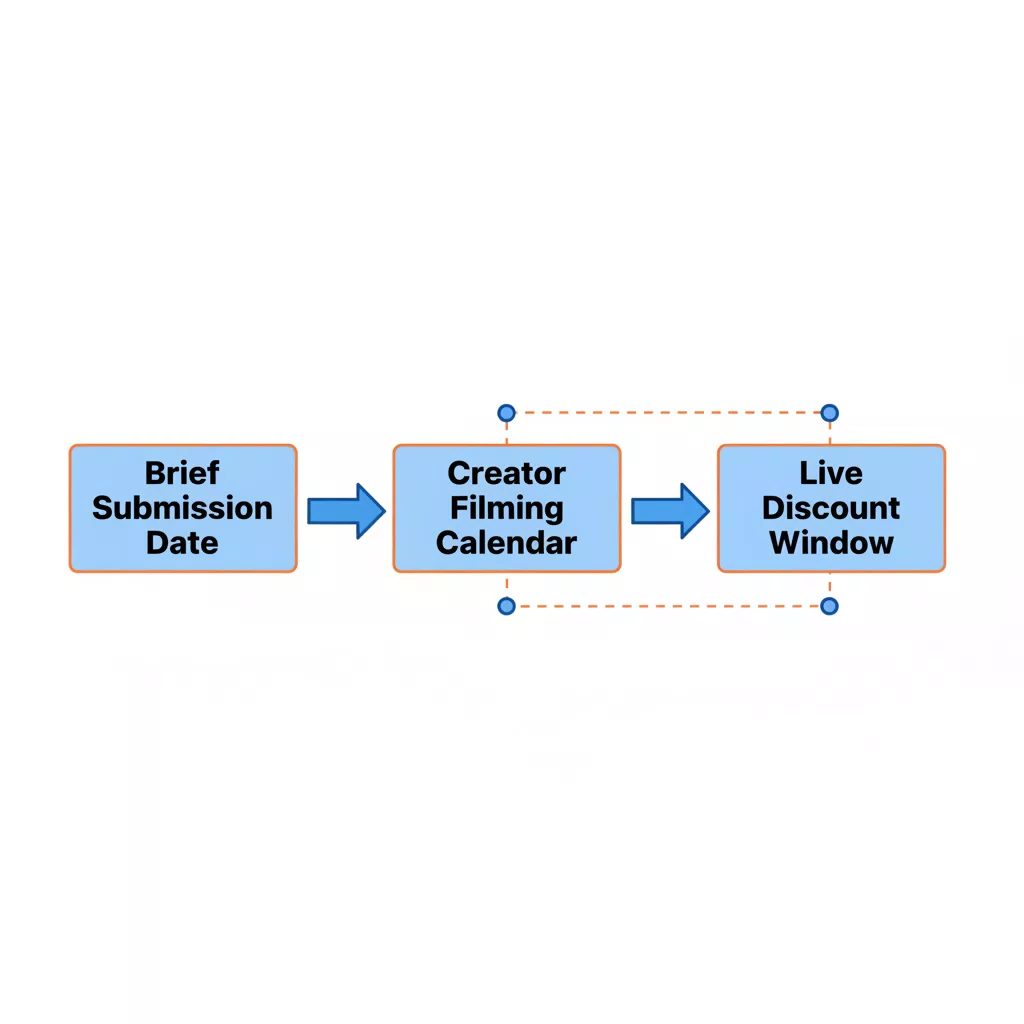
How to Evaluate Late Black Friday Brand Briefs (Without Ruining Your Holiday Posting Schedule)
A late Black Friday brief is worth considering only if the campaign deadline, your production calendar, and the agreed fee still work together.
Check the sale end date, production and review time, and the organic posts already on your calendar. Quote extra work separately and put the approval deadline in writing before accepting.
Here is the quick framework for evaluating last-minute holiday briefs:
- Triage deadlines: Ask the brand for its actual sale start and end dates, including time zone, and confirm that the post can go live while the offer is valid.
- Price the rush: Calculate the extra hours and displaced work, then quote the rush fee that makes this specific brief worthwhile.
- Protect your calendar: Review how many sponsored posts are already scheduled and whether this one would displace content your audience expects.
- Tighten terms: Agree on a workable review deadline, what happens when feedback is late, and the payment schedule before work begins.
Here is how to decide whether to accept, re-scope, or decline a late-season deal.
Triage Late Briefs Against Your Holiday Content Calendar
When a brand reaches out three days before Black Friday, your first instinct might be to grab the cash.
Don't do it yet.
First, check whether the campaign timeline even fits your production queue and algorithm balance.
Verify Posting Windows and Campaign Deadlines
Brands often run promotions during strict promotional windows. For an illustrative example, suppose a brand’s discount ends November 30 and it sends you a brief on November 27 with a three-day turnaround. Your post could land just as the offer ends.
If their internal review process takes two extra days, your post goes live after their discount ends—rendering the sponsorship useless for them and stressful for you.
Always verify the brand's hard promotion cutoff date before signing anything.
Calculate Rush Surcharges for Express Turnarounds
Fast turnarounds disrupt your schedule and force you to put existing projects on hold. You need to charge for that inconvenience.
Work out the added production hours, disrupted bookings, and any cost of moving existing commitments. Quote a rush fee that covers those costs; there is no universal percentage.
Here is how that math works in practice (illustrative scenario):
- Standard 60-second video rate: $1,000
- 48-Hour Rush Surcharge (50%): +$500
- Total Revised Quote: $1,500
If the brand has an aggressive exclusivity clause blocking you from working with other holiday sponsors, increase your fee further to cover lost income from competing categories.
Protect Key Holiday Posting Slots and Organic Reach
Several sponsored videos in a row may crowd out the content your audience expects. Check your own posting plan and past audience response before accepting another slot.
Cap Sponsored Content Frequency During Peak Weeks
There is no universal sponsored-to-organic post ratio. Look at your planned posts, audience feedback, and the distinct value each sponsored post offers.
If two sponsored videos are already scheduled during the same week, decide whether a third would serve your audience or whether another format or date would fit better.
Integrate Brands into Multi-Product Holiday Gift Guides
What if you have no open dedicated post slots left? Offer late-arriving brands a spot in a holiday gift guide instead of a dedicated video.

A gift guide can combine several relevant products in one useful piece of content. Check that the products fit the theme, each sponsor accepts the format, and the disclosures remain clear.
Streamline Terms to Prevent Approval Delays
Late brand deals fail most often during the draft review phase. A brand manager goes on holiday break, your video sits in inbox limbo for 48 hours, and you miss the campaign cutoff entirely.
Enforce 24-Hour Brand Sign-Off Rules
Negotiate a review period that leaves enough time to revise and publish before the promotion ends. The following 24-hour clause is an illustrative option, not a default term.
Example Contract Clause: "Client shall have 24 hours from deliverable submission to request minor adjustments. If no written feedback is provided within 24 hours, the deliverable shall be deemed final and approved for publication."
Agree in advance how late feedback affects the post date and payment, including any cancellation fee you negotiate.
Require Upfront Payment for Late-Season Deals
Check whether the payment terms are workable for the production time and risk involved.
For a very short turnaround, you might ask for a deposit or milestone payment before production. Set the amount according to your costs and the brand relationship rather than a universal rule.
Automate Brief Evaluation and Brand Communications
Evaluating brief timelines, calculating rush fees, and negotiating contract terms manually can consume hours you don't have during peak Q4.
Using AI tools like CreaSeed allows you to handle brand inquiries through a single chat interface. Instead of drafting counter-offers from scratch, you can analyze incoming brief details, apply appropriate rush pricing, adjust payment clauses, and approve deal paperwork in minutes.
Checklist: Fast Decisions on Late Holiday Briefs
Use this quick evaluation framework before accepting any last-minute Q4 brand offer:
| Decision Factor | Safe Condition | Red Flag | Action Required |
|---|---|---|---|
| Turnaround Time | Enough time for production and review | Deadline overlaps existing work | Quote the added cost or propose a later date |
| Payment Terms | Milestones and dates you can accept | Unclear or delayed payment | Negotiate a deposit or clear due date |
| Review Window | Written deadline before sale ends | No named approver or deadline | Set a review window and late-feedback rule |
| Calendar Space | Fits the planned content mix | Displaces important planned posts | Re-scope, move, or decline the deal |
FAQ
How Much Extra Should I Charge for a 24-Hour Turnaround on Black Friday Briefs?
Calculate the extra work and opportunity cost, then quote a specific rush fee. For an illustrative $1,000 project, a $500 rush fee would make the revised quote $1,500; your own number may differ.
What If a Brand Refuses the 24-Hour Draft Approval Clause?
Propose a deadline that still leaves time to publish during the promotion. If the brand cannot meet it, revise the posting date and payment terms in writing or decline the brief.