A Brand Asks to Re-Edit and Post Your Published Video on Their Channel: How to Draft Edit Limits and Quote Licensing Fees
When a brand asks to re-edit and post a video you've already published, treat it as a formal licensing deal—not a free content share.
To protect your income and creative control, grant a limited, non-exclusive license with strict editing limits. Set an explicit term length (such as 30 or 90 days), charge a separate usage fee, and require additional compensation if the brand wants paid ad usage or raw unedited footage.
Here is a quick overview of how usage rights and editing scope differ:
Quick Rights & Scope Comparison
| Usage Type | Allowed Edits | Standard Duration | Fee Structure (Illustrative) |
|---|---|---|---|
| Organic Channel Repost | Trimming runtime, re-framing aspect ratios, adding captions or brand logos | 30–90 Days | Baseline License Fee (e.g., $500) |
| Paid Advertising Rights | Platform native ad formats (TikTok Spark Ads, Instagram Partnership Ads, YouTube Creator Partnerships) | 30–90 Days | Baseline Fee + 50% to 100% Usage Premium |
| Raw File Delivery | Full access to unedited B-roll, voice tracks, or project files | Negotiated per project | Extended Base Fee + Raw Asset Surcharge |
Below, you'll learn how to define strict edit boundaries, set term limits, and negotiate repost rights while protecting your content.
Evaluating Brand Repost Requests: Defining License Scope and Usage Rights
When a brand contacts you asking to re-edit a video you already published on your account, they are asking for commercial usage rights to your existing intellectual property. This is fundamentally different from a standard sponsored post where you create new content for a single feed upload.
Organic Channel Posting Vs. Paid Ad Rights
Allowing a brand to upload your re-edited clip to their organic social feed means they are using your likeness to build their brand audience. However, running that same clip as a paid ad is a completely different commercial transaction.
Paid ad distribution turns your video into a direct conversion tool backed by advertising budget. Platform-native ad formats require specific permission boundaries:
- TikTok Spark Ads: Allows brands to boost an existing organic post from your profile or post a pre-edited version using a native authorization code.
- Instagram Partnership Ads: Enables brands to run sponsored ads featuring your handle directly through Meta Ads Manager.
- YouTube Creator Partnerships: Lets brands boost creator video content across YouTube placements.
If a brand wants paid ad rights on top of organic channel posting, you need to charge an extra usage fee to reflect that expanded commercial reach.
Raw File Access Vs. Finished Asset Edits
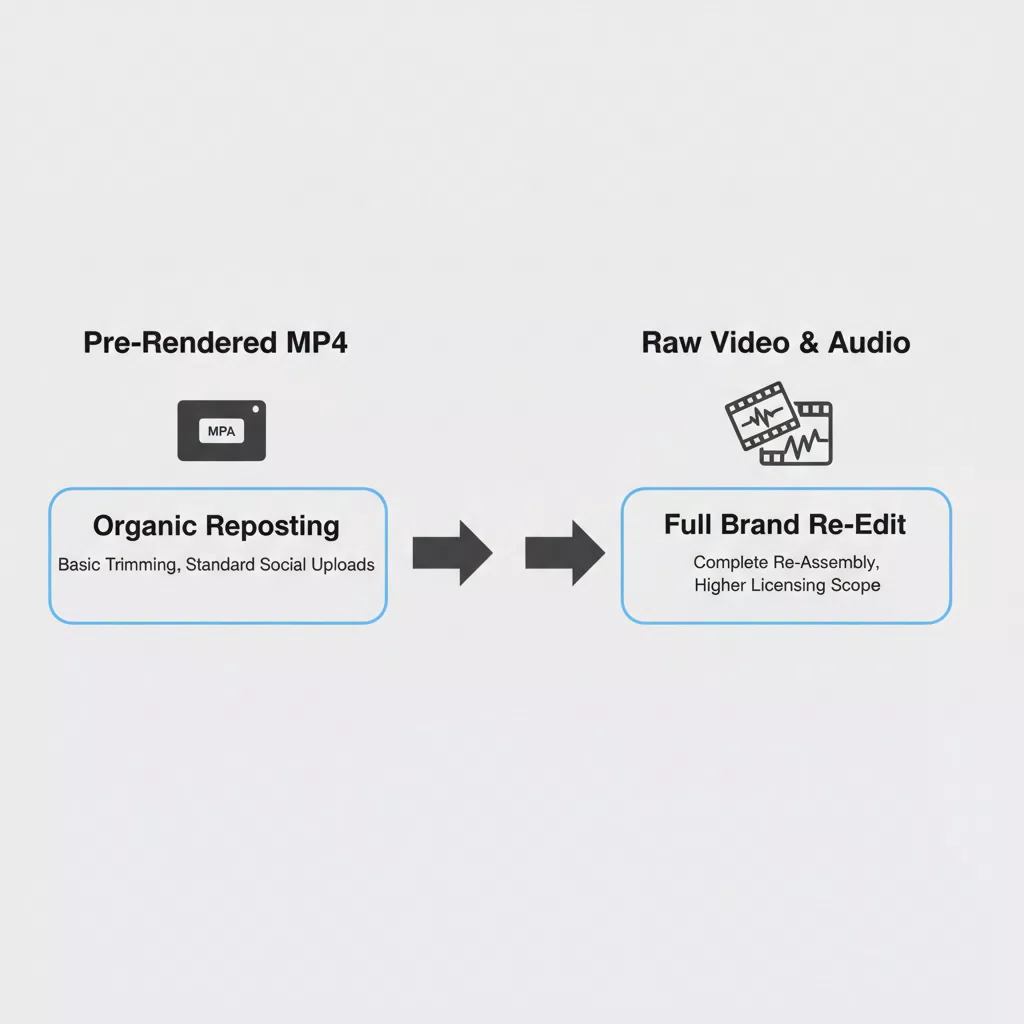
There is a massive difference between letting a brand edit a pre-rendered MP4 file you've already published and giving them access to your unedited raw camera footage (such as B-roll, separate audio tracks, or project files).
When you supply raw files, the brand can strip your voiceover, replace your music, or reassemble your footage into an entirely different marketing message. Delivering raw assets removes your control over the final presentation, so it requires a separate raw asset fee alongside higher licensing terms.
Drafting Edit Limits to Protect Creative Control and Brand Integrity
To ensure a brand does not alter your video in ways that harm your reputation or violate third-party rights, your agreement must clearly outline what edits are allowed and what modifications are strictly forbidden.
Permissible Edits: Trimming, Aspect Ratios, and Subtitles
Standard post-production tweaks are routine and acceptable as long as they don't alter your core review or opinion. You can safely allow:
- Trimming runtime: Shortening a 60-second review down to a 15-second product spotlight.
- Aspect ratio re-framing: Re-formatting a 16:9 horizontal video into a 9:16 vertical clip for TikTok or Reels.
- Branded captions: Adding on-screen text, brand logos, or custom subtitles using brand typography.
Prohibited Alterations: Audio Swaps, AI Voice Clones, and Framing Changes
Severe modifications can expose you to copyright liability or damage your public credibility. Explicitly prohibit:
- Music and Audio Swaps: Replacing your background track with unlicensed music can lead to copyright strikes on your account.
- AI Voice Cloning: Brands must never feed your audio track into AI voice synthesis tools to generate new promotional lines without explicit authorization.
- Misleading Framing: Re-editing your words to make a neutral observation sound like an absolute product guarantee or competitor put-down.
Sample Edit Limit Clause: "Licensee is permitted to trim overall runtime, re-frame aspect ratios for vertical feeds, and add on-screen captions or logos. Licensee shall not alter, synthesize, or clone Creator's voice, substitute audio tracks, or re-edit dialogue to change Creator's original commentary."
Structuring Licensing Fees and Term Lengths
Pricing a re-edit request relies on content licensing principles: charging based on asset value, duration of use, and distribution platforms.
Time-Bound Licensing Vs. Perpetual Rights
Never sell perpetual (lifetime) rights to your content unless the brand pays a substantial buyout price. A standard license should be time-bound to prevent a brand from using your image indefinitely.
Common duration tiers include:
- 30 Days: Ideal for seasonal sales or quick product launches.
- 90 Days: Standard duration for broader quarterly marketing campaigns.
- 1 Year / Perpetual Buyout: Highly valuable rights requiring a premium fee (often 3x to 5x your base rate).
Pricing Framework for Organic Reposts (Illustrative Case)
Let's look at an illustrative pricing breakdown for a creator with a baseline repost license fee of $500.
| Usage Component | Scope & Details | Illustrative Fee |
|---|---|---|
| Base Organic Repost License | 30-day organic posting on 1 brand channel (e.g., Instagram) | $500 |
| Term Extension (+60 Days) | Extends total duration from 30 days to 90 days | +$250 |
| Platform Expansion | Cross-posting re-edit to YouTube Shorts and TikTok | +$300 |
| Paid Advertising Add-On | 30-day paid ad usage via TikTok Spark Ads or Meta Partnership Ads | +$500 |
| Raw Asset Delivery | Unedited B-roll and isolated audio track bundle | +$400 |
| Total Licensing Package | Full 90-day organic & paid multi-platform license with raw files | $1,950 |
Step-By-Step Negotiation and Contract Execution Workflow
When a brand emails you asking "Can we re-edit and post your recent video on our channel?", follow a structured workflow before sending files or agreeing to terms.
Initial Response Template and Scope Checklist
Before quoting a price, gather the necessary scope details from the brand representative.
Illustrative Response Template: "Hi [Brand Name], thanks for reaching out! I'm happy to discuss licensing my published video for your channels. To put together an accurate quote, could you confirm: 1) Which social platforms will you post on? 2) How long do you plan to keep the video active? 3) Will this be organic feed posting only, or will you run paid ads? 4) What specific edits are you looking to make?"
Use this scope checklist during negotiations:
- Primary platforms (TikTok, Instagram, YouTube, LinkedIn)
- License duration (30 days, 90 days, 1 year)
- Distribution type (Organic channel only vs. Paid ad rights)
- Source files needed (Rendered MP4 vs. Raw B-roll files)
- Specific edit requests (Trimming, captions, logo additions)
Key Contract Clauses for Repost Licensing
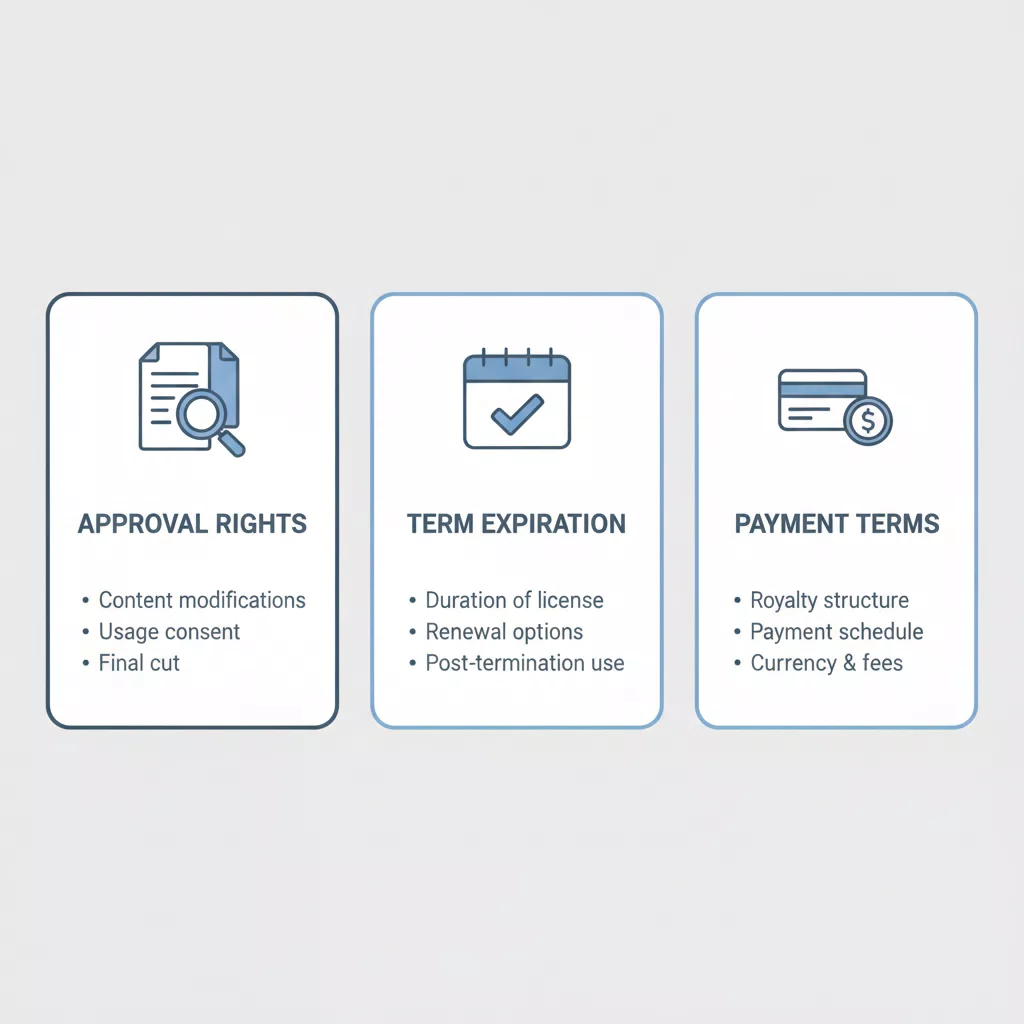
Once scope is confirmed, formalize the agreement with a short contract or written deal memo that includes three critical protections:
- Automatic Expiration & Takedown: Requires the brand to archive or delete the reposted video on the exact day the license ends.
- Approval Right: You reserve 24–48 hours to review and approve the final re-edit before the brand publishes or promotes it.
- Payment Terms: Full payment must clear prior to handing over high-resolution files or granting ad authorization codes.
Summary: Core Rules for Licensing Published Videos
When a brand wants to re-edit and post a video you've already published, keep these essential rules in mind:
- Separate organic from paid rights: Never grant paid ad usage rights under a basic organic repost agreement.
- Define explicit edit boundaries: Permit trimming and captions, but strictly forbid AI voice cloning, music replacements, and misleading dialogue edits.
- Enforce time limits: Set standard 30-day or 90-day license windows, charging extra for term extensions or perpetual buyouts.
- Charge extra for raw files: If a brand wants unedited project files or B-roll, add a raw asset surcharge to reflect the loss of creative control.
- Secure payment and approval upfront: Require approval on the final edit and receive full payment before sending final files.
FAQ
What Happens If a Brand Continues Running My Re-Edited Video After the License Expires?
If a brand continues posting or running paid ads with your video past the contractual expiration date, send a written notice requesting immediate takedown. Your licensing contract should include an automatic daily penalty rate for unauthorized usage post-expiration.
Should I Allow a Brand to Re-Edit My Video for Free If They Give Me Tag Credit?
Allowing a brand to re-edit and post your video for free in exchange for tagging dilutes your market value and surrenders legal rights without compensation. Brands generate revenue from channel content, so you should always charge a commercial licensing fee.