A Brand Demands Performance Metrics and Ad Rights for a Past Short: How to Charge for Reporting and Cross-Platform Reuse
When a brand reaches out asking for performance metrics and ad rights for a past YouTube Short, your first instinct might be to send over a screenshot and say yes.
Here is the main takeaway: Never release raw video files or ad access without a formal licensing addendum.
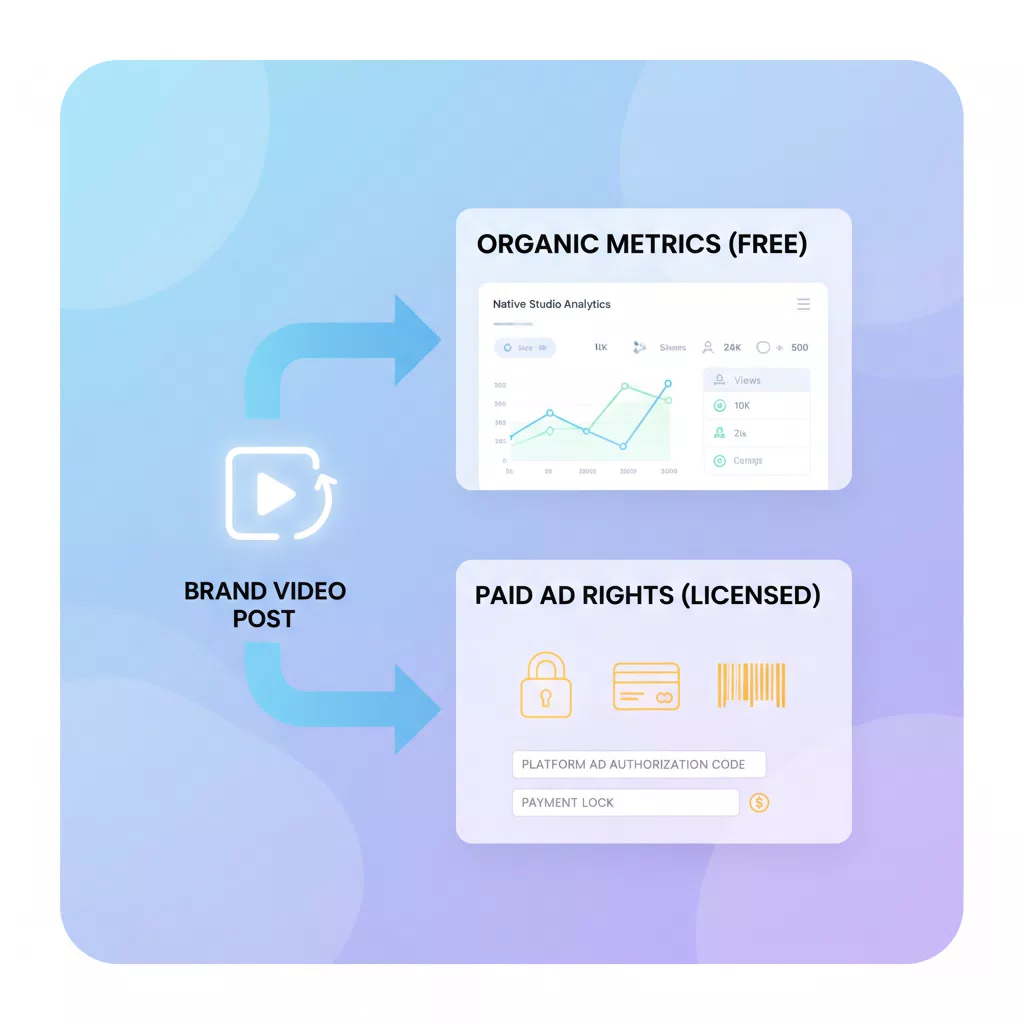
Organic content views are completely separate from paid advertising permissions. If a brand wants to turn your past viral Short into a paid ad campaign, charge distinct standalone fees for advertising usage rights and custom reporting labor.
Key Takeaways Upfront
- Decouple Organic Stats from Paid Access: Sending a basic screenshot of your native analytics is free. Granting native ad access across platforms requires a paid usage license.
- Charge Extra for Raw Asset Delivery: Providing unedited source files or clean renders for a brand's cross-platform channels constitutes a separate intellectual property transfer.
- Bill for Custom Reporting: Simple native screenshots are complimentary, but custom analytics labor—like deep-dive retention reports—requires an administrative fee.
Quick Comparison: Standard Post Vs. Billable Requests
| Request Component | Complimentary / Standard | Billable Add-on Requirement |
|---|---|---|
| Performance Metrics | Native platform screenshots (views, likes) | Custom PDF reports or weekly retention data breakdown |
| Ad Permissions | Organic post published on your channel | Ad access via TikTok Spark Ads, Instagram Partnership Ads, or YouTube Creator Partnerships Boost |
| Asset Files | Streamed video on your native channel | Unedited raw files or clean video renders for brand reuse |
Here is how to calculate your licensing fees, restrict unauthorized content edits, and draft a retroactive usage addendum that protects your intellectual property.
Decoupling Performance Metrics from Advertising Licensing
When a brand emails you about a past viral video, they usually blur two completely different things: proof of organic performance and paid distribution rights.
Sharing a basic view count is standard courtesy. However, granting permission for a brand to spend ad dollars behind your face and channel handle is a paid business deal. If you give away ad access or video files without a contract, you lose control of your work and leave revenue on the table.
Organic Stats Vs. Paid Ad Access Across Platforms
Organic statistics show how your audience naturally interacted with your video on your native channel. Paid ad access allows a brand to target non-followers using your content as a sponsored creative. Each social platform handles this native authorization differently:
- YouTube Creator Partnerships Boost: Allows brands to run sponsored campaigns tied to your YouTube Short without requiring you to re-upload the video.
- TikTok Spark Ads: Requires you to generate an in-app authorization code so the brand can boost your exact post directly from their TikTok Ads Manager.
- Instagram Partnership Ads: Uses Meta Ads Manager to request creator permission, letting the brand run your Reel as an ad under a shared header.
Granting native access on any of these platforms lets a brand turn your personal brand into their direct sales engine. That is why ad permissions must always require a paid license.
Why Raw File Delivery Requires Additional Fees
When a brand asks for your unedited source footage or clean renders without native UI overlays, they are asking for your raw intellectual property. Delivering raw files allows the brand to edit your footage, add their own voiceovers, or upload the content to platforms outside your control.
Standard post usage only licenses the finished video as it exists on your channel. Sending raw B-roll or clean video files creates a brand asset they can reuse indefinitely unless explicitly restricted. Always charge a separate asset transfer fee if a brand requests downloadable source files.
Example Creator Note: "Organic post metrics are provided free of charge. Native ad permissions, clean render deliveries, and cross-platform amplification require a formal usage rights agreement and explicit licensing fees."
Structuring Usage Fees for Past Shorts Across Platforms
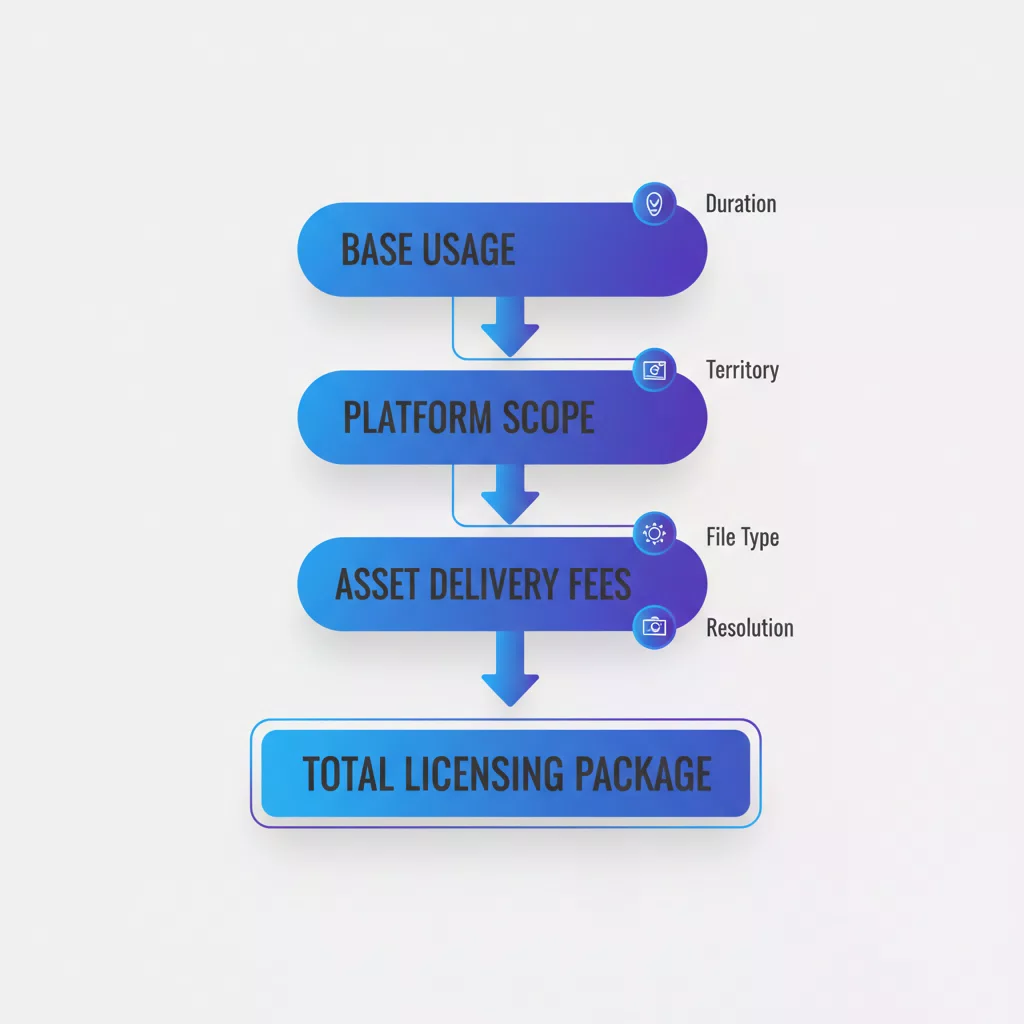
To price a retroactive request, calculate separate fees for licensing duration, platform scope, and asset delivery. Never lump these into a single flat discount.
Calculating Rates Based on Licensing Term and Scope
Licensing rates should scale directly with how long the campaign runs and how many channels the brand targets. A standard baseline rate for a 30-day single-platform ad license is often set around 30% to 50% of the initial organic integration fee.
Consider this illustrative scenario for a past YouTube Short with 500,000 views:
| Usage Rights Component | Scope & Duration | Illustrative Fee |
|---|---|---|
| YouTube Boost License | 60 days on YouTube | $500 |
| Cross-Platform Rights | 60 days on TikTok & Instagram | $400 |
| Raw File Delivery | Clean 4K video render | $300 |
| Custom Retention Data | Deep-dive analytics report | $150 |
| Total Licensing Package | 60-Day Multi-Platform Bundle | $1,350 |
If the brand requests an extension from 60 days to 90 days, add a 25% renewal fee to the base rate. Defining strict time windows prevents brands from running your face in ad auctions forever.
Restricting Content Modifications and Third-Party Transfer
Never give a brand unlimited editing freedom over your content. Protect your brand reputation by embedding strict usage limits into your addendum:
- No Audio Alteration: Prohibit AI voice cloning or dubbing over your spoken voice without prior written approval.
- No Crop Adjustments: Require creator channel watermarks or visible handles to remain intact if raw renders are published natively on brand accounts.
- No Third-Party Sub-Licensing: Explicitly prohibit the brand from transferring video assets to agency partners, parent corporations, or affiliate distributors.
Setting Monetization Terms for Custom Analytics and Reporting
Brands often ask for detailed performance statistics to evaluate ad targeting options. You must separate standard proof of performance from billable administrative labor.
Standard Performance Proof Vs. Paid Deep-Dive Reports
Sending a basic screenshot of your native YouTube Studio dashboard takes 30 seconds and should be free. However, pulling custom retention curves, audience demographic breakdowns, or weekly conversion tracking requires manual data extraction.
Charge an administrative labor fee whenever a brand demands formatted PDF reports or recurring weekly updates.
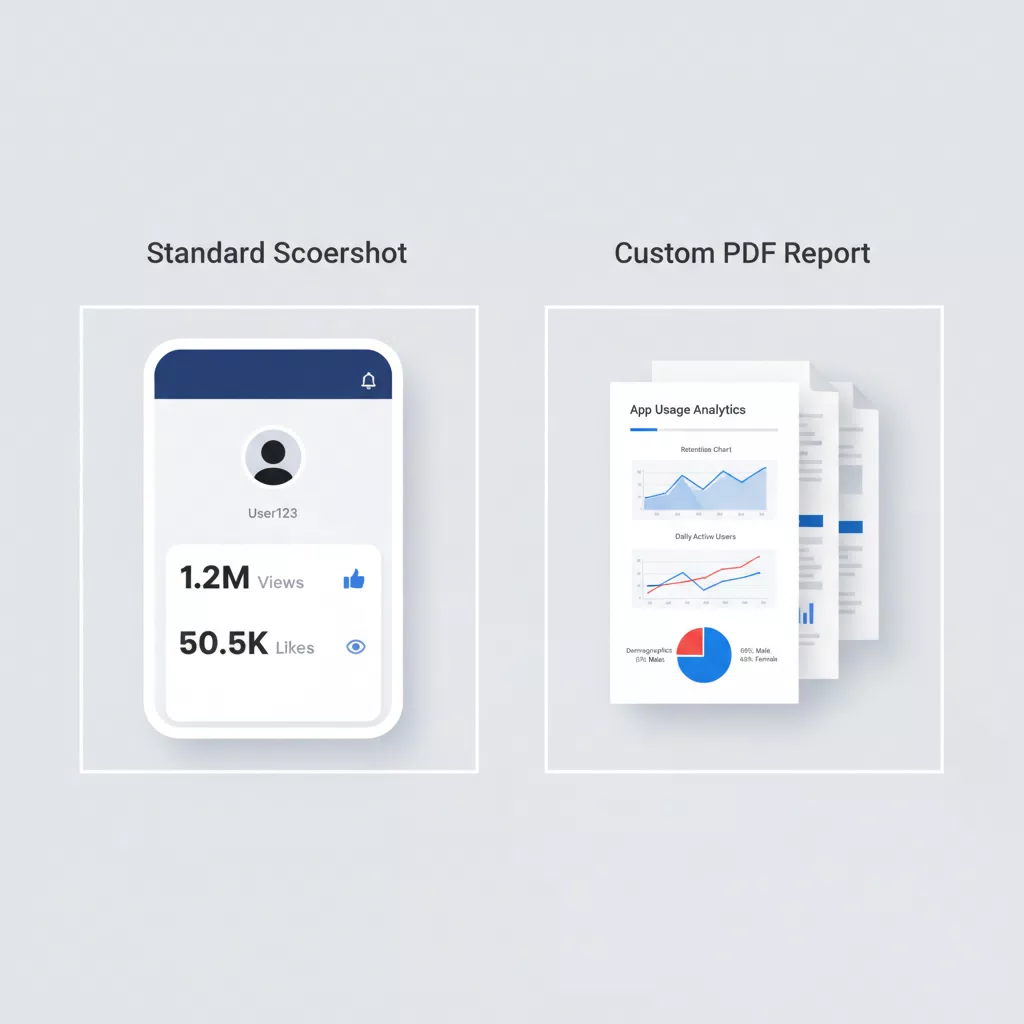
If a brand requests a custom retention breakdown, charge a flat fee (for example, $150 illustrative) to cover your operational overhead. If they only need basic view validation, send a standard screenshot and refuse custom data entry without a signed statement of work.
Drafting Addendums and Automating Brand Negotiations
When handling retroactive brand requests, clear legal boundaries and fast responses keep you from losing control of your assets.
Essential Clauses for a Retroactive Usage Rights Addendum
Every retroactive licensing addendum should include five fundamental parameters:
- Effective Window: Explicit start and end dates (e.g., October 1 through November 30).
- Platform Authorization: Specific named channels (e.g., YouTube Creator Partnerships Boost and TikTok Spark Ads only).
- Payment Schedule: 100% payment upfront before delivering raw files or issuing platform ad authorization codes.
- Automatic Ad Code Expiration: Explicit terms stating that TikTok Spark codes or YouTube permissions will be revoked immediately upon contract expiration.
- Exclusivity Restrictions: Confirm whether the license is non-exclusive, allowing you to work with competing products during the usage window.
Automating Rights Management via AI Chat Workflows
Managing incoming sponsorship requests, negotiating usage rates, and drafting contract addendums manually can absorb hours of your week. Creators can streamline this entire workflow by using automated AI management interfaces.
Instead of paying traditional management agencies 20% commission cuts, you can utilize specialized AI partner workflows like CreaSeed. Through a unified chat interface, creators can automatically calculate account market valuation, construct custom rate cards for post-publication licensing, and draft professional negotiation replies. This keeps your business organized, protects your intellectual property, and ensures you retain 100% of your payout earnings without agency overhead.
Summary: Key Steps to Protect Ip and Monetize Past Short Content
- Separate organic content from paid advertising permissions: A published Short does not give a brand permission to run paid ads.
- Charge separate standalone fees: Always bill distinctly for licensing duration, cross-platform usage, and raw asset file delivery.
- Limit editing rights: Ensure your contract explicitly blocks unauthorized voice replacement, third-party sub-licensing, or improper video cropping.
- Monetize administrative reporting: Provide native dashboard screenshots for free, but charge custom administrative fees for detailed retention breakdowns.
- Use formal legal addendums: Execute clear retroactive agreements before handing over source footage or generating native ad codes.