How to Audit Past Sponsorship Data to Pick Your Most Profitable Brand Categories For 2027
Want to make 2027 your most profitable year for brand deals? Stop guessing which niches pay best.
To pick your top brand categories, you need to audit your historical sponsorship data. That means calculating your Effective Hourly Rate (EHR) for every niche, isolating platform-specific formats—specifically distinguishing TikTok Spark Ads, Instagram Partnership Ads, and YouTube Creator Partnerships—and mapping historic seasonal conversion peaks to allocate your outreach slots.
Here is a quick snapshot of how auditing EHR across platform formats exposes your true category earnings:
Quick Comparison: Category & Format Roi (Illustrative Data)
| Niche Category | Ad Format | Illustrative Production Hours | Illustrative Net Revenue | Illustrative Effective Hourly Rate (EHR) |
|---|---|---|---|---|
| Tech | YouTube Creator Partnerships | 10 hours | $1,500 | $150/hr |
| Beauty | TikTok Spark Ads | 4 hours | $400 | $100/hr |
| Lifestyle | Instagram Partnership Ads | 5 hours | $350 | $70/hr |
Note: The figures in the table above are purely illustrative to demonstrate the audit formula.
To build a data-backed pipeline for 2027, your audit should focus on four core steps:
- Standardize Past Data: Log total production effort (drafts, filming, revisions, calls) alongside net revenue.
- Calculate Real Category EHR: Divide net revenue by hours spent to uncover actual hourly profitability.
- Evaluate Retainers & Usage Rights: Factor in licensing boosts like whitelisting and repeat partner potential.
- Apply the 70-20-10 Framework: Allocate 70% of your 2027 calendar to high-EHR core categories, 20% to growth niches, and 10% to experimental brands.
Here is the exact step-by-step workflow to audit your historic data and map your 2027 sponsorship calendar.
Step 1: Gather and Standardize Past Sponsorship Data
Log Production Time and Total Deliverables per Category
When auditing your historic sponsorships for 2027 planning, gross payout only tells half the story. To understand what a campaign actually earned, you must track every minute invested from pitch to payout.
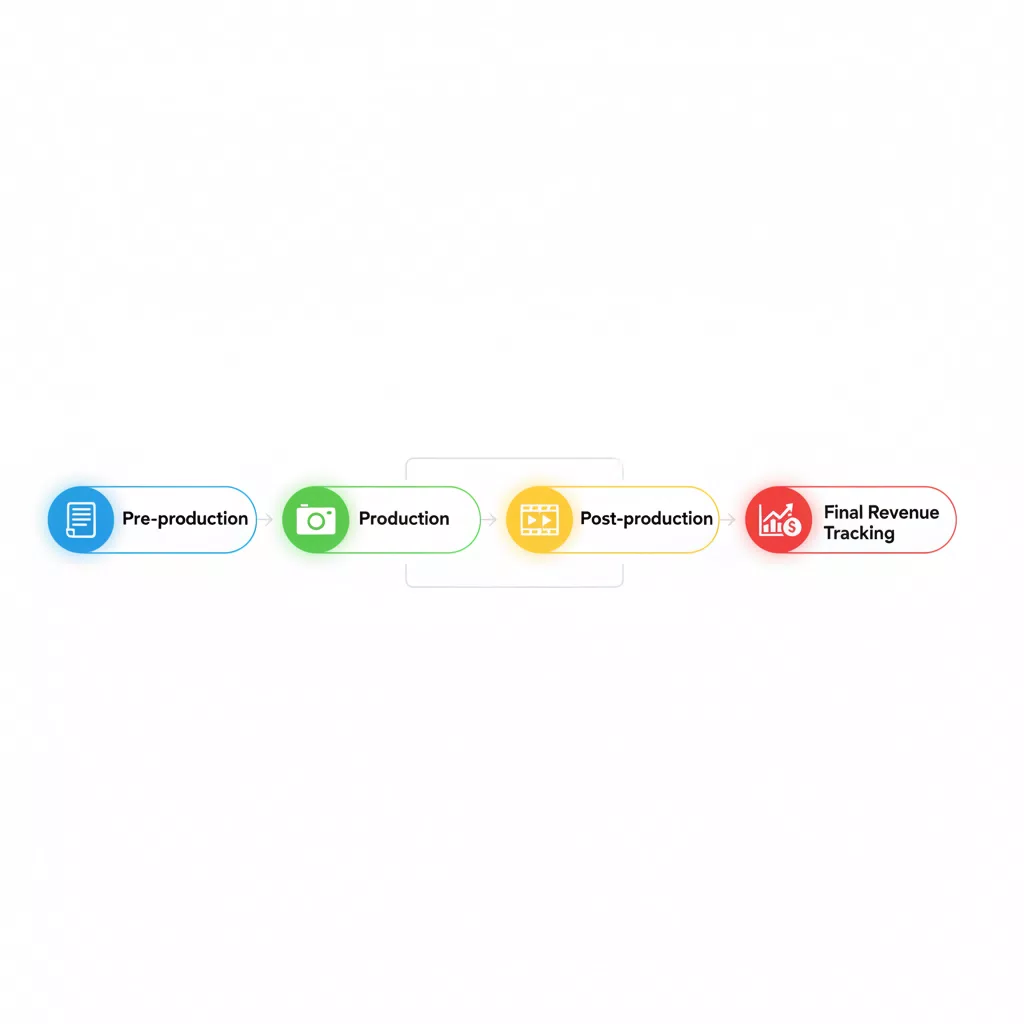
Log the total hours spent on every task for past deals:
- Pre-production: Pitching, initial discovery calls, contract reviews, and script drafting.
- Production: Setup, filming, voiceovers, and asset creation.
- Post-production: Video editing, revision cycles, client communications, and administrative work.
For instance, an illustrative tech integration might pay $1,500 for a 60-second dedicated segment. If script changes, legal reviews, and filming take 10 total hours, your raw time investment is clear. Compare that to a $400 beauty video that takes only 4 hours total.
Categorize Revenue by Platform and Sponsorship Format
Never lump all deliverables into a single revenue bucket. Platform mechanics and ad formats dramatically alter both work volume and net payouts.
Separate your historic records into distinct format categories:
- TikTok Spark Ads: Native short-form posts boosted by brand ad accounts using creator post authorization codes.
- Instagram Partnership Ads: Branded feed posts or Reels tagged with partner handoffs for targeted paid distribution.
- YouTube Creator Partnerships: Dedicated videos or integrated mid-roll segments embedded directly into long-form video uploads.
Each format requires different workflows. A TikTok Spark Ad often requires fast, raw mobile editing with minimal script approvals, whereas a long-form YouTube Creator Partnership involves detailed outline approvals, storyboard checks, and precise timestamp placement.
Step 2: Calculate Category Profitability Metrics
Determine Effective Hourly Rate (Ehr) Across Niches
Gross revenue can mask severe operational inefficiency. Calculating your Effective Hourly Rate (EHR) brings absolute clarity to category profitability.
Use this simple formula:
EHR = Net Revenue / Total Hours Spent
(Note: Net Revenue equals Gross Sponsorship Payout minus direct costs like software, props, or contractor fees.)
For example, consider these illustrative metrics from past campaigns:
- Tech Campaign: $1,500 net revenue / 10 production hours = $150/hr EHR
- Beauty Campaign: $400 net revenue / 4 production hours = $100/hr EHR
- Lifestyle Campaign: $350 net revenue / 5 production hours = $70/hr EHR
While tech long-form content generated higher gross revenue, short-form beauty deals yielded competitive hourly returns due to streamlined production.
Measure Audience Engagement and Trust Retention
High payout categories can backfire if they trigger audience fatigue. To protect long-term growth, measure how each category impacts viewer trust and retention metrics.
Track post-campaign health signals following sponsored posts:
- Unfollow Rate: The net loss of followers in the 48 hours following a sponsored post compared to baseline organic uploads.
- View Retention Decay: Drop-offs in average view duration or reach on organic posts published immediately after a sponsored deal.
If an illustrative gaming app sponsorship generates $120/hr EHR but yields a 15% spike in unfollows, the hidden cost to channel health outweighs the short-term cash flow.
Step 3: Analyze Deal Types and Recurring Brand Partners
Evaluate Repeat Deal Conversion Rates
One-off sponsorships demand heavy administrative energy. Cold pitching, negotiating rates, and reviewing legal terms for new brands take significant time. Repeat partners bypass these hurdles.
Evaluate past sponsors using a friction score based on four criteria:
- Payment Speed: Did they pay invoices within agreed terms (e.g., Net 30)?
- Revision Demands: Did revisions remain within initial scope guidelines?
- Contract Flexibility: Were contract amendments resolved smoothly?
- Renewal Potential: Did the client express interest in multi-month packages?
Categorize brands with low friction and fast sign-offs as high-priority renewal targets. If some one-off partners renew, estimate the saved pitching time using your own records rather than assuming a fixed conversion rate.
Factor Whitelisting and Usage Rights into Category Roi
Standard usage terms cover publishing content on your organic channels. Adding ad rights can be priced separately, but it also creates review and rights-management work.
Whitelisting allows a brand to run paid ads through your handle on platforms supporting formats like Instagram Partnership Ads or TikTok Spark Ads.
When auditing past deals, note which niches routinely pay extra for usage rights:
- Skincare & Beauty: Frequently purchase 30-to-90-day organic whitelisting rights for digital ad campaigns.
- SaaS & Tech: Often pay premiums for ongoing digital ad licensing and website landing page rights.
Adding $300 for 30 days of whitelisting to a $400 short-form video increases net revenue to $700 without adding extra filming hours—effectively boosting your EHR.
Step 4: Build Your 2027 Category Selection Matrix and Pipeline
Apply the 70-20-10 Category Allocation Framework
Once you establish EHR and audience retention metrics across niches, set your content allocation matrix for 2027. Avoid putting all your inventory into a single niche or spreading yourself too thin across dozens.
For example, you could test a 70-20-10 allocation and adjust it to your actual deal pipeline:
- 70% Core Categories: Focus the majority of available sponsorship slots on proven, high-EHR niches with low audience friction (e.g., Tech and Skincare).
- 20% Growth Categories: Allocate slots to rising niches showing strong EHR potential and positive viewer engagement.
- 10% Experimental Categories: Reserve a small fraction of slots for testing new brand categories or innovative campaign formats.
Map Seasonal Sponsorship Slots and Outreach Deadlines
Brand marketing budgets fluctuate seasonally. Aligning outreach with corporate fiscal planning ensures you pitch when decisions and funds are actively being allocated.
Use this illustrative seasonal planning table to schedule proactive pitches for 2027:
| Target Quarter | Ideal Pitching Window | Focus Categories | Strategic Goal |
|---|---|---|---|
| Q1 | Nov 1 – Nov 15 (Prior Year) | Fitness, Productivity, Software | Secure early New Year campaign budgets |
| Q2 | Feb 1 – Feb 15 | Skincare, Outdoor, Travel | Lock in spring product launches |
| Q3 | May 1 – May 15 | Tech, Back-to-School, Fashion | Capture late-summer promotional campaigns |
| Q4 | Aug 1 – Aug 15 | Gaming, E-commerce, Beauty | Maximize peak holiday ad spend |
Note: Pitching timelines are illustrative recommendations based on standard budget cycles. Adjust dates to match specific brand requirements.
Key Takeaways for Auditing Creator Sponsorship Data
To maximize sponsorship profitability in 2027, ground your business decisions in historical performance data rather than revenue guesses:
- Calculate EHR: Evaluate niches by net revenue divided by total production and admin hours spent.
- Separate Formats: Differentiate performance across TikTok Spark Ads, Instagram Partnership Ads, and YouTube Creator Partnerships.
- Protect Retention: Monitor unfollow rates to ensure high-paying categories don't erode audience trust.
- Monetize Rights: Layer usage rights and whitelisting fees onto high-performing short-form deliverables.
- Execute Ahead: Pitch quarterly campaigns 45 to 60 days before budget periods begin.
FAQ
How Do I Calculate Effective Hourly Rate If I Don't Track My Time Precisely?
Review past calendar entries, upload dates, and email timestamp threads to estimate average hours spent per stage (pre-production, filming, editing, revisions) for representative past deals in each category.
What If a High-Paying Brand Category Causes High Audience Unfollow Rates?
Limit high-friction categories to a small percentage of your overall slots, increase post spacing between sponsored uploads, or negotiate non-standard deliverable formats like dedicated landing page integration instead of main feed posts.