Agency Inbounds Vs. Direct Brand Emails: How to Compare Sponsorship Terms and Keep Your Margin
To protect your sponsorship margins, direct brand emails usually offer higher net payouts and direct lines to decision-makers, while agency inbounds bring multi-campaign potential at the cost of middleman fees and longer payment windows.
Evaluating an inbound offer requires looking beyond the gross offer figure. You need to analyze usage rights, platform-specific ad formats (such as TikTok Spark Ads or Instagram Partnership Ads), net payment terms (like Net 30 versus Net 60), and administrative overhead.
Quick Comparison
| Criteria | Direct Brand Email | Agency Inbound |
|---|---|---|
| Net Profit Margin | Higher (No agency fee markup) | Lower (Agency takes a middleman cut) |
| Approval Speed | Faster (Direct communication) | Slower (Multiple agency-client approval layers) |
| Campaign Volume | Usually single deals | Potential access to multi-brand rosters |
| Payment Terms | Typically Net 30 | Often Net 60 or Net 90 |
| Usage Scope | Directly negotiated scope | Complex usage rights & whitelist demands |
Here is how to evaluate brief details, verify authority, and compare inbound sponsorship deals step-by-step.
Evaluating Sourcing Channels: Direct Brand Vs. Agency Inbounds
When an offer hits your inbox, the sender's position in the marketing supply chain determines how much room you have to negotiate.
Direct brand outreach connects you straight to an internal marketing manager. The budget isn't being split with third parties, which means higher net payouts and faster answers.
Agency inbounds come from media buying, PR, or talent management firms. Agencies manage multi-brand budgets and can bring steady deal volume, but they add administrative layers and middleman fee markups.
Identifying Middleman Markup and Fee Structures
Agencies typically operate on either a commission percentage or a fixed markup model. When an agency approaches you with a $3,000 flat fee for a campaign, they may have billed the parent brand $5,000 for that specific creator spot.
The agency retains the $2,000 difference to cover their account management overhead and profit margin.
To understand your real compensation, you need to calculate your net earnings after accounting for third-party cuts, delayed payouts, and unpaid administrative requirements.
Verifying Sender Authority and Domain Legitimacy
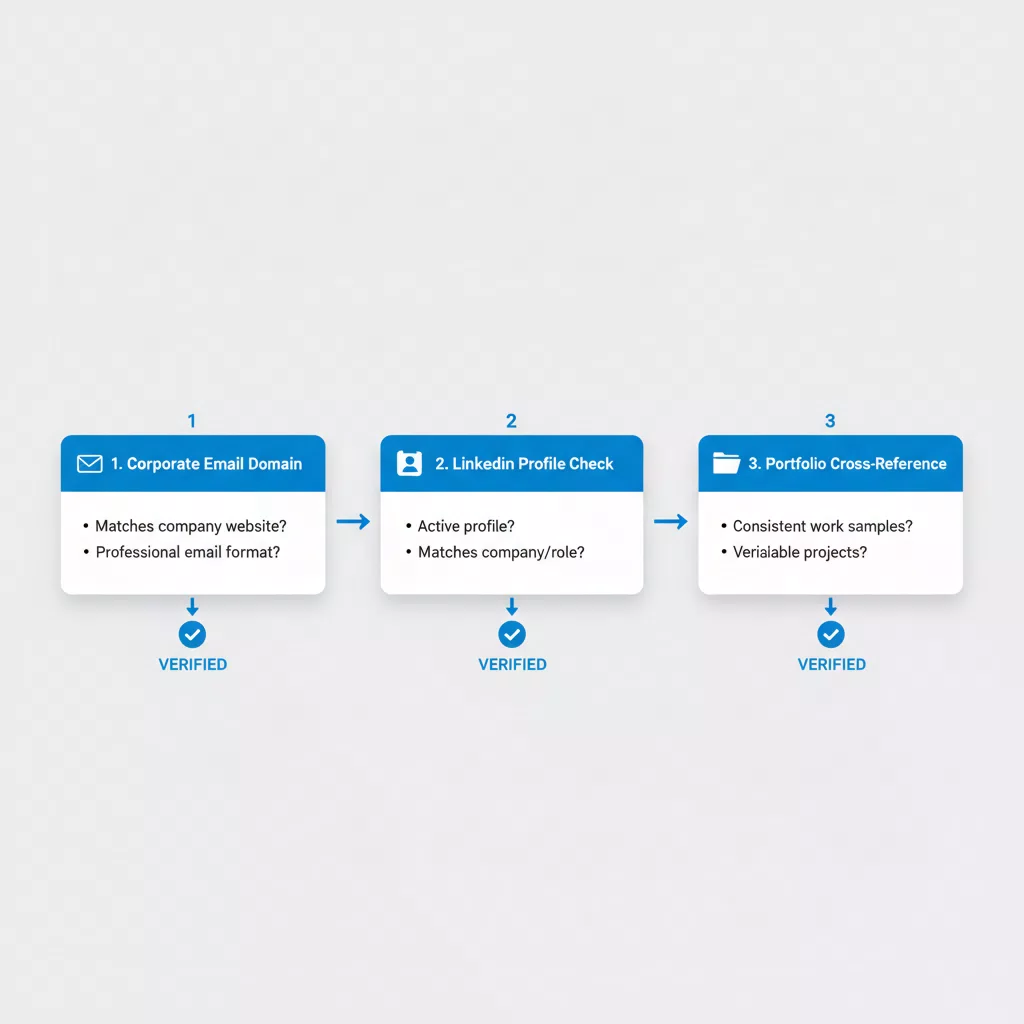
Before sharing pitch decks or signing agreements, verify that the email sender actually represents the brand or agency.
- Check the email domain: Ensure the email originates from an official corporate domain (e.g.,
@brand.com), not a free provider like@gmail.comor a slightly altered domain name. - Cross-reference LinkedIn: Look up the sender's full name and title on LinkedIn to confirm their employment at the agency or company.
- Review client rosters: Authentic agencies publish case studies and client rosters on their official websites. If a representative claims to handle influencer buying for a major client, verify that relationship online.
Inspecting Deliverables, Licensing, and Usage Rights
Gross offer amounts can be deceiving if a brief buries extensive usage requirements in the fine print.
A $4,000 offer that includes multi-channel paid ad rights can yield lower net value than a $2,500 offer restricted strictly to an organic post.
Differentiating Platform Advertising Terminology
Campaign briefs often confuse organic content delivery with paid amplification. You must distinguish between standard organic posts and platform-specific ad integrations:
- TikTok Spark Ads: Allows brands to use your organic TikTok post as a paid ad while keeping all views, comments, and engagement on your native post.
- Instagram Partnership Ads: Formally known as Branded Content Ads, this framework allows brands to run ads through your handle while targeting their chosen audience inside Meta Ads Manager.
- YouTube Creator Partnerships: Features built-in paid promotion disclosures and brand links directly inside the YouTube video ecosystem.
Always price baseline video creation separately from paid advertising whitelisting permissions.
Evaluating Exclusivity Clauses and Licensing Windows
An exclusivity clause prevents you from working with competing brands in your niche for a defined period. Broad lockouts severely limit your future earning potential.
Always inspect the brief for strict usage rights and licensing terms:
- Perpetual Usage: Never give perpetual paid usage rights. Cap all paid ad usage to 30, 60, or 90 days.
- Category Lockouts: Ensure category exclusivity is tightly defined. For example, exclude "all skincare products" in favor of "hydrating facial serums containing hyaluronic acid."
- Territory Limits: Restrict paid usage to specific target regions (e.g., North America only) rather than global usage rights.
Comparing Financial Terms and Payment Timelines
Cash flow timing determines whether a deal is operationally viable. Direct brand deals often process payouts significantly faster than agency networks.
Analyzing Net Payment Terms and Cash Flow Risks
Most agencies enforce Net 60 or Net 90 payment schedules, meaning you receive funds 60 to 90 days after content approval and invoice submission.
Direct brand contacts routinely accept Net 30 terms or offer a 50% deposit upon script approval.
When agreeing to long payment windows, build a late-payment penalty into your contract (e.g., a 5% monthly fee for overdue invoices) to protect against delayed cash flow.
Accounting for Revision Loops and Hidden Expenses
Uncapped revision cycles rapidly erode your effective hourly rate. Specify that your fee includes a maximum of two rounds of minor revisions before additional charges apply.
The table below illustrates how hidden scope additions lower net earnings across three hypothetical campaign scenarios:
| Operational Factor | Scenario A: Direct Brand Email | Scenario B: Standard Agency Inbound | Scenario C: High-Revision Agency |
|---|---|---|---|
| Gross Offered Rate | $3,000 (Illustrative) | $3,500 (Illustrative) | $4,000 (Illustrative) |
| Payment Schedule | Net 30 | Net 60 | Net 90 |
| Included Revision Rounds | 1 Round | 2 Rounds | Uncapped (4 Rounds Required) |
| Paid Ad Licensing | None (Organic Only) | 30-Day Spark Ads | 90-Day Whitelisting |
| Estimated Labor Hours | 8 Hours | 12 Hours | 25 Hours |
| Real Net Rate per Hour | $375/hr | $291/hr | $160/hr |
Executing a Structured Inbound Comparison and Negotiation
Never accept an inbound brief without clarifying ambiguous legal and technical terms first.
Essential Clarifying Questions for Inbound Representatives
Send these clarifying questions to the brand or agency rep before issuing a counter-offer:
Sample Email Template: "Thanks for reaching out! To make sure we align on scope, could you clarify a few quick points?
- Is the proposed fee strictly for organic posting, or does it include paid usage (such as Spark Ads or Partnership Ads)?
- What is the exact paid usage timeframe and geographic territory?
- What are the specific start and end dates for the category exclusivity lockout?
- What is the standard payment window once the final deliverables are approved?"
Building a Deal Comparison Scorecard
Evaluate inbound opportunities by scoring four core components on a scale of 1 to 5:
- Net Compensation: Gross payout minus transaction fees, production expenses, and payment delay costs.
- Production Overhead: Required script iterations, dedicated video length, and approval layers.
- Rights Scope: Duration of ad licensing and strictness of category exclusivity.
- Audience Fit: Organic alignment with your content niche and community expectations.
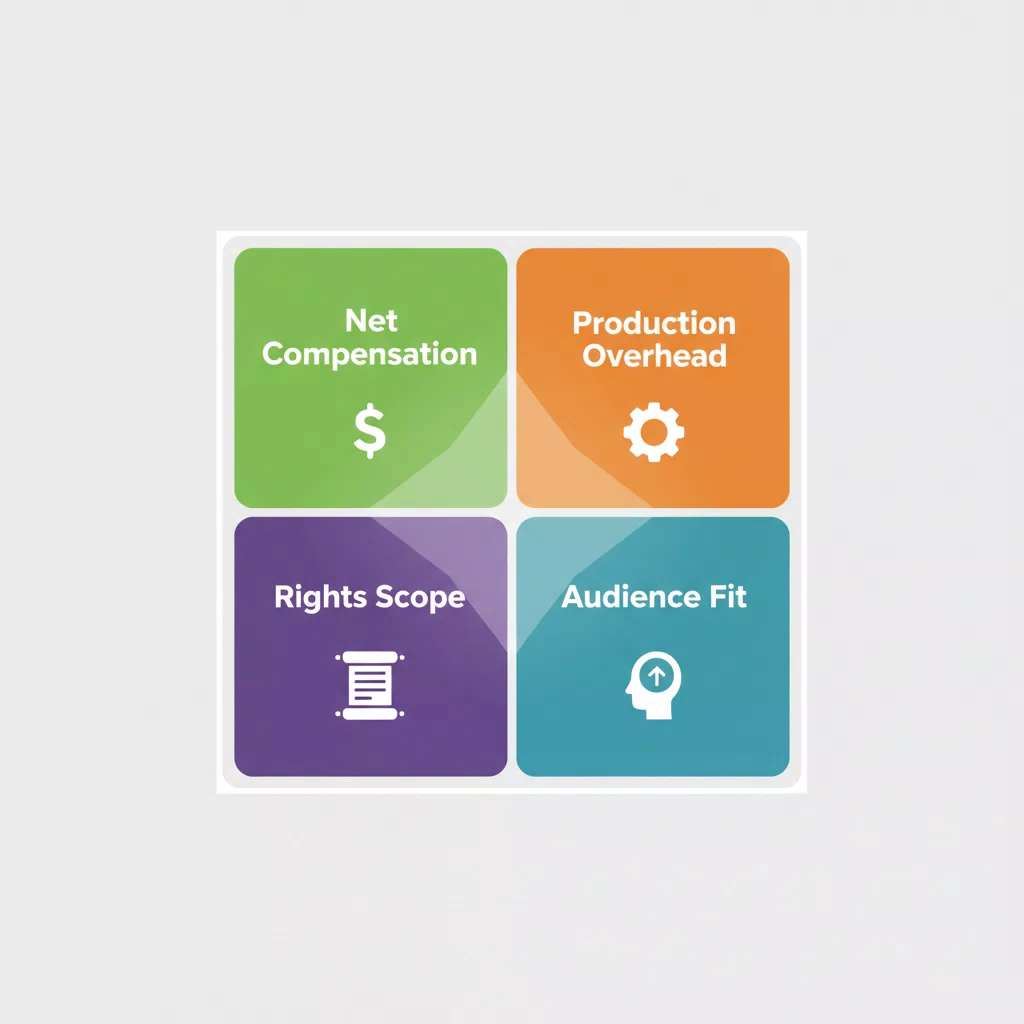
Multiply each score by its relative priority to calculate a total score before deciding which campaign to prioritize.
Summary: Protecting Creator Margins Across Sponsorship Inbounds
Protecting your creator income requires evaluating inbound offers through a strict financial lens.
Always verify domain legitimacy, cap revision cycles, separate organic creation from paid usage rights, and account for net payment schedules to maintain healthy margins across every sponsorship.