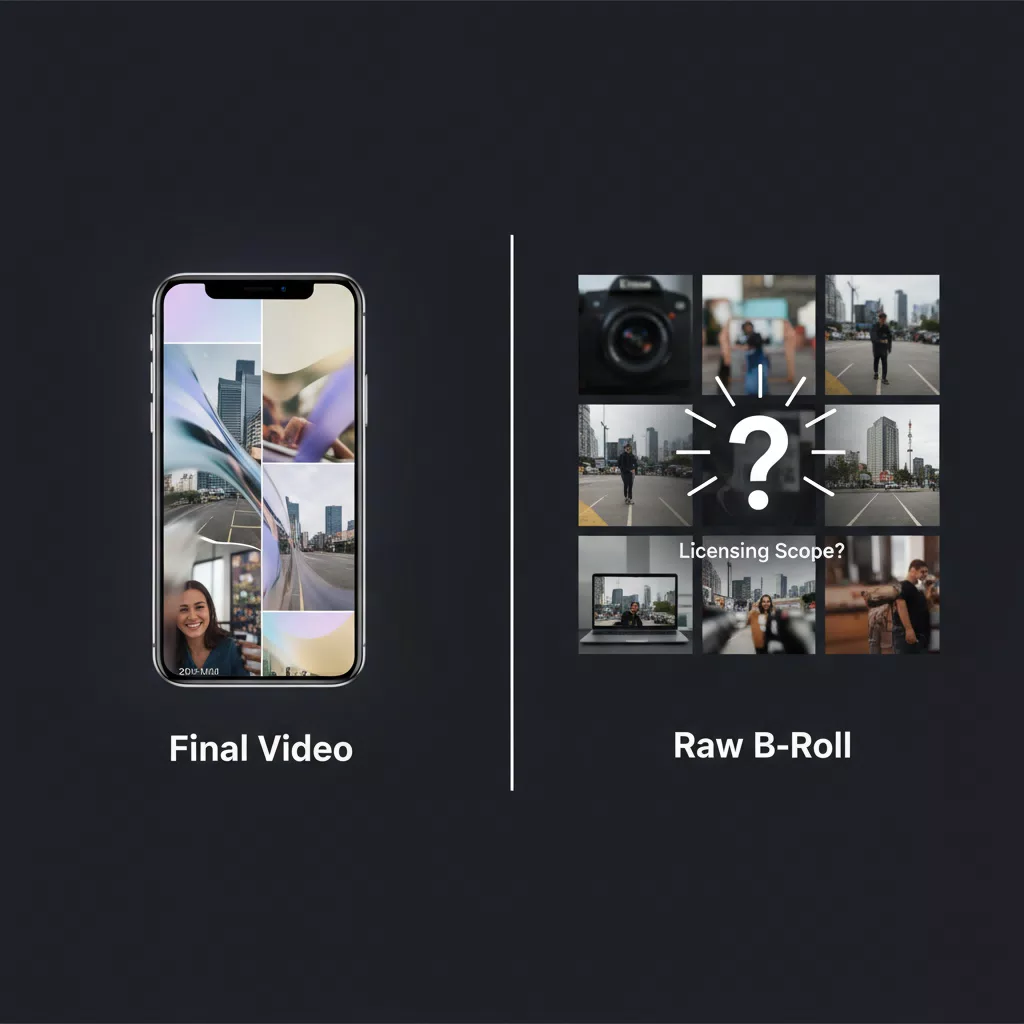
A Brand Asks for Raw Footage After Approval: How to Respond and Quote It
When a brand asks for your raw footage after approving a final video, check the agreed scope before handing it over.
Raw footage can enable new edits and uses, but delivery alone does not define the permissions the brand receives. Check the existing agreement and set any new rights in writing. It is an out-of-scope deliverable with real commercial value, not a minor extra.
Here is how to handle a post-approval raw footage request step-by-step:
- Pause deliverable handoffs: Pause the raw-footage transfer while you confirm scope, rights and pricing.
- Clarify usage rights: Ask how they plan to edit, distribute, and monetize the unedited clips.
- Calculate an add-on fee: Base your price on asset ownership, editing control, and campaign duration.
- Send a professional quote: Use a clear response template to state your rates while keeping the client relationship strong.
Let's break down a real-world scenario, the exact pricing factors to consider, and copy-paste response scripts you can use immediately.
The Post-Approval Raw Footage Request: What Is Really Happening
When a brand asks for raw footage after approving your final video, they aren't just asking for leftover files.
They are asking for full creative control over your unedited video assets.
Finished videos are polished products crafted for a specific scope. Raw footage, on the other hand, contains unedited audio, alternate camera angles, extra B-roll, and unused takes. Giving away unedited files lets a brand re-cut your face, voice, and content into dozens of new ad variations for years.
That fundamentally changes the commercial value of your deal.
Scenario: The Unexpected B-Roll Add-On
Let's look at a real-world creator scenario.
Maya is a skincare creator who agreed to produce one 30-second TikTok video for $800. The contract covered a single finished video posted organically to her feed for 30 days.
Maya spent two hours filming, collected 15 minutes of raw footage, edited the final video, and submitted it. The brand approved the video that afternoon.
Two hours later, the brand's marketing manager sent an email:
"Loved the final video! Can you send over a Google Drive link with all the unedited B-roll clips from your shoot? We'd like to drop them into our archive."
If Maya sends those raw files for free, the brand gets 15 minutes of unedited content to chop up into paid Facebook ads, web banners, or TV spots—without paying Maya a single extra dollar.
4 Key Questions to Ask Before Quoting Raw Footage
Before you name a price for raw footage, you need to know how the brand plans to use it.
Never quote an add-on fee in the dark. Ask these four key questions first:
| Question to Ask | What It Reveals | Pricing Impact |
|---|---|---|
| Where will the clips be published? | Distribution channels (organic social, paid ads, broadcast TV, website). | Paid advertising campaigns demand higher rates than internal storage. |
| How long will you use them? | Licensing duration (30 days, 1 year, perpetual usage). | Longer usage terms increase total asset value. |
| Who is editing the clips? | Re-editing and derivative work permissions. | Giving up full editing rights warrants a higher rights charge. |
| Is this an exclusive transfer? | Scope of asset rights (usage rights vs. full copyright buyout). | Complete ownership transfer commands premium pricing over non-exclusive access. |
Once you receive clarity on these points, you can calculate a fair quote.
How to Calculate Your Raw Footage Fee (Scope & Pricing Framework)
There is no single universal rate for raw footage, but standard industry practices treat raw clips as a distinct commercial deliverable.
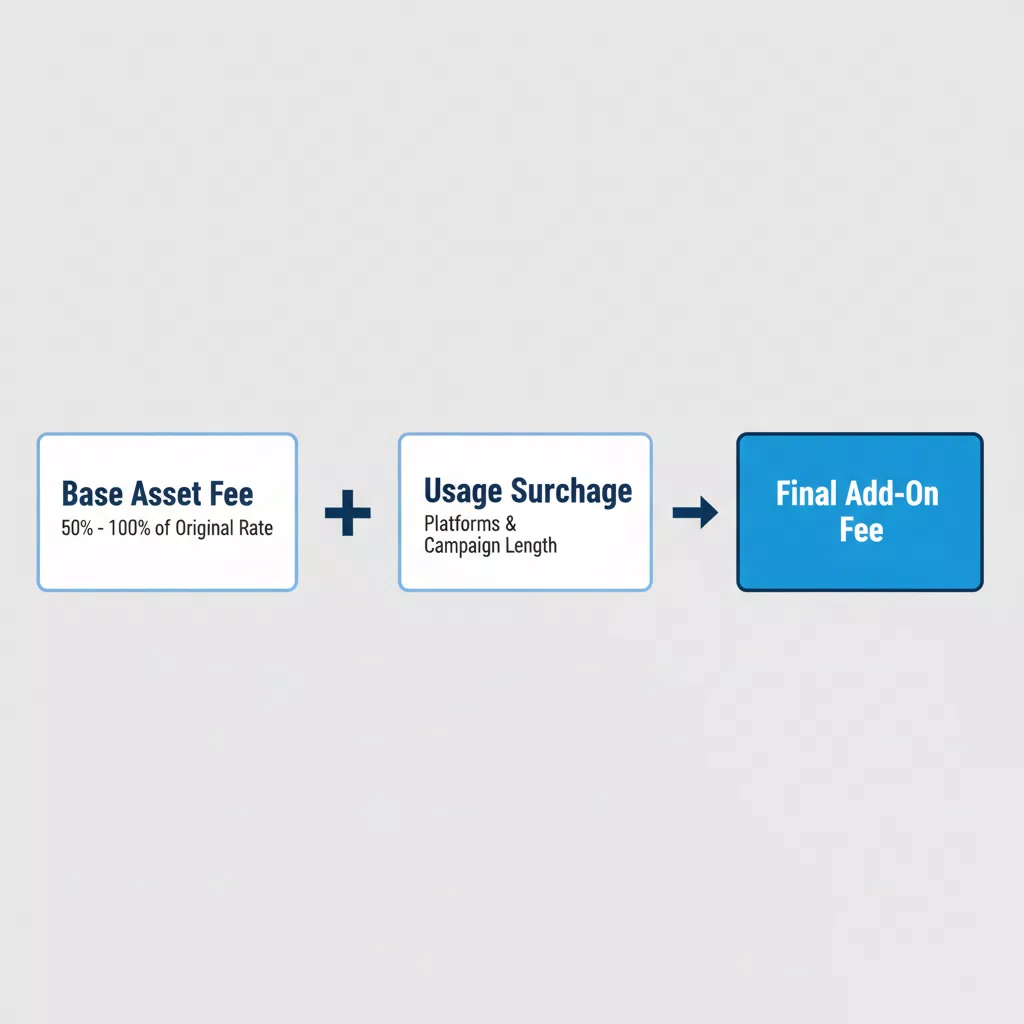
A practical formula to determine your raw footage add-on fee combines a base file transfer fee with a usage multiplier:
- Base Asset Fee: Set a baseline of 50% to 100% of your original finished video fee to cover file preparation and access.
- Usage Surcharge: Add percentage points based on ad spend budget, platform reach, and campaign duration.
For example, if your original video fee was $1,000, your baseline raw footage fee starts around $500. If the brand requests paid advertising rights across multiple channels for six months, you might add a 50% usage surcharge—bringing the total raw footage add-on to $1,000.
If a brand requests total asset ownership or a full buyout fee, your rate should reflect the total commercial value lost by relinquishing control of those assets.
Exact Scripts to Respond to the Brand
You don't need to sound defensive when establishing scope boundaries. You simply need to be clear and professional.
Acknowledge their approval first, explain that raw footage is an out-of-scope deliverable, and present your rates clearly.
Template: Clarifying Usage and Proposing the Add-On Fee
Use this copy-paste script when a brand requests raw footage after approving your main video:
Subject: Re: Final Video Approval & Raw Footage Request
Hi [Brand Contact Name],
Thanks so much! I'm thrilled to hear that the team loves the final video.
Regarding the raw footage: my initial contract covers the delivery and usage rights for the final edited video. Unedited raw clips are separate deliverables because they provide additional editing options and long-term content reuse.
I'd be happy to prepare a quote for the raw footage! To help me send an accurate rate, could you share a few details on your intended usage?
- Where do you plan to publish edits from these clips (e.g., organic social, paid ad campaigns, website)?
- How long will you need licensing rights for the raw clips (e.g., 3 months, 1 year, perpetual)?
Once I have those details, I'll send over an updated scope outline and invoice add-on.
Best, [Your Name]
This response protects your content rights while maintaining a positive client relationship.
Summary: Protect Your Content Rights and Monetize Added Deliverables
Handling post-approval deliverable requests comes down to a clear routine:
- Pause deliverable handoffs until scope and rates are explicitly agreed upon.
- Evaluate commercial value by checking distribution channels, editing rights, and usage duration.
- Calculate add-on pricing using your original project fee as a baseline multiplier.
- Confirm scope updates in written contracts before transferring unedited media files.
By treating raw footage as a premium asset, you safeguard your content rights and unlock additional revenue on every brand partnership.
The creator usage rights checklist can help you define the extra permission separately from file delivery. Use CreaSeed to organize the request and draft a clear reply for your own review.
FAQ
What If the Brand's Original Contract Included Raw Footage in the Deliverables?
If the signed contract explicitly lists raw footage as a deliverable, you must hand it over according to the agreed terms. Review your contract before responding to confirm whether unedited assets were included in the initial scope.
Can I Charge Extra for Raw Footage If the Brand Only Wants It for Internal Archives?
Yes. Even for internal archiving, delivering raw footage requires file handling and gives the brand access to unedited assets. You can charge a nominal base asset delivery fee or request a written agreement stating the files will not be edited or published publicly.
What Should I Do If a Brand Refuses to Pay an Add-On Fee for Raw Footage?
Politely inform the brand that unedited files are outside the contracted scope and cannot be delivered without an updated license. Offer to deliver only the approved final edited video as specified in your original agreement.