The 2027 Creator Inventory Worksheet: How to Balance Retainers, One-Offs, and Seasonal Sponsorship Slots
To build a balanced 2027 sponsorship schedule, you need to analyze your performance data and split your content inventory into three distinct buckets: recurring retainers (40–50%), flexible one-off slots (30–40%), and premium seasonal holds (10–20%).
Using an inventory worksheet helps you secure predictable baseline income while keeping enough production bandwidth open for high-margin seasonal deals.
Quick Comparison of Sponsorship Inventory Buckets
| Inventory Type | Target Allocation | Primary Purpose | Key Advantage |
|---|---|---|---|
| Recurring Retainers | 40–50% | Baseline cash flow | Predictable monthly income and stronger brand partnerships |
| Flexible One-Offs | 30–40% | Testing & discovery | Low risk, format flexibility, and rapid brand onboarding |
| Seasonal Holds | 10–20% | Maximum yield | Peak pricing power during major retail spending windows |
Here is how to audit your past collaboration records, establish hard deliverable caps, and build your full 2027 sponsorship pipeline.
Step 1: Audit Past Collaboration Records to Set 2027 Baseline Capacity
Before launching into a new calendar year, you need a clear baseline of what you actually built and earned in past campaigns. Many creators guess their annual capacity, accept deals as they come, and end up burned out by mid-year.
Auditing your historical records gives you hard data on which formats paid for your time and which ones drained your energy.
Catalog Past Revenue and Deliverable Types
Start by listing every brand deal you completed over the past 12 months in a single spreadsheet. Group these deals by format—such as dedicated YouTube videos, 60-second integrated mid-rolls, or short-form Instagram Reels.
For each entry, record three core numbers:
- Gross Payout: The total fee paid by the brand.
- Asset Type: The exact format delivered.
- Administrative Drag: The extra work involved, including email threads, contract edits, and product shipping delays.
Logging your deals this way reveals patterns quickly. You might discover that short-form videos generate quick cash with low hassle, while long-form dedicated reviews require triple the labor for minimal added pay.
Calculate True Production Time per Asset (Illustrative Scenario)
Most creators only track the time spent behind the camera. To set a realistic schedule for 2027, you must measure total operational time per deal.
Use this direct formula to calculate your effective hourly rate:
Total hours = research and scripting + filming and editing + administration and revisions.
Effective hourly rate = gross sponsorship payout ÷ total hours.
Let's walk through an illustrative scenario to see how this works in practice:
Suppose you were paid $1,500 for a 60-second video integration. Here is the actual breakdown of your spent hours:
- Scripting and brand brief review: 2 hours
- Filming, lighting setup, and audio check: 2 hours
- Editing, rough cut assembly, and graphics: 3 hours
- Admin emails, brand revision requests, and contract compliance: 3 hours
That brings your total investment to 10 hours. Dividing your $1,500 payout by 10 hours gives an effective hourly rate of $150/hour.
If a dedicated review paid $2,500 but required 25 hours due to endless revision rounds, your effective rate drops to $100/hour. This math makes it obvious which deliverables to prioritize in your 2027 schedule.
Step 2: Construct the 2027 Inventory Allocation Matrix
Once you know your actual capacity and production hours, you can divide your year into dedicated inventory buckets.
A structured allocation matrix keeps your monthly income steady while saving room for high-paying seasonal campaigns.
Determine Your Inventory Split Ratio
To balance income security with growth, split your total yearly content slots into three clear categories. If you publish 4 sponsored units per month, you have 48 total slots for the year.
The table below demonstrates how to divide those 48 illustrative annual slots across your inventory buckets:
| Inventory Type | Target Split | Monthly Units (4/mo Max) | Annual Units | Recommended Booking Lead Time |
|---|---|---|---|---|
| Recurring Retainers | 50% | 2 units | 24 units | 30–60 days ahead |
| Flexible One-Offs | 35% | 1–2 units | 17 units | 14–30 days ahead |
| Seasonal Holds | 15% | 0–1 units | 7 units | 60–90 days ahead |
Retainers form your financial foundation. One-off slots let you test new brands, formats, and pricing. Seasonal holds keep your calendar open when brands spend peak budgets during major retail holidays.
Establish Monthly Integration Caps
Overloading your feed with sponsored posts hurts your audience trust and leads to production fatigue. Protect your channel health by capping your sponsored posts.
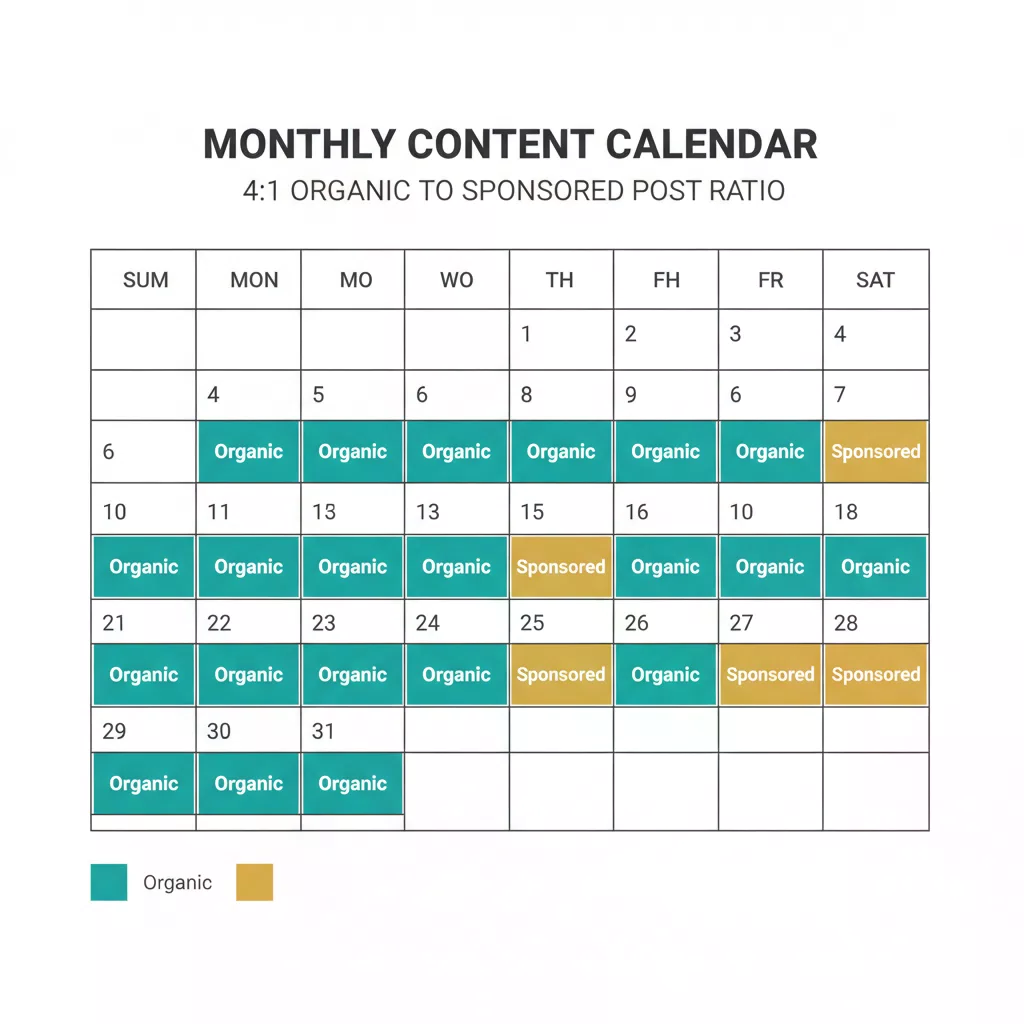
A healthy benchmark is maintaining a 4:1 organic-to-sponsored ratio. For every sponsored integration you publish, publish at least 3 purely organic pieces of content. Setting a hard limit of 4 sponsored integrations per month creates natural scarcity. When brands know your slots are limited, you gain leverage to enforce firm rates.
Step 3: Evaluate Brand Category Profitability and Retainer Potential
Not all brand dollars are equal. Some product categories involve smooth approvals and fast payouts, while others drag you into legal negotiations and endless rewrite requests.
Score Niche Categories by Historical Margin
Rank your past sponsor categories based on three factors:
- Financial Return: Net payout divided by production hours.
- Approval Speed: How quickly the brand approves scripts and rough cuts.
- Contract Constraints: Restrictive terms like strict exclusivity clauses or multi-year usage rights without extra compensation.
For example, productivity software brands might offer straightforward briefs with fast one-round approvals. Conversely, mobile gaming apps might demand complex campaign tracking and multiple script edits. Focus your 2027 sales efforts on categories with high margins and low administrative friction.
Convert High-Performing Sponsors into Multi-Month Retainers
When a one-off campaign hits its performance goals, do not wait for the brand to reach out to you again. Pitch them a multi-month package while the campaign data is fresh.
Sample Retainer Pitch Wording: "Our Q3 video integration generated 45,000 organic views and strong audience engagement for your team. To build on this momentum, I've reserved 1 integration slot per month for Q1 2027. Locking in a 3-month retainer secures guaranteed inventory before our calendar fills up, at a discounted bundle rate of $1,350 per integration instead of our standard $1,500 one-off fee."
Retainers save you dozens of hours in monthly pitching and negotiation, making a small package discount well worth the reliable cash flow.
Step 4: Map Seasonal Windows and Calculate Pipeline Outreach Volume
Brands allocate ad dollars on strict corporate quarterly calendars. If you pitch a Q4 holiday campaign in October, you are already too late.
Set Early-Bird Booking Timelines for Peak Seasons
To capture high-budget seasonal deals, map your outreach timeline at least 60 to 90 days before key shopping periods:
- Q1 (New Year / Fitness / Apps): Pitch in October and November.
- Q2 (Spring / Outdoor / Travel): Pitch in January and February.
- Q3 (Back-to-School / Tech): Pitch in April and May.
- Q4 (Black Friday / Cyber Monday / Holidays): Pitch in July and August.
During peak quarters, brands frequently request whitelisting privileges to boost top-performing assets. Reserving seasonal inventory early lets you negotiate these additional rights for extra revenue.
Calculate Required Pitch Volume to Fill Empty Slots
To keep your pipeline full, build a backward calculation based on your historical deal close rate.
Let's look at an illustrative outreach scenario:
- Monthly Slot Goal: 2 open one-off slots to fill.
- Estimated Lead Close Rate: 15% (out of every 100 brands contacted, 15 sign deals).
- Required Monthly Pitches: 2 ÷ 0.15 ≈ 13.3 pitches, rounded up to 14
In this scenario, sending 14 targeted pitches per month (roughly 3 to 4 pitches per week) would yield about 2 deals if the illustrative 15% close rate held. Actual outcomes vary, so revisit the estimate using your own results.
Summary: Core Guidelines for Managing Your 2027 Inventory Worksheet
Building a profitable 2027 inventory schedule requires discipline and clear boundaries. Keep these fundamental rules in mind as you manage your calendar:
- Audit real hours: Base your pricing on total production time, not just camera time.
- Enforce monthly caps: Stick to a 4-to-1 organic content ratio to maintain audience trust.
- Target high-margin niches: Focus outreach on brand categories with fast approvals and low admin drag.
- Pitch retainers early: Convert successful one-off sponsors into multi-month partners.
- Work 60–90 days ahead: Reach out well before peak retail cycles to claim top seasonal budgets.
FAQ
How Should Creators Adjust Their Inventory Slots If Audience Growth Suddenly Spikes?
When audience reach increases significantly, keep your monthly deliverable caps unchanged to protect content quality. Instead of adding extra sponsored slots, increase your base rates for one-off and seasonal slots while keeping existing retainer partners at agreed rates until renewal.
What Is the Best Way to Handle Brands That Ask for Last-Minute Q4 Integrations?
If a brand requests an integration on short notice during peak season and your regular slots are full, charge a 25–50% rush fee or offer to place them in an early Q1 slot when inventory reopens.