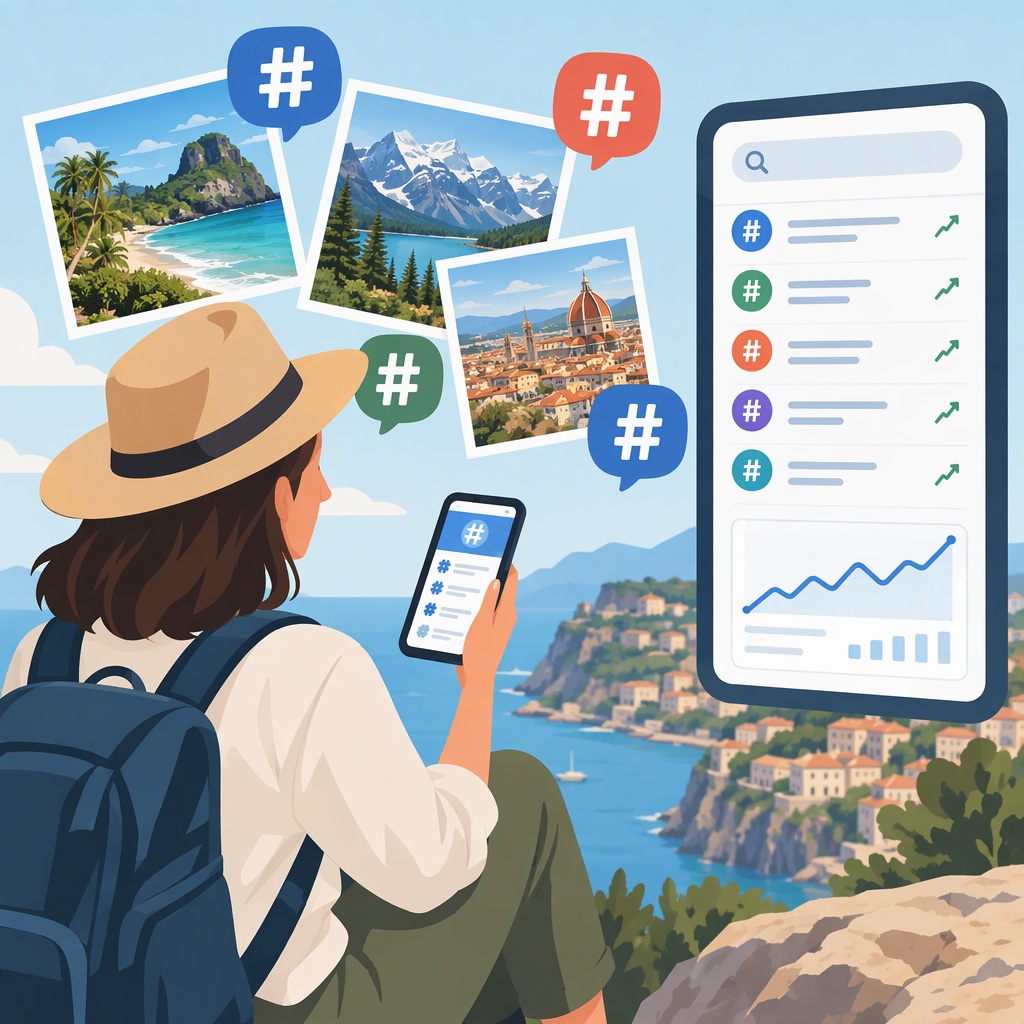
Top Travel Hashtags: Examples and How to Check Trends
There isn’t one universal list of “top” travel hashtags—and a widely used hashtag is not necessarily trending right now. For a post, start with tags that accurately describe its destination, activity, and intended audience. Treat the examples below as searchable starting points, not a verified live ranking. Public hashtag directories list examples such as #travel, #travelgram, #wanderlust, #travelphotography, #solotravel, and destination-specific tags such as #ParisFrance. (iqhashtags.com)
Travel Hashtag Ideas by Topic
These are general examples, not claims that the tags are currently trending or that they will improve a post’s performance. Check that each tag fits the actual content before using it.
| Post topic | Hashtag examples |
|---|---|
| General travel | #travel, #travelgram, #wanderlust, #traveltheworld |
| Travel photography | #travelphotography, #travelphoto, #travelpics |
| Solo trips | #solotravel, #backpacker |
| Adventure and outdoors | #adventure, #explore |
| Destination-specific | A relevant destination tag, such as #ParisFrance |
These examples appear in public hashtag lists, but those lists do not establish a platform-wide popularity ranking or a current trend. A tag may also be used differently across platforms and communities. (iqhashtags.com)
How to Choose Hashtags for a Particular Post
Use a simple relevance test:
- Destination: Name the place shown or discussed. Use a city, region, or country tag only when it genuinely describes the post.
- Activity or subject: Add a tag for what the post is about—such as photography, hiking, or a solo trip—if that is central to the content.
- Intended audience: Consider whether the post is useful to a particular group, such as solo travelers or backpackers. Avoid audience tags that do not fit.
- Check the results: Search each candidate on the platform where you plan to post. Review the results to see whether the tag is relevant to your content and audience.
For example, a hypothetical solo-trip photo in Paris might use #ParisFrance, #solotravel, and #travelphotography if all three accurately describe it. Adding a broad tag such as #travel may make sense too; adding unrelated popular tags just because they are popular does not make the post more accurately labeled.
Broad tags describe a large subject; specific tags describe a narrower place, activity, or audience. The practical trade-off is breadth versus precision: broader wording covers more kinds of travel content, while a specific tag may better describe a particular post. Neither choice guarantees views, reach, or engagement.
How to Check Whether a Travel Hashtag Is Trending
A trend is time-sensitive, so do not rely on a saved list or an undated article to label a hashtag “trending now.” Instead, check the platform where you intend to post:
- Search the candidate hashtag in the platform’s own app or public discovery surface.
- Look for an explicit trend signal, if the platform presents one. On TikTok, the Help Center says Discover can include trending videos and hashtags, and notes that the tab is not available to everyone everywhere. (support.tiktok.com)
- Inspect the visible results for relevance to travel, your specific topic, and your intended audience. A tag appearing in search results—or a large collection of posts—does not by itself show that it is trending.
- Record the platform, region if relevant, and date checked before describing a tag as a current trend. Recheck before publishing if the claim needs to remain current.
A platform’s trend or search signal describes what is visible on that platform at the time and under the conditions you checked. It does not establish that a hashtag will bring more views or predict how a post will perform.
Quick Pre-Publication Checklist
- Does every hashtag accurately match the destination, activity, or audience?
- Did you check the tag on the platform where you will publish?
- If you call it “trending,” have you noted the platform, relevant region, and date checked?
- Have you avoided presenting a curated example list as a universal ranking or performance promise?
Bottom line: Use travel hashtags as accurate labels for a specific post. Treat broad travel tags as starting points, add relevant destination or activity tags, and verify any claim of a current trend on the relevant platform.