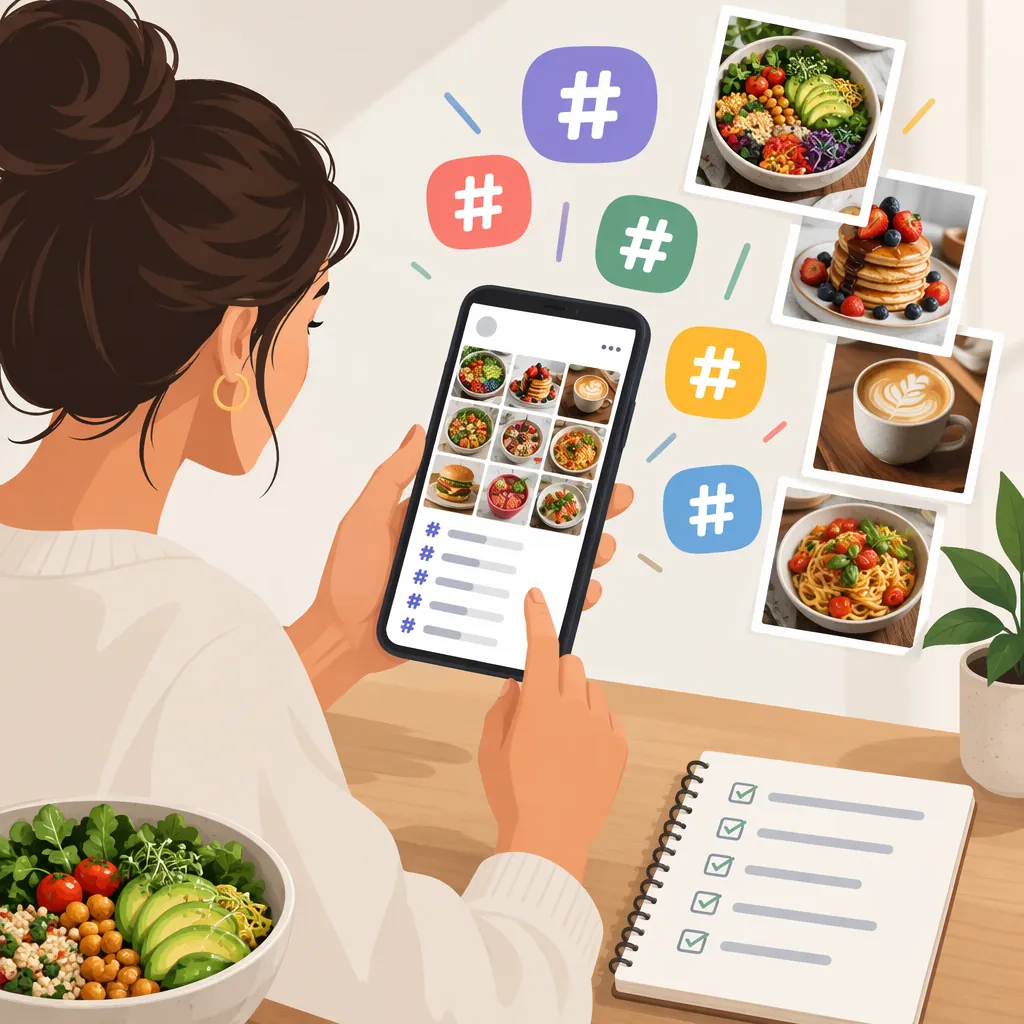
Top Food Hashtags on Instagram: Examples and Trend Checks
Food hashtags to consider on Instagram include #food, #foodie, #foodstagram, #foodphotography, #breakfast, #dessert, and dish-specific tags such as #pasta or #sushi. These are examples from published guides, not a verified current ranking. Choose tags that accurately describe the dish, cuisine, meal, and content format, then check their current use on Instagram before posting. The supplied Instagram guides date to 2015 and 2017, so they cannot establish which hashtags are trending today. [c1] [c2]
Food Hashtag Examples by Category
Use this list as a starting vocabulary, not a popularity leaderboard. Orders2me lists broad food, meal, and ingredient hashtags; nichemarket provides additional categories for photography, cuisines, and dishes. Neither supplied article establishes a current Instagram ranking. [c1] [c2]
| Category | Hashtags to Consider | Selection Check |
|---|---|---|
| General food | #food, #foodie, #foodstagram, #foodlover | Does the post clearly focus on food? |
| Photography and styling | #foodphotography, #foodphoto, #foodstyling | Is photography or presentation a meaningful part of the post? |
| Meals | #breakfast, #brunch, #lunch, #dinner | Does the tag match the meal shown? |
| Desserts and ingredients | #dessert, #chocolate, #strawberries | Is the named food actually featured? |
| Dishes | #pasta, #pizza, #sushi, #ramen, #burger | Does the dish name accurately describe the food? |
| Cuisines | #italianfood, #mexicanfood, #indianfood, #japanesefood | Is the cuisine label appropriate? |
| Dietary descriptions | #veganfood, #vegetarian, #dairyfree | Have you checked the ingredients and preparation? |
Do not copy the entire table into a caption. Select only the categories that fit the individual post. A pasta photograph does not need breakfast, sushi, or vegan tags unless those descriptions genuinely apply.
What “Top” and “Trending” Can Mean
For this guide, separate three questions:
- Popularity: How widely has a hashtag been used over a stated period?
- Momentum: Is its use increasing during a defined recent period?
- Relevance: Does it describe this post and the audience you intend to address?
These are different questions. A list of familiar tags is not, by itself, evidence of rising momentum or suitability for your post.
The supplied sources have important limits:
- Historical Instagram guides: Orders2me’s article is dated April 7, 2015, and nichemarket’s article is dated September 18, 2017. Their hashtag examples are useful for brainstorming, but their age limits any claim about current popularity. [c1] [c2]
- Pinterest inspiration: The supplied Pinterest page collects ideas about Instagram food hashtags. Its Pinterest activity is not an Instagram usage measurement. [c3]
- TikTok rankings: The supplied eDigital article explicitly concerns TikTok. Its listed TikTok counts do not establish an Instagram ranking. [c4]
None of these references provides a current, verified Instagram food-hashtag leaderboard. This article therefore does not assign ranks, report live volumes, or identify a confirmed fastest-growing tag.
Build a Relevant Set for Each Post
A practical selection method is to describe the post before choosing hashtags:
- Name the main subject. Start with the dish or ingredient rather than a generic popularity list.
- Add useful context. Consider the meal, cuisine, or preparation shown.
- Describe the format when appropriate. A styling photograph may suit #foodstyling; a food photograph may suit #foodphotography.
- Check dietary language. Do not infer vegan, vegetarian, or dairy-free status from appearance alone. Orders2me specifically warns that dietary tags must match the food’s ingredients. [c1]
- Remove unsupported labels. Leave out unrelated cuisines, locations, ingredients, and occasions.
A suggested draft for a photograph of homemade tomato pasta might be #pasta #homemade #foodphotography. Add #dinner only if the meal context fits. This is an illustrative set, not a tested recommendation or a claim of better reach.
The references do not establish an optimal current hashtag count for Instagram. Favor a set you can justify tag by tag rather than aiming for an unsupported numerical target.
Pre-Publication Hashtag Checklist
- [ ] Every tag describes something present in the post or its accurate context.
- [ ] Dish and cuisine labels are appropriate.
- [ ] Dietary labels have been checked against ingredients and preparation.
- [ ] Location labels, if used, describe the actual location.
- [ ] No tag was added solely because it appeared on a popularity list.
- [ ] Current Instagram results have been reviewed where available.
- [ ] The final caption and hashtag set have been recorded for later comparison.
Check Current Use Without Overstating Trends
Orders2me advises revisiting hashtag research because trends change. Its article does not supply current measurements, so treat that advice as a reason to check again—not proof that any particular tag is rising. [c1]
Use the following as an observational workflow:
- Search Instagram for each candidate tag using the search options available to your account.
- Review whether the visible results match the dish, cuisine, and kind of content you plan to publish.
- Note dates where they are visible. If you cannot assess recency, record that limitation.
- Record the date of your check and what you actually observed. Do not label a tag “growing” without comparable observations over time.
- Revisit candidates on a consistent schedule and before time-sensitive posts.
Treat a search result as a limited observation, not a platform-wide measurement. When the available evidence is insufficient, use wording such as “relevant in the results reviewed” rather than “trending across Instagram.”
Hashtag Observation Log
| Check Date | Candidate Tag | Match to Planned Post | Visible Recency Evidence | Limitations | Keep, Review, or Remove |
| --- | --- | --- | --- | --- | --- |
| Enter date | Enter hashtag | Describe the match | Record only what is visible | Note missing dates or limited results | Enter decision |
Review Results Without Assuming Causation
If post metrics are available to you, keep a simple record of the content, publication date, hashtag set, and outcomes you care about. Compare posts with similar subjects and formats where possible, and note other changes such as caption wording or publication timing.
Use the record to decide what to examine next, not to declare that a hashtag caused an outcome. Changing several elements at once makes that conclusion especially difficult to support.
The older Instagram guides make visibility and engagement claims, but the supplied material does not establish a current, quantified effect for the examples in this article. No hashtag set here should be read as a guarantee of reach, followers, or engagement. [c1] [c2]
FAQ
What Are the Best Food Hashtags on Instagram?
There is no verified current “best” list in the supplied evidence. Published examples include #food, #foodie, #foodstagram, and #foodphotography, alongside specific tags such as #pasta and #sushi. Use the examples that accurately match your post and check their current use before publishing. [c1] [c2]
How Many Food Hashtags Should I Use?
The supplied references do not establish an optimal current number for Instagram. Select a relevant set rather than filling a numerical quota, and check the platform’s current posting rules separately.
Can I Use a TikTok Food Hashtag Ranking for Instagram?
You can treat overlapping food terms as candidates to investigate, but not as evidence of Instagram popularity. The supplied eDigital ranking is explicitly about TikTok, so its counts and rankings should not be transferred to Instagram. [c4]
Should I Add Vegan or Vegetarian Tags to Every Food Post?
No. Use dietary tags only when they accurately describe the food. Orders2me warns that ingredients such as bacon, butter, or eggs can make particular dietary labels inappropriate. If the ingredients are unknown, leave the label out. [c1]