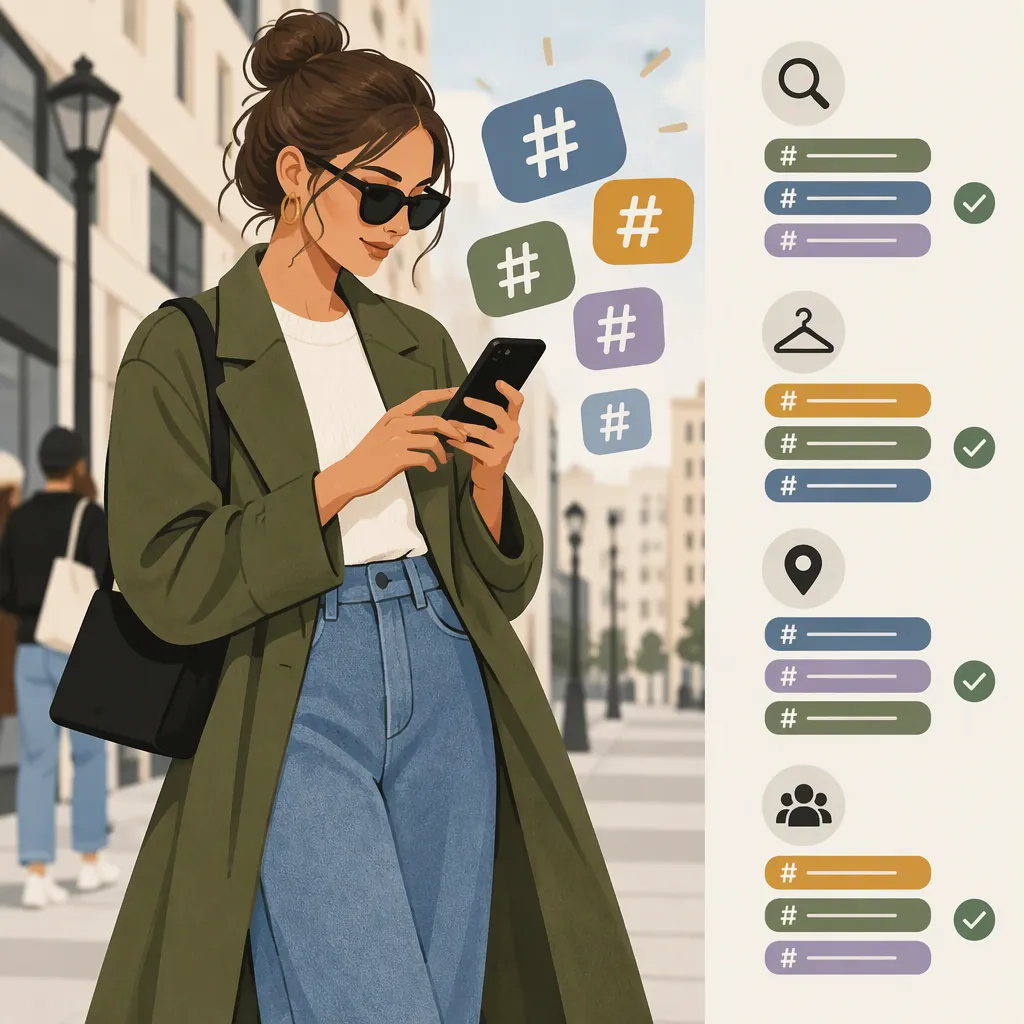
How to Choose Street Style Hashtags for Your Posts
Start with a descriptive tag such as #streetstyle or #streetfashion, then add tags that accurately describe the outfit, a featured detail, or the post format. Treat published hashtag lists as candidates to review, not as guaranteed reach formulas. The supplied references include street style and everyday-outfit tags, but do not establish a universally best combination. [c1] [c2]
Choose Tags by What the Post Shows
Begin with a plain-language description of the post: an everyday outfit, a sneaker-focused look, or a collection of styled outfits. Then choose hashtags that match that description.
The supplied Instagram post lists #StreetStyle, #StreetFashion, #WhatIWore, and #OutfitOfTheDay among fashion hashtag examples. TopTag also lists #streetstyle, #whatiwore, #everydayfashion, and #todaysdetails. These are useful starting candidates, not evidence that every tag belongs on every post. [c1] [c2]
For a practical relevance check, ask: Would someone looking for this subject understand why this post appears under the tag? Remove tags that require an explanation unrelated to the image, video, or caption.
Content-To-Tag Worksheet
Fill in before selecting hashtags:
- Main subject: ______
- Outfit or style description: ______
- Featured clothing or accessory detail: ______
- Post format: ______
- Candidate hashtags: ______
- Tags removed because they do not match: ______
Separate Subject, Detail, and Format Tags
Organize candidates by purpose rather than copying a long block:
- Subject: Consider
#streetstyleor#streetfashionfor a street style post. - Outfit description: Consider
#casualor#everydayfashionwhen those descriptions fit. Both appear in TopTag's suggestions. [c1] - Detail: Consider a detail-oriented candidate such as
#todaysdetailswhen the post emphasizes accessories or styling details. TopTag lists this tag, but does not establish its effectiveness for a particular post. [c1] - Format: Consider
#ootdfor an outfit-of-the-day post,#lookbookfor a curated outfit presentation, or#grwmfor a get-ready-with-me video. The supplied fashion article describes these uses. [c3]
Use this grouping as an editing aid, not a requirement to include one tag from every category.
Build a Shortlist for Each Post
These hypothetical examples illustrate content matching. They are not tested combinations or recommended hashtag counts.
| Hypothetical Post | Candidate Shortlist | Relevance Check |
|---|---|---|
| A casual everyday outfit photographed outdoors | #streetstyle #whatiwore #everydayfashion #casual |
Keep each tag only if it describes the outfit or post. |
| A close-up of accessories within a street style outfit | #streetstyle #todaysdetails |
Make the outfit context clear rather than tagging an unrelated product close-up. |
| A curated series of street style outfits | #streetstyle #lookbook #styleinspo |
Use format and inspiration tags only when the presentation supports them. |
| A video showing the process of getting dressed | #streetstyle #grwm #ootd |
Keep #streetstyle only if the completed outfit fits that description. |
The candidate vocabulary comes from the supplied lists and article. Inclusion in those sources does not verify current popularity or likely results. [c1] [c3]
Review Tags Before Posting
Use this editorial review before publishing:
- Search each candidate on the platform where you plan to post, if search results are available.
- Check whether the visible results match the subject you intend to describe.
- Remove unrelated event, location, or style labels.
- Check the platform's current posting requirements rather than relying on an older hashtag list.
- Keep the caption understandable without the hashtags.
The supplied Instagram post recommends combining relevant broad tags with more specific tags. That is a selection suggestion, not a verified performance formula. [c2] There is no need to retain an unsuitable tag just to complete a template.
Prepublication Hashtag Checklist
- [ ] Every tag describes something present in the post or caption.
- [ ] Available search results match the intended subject.
- [ ] Event and location tags are accurate.
- [ ] The selection follows the platform's current requirements.
- [ ] No tag is included solely because a list calls it viral.
- [ ] The caption makes sense without the tags.
Understand the Limits of Hashtag Lists
These references provide examples, not a current platform-wide ranking. TopTag displays trend indicators without explaining their calculation in the supplied text. The fashion article is dated August 18, 2025, and its table and prose give different counts for some hashtags, including #fashionista and #lookbook. Its popularity figures should not be treated as verified current measurements. [c1] [c3]
The supplied Instagram post is dated February 26, 2021. It is a user post, not platform documentation establishing hashtag performance or current posting rules. [c2]
Accordingly, this guide uses the sources for candidate vocabulary and format descriptions. It does not endorse their growth promises, assign an optimal hashtag count, or claim that any selection guarantees discovery.
FAQ
What Are the Best Street Style Hashtags?
There is no verified best set in the supplied evidence. Start by reviewing #streetstyle, #streetfashion, #whatiwore, and #everydayfashion, which appear in the references, then keep only those that accurately describe your post. [c1] [c2]
Should I Use #Streetwear on Every Street Style Post?
No. Use it only when it describes the outfit. The supplied fashion article associates #streetwear with urban fashion, sneakers, and casual outfits; do not assume it is interchangeable with every street style look. [c3]
How Many Street Style Hashtags Should I Use?
The supplied references do not establish an optimal count. Choose a concise set of relevant tags and check the platform's current requirements. The examples here illustrate selection logic, not a numerical target.
Do Viral Hashtag Lists Guarantee More Reach?
No guarantee is established by these sources. The supplied fashion article makes visibility and engagement claims, but its text does not provide enough supporting methodology to verify those promises. Treat its tags as candidates, not predicted outcomes. [c3]