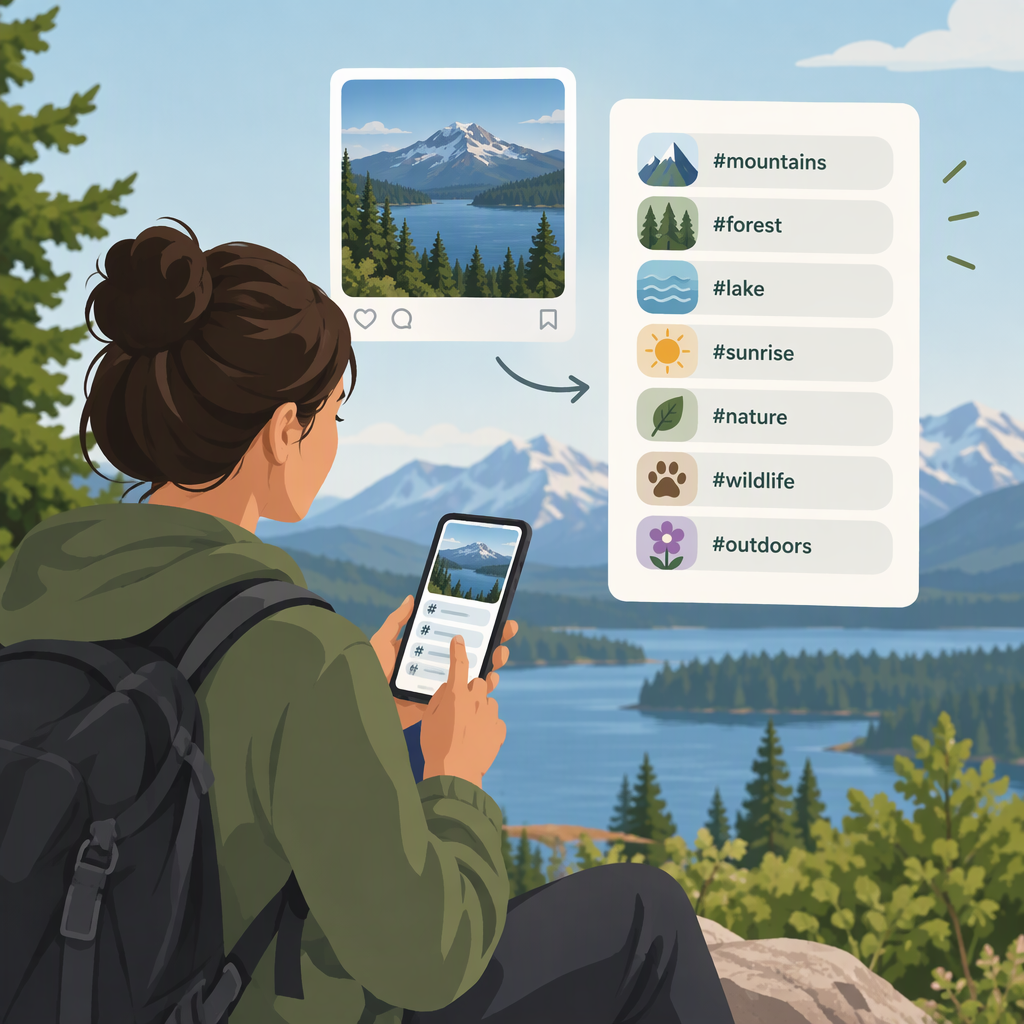
Best Hashtags for Nature: How to Choose Tags That Fit Your Post
The best hashtags for a nature post are the ones that accurately describe what it shows. Start with the main subject, add a more specific detail or setting if it fits, and include a format tag only when useful. The examples below are descriptive starting points—not verified popularity or performance winners.
How to Choose Nature Hashtags
Use this quick check before publishing:
- Name the main subject. Is the post about a bird, a forest, a wildflower, or a landscape? Choose a tag that matches what viewers can actually see.
- Add a specific detail. If it is clear and relevant, describe the species or subject, habitat, activity, or place. Don’t guess at a species or location.
- Consider the format. A photography or video tag may help describe the post, but use one only if it applies.
- Remove mismatches. Leave out tags that are unrelated, overly broad for the post, or included only because they sound popular.
- Review the set against the post. Each tag should make sense to someone who sees the image or video and reads its caption.
This is a relevance check, not a promise of more views. A hashtag can label a topic, but that alone does not guarantee reach or engagement.
Nature Hashtag Examples by Subject and Format
Choose only examples that fit your post; you don’t need one from every category.
| What the post shows | Descriptive starting points |
|---|---|
| A general outdoor scene | #nature, #outdoors |
| A bird or other wildlife | #wildlife, #birds, #birdwatching |
| A forest or woodland | #forest, #woodland, #forestphotography |
| A waterfall or stream | #waterfall, #river, #waterfallphotography |
| Wildflowers or plants | #wildflowers, #nativeplants, #botanicalphotography |
| A close-up nature image | #macro, #macrophotography |
| A nature video | #naturevideo, #wildlifevideo |
These tags are examples of what a post might be called—not a ranking, trend report, or claim that they perform well. A useful set may combine a broad subject with a more specific subject, setting, or format tag, as long as each one fits.
Illustrative example: For a photo that clearly shows a bird in a woodland, you might consider #wildlife, #birds, #woodland, and #birdphotography. If the bird or setting is not identifiable, stick to tags that are still accurate rather than adding a guessed species or location.
How Many Hashtags Should You Use?
There is no single count that applies to every platform. Use only relevant tags, and follow the current limit shown by the platform where you post. A platform’s maximum is a ceiling, not a target.
For Instagram, the platform announced that posts and Reels would move to a limit of up to five hashtags, with the change rolling out gradually. That is Instagram-specific guidance, not a universal recommendation for other platforms. Check Instagram’s current posting guidance or in-app limit before publishing. (socialmediatoday.com)
For other platforms, don’t assume Instagram’s limit—or an old number from a general hashtag list—applies. Check the platform’s current public guidance if you need a specific count. Whatever the limit, choose tags for their descriptive fit rather than filling every available slot.