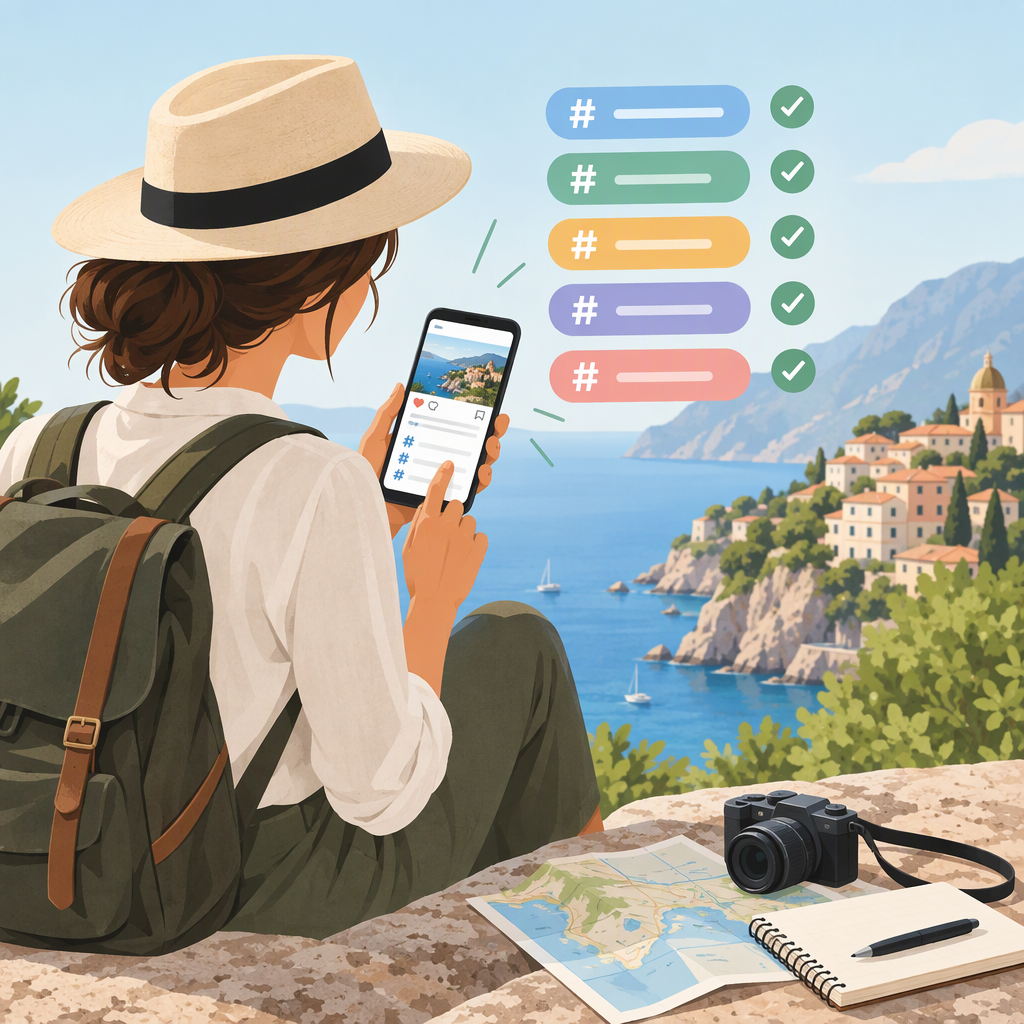
Best Instagram Hashtags for Travel: How to Choose the Right Ones
There is no universally “best” travel hashtag for every Instagram post. Choose tags that accurately describe what your photo or video shows—its destination, activity, travel style, or subject. The examples below are illustrative candidates, not verified rankings or claims about popularity or reach.
How to Choose Travel Hashtags for a Post
Use this quick process before publishing:
- Describe the post plainly. What can a viewer actually see? A street market, a mountain hike, a hotel room, or a train journey?
- Add the destination if it matters. Use a place name only when it accurately identifies the location shown. A destination tag may not fit a post about general travel advice or a packing list.
- Name the activity or travel style. Think about what the post depicts: hiking, city sightseeing, camping, or family travel.
- Include a subject-specific description. The subject might be architecture, local food, a national park, or a scenic railway.
- Remove anything that doesn’t fit. Don’t use a tag just because it sounds popular or appears on a generic list.
This is an editorial method for matching labels to content—not evidence that a particular tag improves discovery or engagement.
Illustrative Travel Hashtag Examples
These sample tags show how to build a relevant set. They are not verified as popular, currently trending, or effective. Adapt them to the actual post, and check spelling and place names before using them.
| What the post shows | Illustrative candidates |
|---|---|
| A walk through Kyoto’s historic streets | #KyotoTravel · #KyotoStreets · #JapanTravel · #StreetPhotography |
| A day hike in Yosemite | #YosemiteHiking · #YosemiteNationalPark · #CaliforniaHiking · #TrailViews |
| A meal at a neighborhood market in Mexico City | #MexicoCityFood · #MexicoCityTravel · #FoodMarket · #LocalFood |
| A family camping trip | #FamilyCamping · #CampingTrip · #OutdoorTravel · #CampgroundLife |
The same trip can call for different tags on different posts. For example, a photo of a Kyoto temple might suit tags describing the temple, its location, and architecture; a separate Kyoto café post should use tags that describe the café or food instead. A tag should fit the content, not merely the trip as a whole.
Broad Versus Specific Travel Hashtags
A broad tag describes a large subject, such as travel or hiking. A specific tag identifies something narrower, such as a destination, activity, or feature of the post. The practical trade-off is generality versus precision: broad wording applies to more kinds of posts, while specific wording says more clearly what this post is about.
That distinction does not establish which tag will perform better. Without current comparative evidence for a defined audience, format, and measurement, it is not possible to responsibly call one option “best-performing.” Choose based on accuracy first; treat any performance claim as a separate question that needs evidence.
A Short Pre-Publish Check
- Does every hashtag describe something actually shown or discussed?
- Is the destination correct and relevant to this post?
- Are the activity, travel style, and subject represented accurately?
- Have you checked spelling and the exact wording of each tag?
- Have you checked Instagram’s current in-app guidance or posting rules? Instagram says its Professional Dashboard’s Best Practices section includes guidance for creators, including information about hashtags; consult the current guidance rather than relying on an old limit or platform tip. (about.fb.com)
Bottom line: Start with the post itself, choose accurate destination and subject descriptions where they apply, and use examples as prompts—not as a promise of reach or a fixed “best hashtags” list.