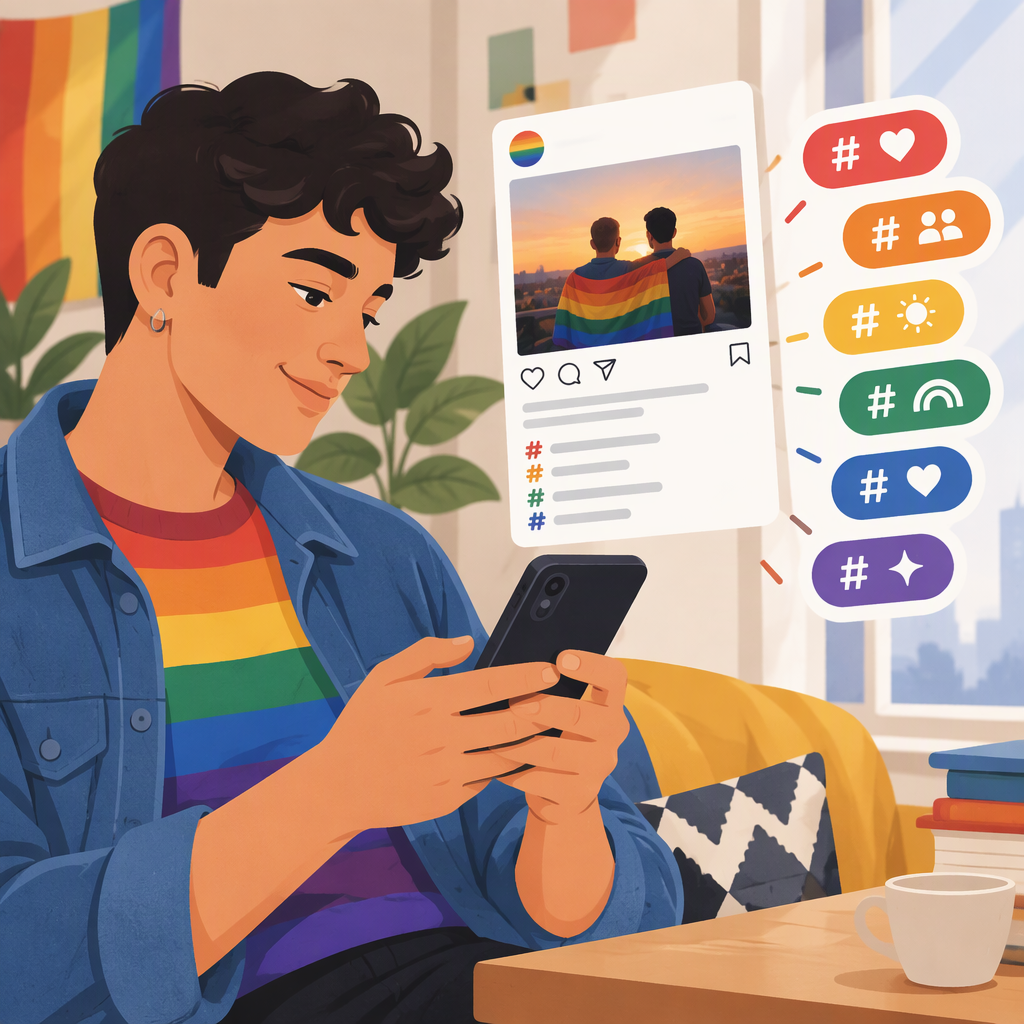
Gay Hashtags for Instagram: How to Choose Pride Tags That Fit
If you’re choosing gay hashtags for Instagram, start with what the post actually shows and whom it’s for. A Pride parade photo, a personal coming-out announcement, and an LGBTQ+ history post call for different tags. Choose only tags that fit; don’t treat any list as a guaranteed way to increase reach.
Instagram announced that it would limit captions for posts and Reels to up to five hashtags. The announcement also recommended fewer, more targeted tags rather than long lists of generic ones. (socialmediatoday.com)
Candidate Gay, Lgbtq+, and Pride Hashtags
These are illustrative options, not a ranking or a claim that they’re trending. Use a tag only when it accurately describes the post and its intended context. Before publishing, search the tag on Instagram and review the public posts it brings up.
| Post context | Candidate tags to consider | Use when… |
|---|---|---|
| Broad LGBTQ+ community or Pride content | #LGBTQ · #Pride |
The post is genuinely about LGBTQ+ people, community, or Pride. |
| A specific identity | #Gay · #Lesbian · #Bisexual · #Transgender |
The identity is relevant to the post and appropriate to name. These tags aren’t interchangeable. |
| A Pride event | #PrideParade · the event’s own hashtag |
The post is actually about that parade or event. Confirm the official event tag from its organizer. |
| Art or history | A specific subject tag, such as #QueerArt or #LGBTQHistory |
The post is about that subject; inspect the tag’s current public context first. |
| A local celebration | The event or city tag used by organizers | The post relates to that event or place. Don’t add a location tag just to attract a local audience. |
Some people use “queer” for themselves or their communities; others don’t. GLAAD notes that there is no single way to describe LGBTQ people, and its media guide is not a prescriptive guide for LGBTQ people. Choose identity language that fits the person or subject represented, rather than assuming one umbrella term suits every post. (glaad.org)
A Quick Way to Choose and Check Your Tags
- Describe the post in one plain sentence. For example: “Photos from the Pride parade in my city” or “A short post about LGBTQ+ history.”
- Pick tags that label that sentence. Consider a broad topic tag, a specific identity or subject tag, and an event or location tag only when it truly applies.
- Inspect each tag on Instagram before using it. Check whether the current public posts match the meaning you intend. If the results are unrelated, confusing, or use the term differently, leave that tag out.
- Check the people and context represented. Don’t apply an identity tag to someone else’s story without a good reason, or use a community term as decoration. If the post is about a particular event, use its tag only if the post actually relates to it.
- Keep the final set at five or fewer. If a tag doesn’t add a clear, accurate description, remove it.
Worked Examples
- Photos from a Pride parade:
#Pride+#PrideParade+ the organizer’s event hashtag + a city tag if the post is genuinely about that place. Add an identity tag only if it fits the people or subject shown. - A Pride illustration:
#Pride+#QueerArtif the artist and artwork’s context make that label appropriate, plus a more specific art or event tag if it accurately applies. Check the public results for each tag first. - An LGBTQ+ history explainer:
#LGBTQHistory+ a tag for the specific historical subject +#LGBTQif it accurately describes the post. A Pride tag is optional, not automatic.
These examples show how to make a choice; they do not claim that a tag is popular or will produce a particular result.
How Many Hashtags Should You Use—And What Can They Do?
Use up to five on a post or Reel, and choose fewer if fewer tags describe it well. Instagram’s announcement set the limit at five and said that targeted hashtags may help content performance and people’s experience on the platform; it did not promise a particular number of views, reach, or engagement for any tag. (socialmediatoday.com)
Treat hashtags as labels, not a distribution guarantee. A focused set makes the post’s topic explicit; a long or irrelevant set can make the caption less clear. Neither choosing a particular Pride hashtag nor filling all five slots guarantees discovery or engagement.
Bottom line: pick a small set that answers “What is this post actually about?” Check the live public context of each tag, use event and location tags only when they fit, and avoid claims that a tag is trending or boosts reach unless you have evidence for that specific claim.