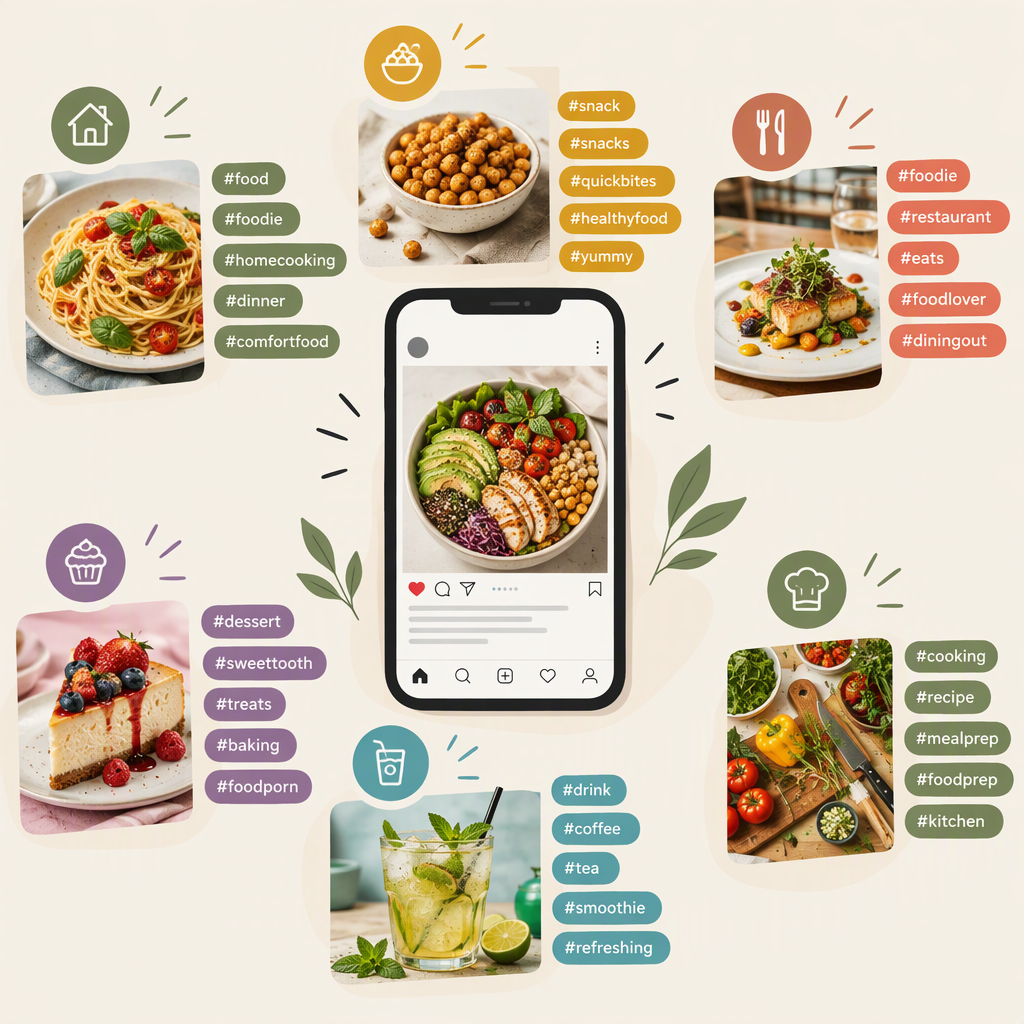
Best Food Hashtags for Instagram: Ideas by Post Type
The most useful food hashtags for an Instagram post are the ones that accurately describe the food, recipe, or cuisine shown—not a list claimed to be universally “best.” Try candidates such as #homecooking for a meal made at home, #baking for a baking post, or #pancakerecipe for a pancake recipe. These are descriptive suggestions, not measured popularity rankings or promises of reach.
Instagram announced in December 2025 that it would roll out a limit of up to five hashtags on a post or Reel. That is a platform limit, not evidence that every post should use five or that any number guarantees discovery. If the composer for your account or format indicates a different limit, follow what it allows. (socialmediatoday.com)
Food Hashtag Ideas by Post Type
Choose only tags that fit the specific post. The examples below are starting points, not a ranking.
| Post type | Candidate hashtags |
|---|---|
| General food post | #food #foodie #foodstagram #homecooking |
| Recipe or cooking tutorial | #recipe #easyrecipes #cookingtips #weeknightdinner |
| Baking | #baking #homebaking #bakingrecipe #sourdough (only if the post is about sourdough) |
| Dessert | #dessert #dessertrecipe #chocolatecake #cookies (choose the specific dessert shown) |
| Vegetarian meal | #vegetarianrecipes #meatlessmeals #veggiedinner #plantbased (use only if accurate) |
| Cuisine-specific dish | #japanesefood #mexicanfood #indianfood #italianfood (choose the cuisine that actually matches the dish) |
| Restaurant or local food post | #restaurantname #cityfood #neighborhoodname #dishname (use the real place or location) |
Broad tags such as #food describe a large category; a narrower tag such as #sourdough or #pancakerecipe describes a more specific subject. That is a difference in relevance and scope—not proof that one type performs better.
How to Choose Hashtags for Your Food Post
- Describe what is visibly in the post. Start with the dish, ingredient, or cooking method.
- Add the recipe or format if it matters. A finished dish, step-by-step tutorial, and recipe card may call for different descriptions.
- Add cuisine or dietary labels only when they are accurate. Don’t use a label just because it is popular or broad.
- If it helps the reader, include a real local tag. For example, a restaurant review could include the restaurant’s name or city; a home recipe need not.
- Remove anything that doesn’t fit. A tag should describe the post, not simply express a hope for more views.
Illustrative example: Suppose you post a video showing how to make ricotta pancakes for brunch. A relevant set of candidates could be #ricottapancakes #pancakerecipe #brunchideas #breakfastrecipes #homecooking. If the caption instead shows a restaurant’s finished dish and says nothing about the recipe, a restaurant or location tag may be more accurate than #pancakerecipe. This is an editorial example, not a tested performance result.
How Many Food Hashtags Should You Use?
For a post or Reel, treat Instagram’s announced up-to-five limit as the ceiling, not an optimal target. Use fewer when fewer tags accurately describe the post; there is no verified ideal count in the cited guidance. Instagram’s creator education hub says it includes guidance on hashtags and other topics, and Instagram’s announcement emphasized more targeted tags rather than many generic ones. Neither establishes a guaranteed reach outcome for a particular food hashtag. (about.fb.com)
Before publishing, check that every tag matches the food or content shown and that the posting interface accepts your selection. Hashtag examples are candidates to adapt—not current trend data, rankings, or a promise of discovery.