Best Hashtags for Fitness Instagram: How to Choose Tags for Each Post
Best Instagram Hashtags for Fitness: Choose Tags for the Post
There is no universal list of “best” fitness hashtags. Choose a few that accurately describe the specific post and the people it is for. Instagram announced a limit of up to five hashtags on a post or Reel in December 2025; treat five as a maximum, not a target. Hashtags can help categorize content and may help people find it through hashtag search, but they are not a reliable way to increase general reach. (digitaltrends.com)
For example, a video demonstrating a barbell squat might use #strengthtraining, #barbelltraining, and #squatform. Skip #powerlifting unless the post is actually about powerlifting. A precise, smaller set is more useful than filling every available spot with broad or loosely related tags.
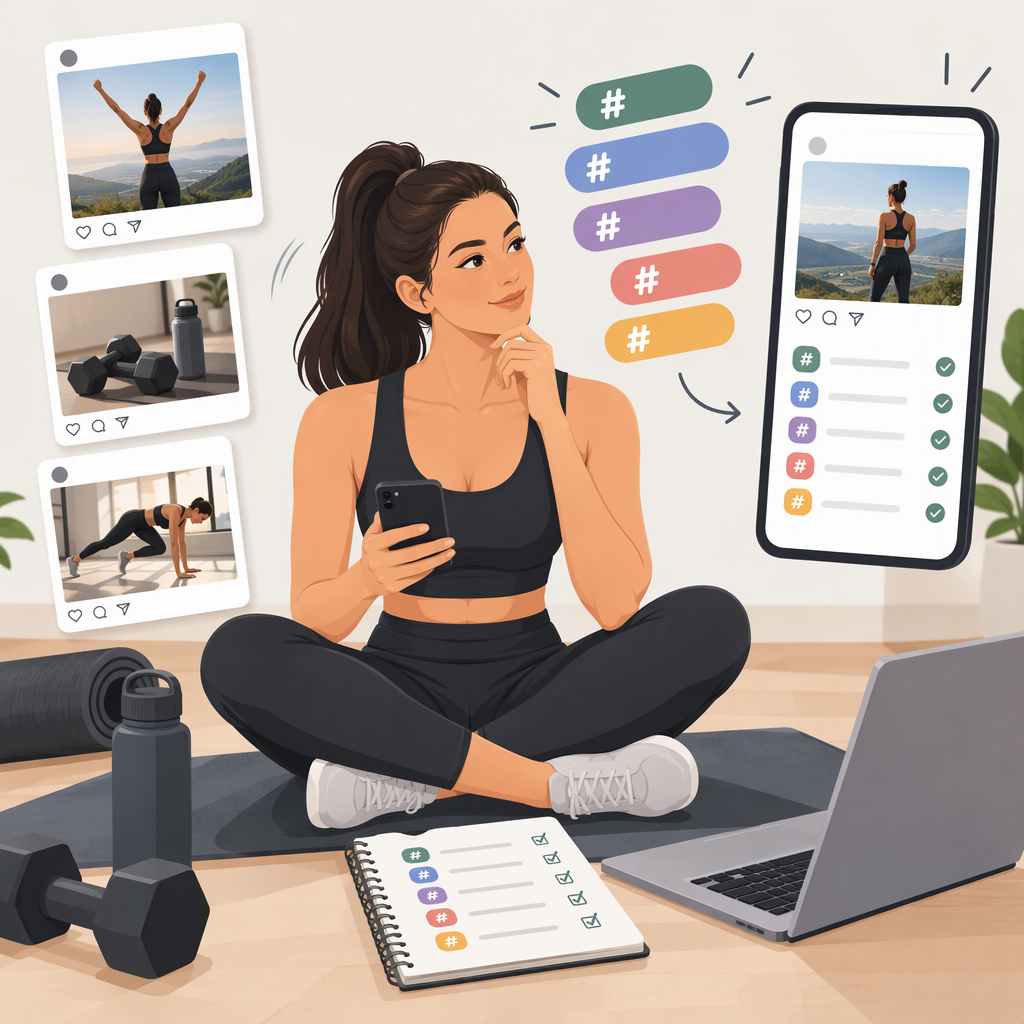
A Simple Method for Choosing Fitness Hashtags
- Describe the post plainly. Identify the exercise, activity, or lesson shown: a squat tutorial, a trail run, a yoga flow, or a no-equipment workout.
- Choose tags that match that subject. Start with one or two clear activity tags, then add a more specific tag only when it accurately describes the content. A tutorial and a race recap may need different tags even if both feature running.
- Think about the intended audience. Use a tag for a community or training level only when it fits the post—for instance, beginner-focused instruction or a local run group.
- Add a location tag only when location matters. A city or neighborhood tag can make sense for a local class, club, or route. It is less relevant to a general exercise demonstration aimed at anyone.
- Check each tag before posting. Ask whether someone browsing that tag would reasonably expect to find this post. If not, leave it out. You do not need to use all five.
Hashtags may support categorization and search, but Instagram’s head has said not to treat them as a way to get more distribution. So write a clear caption that explains the workout or lesson; do not rely on hashtags to make an unclear post discoverable. (blog.hootsuite.com)
Fitness Hashtag Examples by Post Type
These are descriptive starting points, not rankings or performance-tested recommendations. Use only the tags that fit the actual post, and check that the tag still reflects the audience and subject you intend.
| Post type | Possible starting points | Use when… |
|---|---|---|
| Strength training | #strengthtraining #barbelltraining #squatform |
The post demonstrates strength work or explains lifting technique. Use #squatform for a post that actually covers squat form. |
| Running | #running #trailrunning #runclub |
The post is about running. Choose #trailrunning for a trail run, or #runclub for club-related content. A local tag may fit a local route or event. |
| Yoga | #yoga #yogaflow #mobility |
The post shows yoga or a flow. Use #mobility only if mobility is a real focus, not just because the post involves movement. |
| Home workouts | #homeworkout #bodyweighttraining #dumbbellworkout |
The workout is designed for home. Pick an equipment-specific tag only if that equipment is used. |
You can combine relevant tags from a row, but you do not have to use every suggestion. For a home dumbbell workout, for example, #homeworkout and #dumbbellworkout may describe the post more accurately than adding several broad fitness labels.
How Many Hashtags to Use—And How to Review Results
Use up to five hashtags per post or Reel under the limit Instagram announced in December 2025. The limit does not mean every post needs five. A post with two accurate tags is better labeled than one padded with tags that do not fit. (digitaltrends.com)
To review your choices, look at the post’s available Insights—such as views, interactions, or other content-level results—and compare them with similar posts. Instagram’s help information describes viewing insights for an account or individual content, though what is available can depend on the account and feature. These are post-level outcomes, not proof that a particular hashtag caused them. (meta.com)
A modest comparison can help you make a practical decision: record the tags used on several similar strength tutorials, then compare the outcomes you care about, such as views or interactions. Keep the format and subject as similar as you reasonably can, and change only a small part of the tag set at a time. Treat any pattern as an observation, not a controlled test: differences in the video, caption, timing, or audience response can also affect results. If Instagram does not show hashtag-specific attribution, do not infer that an individual tag drove a result.
Quick Relevance Check Before Posting
- Does each hashtag describe what is actually shown or taught?
- Does it fit the intended audience, level, or community?
- Is a location tag genuinely useful for this post?
- Have you kept the set to five or fewer—and left out tags that do not fit?
- Are you treating hashtags as labels, not a promise of reach?
If a tag fails the relevance check, remove it. The goal is a clear, accurate description of the post—not a magic combination that guarantees views.