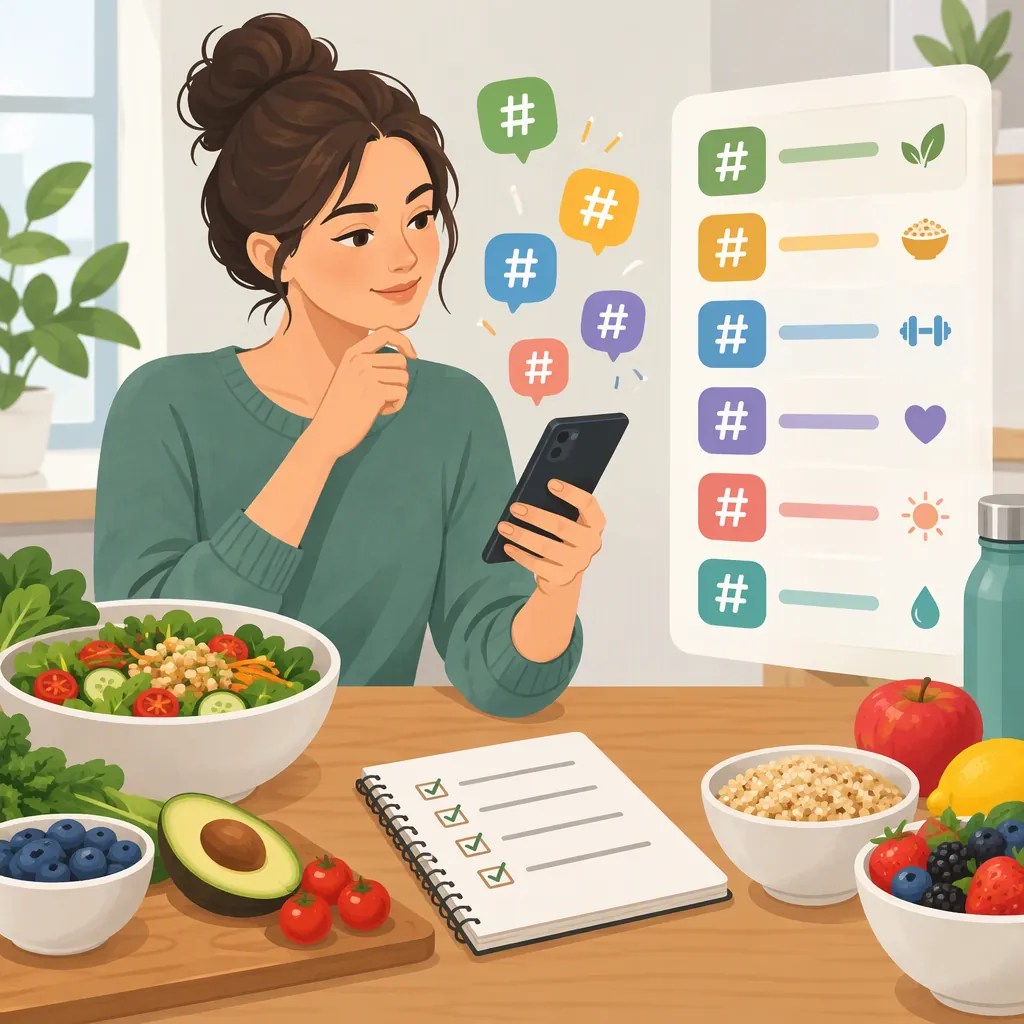
How to Choose Healthy Eating Hashtags
Choose healthy eating hashtags by starting with a relevant topic tag, such as #HealthyEating, then adding tags that describe the actual recipe, meal, or context. Options include #HealthyRecipes, #HomeCooking, #MealPrep, and #HealthyBreakfast. Use dietary or location tags only when they accurately fit the post. Treat published hashtag lists as starting points, not evidence of guaranteed reach. [c1] [c2] [c3]
Start with What the Post Actually Shows
Before choosing hashtags, describe the post in one plain-language sentence. For example: “This is a homemade breakfast bowl with a recipe,” or “These are lunches prepared for the coming week.” Use that description to filter your choices.
The provided guides recommend matching tags to the content rather than adding unrelated popular terms. Best-Hashtags also recommends supporting hashtags with a caption that explains the post. [c1] [c4]
A practical selection order is:
- Topic: Consider #HealthyEating or #HealthyFood if that is genuinely the subject.
- Content type: Add #HealthyRecipes for a recipe or #HomeCooking for a cooking post.
- Meal or use case: Consider #HealthyBreakfast, #LunchboxIdeas, or #MealPrep when applicable.
- Specific context: Add a dietary, day-of-week, or location tag only when the post supports it.
This is a relevance checklist, not a formula for ranking. A tag should help describe the post, not introduce a subject absent from it.
Hashtag Selection Worksheet
Post description: ______
Main topic tag: ______
Recipe or cooking tag: ______
Meal or use-case tag: ______
Optional dietary, timing, or location tag: ______
Accuracy check: Does every tag describe something shown or explained?
Caption check: Can someone understand the post without reading the hashtags?
Example Healthy Eating Hashtag Sets
The following sets are illustrative combinations drawn from tags in the supplied references. They are not ranked recommendations, verified trends, or a required number of hashtags. Keep only the tags that fit your content. [c1] [c2] [c3]
| Post Type | Example Tags | Relevance Check |
|---|---|---|
| Homemade recipe | #HealthyEating #HealthyRecipes #HomeCooking #CookedFromScratch | Does the post include or explain the recipe and cooking? |
| Breakfast idea | #HealthyEating #HealthyBreakfast #BreakfastBowl #HomemadeFood | Is it actually a homemade breakfast bowl? |
| Meal preparation | #HealthyEating #MealPrep #LunchboxIdeas #HealthyRecipes | Does it show prepared meals or useful preparation guidance? |
| Vegan recipe | #HealthyEating #VeganRecipes #VeganFood #HomeCooking | Does the recipe accurately fit the vegan label? |
| Budget-focused eating ideas | #HealthyEating #HealthyEatingOnABudget #HealthyEatingIdeas | Does the post explain the budget context rather than merely showing food? |
For a preparation video, #CookWithMe is another candidate listed in the Hashtag Picker guide. For location-specific content, Tech-Wonders lists examples such as #ChicagoEats and #NYCEats, while advising that location tags should fit the intended local audience. [c2] [c3]
Keep Dietary and Health Labels Accurate
Treat dietary tags as descriptions that need checking, not as interchangeable additions to a healthy eating post. The Hashtag Picker guide specifically advises against misleading dietary tags. [c3]
For this selection workflow:
- Use #VeganRecipes only when the recipe fits that description.
- Do not infer #GlutenFree or #DairyFree from a photo alone; check the recipe and ingredients.
- Leave out #WeightLoss when weight loss is not the subject, even though it appears in related-tag lists. [c1]
- Do not add nutrient labels such as #HighProtein just because they appear in a food hashtag guide. Use them only when the description is supported.
A hashtag list is not nutritional evidence. This article addresses labeling social posts, not whether a meal meets an individual's dietary or medical needs.
Treat Hashtag Lists as Candidates, Not Guarantees
Several supplied guides recommend combining broad topic tags with more specific ones. That is a useful way to organize candidates, but their popularity labels and growth claims do not establish how your next post will perform. [c1] [c3] [c4]
The sources also differ on hashtag quantity: the Hangry Woman article's 2018 guidance refers to 30 hashtags, while the Hashtag Picker guide published in 2026 states a five-hashtag Instagram limit. These are third-party articles, not official platform documentation, so they do not establish a current universal rule. Check the posting interface for the account and format you are using. [c3] [c4]
For a simple review process, record the post topic, chosen tags, publication date, and whatever discovery or engagement information is available. Compare similar posts cautiously. A difference in results does not isolate the effect of hashtags from the caption, content, timing, or other changes.
The goal is a defensible set of accurate labels. No example here promises more views, followers, or engagement.
Simple Hashtag Review Log
| Date | Post Topic and Format | Hashtags Used | Available Results | Other Changes | Next Relevance Adjustment |
| --- | --- | --- | --- | --- | --- |
| ______ | ______ | ______ | ______ | ______ | ______ |
FAQ
Which Healthy Eating Hashtags Should I Start With?
Consider #HealthyEating or #HealthyFood as a topic tag, then choose more descriptive options such as #HealthyRecipes, #HomeCooking, #MealPrep, or #HealthyBreakfast. These appear in the supplied guides; select them for relevance rather than assuming they are the best-performing tags. [c1] [c2] [c3]
How Many Healthy Eating Hashtags Should I Use?
These references do not establish a current universal number. They contain differing Instagram guidance, including 30 hashtags in a 2018 article and five in a 2026 guide. Check the limit shown for your platform and post format, then use only relevant tags within it. [c3] [c4]
Should Every Healthy Eating Post Include Vegan or Weight-Loss Hashtags?
No. Choose those tags only when they describe the post. Their appearance in related-tag lists does not make them appropriate for every meal or recipe. The supplied guides emphasize content relevance and avoiding misleading dietary labels. [c1] [c3]