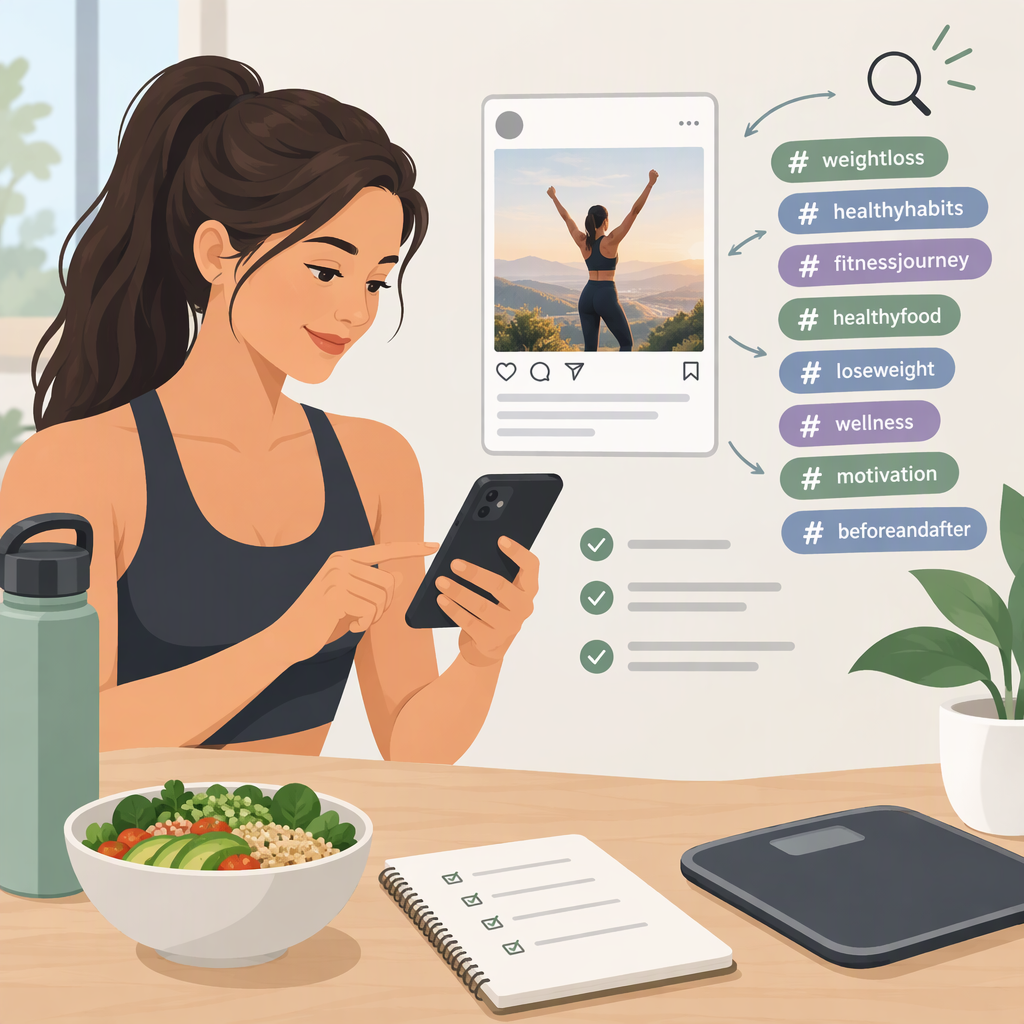
Best Hashtags for Weight Loss: How to Choose Tags for Your Post
The Short Answer
There is no universally “best” weight-loss hashtag based on the information available here. Choose a small set that describes what your post actually shows, such as a specific workout, recipe, or fitness routine. Treat the examples below as starting points—not verified trending or high-performing tags—and check how they appear on the platform where you plan to post.
Hashtags can help people find content grouped under the same tag on some platforms. That does not mean a particular tag will increase reach, engagement, or weight loss. YouTube, for example, says hashtags link to results pages for videos using the same hashtag; its separate video “tags” field is different, and YouTube says a video’s title, thumbnail, and description are more important discovery information than that field. (support.google.com)
Weight-Loss Hashtag Examples by Post Type
These are descriptive suggestions, not a ranking or a claim about current popularity. Use only the tags that accurately fit the post, and check the exact wording in your platform’s search or hashtag interface before publishing.
| If your post is about… | Possible tags to consider |
|---|---|
| A workout or exercise demonstration | #workout #strengthtraining #walkingworkout #fitnessjourney |
| A meal or recipe | #healthyrecipes #mealprep #balancedmeals #nutrition |
| Building a routine or sharing a personal update | #fitnessjourney #healthyhabits #workoutroutine |
| Weight-loss content broadly | #weightloss #weightlossjourney |
A tag’s wording alone does not establish that it is active, suitable for every platform, or likely to perform well. For example, use #walkingworkout for a post that actually features a walking workout—not just because the post mentions fitness. Avoid progress or transformation tags if the post does not show or discuss progress.
A Simple Way to Choose Tags
- Describe the post in one sentence. Be specific: “A beginner-friendly 20-minute walk” is more informative than “fitness content.”
- Choose tags for the post’s actual topic. Pick a broad topic tag if it fits, then add narrower tags for the activity, recipe, or routine shown. Leave out anything the post does not cover.
- Check the platform. Search each candidate tag in the app or review the platform’s own suggestions, then look at whether the associated posts match your intended topic. Treat any displayed popularity or trend information as platform-specific and time-sensitive.
- Follow the platform’s current instructions. Features and rules differ. YouTube says hashtags can appear in a video title or description and link to results pages; it also cautions against adding too many. TikTok’s help center describes searching for hashtags and exploring hashtag results, though the interface can vary by location or account. (support.google.com)
- Remove misleading tags. Keep the final set short enough to stay relevant. Don’t use a tag that implies a medical result, guaranteed weight loss, or content that is not in the post.
Worked Example
Suppose a creator posts a short video demonstrating a beginner walking workout. A reasonable illustrative set might be #walkingworkout, #workout, and—if the post genuinely discusses the creator’s routine—#fitnessjourney. The creator should search those tags on the intended platform and remove any that lead to an unrelated or misleading topic. This example shows how to match tags to content; it is not a performance test or a claim that those tags are currently popular.
Keep Weight-Loss Tags Accurate
A hashtag is a description, not a promise. Avoid tags or captions that suggest an exercise, meal, or routine guarantees weight loss or a medical outcome. Don’t label ordinary content as a treatment or imply a result the post cannot substantiate. The most defensible choice is the tag that truthfully tells viewers what the post contains.
Bottom line: Start with the post itself, choose a few accurate topic-specific tags, and check them on the platform you will use. No example here is presented as universally best, trending, or proven to increase reach.