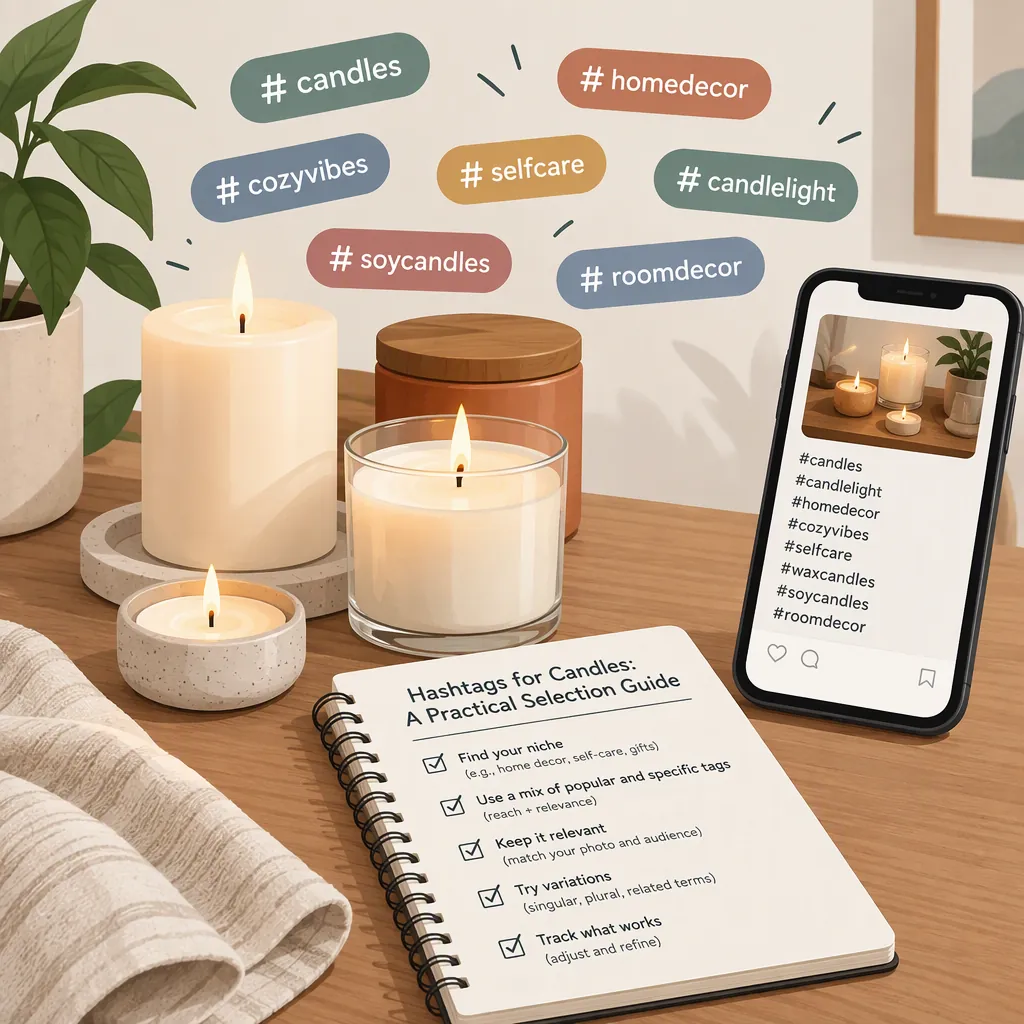
How to Choose Hashtags for Candles and Candle Crafts
Choose hashtags for candles by describing what the post actually shows: the candle, the making process, and any relevant material or setting. For a pouring tutorial, an illustrative set is #Candles #CandleMaking #CandlePouring. Add #SoyCandles only if the candles are made with soy wax. These are suggested labels, not verified high-performing tags. The supplied candle-marketing guide defines hashtags as topic identifiers but does not establish a best candle hashtag set. [c1]
Start with the Topic of the Post
The supplied NI Candle Supplies guide describes hashtags as words or phrases preceded by # that identify a topic. Use that definition as the starting point, rather than assuming a tag will deliver more views. [c1]
Before selecting tags, write one sentence describing the post. For example: “This video shows wax being poured into candle jars.” Then choose labels that fit that sentence.
A useful editorial framework is:
- Subject: #Candles or #CandleMaking.
- Process: #CandlePouring, if pouring is shown.
- Material: #SoyCandles or #BeeswaxCandles, only when accurate.
- Setting: #CandleDecor, if the post focuses on a decorative arrangement.
You do not need a tag from every category. Remove any label that describes something absent from the post. This framework is a selection aid, not a documented platform ranking rule.
Example Hashtag Sets for Candle Posts
The following sets are original examples for editing, not popularity rankings or tested recommendations. Use only the tags that accurately describe your content, and check their current context on the platform before posting.
| Post Topic | Illustrative Hashtags | Accuracy Check |
|---|---|---|
| Candle-making tutorial | #Candles #CandleMaking #CandleMakingTutorial | Does the post teach a process rather than only show a finished candle? |
| Wax-pouring clip | #CandleMaking #CandlePouring #HandmadeCandles | Is pouring shown, and are the candles handmade? |
| Soy-wax candle project | #Candles #SoyCandles #CandleCrafts | Is soy wax actually used? |
| Beeswax candle project | #Candles #BeeswaxCandles #CandleMaking | Is beeswax actually used? |
| Candle arrangement | #Candles #CandleDecor #HomeDecor | Is the arrangement the main subject? |
| Autumn-themed craft | #CandleCrafts #AutumnCrafts #SeasonalDecor | Does the project visibly fit the seasonal theme? |
Treat these as separate starting points. Combining every row would introduce labels that may not fit a single post.
Editable Pouring-Post Example
Caption: Pouring wax into candle jars during a candle-making project.
Candidate hashtags: #Candles #CandleMaking #CandlePouring
Optional material tag: #SoyCandles, only if soy wax is used.
Before posting: Check that every tag matches the project and review its current platform context.
Check Relevance Before Using a Tag
Review each candidate hashtag in the platform where you intend to publish. Look at the available results and ask whether the topic matches your post. If results are unavailable or unclear, do not treat the tag as validated.
Use this checklist:
- Content match: Does the photo, video, or caption support the tag?
- Material accuracy: Can you confirm any wax or ingredient label?
- Claim accuracy: Does the tag imply a benefit or certification you have not substantiated?
- Context match: Do the visible results concern the same kind of craft?
- Current requirements: Does the set comply with the platform’s current posting rules?
Avoid using labels such as #NonToxicCandles or #EcoFriendlyCandles merely as discovery terms. In this guide, the safer editorial choice is to omit any tag that makes an unsupported claim. Likewise, leave out unrelated trending tags rather than attaching them to a candle post solely because they appear popular.
Review Results Without Assuming Causation
NI Candle Supplies recommends using social-platform analytics to review content performance and adjust a strategy. That supports a review habit, but it does not demonstrate that any particular candle hashtag causes better results. [c1]
For an informal comparison, keep a record of the post topic, format, tags, and available metrics. Compare posts with similar subjects and formats where practical. Note other differences, such as the opening image, caption, or publication time.
Treat any apparent improvement as an observation, not proof of a hashtag effect. The supplied references do not establish an optimal hashtag count, current search volumes for these examples, or guaranteed reach.
Hashtag Review Worksheet
Platform:
Post date:
Post topic and format:
Hashtags used:
Reason each tag fits:
Metric selected for review:
Review date or interval:
Observed result:
Other differences from comparable posts:
Decision: Keep, replace, or remove a tag, with a brief reason.
Limitation: This comparison does not isolate the effect of hashtags.
FAQ
What Are the Best Hashtags for Candles?
The supplied guide does not identify a verified best-performing set. Start with accurate topic labels such as #Candles and #CandleMaking, then add a process, material, or setting tag when it fits. Treat these examples as candidates to review, not reach guarantees. [c1]
How Many Hashtags Should a Candle Post Use?
This guide cannot establish an optimal number from the supplied references. Follow the platform’s current requirements and keep only tags that accurately describe the post. The size of an example set here is not a performance recommendation.
Can I Reuse the Same Candle Hashtags?
Reuse a subject tag when it still fits, but review the rest for each post. A pouring tutorial and a room-decoration photo may both feature candles while needing different process and setting labels. Relevance is the selection rule here, not a claim about algorithm behavior.