Urban Photography Hashtags: How to Choose Relevant Tags
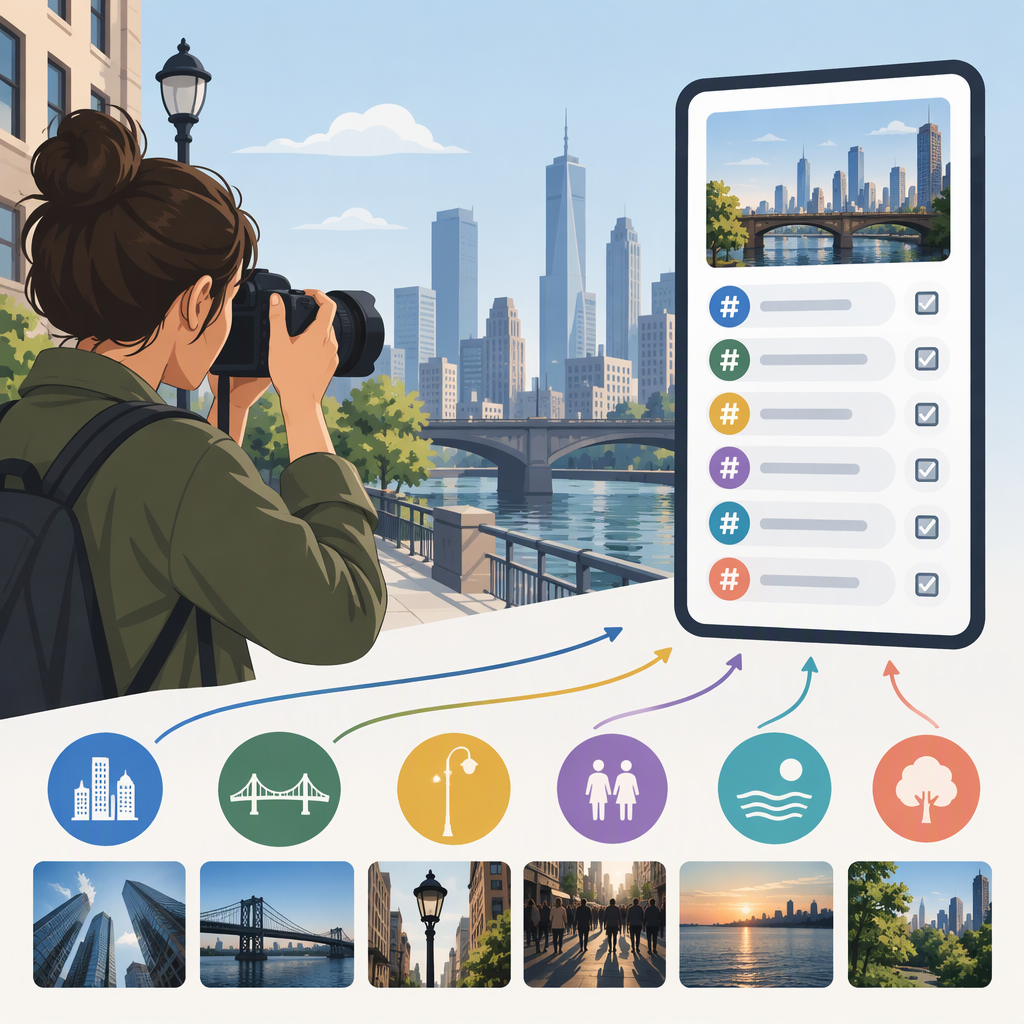
Choose urban photography hashtags by starting with the photograph, not a list of supposedly high-performing tags. Describe its visible subject and style, then use only tags that accurately fit. Add a location tag only when the location is correct and you are comfortable sharing it. There is no verified optimal tag count or mix in the information available here, and these examples are candidates—not rankings or promises of reach.
Choose Tags from the Photograph
Before posting, write down three things:
- The main subject: What is plainly visible—architecture, a street, a mural, a bridge, or a city skyline?
- The style or conditions: Does the image clearly show a night scene, a black-and-white treatment, or a particular photographic approach?
- The location, if useful: Is a city or neighborhood description accurate, relevant, and appropriate to share?
Turn those notes into candidate tags. Keep a tag only if it describes the image or a relevant context for it. If the photograph does not show what a tag names, leave that tag out.
Example: A City Building Photographed at Night
For a recognizable building photographed after dark, possible descriptive candidates might include #UrbanPhotography, #ArchitecturePhotography, and #NightPhotography—but only if each accurately describes the picture and the platform accepts the tag. These are illustrative examples, not verified popularity, availability, or performance recommendations.
For a mural in a city neighborhood, a more suitable descriptive pattern might be [urban photography] + [mural or street art] + [accurate location, if appropriate]. Replace the bracketed descriptions with tags that genuinely match your image; omit the location if it is uncertain or you would rather not disclose it.
Balance Broad, Specific, and Location Descriptions
A broad tag names a general subject; a narrower tag describes a more particular subject or style. A location tag adds geographic context when it is accurate. That is a descriptive distinction—not evidence that one type will perform better or reach more people.
Use this flexible pattern as a starting point:
[urban subject] + [visible subject or style] + [accurate location, if appropriate]
For example, a photograph of a lit bridge could be described with one general urban-photography tag, one relevant bridge or architecture tag, and—if suitable—one accurate city or neighborhood tag. Remove any candidate that does not fit. The pattern is not a required formula, and it does not establish an ideal number of hashtags.
Check Platform-Specific Details Before Making Claims
Hashtag rules and features are platform-specific. If you need to know whether a tag is available, whether a limit applies, or whether a tag is restricted, identify the platform and consult its current official guidance before publishing. Do not label a tag “banned,” “safe,” “trending,” or “popular” without current, platform-specific support.
For example, TikTok’s Help Center describes searching for hashtags through its search experience and notes that discovery features may not be available everywhere. That is a platform-specific detail, not a rule for every social platform. (support.tiktok.com)
Review and Refine Without Assuming Cause
If you want to review your choices, keep notes across multiple posts: the tags used, the kind of image, and the outcomes you care about. Compare similar posts where practical, and treat any pattern as tentative. A single post cannot show that a particular hashtag caused an outcome; images, audiences, timing, and platform systems can also differ.
The dependable starting point is simple: describe what the photograph actually shows, choose only relevant tags, and verify platform-specific claims separately.