How to Find and Evaluate YouTube Sponsor Companies
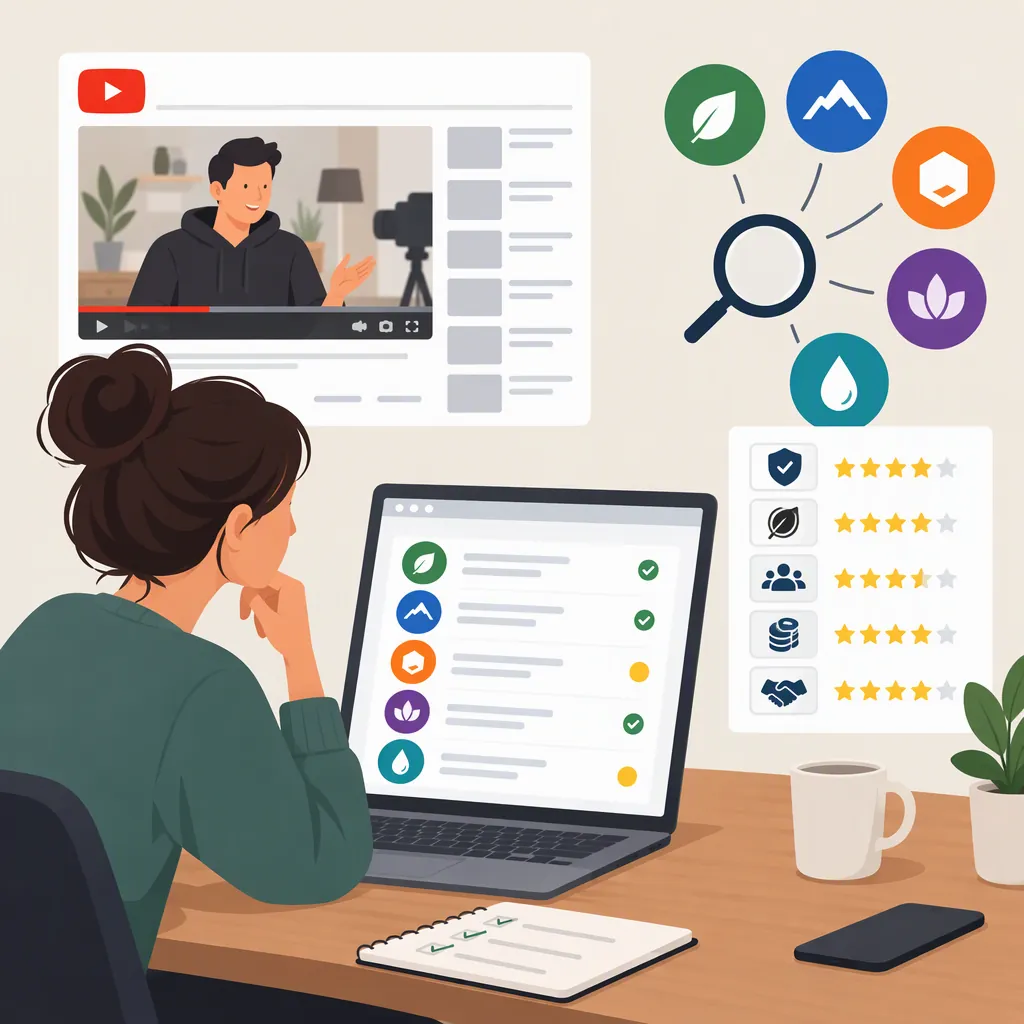
To find YouTube sponsor companies, research brands appearing in sponsored videos from creators whose topics and audiences resemble yours. Use those examples as leads—not proof of an open opportunity. Evaluate each brand’s relevance, proposed format, compensation, and terms before treating it as a potential partner. An affiliate link alone does not establish a paid sponsorship. [c2]
Identify Who Is Offering the Collaboration
A YouTube sponsorship is a paid partnership between a creator and a brand. It may take the form of a short mention, an integrated segment, or a dedicated video. These arrangements are distinct from automatically placed video ads. [c1] [c2]
When researching “YouTube sponsor companies,” separate three roles:
- The sponsoring brand: The company whose product or service would appear in your content.
- An agency or representative: A potential intermediary. Ask which advertiser it represents and who would sign and pay under the agreement.
- A sourcing platform: A research route rather than evidence that a brand has offered you a deal.
Also distinguish compensation types. The sponsorship examples guide explains that affiliate links can generate purchase commissions without a payment for the mention itself; some deals combine sponsorship fees with affiliate commissions. [c2]
As a practical screening step, label every opportunity as paid sponsorship, affiliate-only, product-only, mixed, or compensation unknown. Do not assume these arrangements have equivalent value.
Opportunity Classification Checklist
- Advertised brand:
- Person or organization offering the arrangement:
- Role: brand / representative / sourcing platform / unknown
- Compensation: fixed payment / commission / product / mixed / unknown
- Requested content:
- Contracting party:
- Paying party:
- Questions still unresolved:
Use Sponsor Examples as Research Leads
The supplied sponsorship examples article identifies the following brand–creator pairings. These are source-reported examples, not independently verified current openings or endorsements. [c2]
| Brand | Example Reported by the Source | Research Question for Your Channel |
|---|---|---|
| Insta360 | An unboxing and walkthrough by The Tech Chap | Would a hands-on demonstration serve your viewers? |
| Poliigon | A Blender tutorial by Blender Guru | Does the product belong naturally in your teaching workflow? |
| Klook | Travel content by TDR Explorer | Are your viewers interested in the destinations or activities involved? |
| Thrive Market | Cooking content by Cheap Lazy Vegan | Is there a relevant recipe or shopping context for your audience? |
| Rize | Educational content by Ali Abdaal | Does a productivity-related integration fit your topic? |
Use the examples to identify relevant categories and creative formats. Do not infer that a company currently accepts unsolicited proposals, has a particular budget, or will sponsor a channel of your size. The supplied references do not establish those facts.
Brand Research Record
Brand:
Relevant product or category:
Comparable creator:
Public source URL:
Video publication date, if available:
Evidence of sponsorship:
Observed content format:
Audience-fit hypothesis:
Current opportunity status: unconfirmed
Public contact route: verified / not found
Next research question:
Compare Manual Research and Sourcing Platforms
A useful manual workflow is to review comparable channels, examine apparent sponsored segments and descriptions, and record the brand, format, publication date, and evidence. The supplied guides emphasize examining previous collaborations and researching a brand before proposing a partnership. [c1] [c2]
If evaluating a sourcing platform, use the following questions rather than relying on promotional descriptions:
- Traceability: Can a result be checked against the original public video or another public source?
- Freshness: Is the observation date clear, and is it different from the video’s publication date?
- Classification: Does the result distinguish paid sponsorships from affiliate links and ordinary product mentions?
- Relevance: Can you assess topic, audience geography, and content format rather than just subscriber count?
- Contact provenance: Is a listed contact publicly verifiable, and is its role clear?
- Workflow and cost: Can you retain your research records, and are access limits and charges understandable?
These are suggested evaluation criteria, not claims that any particular service meets them. The supplied Sponsorship creator page is a provider’s own description, not an independent product assessment. This article does not verify its data quality, contact accuracy, or outcomes. [c3]
Evaluate Audience Fit Before Discussing Price
Both educational guides identify audience alignment, engagement, and integration format as relevant to sponsorship decisions. ADOPTER Media also recommends examining view consistency and previous ads rather than relying on subscriber totals alone. [c1] [c2]
For a creator-side shortlist, consider four questions:
- Audience relevance: What viewer need would the proposed product address? Treat this as a hypothesis unless your own audience data supports it.
- Editorial fit: Can you explain the product within your usual content without making unsupported claims?
- Production fit: Can you deliver the proposed format and schedule with your available resources?
- Commercial fit: Is the compensation worthwhile after considering production work, revisions, restrictions, and requested rights?
For each criterion, record “supported,” “uncertain,” or “poor fit,” with a short reason. Keep uncertain leads in a research queue rather than treating them as qualified opportunities.
The supplied sources describe rates as dependent on multiple factors, including niche, audience, engagement, and format. Their pricing guidance should not be treated as a guaranteed offer or a universal rate card. [c1] [c2]
Shortlist Evaluation Worksheet
| Criterion | Supported / Uncertain / Poor Fit | Evidence or Open Question |
| --- | --- | --- |
| Audience relevance | Uncertain | Add supporting evidence |
| Editorial fit | Uncertain | Describe a suitable integration |
| Production fit | Uncertain | Estimate work and scheduling needs |
| Commercial fit | Uncertain | Review compensation and restrictions |

Decision: research further / discuss terms / decline
Reason:
Unresolved questions:
Clarify the Offer Before Committing
The examples guide recommends clearly explaining what you offer and what you expect in return. It also identifies exclusivity, integration type, and campaign duration as pricing considerations. [c2]
A practical written review should cover:
- Deliverables, placement, publication timing, and any required links.
- Fixed compensation, commissions, product provision, and payment timing.
- Approval steps, revision limits, and responsibility for supplied claims.
- Any requested reuse of your content, including duration and scope.
- Restrictions on competing brands and how long those restrictions last.
- Cancellation, delays, and what happens if the scope changes.
These are review prompts, not legal advice or a complete contract checklist. Resolve unclear terms before agreeing to produce content, and assess applicable disclosure requirements separately.
Evidence limitation: This article uses three supplied commercial sources. It provides a research method and attributed examples, not a verified directory of active sponsors, confirmed contacts, or promised deal outcomes.
FAQ
Does an Affiliate Link Mean a Company Sponsors the Creator?
No. The supplied examples guide distinguishes affiliate commissions from payment for a sponsored mention. Some agreements combine both, so the link alone is insufficient evidence of the compensation arrangement. [c2]
Can a Small YouTube Channel Be Considered for Sponsorship?
The supplied guides do not treat subscriber count as the sole consideration; they also discuss audience fit, engagement, niche, and format. That supports evaluating smaller channels on those factors, but it does not establish a universal minimum size or guarantee an offer. [c1] [c2]
Does a Past Sponsored Video Prove a Brand Is Hiring Creators Now?
No. Treat the source-reported examples as evidence of a reported collaboration, not confirmation of current availability. The supplied examples article does not establish an open opportunity, current budget, or acceptance criteria for each listed brand. [c2]