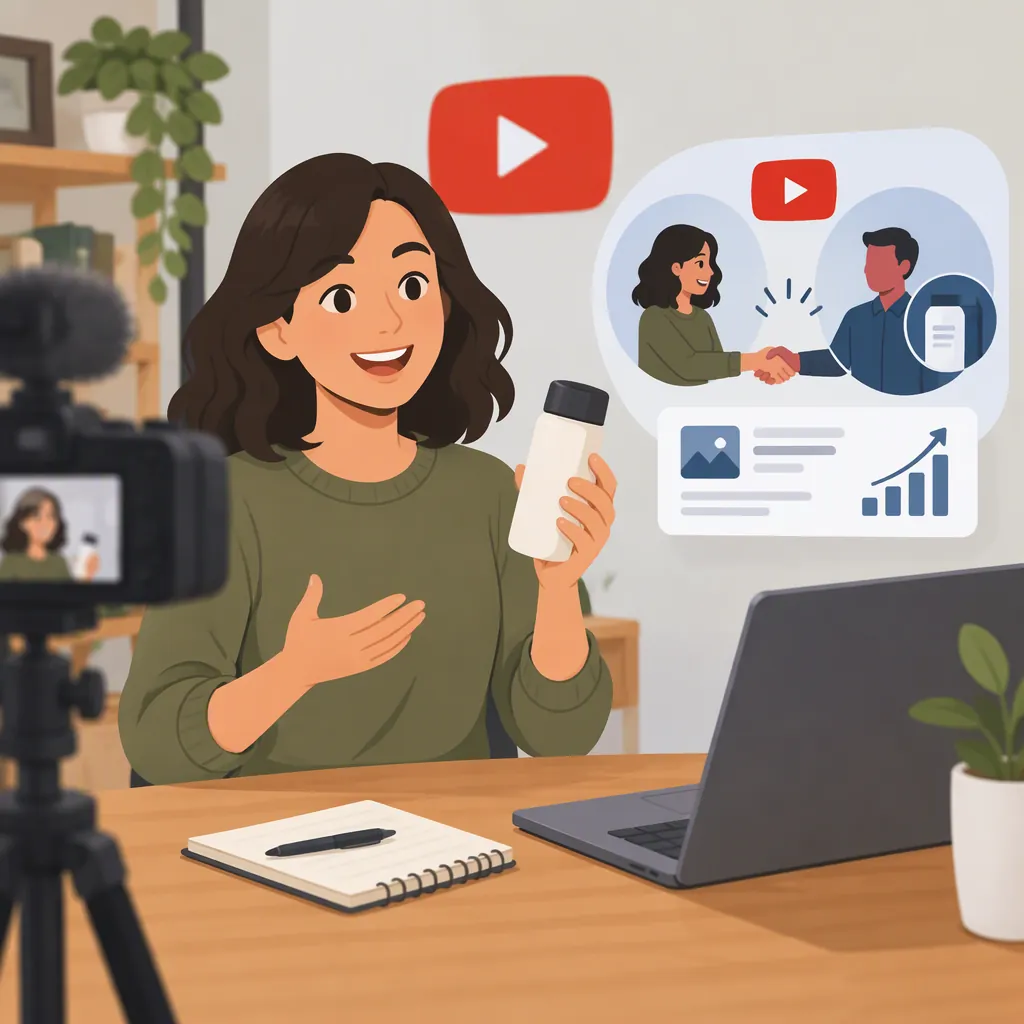
YouTube Sponsorship for Small Channels: Finding Opportunities and Proving Value
Small YouTube channels can pursue sponsorships by identifying brands relevant to their niche and presenting evidence of audience fit, recent video performance, and a clearly scoped content idea. Sponsorship.so’s guide explicitly describes opportunities for smaller, engaged niche audiences, but it does not establish a universal subscriber minimum or guarantee a deal. Treat existing sponsorships as research leads—not proof that a brand accepts small channels. [c1]
What a Small Channel Can Offer
A YouTube sponsorship is a paid arrangement in which a creator promotes a brand within video content. Formats can include an integrated segment, a dedicated video, or an ongoing partnership. Affiliate participation is different: a creator may earn commissions without having a paid sponsorship agreement. [c1]
For a small channel, a useful proposal is not simply “my audience is inexpensive.” It explains why a particular video reaches people for whom the product is relevant. Sponsorship.so’s guide identifies niche audiences and engagement as potential strengths of smaller channels. That is general guidance, not evidence that every niche channel will attract sponsors. [c1]
Build the proposal around three questions:
- Audience relevance: What subject brings viewers to the channel, and how does the proposed product relate to it?
- Content relevance: Where could a sponsor segment fit without displacing the video’s purpose?
- Evidence quality: Which public videos and observable results support the proposal?
The supplied references do not establish a reliable subscriber threshold for sponsorship eligibility. Avoid treating any particular channel size as an automatic qualification or disqualification.
Audience-Fit Statement
Complete this statement using supported details only:

My channel covers [specific subject]. A proposed video about [topic] could include [sponsor format] because [concrete connection between the product and the topic]. Relevant public examples are [video titles and URLs]. These examples demonstrate [observable evidence], but they do not establish future sales or guaranteed reach.
Find Leads Through Comparable Content
Start with videos serving a similar topic, language, and audience context. Look for explicit sponsorship disclosures, then record the brand, publication date, format, and connection to the video topic. Separate a paid integration from an affiliate link or an ordinary product mention; those are not interchangeable evidence. [c1]
Sponsorship.so’s October 2026 ranking provides examples of brands associated with different content categories, including manufacturing, personal finance, and gaming. Its stated sample covers spoken paid sponsor reads in English-language videos published from September 19 through October 18, 2026, and excludes Shorts. It ranks brands by the number of distinct channels in that sample, not by willingness to sponsor small creators. [c2]
Use that kind of list to form a research hypothesis. A manufacturing sponsor appearing in maker content may be worth investigating for another relevant maker channel. Its appearance does not establish an open application process, available budget, or interest in your channel.
For each lead, check the brand’s public website for current partnership information. If no relevant contact or program is verifiable, mark it as unknown rather than guessing an email address. Keep the shortlist focused on topical fit instead of sending the same proposal to every frequently listed sponsor.
Sponsor Research Record
Brand: [name]
Relevant category: [category]
Public evidence URL: [source URL]
Evidence date: [date]
Evidence type: [disclosed paid integration / affiliate offer / unclear]
Comparable video topic: [topic]
Fit with proposed video: [specific reason]
Verified public partnership route: [URL or unknown]
Small-channel eligibility: [documented requirement or unknown]
Open questions: [budget, format, geography, product restrictions]
Compare Direct, Directory, and Agency Routes
The supplied guide describes direct outreach and agency-mediated sponsorships. These are different routes to a conversation, not guarantees of acceptance. [c1]
A public directory can help show how creators describe their channels and offers. The supplied Sponsorship Website page displays creator listings with subscriber counts, categories, and asking prices, including listings presented as very small channels. Those listings do not prove completed deals, verified performance, or a market rate. Its broad promotional claims about sponsorship outcomes should not be treated as established evidence. [c3]
An agency route requires a separate eligibility check. ThoughtLeaders describes matching creators and brands and managing proposals and campaigns, but the supplied homepage does not establish a minimum subscriber count or acceptance criteria for small channels. Its promotional examples and performance claims are not a forecast for an individual creator. [c4]
A practical comparison is to record what each route actually makes public: eligibility, fees, representation terms, payment responsibilities, and the application process. If a term is missing, leave it unresolved. Do not infer that a service is suitable merely because it mentions creators.
Route Comparison Checklist
For each direct contact, directory, or agency route, record:
- Public eligibility requirements and their source.
- Whether the opportunity is paid, affiliate-only, gifted, or unspecified.
- Any stated fee or commission.
- Who contracts with and pays the creator.
- Whether representation is exclusive.
- Which terms remain unavailable or unverified.

Decision note: [why this route fits the channel, or why more information is needed].
Build a Public-Evidence Value Brief
Sponsorship.so recommends a media kit containing channel statistics, content examples, sponsorship options, and contact information. Its pricing discussion also points to recent views and audience characteristics rather than subscriber count alone. [c1]
For a public-only brief, organize information that a prospective partner can check:
- Channel subject, language, and public channel URL.
- Recent comparable videos, their publication dates, and visible view counts recorded on a stated date.
- A transparent summary of those videos, with the selection method explained.
- Examples showing production style and the proposed integration context.
- A defined deliverable and the limits of the available evidence.
Do not select only the strongest video and present it as typical performance. One workable method is to summarize a consecutive set of recent videos in the proposed format, separating Shorts from long-form uploads and identifying unusual outliers.
Public views and comments do not establish audience income, location, purchase intent, or sales. Describe a topical connection as a fit hypothesis unless stronger evidence is available. If there is no sponsorship history, say so; ordinary videos can demonstrate content quality without being labeled successful campaigns.
One-Page Value Brief
Channel: [name and public URL]
Topic and language: [details]
Evidence checked on: [date]
Video selection method: [consecutive recent uploads in a defined format]
Comparable videos: [titles, URLs, dates, and visible views]
Performance summary: [calculation and sample size]
Proposed video: [topic]
Proposed sponsor placement: [format and context]
Public evidence of fit: [specific observations]
Sponsorship history: [verified examples or no prior paid sponsorships]
Limitations: [unknown demographics, no conversion evidence, uncertain future reach]
Deliverable scope: [what is included and excluded]
Scope the Deal Before Discussing Price
The sponsorship workflow described by Sponsorship.so moves from audience matching and an offer to a brief, approval, publication, and reporting. It describes pricing as commonly connected to expected views. However, the same page gives differing rate ranges in its main text and FAQ, so it is not a dependable universal rate card for small channels. [c1]
Instead of quoting a rate based only on subscribers, define what the proposed fee covers. Include the format, placement, production work, approval rounds, publication window, and reporting. Treat reuse rights, category exclusivity, and additional edits as separate terms to resolve rather than silently bundling them into the offer.
If you use a view-based estimate, distinguish the assumptions from the promise:
Estimated integration fee = expected views ÷ 1,000 × negotiated sponsorship CPM.
This is an estimating method, not a guaranteed price or result. Label expected views as a forecast, explain the comparable videos used, and avoid promising sales. Keep fixed payment, commission, and gifted-product arrangements clearly separated.
Proposal Outline
Fit: [specific connection between the brand and a planned video]
Evidence: [public comparable videos and dated performance summary]
Deliverable: [format, placement, and included production work]
Schedule: [proposed publication window]
Review process: [number of rounds and deadlines]
Compensation: [fixed fee, commission, gifted product, or combination]
Rights and exclusivity: [proposed limits or unresolved terms]
Reporting: [metrics, source, and reporting date]
Limitations: [no guaranteed views, clicks, or sales unless separately agreed]
Preserve Trust and Report Within the Evidence
The supplied guide recommends disclosing paid promotions and using links or codes to track results. It also advises reviewing current YouTube policies before agreeing to a sponsorship. This article does not independently establish current platform rules or legal disclosure requirements; the provided references are commercial resources, not platform or regulatory guidance. [c1]
Before publication, resolve disclosure wording, approved claims, deadlines, payment terms, and any product-category concerns. A sponsor brief should not be treated as independent proof of a product claim.
For reporting, distinguish video exposure from sponsor outcomes. Public view counts support a statement about video views, not how many people watched the sponsor segment or bought a product. Report clicks or conversions only when a documented measurement source is available, and identify its time window and limitations.
A first collaboration is most useful as evidence when its scope and results are recorded accurately. A modest result with clear measurement is more defensible than an unsupported claim of campaign success.
Post-Publication Report
Published video: [title and URL]
Publication date: [date]
Report date and measurement window: [details]
Delivered scope: [placement and agreed items]
Video views: [count, source, and observation date]
Clicks: [documented count and source, or unavailable]
Conversions: [documented count and source, or unavailable]
Measurement limitations: [attribution gaps and unavailable data]
Follow-up notes: [what the evidence supports and what remains unknown]
FAQ
How Many Subscribers Do You Need for a Sponsorship?
The supplied references do not establish a universal minimum. Sponsorship.so says smaller channels can attract sponsorships through engaged niche audiences, but that is not an eligibility rule for any particular brand. Check each opportunity’s stated requirements. [c1]
Which Brands Should a Small Channel Research First?
Begin with brands appearing in disclosed sponsorships on topically comparable channels. Use sponsor rankings as leads rather than acceptance lists. Sponsorship.so’s October 2026 ranking covers a specific English-language, non-Shorts sample and does not identify which brands accept small channels. [c2]
How Can You Show Value Without Previous Brand Deals?
Use ordinary public videos to demonstrate subject relevance, production style, and recent performance. Label the evidence accurately and state that there is no prior paid sponsorship history. The supplied guide recommends a media kit with channel statistics and content examples; it does not require fabricated campaign results. [c1]
Is an Affiliate Offer the Same as a Paid Sponsorship?
No. The supplied guide explains that creators can join affiliate programs and earn commissions without being sponsored. Clarify whether an offer includes a fixed payment, commission, gifted product, or a combination before evaluating it. [c1]