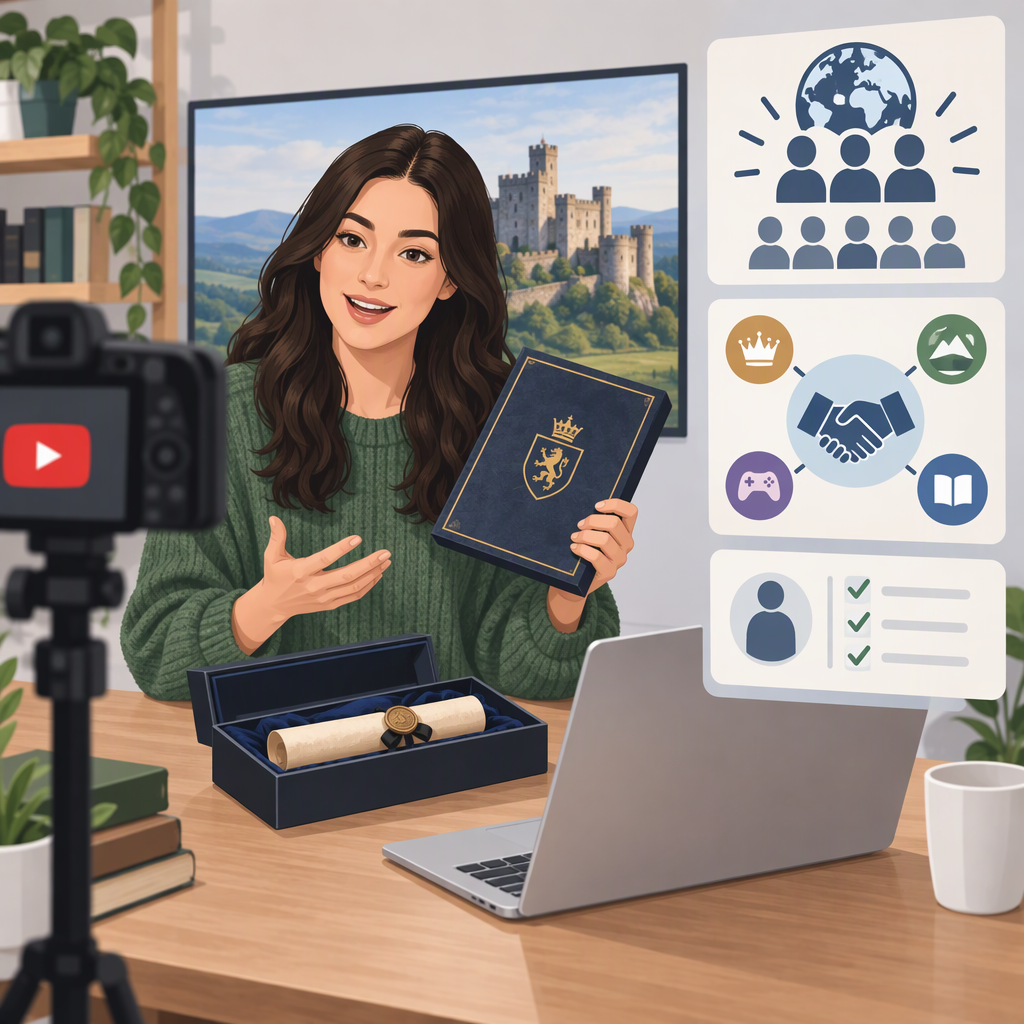
Established Titles YouTube Sponsorships: Public Opportunities and Creator Fit
Established Titles YouTube Sponsorships: What Public Evidence Confirms
Established Titles has a public affiliate portal, but the public information reviewed here does not establish that a YouTube sponsorship program is open, that the portal accepts new creators, or that a separate sponsorship application is available. The affiliate portal is a place to check for affiliate-program information; an affiliate arrangement is not automatically the same as a paid sponsorship. (affiliates.establishedtitles.com)
The company’s public site describes its title packs as novelty gifts involving a souvenir plot and certificate. That is the company’s own description, not independent verification of its claims. A creator considering a promotion should review the current offer and its qualifications directly, and independently check consequential claims they plan to repeat. (establishedtitles.com)
Practical next step: If an affiliate arrangement is relevant, start at the official affiliate portal and read its current terms. If someone approaches you about a separate sponsorship, verify that person and the proposed relationship through a channel you locate independently on the company’s official site. The material reviewed here does not confirm a dedicated sponsorship contact or a currently open YouTube sponsorship opportunity. Don’t treat an old video, third-party listing, or unsolicited message as proof of authorization.
How to Assess Fit for Your Channel
There is no universal yes-or-no answer. Decide based on the actual offer, your audience, and whether you can explain the promotion accurately without compromising your channel’s credibility.
Ask yourself:
- Would viewers see a genuine connection? Consider whether the offer is relevant to your channel’s topics and audience interests—not just whether a discount code might perform.
- Can you describe the offer precisely? Separate what the company says from what you have independently confirmed. Don’t repeat claims you cannot support or explain important limitations away.
- Does the arrangement meet your editorial standards? Consider whether you would recommend or feature it without pressure to make claims you don’t believe.
- What is the trust trade-off? A potentially relevant offer may still carry a credibility cost if viewers find it confusing, poorly matched, or inadequately explained.
For example, a creator whose audience enjoys novelty gifts might see a clearer thematic connection than a creator whose viewers expect only technical product reviews. That is a hypothetical fit test, not evidence about a particular channel’s audience or results. If the offer or terms remain unclear, “not yet” is a reasonable decision.
What to Verify Before Accepting a Deal
These are general creator checks, not Established Titles-specific terms or procedures. Get the important details in writing before committing:
- Sender and authority: Confirm the person’s identity and authorization using contact details you find independently through an official company channel. A branded email address alone is not proof.
- Arrangement and compensation: Clarify whether this is a flat-fee sponsorship, affiliate commission, gifted product, or a combination. Record payment amounts or commission rules, payment timing, conditions, and any tracking or attribution requirements.
- Deliverables and schedule: Specify the video format, number of mentions, posting date, links or codes, and whether the brand expects changes or a particular callout.
- Rights and restrictions: Check how the brand may reuse your video or likeness, for how long and where; whether exclusivity applies; and what approval rights the brand has.
- Cancellation and non-performance: Agree what happens if either side cancels, payment is late, the product or offer changes, or the content cannot be published as planned.
- Claims and disclosure: Make sure you can substantiate statements you make, identify the relationship to viewers, and use YouTube’s paid-promotion setting when applicable.
If a term is vague—especially payment conditions, content rights, or exclusivity—ask for clarification before agreeing. A good audience fit does not by itself make unclear terms acceptable.
Disclosure and YouTube Checks Before Publishing
For U.S.-relevant guidance, the FTC says creators should disclose a material connection to a brand, which can include payment or receiving free or discounted products or services. The disclosure should be easy to notice and understand, placed with the endorsement; the FTC cautions against relying on a disclosure that viewers may miss, such as one only at the end or behind a “more” click. This is general information, not individualized legal advice. (ftc.gov)
YouTube says creators must tell the platform about paid product placements, endorsements, sponsorships, or other content requiring disclosure by selecting the paid-promotion box in the video details. YouTube also notes that creators and brands remain responsible for applicable local and legal disclosure obligations. The platform setting does not replace the need to explain your relationship clearly to viewers. (support.google.com)
Before publishing, identify what viewers receive from the relationship—for example, a fee, commission, or free product—and explain it plainly where the promotion appears. Then use YouTube’s paid-promotion control if the arrangement falls within its policy. Check the current FTC and YouTube guidance for the specific format and relationship involved.
Bottom Line
A public Established Titles affiliate portal is identifiable, but the information reviewed does not confirm an open YouTube sponsorship program or a dedicated sponsorship application. Evaluate any offer against your audience, your ability to explain it accurately, and the written terms. Verify the sender independently, and make the required platform and viewer disclosures before publishing.