How to Get Brand Deals on TikTok: Find, Pitch, and Evaluate Opportunities
The Short Answer
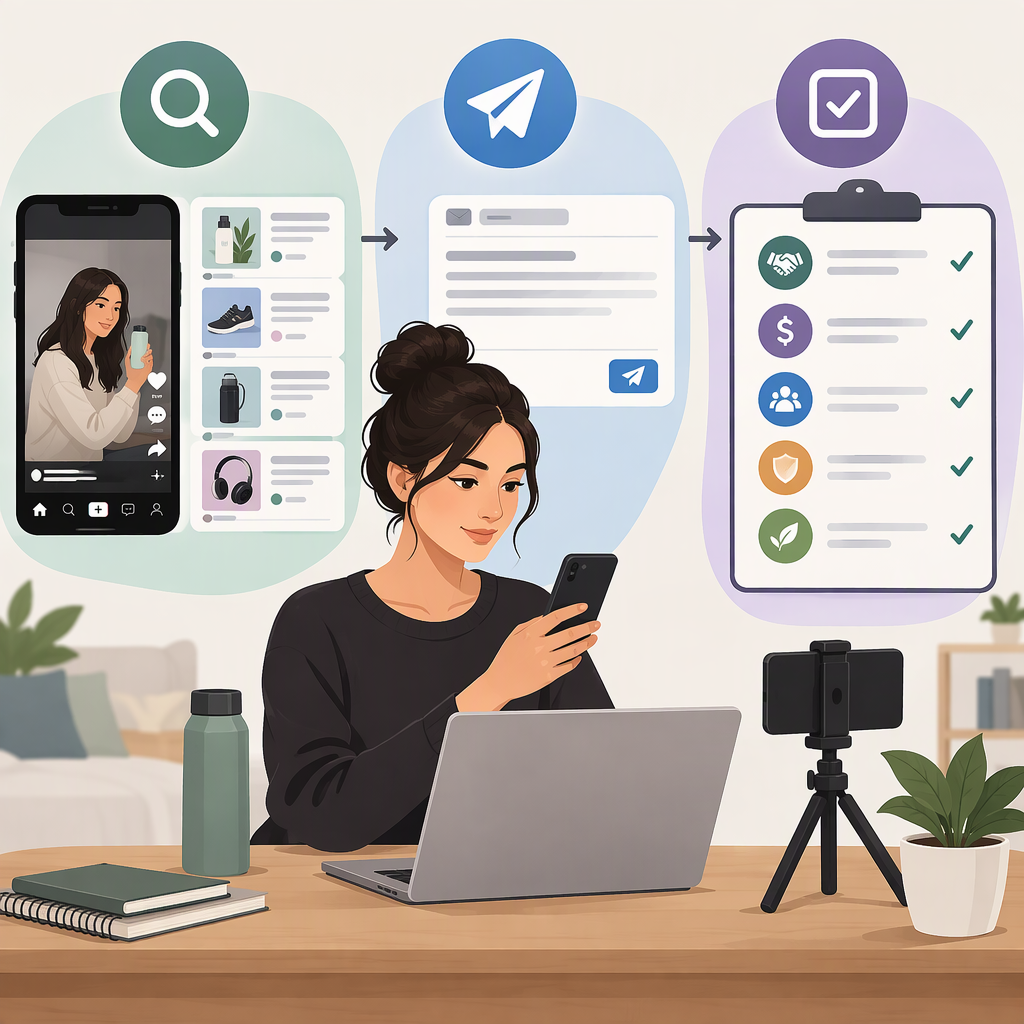
To get brand deals on TikTok, identify brands that fit your content and audience, then pursue an appropriate route: look for opportunities through TikTok’s creator collaboration tools when available to you, contact brands directly, or explore reputable creator agencies and marketplaces. Prepare a concise pitch with relevant examples, audience information, and a specific video idea. Before agreeing, clarify the deliverables, payment, deadlines, content usage, and any exclusivity or advertising permissions. If you publish promotional content, follow TikTok’s disclosure instructions and applicable advertising rules. None of these steps guarantees a deal.
1. Find Brands That Fit Your Content
Start with fit, not a follower-count target. Make a short list of brands whose products or services relate naturally to the subjects you already cover and that make sense for your audience. Check how each brand presents itself, what it currently promotes, and whether you can propose content that would be useful or entertaining without making claims you cannot support.
Then choose a discovery route:
- Check TikTok’s creator-collaboration options. TikTok describes TikTok One as a platform for creator marketing and partnerships. Look for its creator-facing options through TikTok’s official resources or your account. The public material does not establish that every creator, account, or region has the same access or eligibility, so don’t assume you can join or receive offers. (creatormarketplace.tiktok.com)
- Contact brands directly. Look for a business or partnerships contact on the brand’s official website or professional social profiles. A concise, personalized email is often a practical way to propose an idea, even if the brand has not publicly advertised a campaign.
- Consider agencies and creator marketplaces. Review who operates the service, how opportunities are presented, and what fees, permissions, or information it asks for. Be wary of unsolicited offers that ask for payment, passwords, or sensitive account access just to be considered.
- Make it easy to assess your work. Keep your profile and contact details current, and have a few relevant public videos ready to share. A brand can then see the kind of content you make without relying on a broad claim about your potential.
A useful first step: make a list of five plausible partners. For each, write one sentence about why your audience and content fit, then note a specific product, service, or campaign idea you could discuss.
2. Prepare and Send a Tailored Pitch
Before reaching out, assemble a simple set of materials:
- Your TikTok handle and a one-line description of your content.
- A few links to relevant videos that show your style and subject matter.
- Audience information you can accurately share, such as the audience’s main interests or available account analytics. Label estimates clearly; don’t inflate or imply guaranteed results.
- One or two specific content concepts, with a proposed format and what the brand would receive.
- Your contact details and, if useful, a concise media kit. A media kit is optional presentation material, not a TikTok requirement.
If you have not done brand partnerships before, don’t invent experience or results. Lead with relevant content, a clear creative idea, and what you can reliably deliver.
Adaptable pitch example
Subject: TikTok collaboration idea for [Brand]
Hi [Name],
I’m [name], a TikTok creator who makes [brief description of content]. I’m reaching out because [specific reason the brand fits your work or audience].
I’d like to propose [brief video concept]. I could deliver [specific proposed deliverable] by [proposed timing]. Here are a few relevant examples of my work: [links].
If this fits an upcoming campaign, would you be open to discussing the brief, usage rights, timeline, and budget? You can reach me at [contact details].
Best,
[Name]
Treat the template as a starting point, not a proven formula. Personalize the reason for contacting the brand, keep the proposal easy to understand, and ask for a concrete next step. If there is no response, one polite follow-up after a reasonable interval is enough; don’t treat silence as an invitation to send repeated messages.
3. Review the Offer Before You Accept
Ask for the brief and material terms in writing. The right arrangement depends on the work and your priorities; there is no single rate or structure that suits every creator. Before accepting, check:
| Term | What to clarify |
|---|---|
| Deliverables | How many posts or videos? Which platform or account? Are there captions, links, livestreams, or other items? |
| Creative requirements | What must be shown or said? Are there claims, talking points, or restrictions? Can you give an honest opinion and make content that fits your style? |
| Deadlines | When are drafts, approvals, and final posts due? When does the content need to stay live, if specified? |
| Compensation | What is the amount, currency, and form of payment? Is any compensation product-only? What are the payment timing and invoicing steps? |
| Revisions and approval | How many revision rounds are included? Who approves the content, and by when? What happens if feedback arrives late? |
| Usage rights | Where may the brand use your video, for how long, and in what formats? Does the offer include editing, reposting, or use outside TikTok? |
| Paid promotion and authorization | Does the brand want to promote the post as an ad or use your account or content for paid distribution? What access or authorization is requested, for what purpose, and for how long? |
| Exclusivity | Which competing brands are restricted, in what category, and for how long? Does the restriction apply to all content or only paid work? |
| Cancellation and other obligations | What happens if the campaign changes or is canceled? Are there extra reporting, product-return, or confidentiality requirements? |
Don’t agree to a vague promise of “exposure” if you expect payment, and don’t grant broad or indefinite usage simply because a brand requests it. If a term is unclear, ask for a specific explanation or propose a narrower scope before accepting. You can accept, negotiate, request clarification, or decline. If a contract raises legal questions, consider advice from a qualified professional; this checklist is general information, not legal advice.
4. Disclose the Collaboration and Deliver What You Agreed
TikTok says creators must turn on its content disclosure setting when posting content that promotes a brand, product, or service, including a third-party promotion in exchange for payment or another incentive. TikTok’s published steps describe selecting Content disclosure and ads, turning on Disclose commercial content, and choosing Branded content for a third-party partnership; menu labels or placement may depend on the account workflow. TikTok says posts without proper disclosure may be removed or restricted. (support.tiktok.com)
TikTok also describes a default 60-day authorization period when a creator tags a brand partner in the workflow. That authorization is a material permission, not just a label: confirm what the brand wants to do with the content and whether the scope and period match your agreement before granting it. (ads.tiktok.com)
For U.S. audiences, the FTC says a material connection—such as payment, free products, or another benefit—should be made obvious to viewers. Its guidance says a disclosure should be easy to notice and placed with the endorsement, rather than hidden in a profile, after a “more” click, or among hashtags. A platform label may help, but don’t assume it automatically covers every disclosure obligation; the right approach depends on the specific content and context. (ftc.gov)
Before publishing, confirm that you have:
- Followed TikTok’s current disclosure instructions for the post or LIVE.
- Clearly disclosed any relevant relationship in a way viewers can notice with the endorsement.
- Checked that product statements reflect your honest experience and are not unsupported.
- Matched the post, timing, and any promised revisions to the written agreement.
- Granted only the usage or advertising permissions you agreed to.
A Simple Next-Step Checklist
- Identify a handful of brands that genuinely fit your content.
- Check TikTok’s creator partnership options, and consider direct outreach or reputable intermediaries too.
- Prepare relevant examples, accurate audience information, and a specific idea.
- Send a brief, personalized pitch with a clear next step.
- Resolve payment, deliverables, deadlines, revisions, usage, authorization, and exclusivity before accepting.
- Verify TikTok’s disclosure workflow and applicable disclosure guidance before posting.
A suitable collaboration is one whose creative work, compensation, timeline, permissions, and disclosure obligations are clear enough for you to decide whether to proceed.