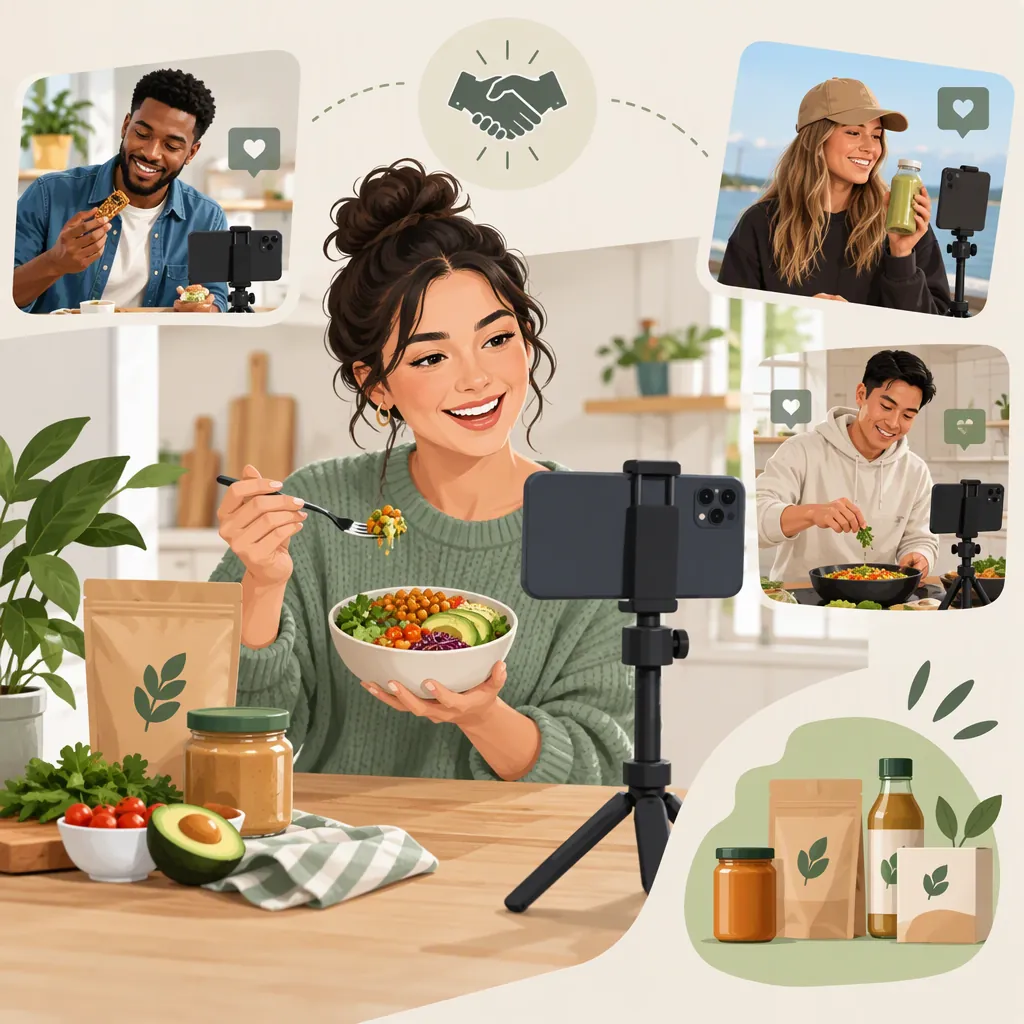
Food Brands That Work with Micro Influencers: Examples and Research Steps
St Pierre Bakery and Health-Ade are food and beverage brands with micro-influencer collaborations described in the supplied Stack Influence article. Influencity also lists Coca-Cola among its micro-influencer examples. These are research leads, not verified openings: the references do not establish current applications, payment terms, or minimum follower requirements. HelloFresh, Oreo, Chipotle, and Doritos appear as broader influencer examples, but that alone does not confirm opportunities for small creators. [source_1] [source_2]
Food and Beverage Brands to Research
For a small food creator, a useful shortlist distinguishes reported micro-influencer activity from general influencer marketing. The examples below come from secondary marketing resources, not current brand recruitment pages. Treat them as starting points for verification rather than a directory of available deals. [source_1] [source_2]
| Brand | What the Provided Reference Describes | Possible Content Fit to Evaluate |
|---|---|---|
| St Pierre Bakery | Stack Influence describes seasonal micro-influencer campaigns featuring grilling recipes and holiday dishes. [source_1] | Sandwich tutorials, brunch recipes, or seasonal baking content. |
| Health-Ade | Stack Influence describes micro-influencer posts featuring its drinks and subsequent brand reuse of content. [source_1] | Beverage photography or everyday food-and-drink content, without unsupported health claims. |
| Coca-Cola | Influencity lists Coca-Cola in a video about brands that work with micro-influencers; the supplied text offers little campaign detail. [source_2] | A beverage-content concept, subject to verification of a relevant program. |
| HelloFresh | Stack Influence describes lifestyle and YouTube creator collaborations involving meal preparation. It does not establish a micro-creator application route. [source_1] | Cooking demonstrations or meal-planning content. |
| Oreo | Stack Influence describes dessert blogger and home baker collaborations. It does not specify current small-creator eligibility. [source_1] | Dessert tutorials or recipe photography. |
| Chipotle and Doritos | Stack Influence describes TikTok campaigns involving creators and audience participation, not verified small-creator openings. [source_1] | Short-form creative concepts, if a suitable opportunity is independently confirmed. |
The content-fit column contains editorial suggestions, not campaign briefs or statements about what these brands are currently seeking. None of the supplied references verifies an open application, available budget, or acceptance criteria.
Brand Research Record
Brand: [name]
Reported collaboration evidence: [reference and description]
Evidence type: [micro-influencer example / broader creator campaign]
Current official opportunity found: [yes / no / unclear]
Date checked: [date]
Relevant audience or content fit: [specific reason]
Eligibility and location restrictions: [verified details / unknown]
Compensation and deliverables: [verified details / unknown]
Next research question: [what still needs confirmation]
Verify an Opportunity Before Treating It as a Deal
A past campaign and an available collaboration are different things. The supplied references establish reported examples, but they do not provide a verified, current application route for the listed food and beverage brands. [source_1] [source_2]
Use this research sequence:
- Check the brand's official website and social profiles. Look for a clearly identified creator, ambassador, affiliate, or partnership page.
- Read the actual terms. Record location restrictions, platform requirements, deliverables, compensation, and any stated audience criteria. Mark missing details as unknown.
- Confirm that the opportunity is current. Note the date checked and any application deadline. An old campaign hashtag is not proof of active recruitment.
- Verify the contact channel. Confirm an agency's or representative's connection through a brand-controlled source before sharing sensitive information.
- Separate the collaboration types. A product offer, commission arrangement, paid post, and content-production assignment should not be treated as interchangeable.
As a precaution, do not send account passwords or pay an unexplained participation fee. Ask for written terms before agreeing to work. No verified brand email contacts are included in the supplied references.
Opportunity Verification Checklist
- [ ] The contact or application route is confirmed through a brand-controlled source.
- [ ] The opportunity is current, or its status is explicitly marked unknown.
- [ ] Location and platform requirements are clear.
- [ ] Compensation is identified as cash, product, commission, or a combination.
- [ ] Deliverables, deadlines, and revisions are specified.
- [ ] Content usage and exclusivity terms are available.
- [ ] No password sharing or unexplained payment is requested.
- [ ] Unanswered questions are recorded before acceptance.
Show Value Beyond Your Follower Count
The Stack Influence article emphasizes niche audiences and describes recipe videos, food photography, and beverage posts as collaboration formats. Those examples suggest useful ways to organize a creator portfolio; they do not guarantee that a particular brand will select you. [source_1]
Build a compact evidence sheet around what you can actually demonstrate:
- Audience fit: Describe your subject area, such as budget cooking or home baking. Use platform analytics for audience location or demographics; label anything unavailable as unknown.
- Relevant work: Include a few strong examples of recipes, demonstrations, or food photography. Label unpaid samples clearly so they are not mistaken for previous partnerships.
- Content performance: Show reach or views, saves, shares, and relevant comments for a stated reporting period. Avoid selecting one unusually successful post as if it represents normal performance.
- Production scope: Explain the formats you can make, the work included, and a realistic schedule.
- Measurement limits: Distinguish attention from sales. Do not claim purchase results without attributable evidence.
If you calculate engagement, state the formula and denominator. For example, interactions divided by reach measures something different from interactions divided by followers. Consistent reporting is more useful than an unexplained percentage.
One-Page Creator Evidence Sheet
Content niche: [specific subject]
Audience evidence: [platform analytics, date range, and limitations]
Relevant portfolio examples: [links to your own work]
Sample labels: [unpaid concept / organic post / documented paid collaboration]
Typical performance: [metric, reporting period, and selection method]
Engagement formula, if used: [included interactions ÷ denominator × 100]
Proposed format: [video / photography / recipe / other]
Production scope: [deliverables and timing]
Results not established: [sales, purchase intent, or other unavailable measures]
Evaluate Compensation and Content Rights Separately
The Stack Influence article discusses product seeding and reuse of creator content. That discussion is not evidence of the terms any listed brand currently offers, nor does it establish permission to reuse a particular creator's work. [source_1]
For each proposed collaboration, separate these questions:
- What are you making? Specify the number of assets, format, posting requirements, deadlines, and revisions.
- What are you receiving? Identify cash, product, commission, expenses, and payment timing. Treat a product-only arrangement as distinct from a cash fee.
- Where can the content appear? Clarify whether permission covers organic reposting, websites, email, paid advertising, or other placements.
- For how long? Record the usage period and any renewal terms.
- What restrictions apply? Define exclusivity by category and duration rather than leaving it open-ended.
For food content, preserve space for honest observations and avoid unsupported nutrition or health claims. Confirm applicable disclosure requirements and platform rules before publishing; the supplied references are not sufficient legal guidance.
Collaboration Terms Worksheet
Deliverables and posting requirements: [details]
Deadline and revision limit: [details]
Compensation and payment date: [details]
Product, ingredient, or shipping expenses: [responsibility]
Permitted content placements: [specific channels]
Paid advertising permission: [included / excluded / unresolved]
Usage duration: [period]
Exclusivity: [category and duration / none]
Disclosure and claims review: [requirements to confirm]
Cancellation terms: [details]
Unresolved items: [questions]
FAQ
Which Food Brands Have Reported Micro-Influencer Collaborations?
The supplied Stack Influence article describes micro-influencer collaborations for St Pierre Bakery and Health-Ade. Influencity includes Coca-Cola in its micro-influencer brand examples. These references do not verify current openings or payment terms. [source_1] [source_2]
How Many Followers Do I Need for a Food Brand Deal?
There is no verified brand-specific minimum in the supplied references. Stack Influence describes micro-influencers as often having 5,000–100,000 followers, but that descriptive range is not an eligibility requirement. Check the actual opportunity rather than assuming the label determines whether you qualify. [source_1]
Are These Paid Opportunities or Product-Only Collaborations?
The references do not establish current compensation for the listed brands. Stack Influence discusses both fees and free-product arrangements generally. Confirm payment, deliverables, expenses, and usage rights in writing for any specific proposal. [source_1]
Does a Large Influencer Campaign Prove a Brand Works with Small Creators?
No. Stack Influence includes HelloFresh, Oreo, Chipotle, and Doritos as influencer marketing examples, but those descriptions alone do not establish small-creator recruitment or eligibility. Look for explicit micro-creator evidence and a current, verified opportunity. [source_1]
Sources
-
[source_1] Food Brands That Work With Influencers: US Examples
-
[source_2] 5 Brands that Work with Micro-Influencers