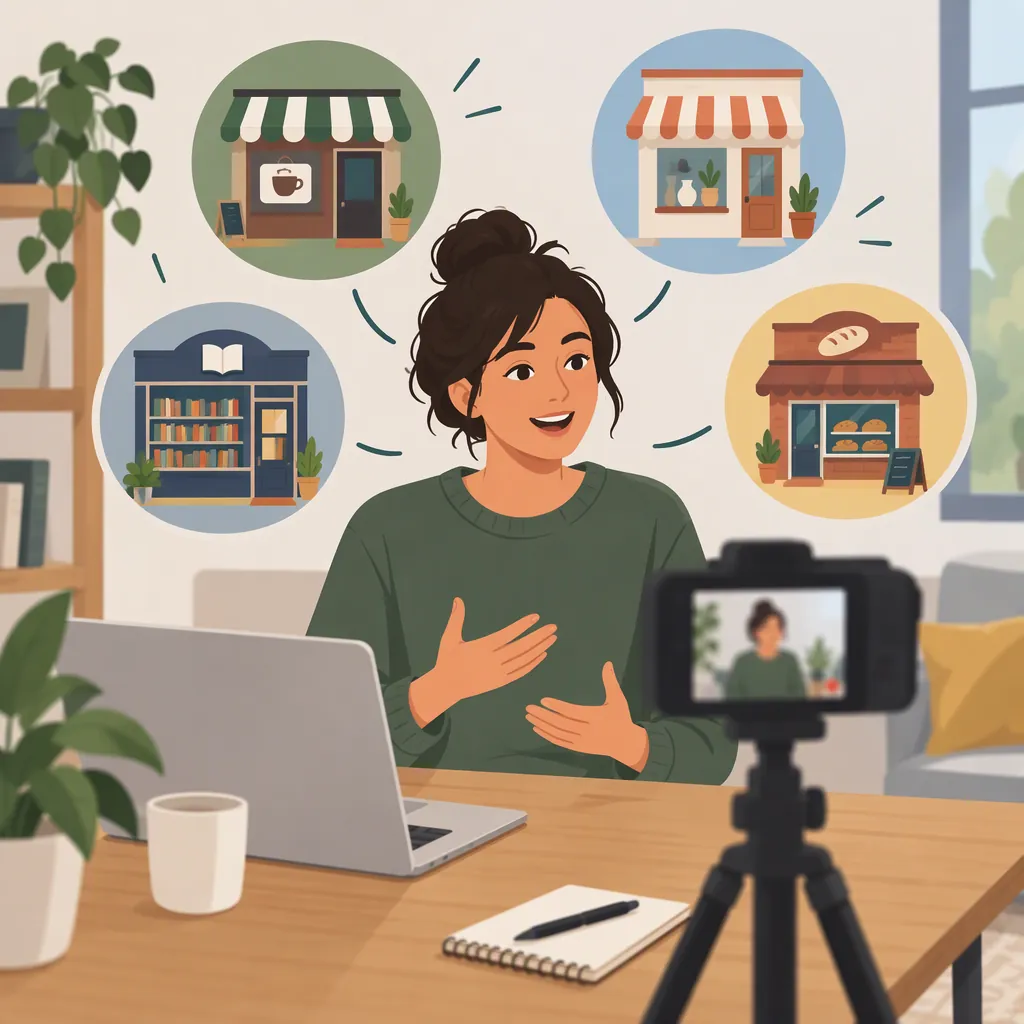
Can a Local Business Be a Suitable Sponsor for My Small Audience?
Yes—a local business can be a suitable sponsor if your audience overlaps with the people it wants to reach and you can offer relevant, clearly defined benefits. A small following alone does not rule out sponsorship: Bank of America’s guidance identifies niche audiences and consistent engagement as potential sources of value. For a local partnership, assess geographic fit as well as interests, and do not promise sales you cannot substantiate. Suitability does not guarantee that a business has a budget or will agree to a deal. [source_1]
Assess Audience Fit Before Follower Count
The useful question is not simply how many people follow you, but which of those people the business could meaningfully serve. Bank of America describes audience alignment, clear benefits, and credible execution as core considerations in sponsorship decisions. [source_1]
For a neighborhood business, distinguish your total audience from the portion within its service area. For a business that also sells online, location may be less restrictive, but topic and customer fit still need examination.
As a hypothetical example, a creator covering neighborhood gardening could propose a relevant collaboration with a nearby plant shop. That is a possible match—not evidence that the shop wants sponsorship or that followers will buy.
Use this suggested fit check before developing an offer. An unknown answer is a research gap, not a reason to invent a favorable answer.
Local Sponsor Fit Check
- Audience overlap: What evidence shows that viewers are in the business’s service area or interested in its offering?
- Content relevance: Does the business fit a topic the audience already follows?
- Business objective: Has the business confirmed what it wants to achieve?
- Delivery fit: Can the creator provide the proposed content or event participation reliably?
- Measurement fit: Can both sides agree on an observable result?
- Open questions: Which assumptions still need confirmation?
Show Relevant Evidence Without Overstating It
A sponsorship proposal should explain the audience, reach, engagement, deliverables, and investment. The Sponsorship Collective also recommends researching the audience rather than relying only on familiarity with community members. [source_1] [source_2]
For a small creator, a practical evidence summary could include recent content performance, available audience-location data, and examples of relevant audience questions. Use aggregated information rather than identifiable follower details.
Keep the limits beside the numbers. State the reporting period, distinguish followers from views, and identify whether a location estimate comes from platform analytics or an optional survey. Survey respondents should not automatically be treated as representative of everyone who follows you.
Do not describe comments as purchases or assume every follower will see a sponsored post. If local reach is unknown, say so. A proposed test can help investigate fit, but it should not be presented as proof of demand.
Audience Evidence Worksheet
Reporting period: [Start and end dates]
Audience size: [Current count and platform]
Recent comparable content: [Topic, format, views, and engagement]
Geographic evidence: [Available location data and its source]
Relevant interests: [Observed topics or aggregated survey responses]
Known limitations: [Missing data, small sample, or unusual performance]
Supported conclusion: [What the evidence actually demonstrates]
Unproven assumption: [What still needs testing]
Find Prospects Through Public Local Research
The Sponsorship Collective suggests examining local business websites and social profiles for sponsorship activity and using community connections to identify relevant contacts. Bank of America also recommends researching sponsors of comparable programs and businesses serving similar customers. [source_2] [source_1]
For creator partnerships, a suggested shortlist can start with businesses whose offerings already fit your content. Public event sponsor lists may provide additional leads. Record what you actually found: a past sponsorship, a relevant service area, or a publicly listed business contact.
Past event support is only a research lead. It does not establish a current budget, interest in creator content, or willingness to sponsor you. Avoid assuming that a business is easier to secure merely because it is nearby or independently owned.
Before preparing a detailed proposal, clarify the business’s objective, intended audience, timing, and preferred format. The Sponsorship Collective frames an initial sponsor meeting as a discovery conversation rather than an immediate request for funding. [source_2]
Design a Limited Offer Around a Confirmed Goal
Sponsorship is a commercial exchange, not simply a donation. Bank of America describes financial, in-kind, and promotional arrangements, with benefits agreed between the parties. [source_1]
A suggested starting point is a limited collaboration with a clear scope: a defined content placement, a local event segment, or a short series relevant to your audience. Choose the format after understanding the business’s objective, rather than treating every sponsor as a buyer of the same package.
Separate compensation from costs. Products, venue access, or services may be useful, but assess whether they address your actual needs and whether production expenses remain uncovered. The provided references do not establish a standard creator rate or a minimum follower requirement.
As planning guidance, document deliverables, timing, compensation, payment terms, approval boundaries, content reuse, exclusivity, cancellation, and how sponsorship will be identified to viewers. These are suggested discussion topics, not a complete legal agreement or jurisdiction-specific disclosure guide.
Small Collaboration Scope Worksheet
Confirmed business objective: [What the sponsor wants to achieve]
Audience fit: [Evidence of relevant overlap]
Deliverable: [Format, quantity, channel, and publication window]
Compensation: [Cash, in-kind contribution, or combination]
Creator costs: [Production expenses and time]
Content boundaries: [Approval process and editorial limits]
Rights and restrictions: [Reuse, duration, and exclusivity]
Measurement: [Metric, data source, and reporting date]
Uncertainties: [What neither party can guarantee]
Measure the Agreed Goal and Keep Limits Visible
Local sponsorship need not be framed only as immediate sales. Chronogram Media’s event-focused article discusses visibility, community association, and differentiation as potential sponsor benefits. That perspective concerns events; it does not prove that a small creator’s campaign will produce those outcomes. [source_3]
Choose reporting that matches the agreed objective. For visibility, report available reach or views. For engagement, report relevant interactions. If the business wants visits or purchases, discuss whether it can supply attributable results through an agreed tracking method.
Distinguish what you delivered from what the business achieved. A published post is a deliverable; a sale is an outcome. Clicks alone do not establish purchases, and untracked activity should remain unknown rather than being credited to the collaboration.
Bank of America emphasizes delivery, communication, and results reporting as foundations for continuing sponsorship relationships. A factual recap can support a decision to repeat, revise, or stop the arrangement without claiming guaranteed growth. [source_1]
FAQ
How Many Followers Do I Need for a Local Sponsor?
The provided references do not set a universal minimum. Bank of America says niche audiences and consistent engagement can be valuable even without a large following. Assess relevant audience overlap, credible evidence, and deliverables rather than treating a follower count as automatic qualification. [source_1]
Can a Local Business Sponsor Me If Most Followers Live Elsewhere?
Possibly, but clarify how the business can benefit. If it serves only nearby customers, limited local reach is a reason to question fit. If it serves customers online or has another relevant objective, a wider audience may be compatible. This is a practical application of audience alignment, not evidence that a particular business will sponsor you. [source_1]
Does Sponsorship Have to Include Cash?
No. Sponsorship can include products, services, venues, expertise, or promotional support in exchange for agreed benefits. Evaluate whether the contribution is useful and whether it covers your costs; non-cash compensation should not be assumed to have the same practical value as payment. [source_1]