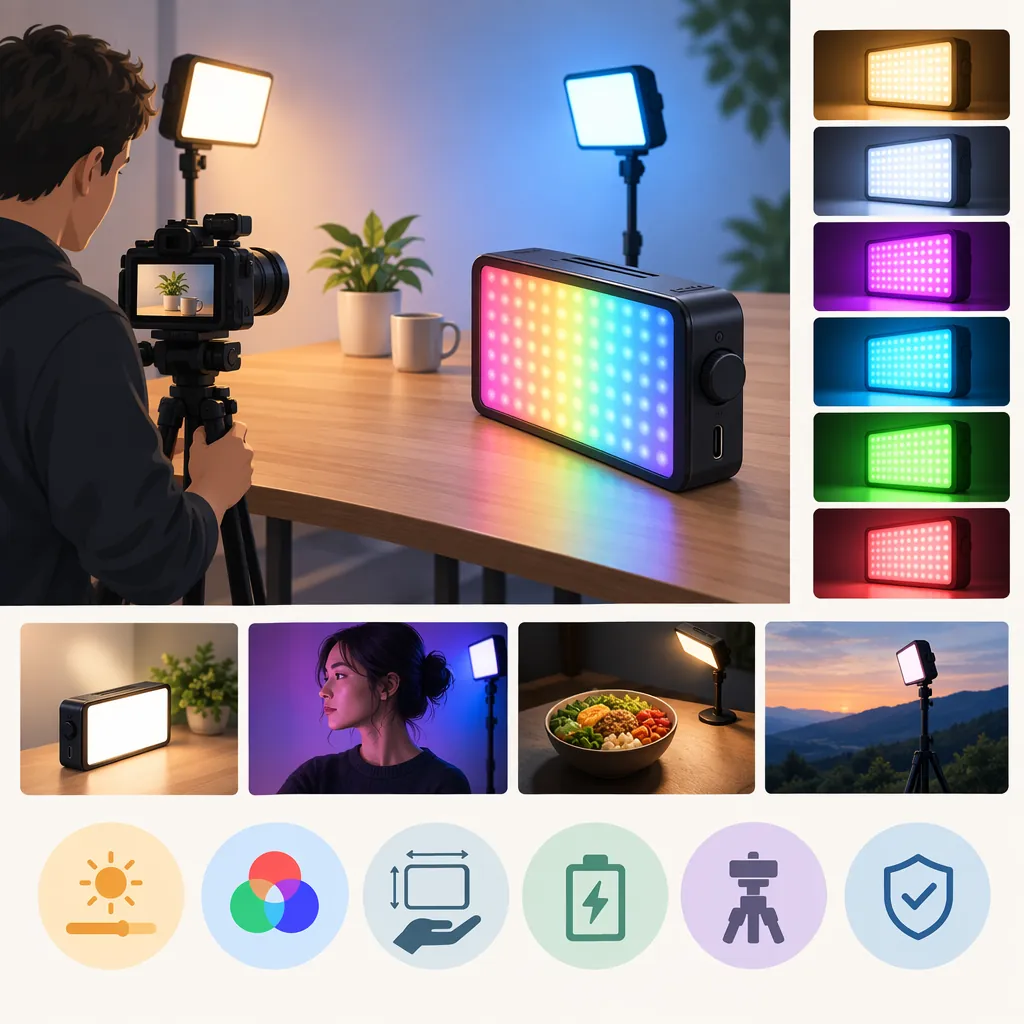
Choosing a Weeylite Rb08p RGB Pocket-Sized Led Light for Filming
To assess the Weeylite RB08P RGB pocket-sized LED light for filming, start with the intended shot and check output, color, flicker, mounting, and runtime under your recording conditions. The provided references name the RB08P but do not establish its performance or suitability for a particular shoot. Treat “pocket-sized” as a search description, not a verified dimension, and confirm specifications against documentation for the exact unit.
What the Available Sources Establish
The supplied Amazon Live page is titled “Watch Weeylite RB08P FULL COLOR RGB VIDEO LIGHT on Amazon Live.” Its provided text does not include usable test results or technical specifications. The supplied Tokopedia results page contains listings labeled Viltrox Weeylite RB08P Mini RGB LED Video Light. These sources establish how the item is named on those pages, not how it performs. [ref_1] [ref_2]
Neither reference is a manufacturer manual or a controlled performance report. This guide therefore does not verify dimensions, brightness, color accuracy, battery runtime, mounting hardware, charging behavior, or control options. It also does not establish that “RB08PRGB” is a separate model designation.
Use the following checklist as an evaluation method, not as a review or recommendation of this model.
Define the Light’s Job Before Comparing Features
Write down whether the light would serve as the main illumination, supplemental illumination, a background accent, or a visible element in the frame. Do not assume that a light suited to one role will meet your requirements for another.
For a talking-head shot, evaluate the intended subject position, framing, and appearance of facial shadows. For a tabletop shot, include reflective objects and any close-up details that must remain visible. For a colored background, specify the area you want illuminated and the appearance you want to achieve.
Choose acceptance criteria before testing: your camera settings, working distance, acceptable exposure, desired color, recording duration, and available mounting space. Compare alternatives using the same scene and criteria rather than relying on a product label alone.
Shot Requirements Worksheet
- Intended lighting role:
- Subject and framing:
- Camera, frame rate, shutter setting, and white balance:
- Planned light-to-subject distance:
- Required exposure and acceptable shadow appearance:
- Desired neutral or colored look:
- Required uninterrupted recording duration:
- Mounting location and space constraints:
- Conditions that would rule out the light:
Evaluate the Light in Recorded Footage
If an evaluation unit is available, use a repeatable recording test. This is a proposed procedure; no RB08P test results are supplied here.
- Set up the actual camera, subject, background, and planned working distance. Keep exposure and white balance fixed for comparison clips.
- Record the scene with the light off, then with the settings you intend to use. Check whether the subject reaches your target exposure without an unwanted change to the camera settings.
- Review skin, neutral objects, and relevant product colors. Judge the recorded image, not just the appearance of the light itself.
- Record at every frame rate and shutter setting planned for the shoot. Inspect the clips for visible banding or brightness fluctuations. A satisfactory result at one setting should not be treated as validation of every setting.
- Evaluate each colored setting you need separately. Check whether the desired color remains visible in the recorded scene.
- Repeat the useful setup after any intended change in placement or light modification.
Record the conditions alongside each result. Describe any conclusion narrowly—for example, “acceptable in this tested setup”—rather than as a universal performance claim.
Check Fit, Mounting, and Power Requirements
Before treating the light as suitable for a portable kit, confirm its dimensions, weight, included accessories, and mounting interface using documentation for the exact unit. Compare those details with your available space and support hardware. The supplied sources are insufficient to verify these requirements. [ref_1] [ref_2]
For a hands-on evaluation, check that the intended support holds the light securely and that controls remain accessible in its working position. Follow the documented operating and mounting instructions; do not improvise an unsupported attachment.
Define the uninterrupted recording time you need, then evaluate runtime at the settings intended for that session. Verify charging requirements and whether operation during charging is permitted before planning around it.
The decision can remain conditional: suitable for a specific tested role, unsuitable for that role, or unresolved because documentation or testing is missing. With the evidence supplied here, a model-specific suitability judgment remains unresolved.
FAQ
Can the Weeylite Rb08p Be Used as a Main Light?
The supplied references do not establish that. Evaluate it at your intended distance with your subject and camera settings. Accept it for that role only if the recorded exposure and appearance meet your defined requirements.
Is the Rb08p’s Pocket Size Verified Here?
No. The Tokopedia listings use “Mini” in the product name, but the supplied references do not provide verified dimensions. Confirm the exact unit’s measurements rather than treating a size descriptor as a specification.
Does the RGB Label Establish Filming Suitability?
No. Both supplied sources use RGB in naming the light, but that label does not provide measured output, color accuracy, or flicker results. Evaluate the settings needed for your footage and keep any conclusion limited to the conditions tested.