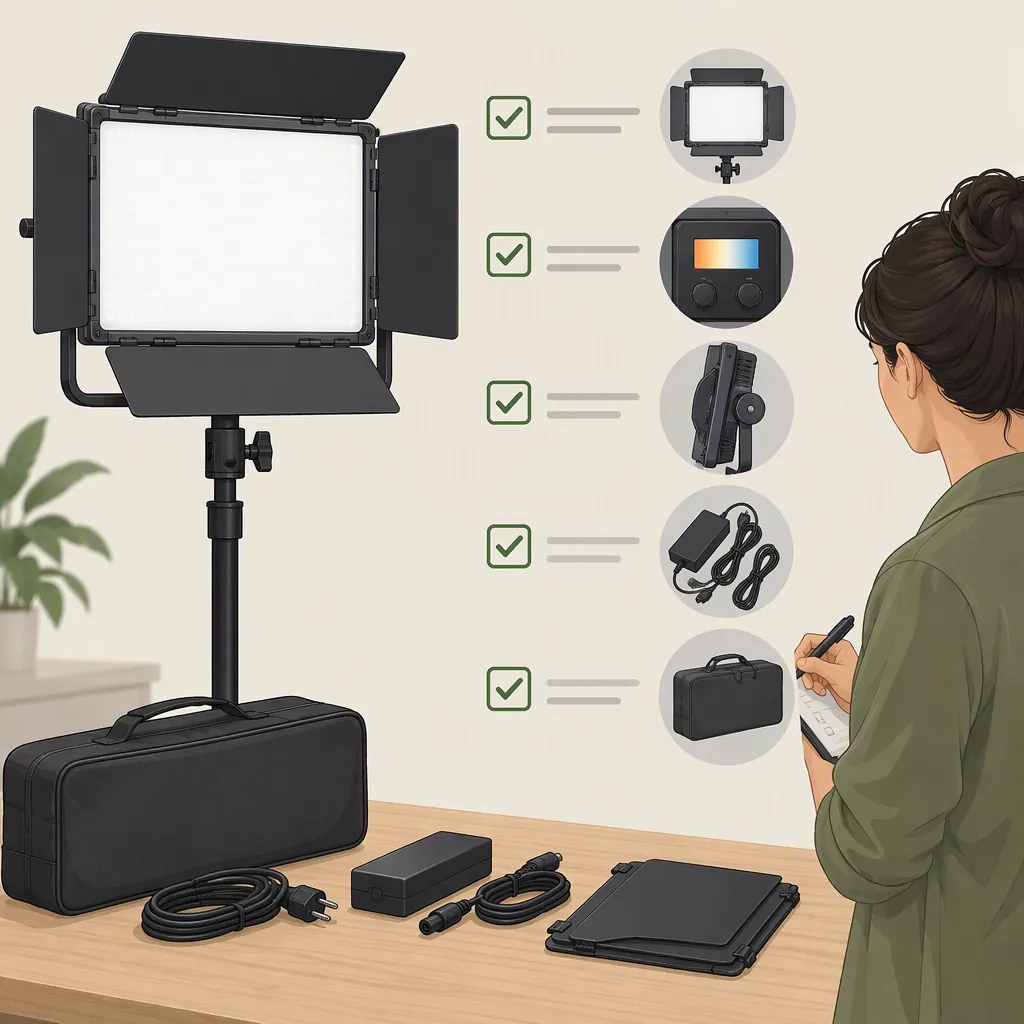
How to Evaluate a Phottix Nuada R3 Led Light for Filming
Evaluate a Phottix Nuada R3 LED light against your actual filming setup rather than assuming it is suitable from its name. Check exposure at the intended distance, color consistency, flicker, power requirements, and mounting. The supplied Phottix USA collection page does not establish R3-specific specifications, so this guide cannot verify its output, features, or suitability for a particular shoot. [source_1]
What the Available Source Establishes
The supplied Phottix USA page is an LED-light collection listing. Its navigation includes panel lights, ring lights, light kits, and tube lights, as well as a Nuada collection. However, the supplied page text does not identify a Nuada R3 listing or provide an R3 specification sheet. [source_1]
That is an evidence gap, not proof that the model is unavailable or unsuitable. Do not infer R3 brightness, color-temperature range, color-rendering ratings, battery compatibility, dimensions, or included accessories from other Phottix products. Those details remain unverified here.
Define the Shoot Before Comparing Lights
Start with a short production brief. Specify whether the light would serve as a key light, fill light, or background light. Record the subject size, framing, available placement space, existing light sources, and intended camera settings.
Treat these as requirements to test, not as capabilities already confirmed for the R3. For an interview, prioritize a test with a person seated in the intended position. For tabletop work, use the actual objects and surfaces. For mobile filming, include setup time, transport, and the planned power arrangement in the evaluation.
Filming Requirements Worksheet
- Scene and subject: ____
- Proposed light role: ____
- Framing and subject movement: ____
- Available light-to-subject distance: ____
- Camera, frame rate, shutter setting, aperture, and ISO: ____
- Existing room light or daylight: ____
- Intended diffusion or other modifiers: ____
- Recording duration and power access: ____
- Mounting location and space restrictions: ____
- Conditions that would rule the light out: ____
Run a Camera-Based Lighting Test
If an evaluation unit is available, test it with the camera and settings planned for production. Keep a record of each configuration so comparisons are repeatable.
- Exposure: Place the light at the intended working distance. Check whether the subject reaches your chosen exposure without changing settings you need to preserve.
- Light placement: Try the intended angle and framing. Review shadows, reflections, and coverage rather than judging only the illuminated area by eye.
- Modifiers: Test the exact proposed modifier, but first verify its mounting compatibility. Do not assume any modifier is supplied or supported.
- Color: Record a neutral reference and representative subject materials. Compare clips using the same white-balance setting, then assess the mixed-light setup separately.
- Flicker: Record at every intended frame rate and shutter setting, including slow-motion settings if relevant. Repeat at the dimming levels you expect to use and inspect footage for bands or brightness fluctuations.
- Sound: Record room tone with the light operating and check for unwanted sound in the production microphone.
A successful test supports only the tested configuration. It does not establish performance at untested settings or prove a general R3 product claim.
Test Log
| Test | Setup and Settings | Observation | Meets Requirement? |
|---|---|---|---|
| Exposure at working distance | To record | To record | Yes / No / Unclear |
| Coverage and reflections | To record | To record | Yes / No / Unclear |
| Intended modifier | To record | To record | Yes / No / Unclear |
| Color comparison | To record | To record | Yes / No / Unclear |
| Flicker at planned settings | To record | To record | Yes / No / Unclear |
| Microphone noise check | To record | To record | Yes / No / Unclear |
Check Power, Mounting, and Evidence Gaps
Before making a selection, verify the exact model designation and the documentation for the unit being evaluated. Confirm the specified power supply, any supported batteries, mounting interface, weight, and package contents. None of these R3-specific details is established by the supplied collection page. [source_1]
Use only a documented compatible power arrangement. Check stand capacity against the complete planned load, including accessories, and plan cable routing so it does not obstruct movement. If battery operation is documented, evaluate recording duration under your intended settings rather than assuming a runtime.
Classify each requirement as verified by documentation, observed in a test, or still unknown. Keep unknowns visible in any comparison with alternative lights. A reasonable selection requires both acceptable footage and a workable, documented setup; this source alone is insufficient for an R3-specific recommendation.
FAQ
Is the Phottix Nuada R3 Suitable for Filming?
Suitability is not established by the supplied source. Evaluate the exact unit at your planned distance, camera settings, and light placement, and verify its operating requirements before reaching a conclusion. [source_1]
What Are the Nuada R3's Output and Color Specifications?
The supplied collection-page text does not provide R3-specific output or color specifications. This guide therefore does not assign brightness, color-temperature, or color-rendering values to the model. [source_1]
What Should I Test First?
Start with exposure at the intended working distance using your planned camera settings. Then review coverage, color, flicker, sound, and the practical power and mounting arrangement. Record the conditions so the result remains tied to the setup you actually tested.
Sources
- [source_1] LED Lights – Phottix USA