Yongnuo Yn300 Iii: How to Choose the Right Version
Short Answer
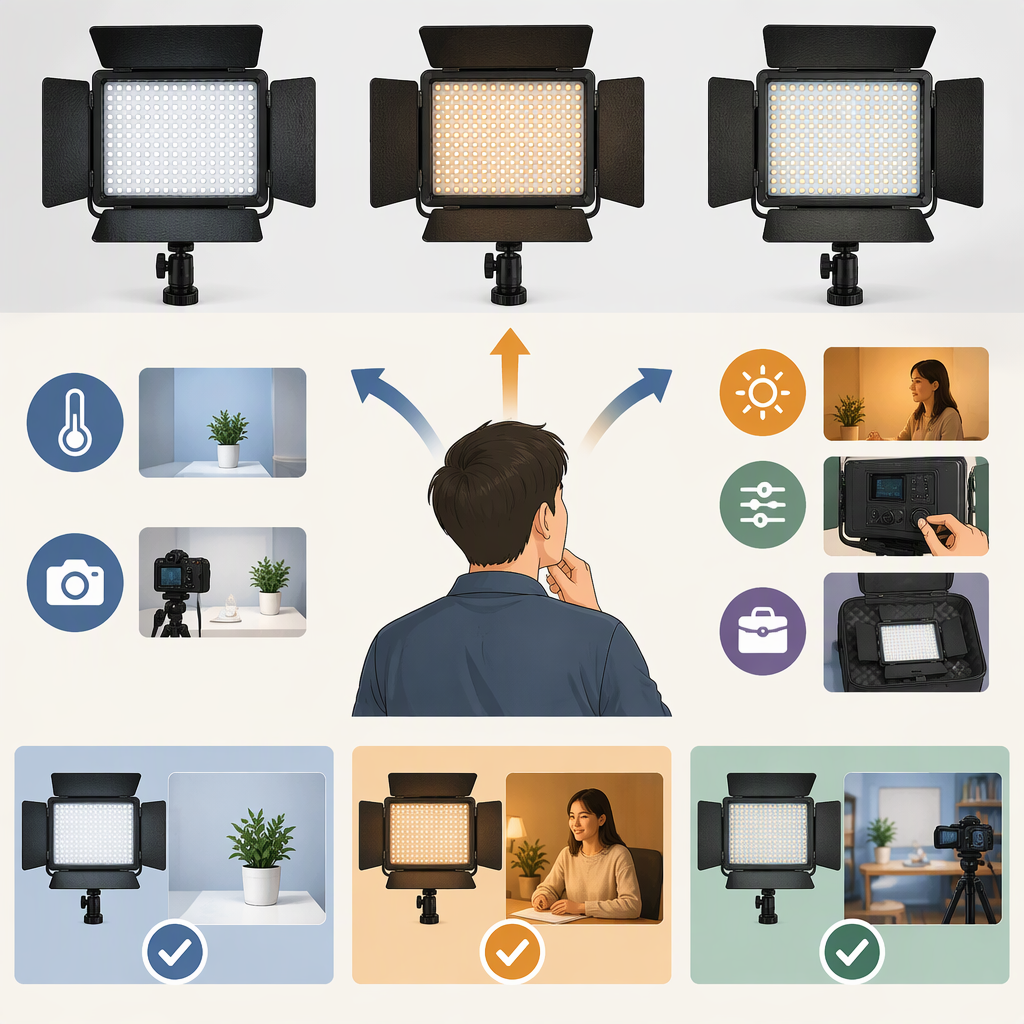
The Yongnuo YN300 III is a 300-LED video light, but the name alone does not tell you which color-temperature version or kit a listing contains. Yongnuo documents both a 5600K daylight version and a bi-color version adjustable from 3200K to 5600K. Choose the bi-color version if you need to match warmer or cooler ambient light; choose the daylight version only if fixed 5600K suits your setup. (hkyongnuo.com)
Compared with the YN300 II, the documented core lighting choice is similar: both have a bi-color 3200–5600K version and encoder dimming. Yongnuo specifically lists smartphone app control and control of up to eight groups for the III; its II page describes a wireless remote but does not establish whether the II lacks app control. So treat remote-control needs as a reason to check the exact unit and manual—not proof that every III is a major upgrade. (hkyongnuo.com)
The YN300 IV is the more relevant alternative if you want RGB color effects: Yongnuo’s official store describes RGB LEDs and scene modes as additions over the III. If you only need white light with adjustable color temperature, the III may cover that need; if you need RGB, compare the exact IV version and its controls. (th.hkyongnuo.com)
Identify the Exact Yn300 Iii
Check the model name on the light itself and compare it with the model name in the listing and manual. If the listing does not show a clear model marking, ask for a photo of the unit’s label before relying on its title. Also confirm which YN300 III color version is offered:
- 5600K (daylight) version: Yongnuo describes 300 LEDs rated at 5600K.
- Bi-color version: Yongnuo describes 150 LEDs at 3200K and 150 at 5600K, with adjustment across 3200–5600K.
These are different versions under the YN300 III name, not evidence that a listing titled only “YN300 III” is necessarily bi-color. Check the selected option, product photos, and manual for the specific item. (hkyongnuo.com)
Do not confuse the YN300 III with YN300 Air: the manufacturer describes the Air as a slimmer, lighter model with a wider 110-degree illumination angle. It is a related product name, not simply another way of writing YN300 III. (hkyongnuo.com)
Yn300 Ii, Iii, or Iv?
| Model | Documented distinction | When that difference may matter |
|---|---|---|
| YN300 II | Available documentation describes a 3200–5600K bi-color version, encoder dimming, and a wireless remote. Its product page lists four color-temperature plates. | Consider it if its verified condition, price, and included accessories suit you. The available manufacturer descriptions do not establish that the III is brighter or universally better. (hkyongnuo.com) |
| YN300 III | Offered as either fixed 5600K or bi-color 3200–5600K. Yongnuo lists app control, control of up to eight groups, encoder dimming, an LED display, and two color-temperature plates. | A fit if you want the documented bi-color option, or the III’s stated app/group-control features matter to your workflow. Confirm the exact variant and included items. (hkyongnuo.com) |
| YN300 IV | Yongnuo’s official store describes added RGB LEDs and scene modes compared with the III; the store listing also presents white and bi-color options. | Compare it if RGB effects are important. Verify which color-temperature option, power inputs, and accessories apply to the particular IV listing. (th.hkyongnuo.com) |
This is a feature comparison, not a brightness or image-quality ranking. The cited manufacturer descriptions do not provide a directly comparable, independently tested output result for these generations. Nor do they establish that every regional package contains the same remote, filters, adapter, or stand.
Check Power, Accessories, and the Specific Listing
Before deciding that a particular unit will work with your setup:
- Confirm the exact model and color version. Match the listing’s selected option to the unit label and relevant manual. “YN300 III” alone does not identify whether it is fixed 5600K or bi-color.
- Check the battery you plan to use. Yongnuo’s YN300 III store listing names NP-F-series batteries as compatible and says they are not included. Confirm the exact battery type against the manual for your unit. (th.hkyongnuo.com)
- Do not assume an adapter specification from a generic listing. There is a discrepancy in the available Yongnuo material: the YN300 III manual says the input is 12 V, 5 A, while the official-store product page says a 12 V, 2 A adapter. Because those ratings differ, use only the power supply specified for your exact unit by its manual or markings; ask the seller or Yongnuo to resolve the mismatch before connecting an adapter. (th.hkyongnuo.com)
- Verify accessories and package contents item by item. Yongnuo’s III page mentions two color-temperature plates, but that does not confirm what a particular seller’s kit includes. Check whether the specific listing includes the remote, battery, adapter, handle, stand, or other accessories you need. (hkyongnuo.com)
- Check mounting and accessory compatibility by exact model. Yongnuo identifies its YN45-1 softbox as compatible with the YN300 series, including the III, but says it is not for the YN300 Air. Do not infer that an accessory fits just because its name includes “YN300.” (th.hkyongnuo.com)
Bottom Line
Choose the YN300 III bi-color version when you need its documented 3200–5600K adjustment. Choose its 5600K version only when fixed daylight is appropriate. Consider the YN300 II if a specific used or listed unit meets your needs, but the manufacturer’s descriptions do not establish a universal generation-to-generation performance winner. Consider the YN300 IV if RGB effects are a requirement. In every case, verify the unit’s exact model and color version, included kit, and power requirements—especially the adapter rating, where available YN300 III materials conflict.