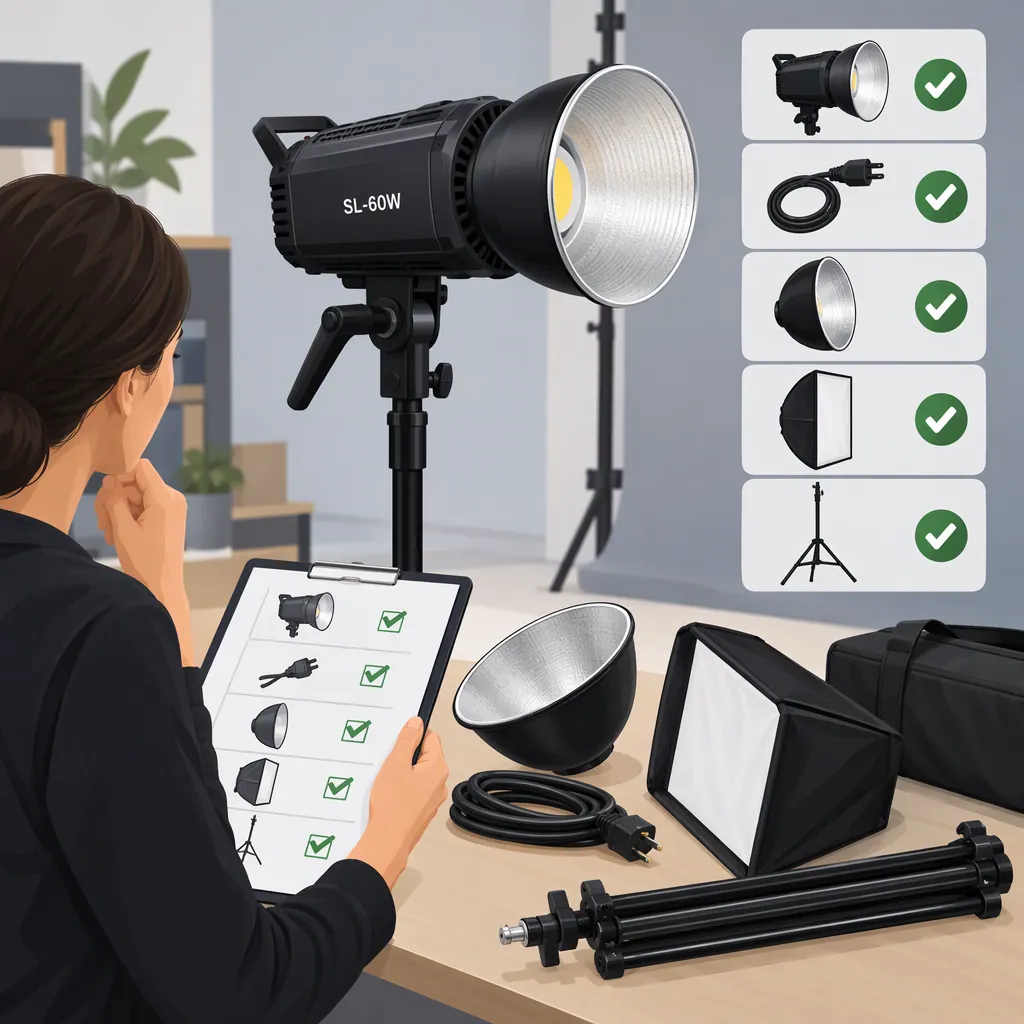
Neewer SL-60W Selection and Compatibility Guide
For a “neewer sl 60w” search, first confirm the exact model and its documentation before choosing modifiers, power accessories, or a stand. The supplied reference is a personal quick look at a Neewer SL-60W, not a manufacturer compatibility guide. It describes one reviewer’s setup, but does not establish a verified mount specification, electrical requirements, or accessory load limit. Treat those details as unresolved until checked against documentation for the actual unit. [c1]
Confirm the Model and Evidence
The supplied PhotoKensho article identifies the light as the Neewer SL-60W and describes the author’s own use of it. That makes it useful as an example of a lighting setup, but not as a complete specification sheet or a guarantee about every unit sold under a similar name. [c1]
Before assessing compatibility, record the model exactly as printed on the light, along with any revision identifier. Compare that information with the matching manual rather than relying on a shortened listing title such as “SL60W.”
The supplied evidence does not verify an official modifier-mount standard, input voltage range, color-accuracy rating, measured output, or supported battery system. This guide therefore leaves those specifications open rather than filling them in from similarly named products.
Check Modifier Fit and Support Separately
The reviewer describes using a double-baffle softbox, a strip softbox, and a diffuser dish. The article also distinguishes those examples from larger modifiers the author had not tried. Neither group should be treated as a universal compatibility list. [c1]
For a proposed modifier, check three separate questions:
- Attachment: Does its adapter match the mount documented for your exact light?
- Clearance: Can it attach and lock without interfering with controls, ventilation, or the tilt mechanism?
- Support: Do the light, bracket, and stand have documented capacity for the complete assembly?
Do not infer a particular mount standard merely because the source mentions softboxes. The reference does not establish that specification.
The reviewer also expresses concern about placing heavy loads on the light’s plastic umbrella mount. That is a caution from one user, not a tested load rating. Confirm the permitted load and support arrangement in the relevant equipment documentation. [c1]
Evaluate Power and Recording Conditions
The author describes using wall power and reports that fan noise was insignificant in that setup. The article does not provide a controlled acoustic measurement or verify battery operation for the reviewed light. Those observations should not become a promise of silent operation or portable power compatibility. [c1]
For power, check the unit’s input label, the matching manual, and the approved supply. Do not select a replacement supply or battery adapter based only on a similar model name or a connector that appears to fit.
For sound, make a short recording with your intended microphone, placement, gain, and light setting. Listen during pauses in speech, not just while someone is talking. Test under conditions representative of the intended session.
For exposure, test the intended framing, light position, modifier, and camera settings together. The reviewer found the lowest available setting too bright for some close work, but that observation is specific to the author’s circumstances. It does not establish a universal minimum working distance or exposure result. [c1]
Use a Setup Verification Worksheet
Keep documented compatibility separate from observations made during a test. A successful attachment does not, by itself, establish an approved load or electrical configuration.
Use the worksheet below to identify what is confirmed and what remains unknown. If a required specification cannot be verified, leave that part of the setup unresolved rather than assuming compatibility. The supplied review offers setup examples, not a complete compatibility matrix. [c1]
Pre-Use Verification Worksheet
- Exact model and revision on unit: ______
- Matching manual or specification document: ______
- Input requirements and approved power supply: ______
- Documented modifier mount and required adapter: ______
- Modifier attachment and clearance checked: ______
- Documented load limits for bracket and stand: ______
- Complete assembly supported within those limits: ______
- Test framing, camera settings, and light position: ______
- Recorded fan-noise test and listening result: ______
- Unresolved items that prevent use: ______
FAQ
Does the Supplied Source Confirm a Bowens Mount?
No. It mentions several modifiers but does not explicitly verify a Bowens mount specification. Check the manual and attachment details for the exact unit and modifier before treating them as compatible. [c1]
Can the Neewer SL-60W Run on Batteries?
Battery operation is not verified by the supplied reference. The reviewer describes wall-powered use. Confirm any battery arrangement through documentation for the exact unit; do not transfer power-system details from another light mentioned in the article. [c1]
Is It Quiet Enough for Spoken-Word Recording?
The reviewer reports little audible fan noise in their setup, but provides no controlled noise measurement. That is insufficient to guarantee a clean recording with your microphone and placement. Use a representative recording test to assess the intended setup. [c1]
Does the Review Establish Compatibility with a Large Softbox?
No. The reviewer describes some modifier use, identifies other possibilities as untested, and raises a concern about heavy umbrella loads. Verify attachment, clearance, and documented support limits separately for the modifier you intend to use. [c1]