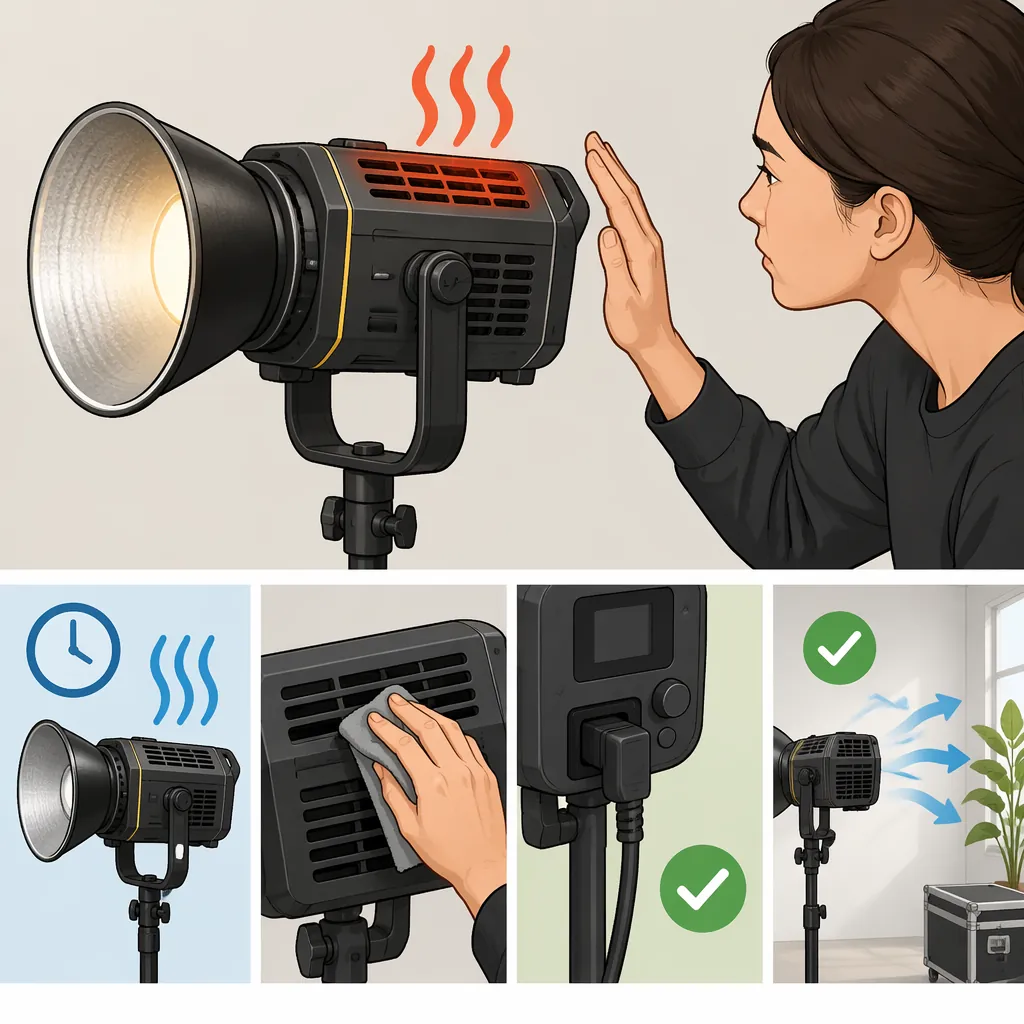
Godox Vl300 Overheating: Safe Troubleshooting and Next Steps
If you suspect your Godox VL300 is overheating, stop using it, switch it off, disconnect power when safe, and allow it to cool. Danger signs mean no restart; otherwise, limit checks to the disconnected equipment’s exterior. If the fault recurs or the cause remains unclear, keep the light out of use pending qualified assessment. Do not repeatedly cycle power or open the housing.
Choose the Safe Troubleshooting Path
These steps are conservative safety precautions, not a manufacturer-verified VL300 diagnostic or repair procedure.
| What you observed | What to do next |
|---|---|
| Smoke, burning smell, sparking, melting, or visible cable or connector damage | Discontinue use. Switch off and disconnect power only when safe. Do not reconnect the equipment to reproduce the event. |
| Shutdown, reduced output, unusual noise, or a display message, without obvious danger signs | Switch off, safely disconnect power, and let the equipment cool. Record the symptom and perform only the exterior checks below. |
| A fault that recurs after checks permitted by manufacturer instructions, or a cause that remains unclear | Keep the equipment out of use. Submit your observations for qualified diagnosis rather than attempting repeated restarts or guessing which part has failed. |
Evidence boundary: This page cites a retailer’s VL300 temperature control board listing and an ASUS graphics-card cooling guide. The listing identifies a spare part; the ASUS guide provides general cooling context, not instructions for this light. [c1] [c2] Neither reference provides a VL300 thermal cutoff temperature, operating-temperature limit, normal fan behavior, error-code explanation, reset sequence, or repair procedure. This does not mean such information is absent from official Godox documentation.
1. Identify the Symptom and Affected Component
Treat “overheating” as a suspected cause rather than a confirmed diagnosis. Write down what actually happened:
- Did the light shut down, reduce output, make an unusual noise, or display a message?
- Did the issue occur at startup or after sustained use?
- Did you notice a smell, smoke, discoloration, or visible damage?
- Did the concern appear to involve the light head, controller, power supply, or a connector?
Record any displayed message exactly. Do not assign a thermal meaning to a code without model-specific documentation.
Distinguishing the affected component makes the incident record more useful, but it does not establish the cause. Do not re-energize the equipment merely to locate the symptom or obtain a photograph.
2. Check the Exterior with Power Disconnected
After switching off, safely disconnecting power, and allowing the equipment to cool:
- Look for ventilation obstructions. Check whether fabric, packaging, nearby equipment, or other objects cover accessible ventilation openings.
- Inspect accessible exterior surfaces. Note visible debris, damaged housings, cable damage, and discolored or damaged connectors. Do not dismantle connections or housings to inspect internal parts.
- Record the placement. Note whether the setup was enclosed, in direct sunlight, or near another heat source.
- Check model-specific instructions. Consult the VL300 manual for approved placement, cleaning methods, power connections, and operating conditions before considering further use.
Blocked airflow, dust buildup, and inadequate ventilation are cooling concerns identified in ASUS’s graphics-card guide. That is general background only—not evidence that any of these conditions caused your VL300 fault. GPU fan modes, software adjustments, temperature guidance, and case-opening procedures must not be transferred to this light. [c2]
Do not insert tools through vents, apply liquid cleaner, bypass protection, or open the housing. If debris cannot be addressed using an approved exterior cleaning method, leave it for qualified service personnel.
Finding an obstruction or correcting placement does not, by itself, establish that the equipment is safe to restart.
3. Record the Incident Before Further Use
Use observations you already have. Do not deliberately recreate a dangerous event.
Suspected Overheating Incident Record
- Date and equipment identification:
- Affected component: Light head, controller, power supply, connector, or unknown
- Exact symptom or displayed message:
- Approximate time from startup to symptom:
- Output setting at the time:
- Power source and connection arrangement:
- Modifier and placement:
- Room conditions and nearby heat sources:
- Visible ventilation obstructions or damage:
- Unusual sound, smell, smoke, or discoloration:
- Actions taken and whether power remains disconnected:
- Photos available without reopening or re-energizing equipment:
If there is no obvious damage, follow manufacturer instructions or qualified service advice to determine whether another test is appropriate. The absence of visible damage is not clearance to restart. This page cannot establish a safe cooling interval, restart sequence, or continuous operating duration.
If a fault recurs during further use permitted by those instructions, discontinue use rather than repeatedly cycling power.
4. Seek Diagnosis Before Replacing Parts
Kamera Express lists a temperature control board as a spare part for the Godox VL300. Its listing does not provide a diagnostic test or establish that the board caused your symptoms, that replacement will resolve them, or that installation is suitable for an owner to perform. [c1]
For recurring shutdowns, damaged connections, or suspected internal cooling problems, keep the equipment out of use pending qualified assessment. Provide the incident record and ask the service provider to clarify:
- Which component is affected?
- What evidence supports the diagnosis?
- What repair, if any, is required?
- What checks are needed before the equipment returns to use?
Leave internal inspection and repair to qualified service personnel. A named spare part is not a substitute for diagnosing the fault.
FAQ
Does a Godox Vl300 Shutdown Prove It Is Overheating?
No. A shutdown alone does not establish a thermal fault from the evidence cited on this page. Record the timing, exact display message, affected component, and power arrangement. The cited VL300 spare-part listing contains no shutdown diagnostic procedure. [c1]
What Temperature Is Too Hot for the Godox Vl300?
The references cited on this page do not provide a VL300 operating-temperature limit or thermal cutoff threshold. Consult model-specific manufacturer documentation; do not substitute graphics-card temperature guidance or judge safety by touching the housing. The ASUS reference concerns graphics cards, not the VL300. [c2]
How Long Should I Wait Before Restarting It?
This page cannot specify a safe restart interval. Allow the disconnected equipment to cool, then use manufacturer instructions or qualified service advice to determine whether further testing is appropriate. Do not restart after smoke, burning smells, melting, sparking, or visible damage.
Does Unusual Fan Noise—Or a Fan That Appears Stopped—Confirm a Fault?
This page’s references do not establish normal VL300 fan behavior. Record what you observed and when it occurred, but do not infer a VL300 fan mode from ASUS’s graphics-card guidance. Do not open the light or insert anything through its vents to test the fan. [c2]
Should I Replace the Temperature Control Board First?
No—not solely because the part is listed for the VL300. The listing identifies a spare part, not a confirmed failure in your unit or a repair outcome. Have the fault diagnosed before selecting replacement parts. [c1]